Image 1: Who would have thought that this piece of goose liver pate contains a natural test-booster? Unfortunately even this SuperFood won't give you your 1g /day.
Can you imagine how it must feel to be the shrinking violet in a family of nutritional saviours? Where your brothers C, E, not to mention the rising superstar D, get all the attention and you are treated just like another letter in the vitamin ABC? Well, I guess you don't ... but if vitamins had feelings, menaquinone, also known as Vitamin K2, certainly would ;-) After all, even many supplement junkies know it only as "that strange co-factor of vitamin D. In part this may even be my fault. After all, I have discarded all the previous studies on its beneficial effects on heart health (Galeijnse. 2004), bone formation (Yamaguchi. 2001) and resorption (Yamaguchi. 2003) and so-on and so-forth, as not "sexy" enough to make it into the SuppVersity news. The results of a recent study, by Asagi Ito et al. (Asagi. 2011), on the other hand, are sexy, there is no doubt about it ;-)
Image 2: Don't be fooled by the soy industry - there is exactly ZERO MK4 in Natto! You will have to resort to "real" foods if you want some MK-4 in your diet - cf. figure 4, below; unfortunately even goose liver, the dietary source with the greatest amount of menaquinone (MK4) won't give you enough to see results.
Did you know that there are thousands of forms of "vitamin K"? The major ones are yet phylloquinone, also known as vitamin K1, which is abundant in all sorts of green vegetables (>200g/100g), has a pretty low bioavailability of <10% and is important for normal blood coagulation aside, and a certain form of menaquinone that has been labeled MK-4. Only recently have scientists discovered that the latter is synthesized from phylloquinone or menanquinones with longer side-chains in certain mammalian tissues (Suttie. 2011). This ability to produce MK-4 from dietary substrates and the high MK-4 content in human brains and reproductive organs speaks for the importance of this hitherto largely overlooked "vitamin" (in the strict sense it is no vitamin if your body can produce it on its own).
The Japanese scientists treated a group of Male Wistar rats on a standard diet with 75mg/kg body weight of vitamin K2 (menaquinone-4; human equivalent 12mg/kg, 972mg for an 80kg adult) for 5 weeks and measured their plasma and testes levels of testosterone... and the results, were "sexy", as you can see in figure 1 ;-)
Figure 1: Serum testosterone levels (in ng/dl) in male Wistar rats in the course of five weeks on 75mg/kg MK4 vs. control (data adapted from Asagi. 2011)
As the data goes to show there was - despite the usual diurnal ups-and-downs a clear trend towards increased serum testosterone levels in the MK-4 group - on average, +56% more testosterone from weeks 1-5 in the MK4 group. And a whopping +70% at the end of the study period. An even greater increase of +88% was seen in the tissue concentration of testosterone within the testes. The latter went hand in hand with a profound enrichment in vitamin K2 content in the reproductive organs, as well as in the livers of the MK4-supplemented animals (no, I did not make a mistake, there really was almost no MK4 in the livers of unsupplemented animals, cf. figure 2).
Figure 2: MK4 levels (pmol/g tissue) in liver and testes of rats after 5 weeks on 75mg/kg supplemental menaquinone-4 (data adapted from Asagi. 2011)
Interestingly, these profound increases in testosterone production were not mediated by changes in luteinizing hormone concentration.
From the rat model to the petri-dish: Exploring the underlying mechanism
In in-vitro studies, the scientists also found that vitamin K1 was without effect on testicular I-10 cells, and that Warfarine,a pharmacological anticoagulant did not suppress the dose-depend (cf. figure 3) testosterone boosting effects of MK4 on a cellular level.
Figure 3: Relative increase in testosterone production of testicular I-10 cells after 24h of incubation with different amounts of MK4 (data calculated based on Asagi. 2011)
The most likely explanation, according to Asagi et al., for the profound effects MK4 has on the output (its like an after-burner for your testes ;-) of testosterone would be c-AMP mediated, as
treatment of I-10 cells with MK-4 in the presence of db-cAMP was found to significantly enhance testosterone secretion into the cul-ture medium, and the maximum enhancement of secretion was observed when 30μM MK-4 was present in the medium.
That being said, I bet your next question is "where can I get that stuff"? Well, the most obvious answer would be: At the supplement vendor of your choice, which is basically where the scientists got their MK-4 (Nisshin Pharma Inc.), as well.
Figure 4: MK4-content (µg/100g) of the only significant (~10µg/100g or more) dietary sources of MK4 (data based on Schurgers. 2000)
If you look at the only "reasonable" (i.e. foodstuff with 10µg or more MK-4 per 100g) dietary MK-4 sources I have compiled for you in figure 4, you will probably also understand, why the rats had almost ZERO MK-4 in their livers and MK-4 was not even detectable in the serum of the 6 healthy male volunteers whose serum Schurgers and Vermeers as part of their analysis of the plasma vitamin K response to different foodstuff (Schurgers. 2000). Since the scientists focused on K1 and MK-7 (the "Natto-K2") the rest of their results, i.e. everything but their analysis of 13 types of meat, 6 types of fish, 9 types of fruits and vegetables, 10 types of dairy, egg products, oils, breads, and beverages (the only relevant sources are listed in figure 4) are unfortunately useless for us.... anyway, if you want to build some muscle, you better go now and enjoy a few kilo of the good old goose liver paste, although even that would not give you the 1g "human equivalent" of the 75mg/kg the rats in the study received.
Image 1: The yellow bone marrrow fat turns out to be more than a filler.
In Germany there is a common saying that is predominantly used by the mothers of fat kids: "My son, overweight? No. He just has some really heavy bones." Well, I guess few of these proud mothers will be aware that recent research from the Boston Medical School (Fulzele. 2011) and the University of Toledo suggests that there may be more to the bone-bodyweight connection than even they may have thought.
In a comprehensive review of the latest findings on bone metabolism (Fulzele. 2011) Keertik Fulzele and Thomas L. Clemens state that the "contemporary model [which] assigns IGFs [insulin like growth factor] as central regulators of cell profileration, survival, and organism growth" and reduces the influence of insulin to the "level of regulation fuel utilization, storage, and energy expenditure" is too simplistic to to accommodate the overlapping roles of IGF and insulin in several physiologic processes, one of which is the recently discovered and previously unappreciated skeletal action of insulin. Via skeletal insulin receptors, the latter is intricately involved in
osteablast [=bone cells] bone acquisition
osteocalcin production
Of these, the production of the noncollagenous peptide ostecalcin could be of special interest with respect to the metabolic function of bone, as its undercarboxylated form (carboxylation of osteocalcin occurs in the presence of vitamin K and "activates" the peptide hormone, so that it can fulfill its bone-building function), which has a low affinity for bone matrix, appears to function as a hormone on the systemic level. On the other hand, insulin has lately been found to increase the accumulation of undercarboxylated osteocalcin, which "in turn acts in an endocrine fashion to regulate pancreatic insulin secretion and peripheral insulin responsiveness". It is this hitherto unknown mechanism by which your bones factor in the complex hormonal game that is your metabolism and by which skeletal energy-sensing pathways may manage fuel production, storage, and expenditure in a similar vein as their analogues in muscle and fat tissue.
Figure 1: Metabolic and endocrine functions of white (WAT) and brown (BAT) adipocytes in your bone marrow (based on Czernik. 2011)
As the scientists point out, we are just beginning to understand the sophisticated role our bones play in the orchestration of our metabolism. Questions that still have to be answered relate to the ways, osteablasts "sense" glucose and other fuels, whether they simply burn amino acids and glucose as fuel and whether and to which extent medications that influence bone resorption could also be used for blood sugar management.
Answers to these questions will expand our understanding of the biology of the skeleton and should have implications in the diagnosis and management of patients with metabolic diseases, including osteoporosis and diabetes.
More information on the underlying mechanisms by which your bones directly influence your metabolic rate, and thus your weight, can be found in a Special Issue of the Journal 'Bone', entitled "Bone and Fat". In her paper (Czernik. 2011), Beata Lecka-Czernik elaborates on the possible influence the yellow bone fat, which - believe it or not - occupies a significant portion of your bone marrow cavity, could have on your metabolism, both locally, as well as systemically.
Did you know? The fat distribution in your skeleton is site, age, and gender specific (men have more bone fat than women). In adults the bone marrow cavity of long bone, for example, is entirely filled with fat, while the ileac crest marrow contains only ~40% fat. The overall amount of bone fat can double in the course of your life and the WAT- and BAT-like adipocytes appear to have similar metabolic and endocrine functions as their white (WAT) and brown (BAT) analogues on your hips, your belly and your neck.
In this context, the integrative models of Ferron et al and Fulzele et al. are of particular interest, as they could help elucidate the link between the anabolic effects of insulin signaling in osteoblasts and the regulation of insulin sensitivity in peripheral organs. And who knows, even if its not the "heavy bones" that contribute to the obesity pandemic,"fat bones" could well become a novel target in its prevention and treatment.
Some butter on top of the broccoli would allow for the assimilation of the absorption of the 101.6μg vitamin K 623IU vitamin A (various).
There are a handful of very basic questions in nutrition science, no one appears to have an answer to. One of these questions, which is directly related to the well-known fact that the vitamins A, D, E & K are "lipid soluble". This means that they are "solved" and thus made absorbable by fats and oils. The general assumption is thus that the vitamins A, i.e. the retinol and carotenoids, all forms of vitamin D, the tocopherols and -trienols (vitamins E) and the two major forms of vitamin K, i.e. phylloquinone (K1) and menaquinone (K2) will only be absorbed, if you consume them with a sufficient amount of dietary fat. Now, the questions obviously are (a) is this correct and (b) how much is sufficient.
Is there a rule of thumb? Well, I guess if there was one, it would be to consume 5-10g of low PUFA fats with every meal to maximize the absorption of fat-soluble vitamins. Needless to say, that this does not imply that you'd have to start adding olive oil to your post-workout shake ;-)
In view of the fact that the answers to (a) and be are not necessarily identical for all four vitamins of interest, it appears sensible to tackle them one after the other.
A
Starting with vitamin A and the various forms of carotenoids, we can already confirm that (a), i.e. the assumption that we need dietary fats to optimally absorb vitamin A is correct. As Karin van het Hof and her colleagues point out, the "amount of dietary fat required to ensure carotenoid absorption [does yet] seem low (∼3–5 g per meal), although it depends on the physicochemical characteristics of the carotenoids ingested." (van het Hof. 2000) In spite of the fact that 5g of fat are not exactly much, the classic uncooked vegetarian orthorexic salad often comes with a total of only 5g of fat of which 95% remain at the bottom of the salad bowl. If that sounds like your favorite dish, you should be aware that you are risking that all the good beta- and other carotenoids in the salad will pass right through.
Red Palm Oil is an excellent carotene source that comes with tons of fat for optimal absorption | learn more
With carotenes you should keep in mind that they have individual and "vitamin A"-related effects that occur after their conversion to retinol and the uptake of the latter through the lymphatic system in the gut. For this to take place the presence of a couple of ~5g of fat (Jayarajan. 2013) in the intestinal lumen is paramount importance. Even more than preformed vitamin A, carotenes do thus rely on the presence of dietary fat in your meals to be optimally converted (Goodman. 1966) and absorbed.
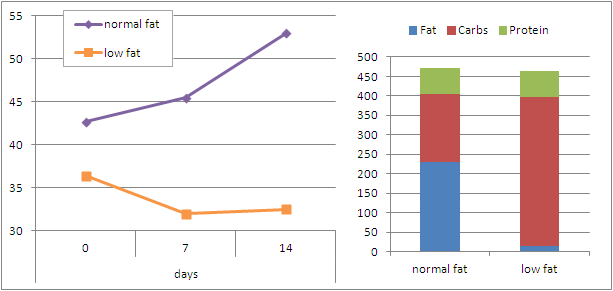
Figure 1: Changes in hepatic vitamin A (retinol) and carotenoid stores in gerbils after 14 days on high fat (30%) vs. low fat (10%) diet (Deming. 2000)
In that, the concomitant presence of both dietary fat and carotenoids in a meal is a necessary prerequisite for the absorption of vitamin A, also because the fatty acids will trigger the conversion of of beta-carotene into vitamin A and its subsequent absorption via the lymphatic system (Ribaya‐Mercado. 2002). It is thus not surprising that animal studies by Lakshman et al. (1996) and Deming et al. (2000; see Figure 1) suggest that low fat diet can lead to a depletion of the vitamin A tissue stores even if the serum levels remain constant. The amount of fiber in the diet, on the other, has no influence the absorption of vitamin A (Mills. 2009).
Interestingly enough, the provision of the fat blocker Orlistat reduces the absorption of vitamin A only insignificantly, as a 1996 paper by Angela T. Melia, Susan G. Koss‐Twardy, and Jianguo Zhi would suggest (Melia. 1996).
E
Which takes us right to vitamin E, the absoprtion which is - in spite of being "blocked" by the fat blocker orlistat (Melia. 1996) - less susceptible to the absence of dietary fat than you may think. Annet JC Roodenburg, Rianne Leenen, Karin H van het Hof, Jan A Weststrate, and Lilian BM Tijburg do in fact argue that the optimal intake of vitamin E requires only "a limited amount" of dietary fat (Roodenburg. 2000).
Figure 2: Vitamin E serum levels after 7 days on control (low fat, 3g) or high(er) fat (36g) diet with and without supplemental vitamin E (Roodenburg. 2000)
As you can see in Figure 2. A minimum intake of only 3g per day was sufficient to keep the vitamin E levels stable. The short study period of 7-days (each) and the absence of measures of tissue concentration of vitamin E do yet reduce the practical relevance of the data, Roodenburg et al. present in their Y2k paper in the American Journal of Clinical Nutrition.
The PUFA advantage: Aside from the issue of serum vs. tissue levels, there is yet another experimentally verified fat vitamin E and fat carotenoid interactions we should take into consideration, when we are talking about "optimizing" our dietary vitamin E supply; and that's the type of fat we consume: Dietary fats with increased ratio of unsaturated to saturated fatty acids enhance absorption of carotenoid and vitamin E by increasing both efficiency of micellarization and lipoprotein secretion (Chitchumroonchokchai. 2010).
If you take a look at the high prevalence of vitamin E dieficiency among the fat (and PUFA) "loving", or at least eating, majority of Americans, it does yet become obvious that a lack of dietary fat is not just theoretically, but also practically not exactly the #1 reason you may become deficient in tocopherols and -trienols. That the latter is an increased demand due to chronic inflammation and the (over-)consumption of exactly those PUFAs that come with a shitload of vitamin E in nature, for a reason would yet be a topic for another SuppVersity article and thus something we will skip to fast forward to ...
K
...Vitamin K, obviously. Vitamin K is a relative newcomer to the public's understanding of the alphabet soup. Aside from being it a good tool to rip customers vitamin K, or rather K1 (plant sources) and K2 (animal sources) are thus also the only fat soluble vitamins not everyone knows. The fact that the amount of phylloquinone (K1) that makes it into your blood stream is ~70% reduced if you eat your spinach without fat (Gijsbers. 1996).
And if we take the results researchers from the Gifu University School of Medicine present in a 1996 paper in the Journal of Pharmacological Sciences, as a reference, the amount of fat you need to optimally absorb your K2 (menaquinones), is not exactly low.
Figure 3: For optimal absorption of K2, there has got to be a huge amount of fat in the meal - but who wonders. K2 comes with a high amount of fat (Uematsu. 1996)
Uematsu et al. had to supply their subjects, who consumed otherwise identical test meals with 8.8, 20.0 and 34.9g of fat in them with the maximal (i.e. 35g) of fat before the K2 absorption maxed out. In that the total area under the curve did not really differ between those subjects who consumed the K2 before and those who took it immediately after the test meal.
That's a pity, 'cause a high intake of vitamin K (menaquinone from animal sources) has been associated with a 27% reduced risk of developing heart disease (Geleijnse. 2004), an ailment of which many still believe that it was brought about by the fat they need to optimally absorb their vitamin K.
D
For vitamin D, our last "V" on the list, things look differently. For one, everybody knows about this miracle vitamin and for two, it may be "fat soluble", but the amount of fat that's required to optimally absorb it turned out to be much lower than previously thought (see "A Fat D-Ficiency! Do You Really Need More Vitamin D or Simply More Fatty Foods? Study Shows, Even 50.000 IU of Vitamin D3 Useless, When You Ingest It Without Fat. " | read more).
Actually you could argue that it's not fat, but cholesterol that should be essential for optimal D levels. It's not necessary to absorb supplements you should not be taking, but rather as a raw material that's used to produce vitamin D in the skin, once the latter is exposed to the sun. The allegedly logical assumption that statins which lower the production of endogenous (=your body's own) cholesterol would lower vitamin D levels, however, has been refuted in study investigating the effects of fluvastatin and rosuvastatin, of which the latter actually increased the 25-OHD levels (probably due to anti-inflammatory effects and a reduced use of vitamin D as an acute phase reactant | learn more)
In fact, Niramitmahapanya et al. found in 2011 that it's not necessarily a high amount, but rather the right type of fat that determines if and how much of the vitamin D you take in capsule form or find in comparably low amounts in your foods that determines how much of the vitamin D actually makes it into your bloodstream:
"The change in plasma 25OHD (nanograms per milliliter) during vitamin D supplementation was positively associated with MUFA, (β = 0.94; P = 0.016), negatively associated with PUFA, (β = −0.93; P = 0.038), and positively associated with the MUFA/PUFA ratio (β = 6.46; P = 0.014)."
In plain English this means, that the "good" seed and vegetable oils with their high PUFA content will effectively inhibit the absorption of vitamin D - an observation that adds to the many reasons the modern sedentary, sun-avoiding, sun-screen using, soybean oil (MUFA:PUFA = 0.4) guzzling American is low in or quasi devoid of vitamin D.
Figure 4: 25(OH)D levels of 30 healthy men and women after ingestion of 50.000IU vitamin D3 supplement in conjunction with a normal or low fat breakfast (Raimundo. 2011)
Against that background it's not surprising that you will not find a conclusive answer to the question how much fat you actually need. In a study that used a fatty meal with soybean oil in it, the effect would be totally different from one in which the subjects consumed meals that were made with sunflower oil, an oil with a MUFA:PUFA ratio >1. In view of the results Gnadinger et al present in a recent appear it does still seem appropriate to consume at least some fat alongside your vitamin D supplements. As far as the food-borne vitamin D is concerned, you don't have to worry, anyways. Foods that are high in D3 usually come with all the fat you need to absorb it.
How much fat, exactly you would need to make the most of dietary and supplemental vitamin D, on the other hand, is still not known. The previously mentioned data from the study by Raimondo et al. (see Figure 4, to the right) I wrote about in "A Fat D-Ficiency" is obviously still valid. The extremely high amount of vitamin D (50,000IU!) could yet require a correspondingly high amount of fat to be optimally absorbed and the fact that the fat in the study came from a "vegetable margarine" with an undisclosed ratio of MUFA:PUFA does not make the real-world effects any more predictable.
So what do I need to optimally absorb my "fat soluble" vitamins?
Vitamin A & carotenes require relatively high amounts of fat for optimal absorption.
Vitamin D absorption benefits from additional fat in the diet. While we don't know the optimal amount, we do know the optimal type: A high MUFA, low PUFA fat (the effects of saturated fat are unknown, but I gather they will be positive, as well).
Vitamin E requires only minimal amounts of fat (~3g) for optima absorption.
Vitamin K appears to be most fat hungry. The more fat you have in a meal, the better it is absorbed. If you supplement, always take the pills with your highest fat meal in the day.
Bottom line: If you take a look at the natural sources, it should be obvious. The fat soluble vitamins are meant to be consumed with fat... well, not really. Carotenes (pre-vitamin A), one of those vitamins for which the presence of dietary fat in a meal is most important do not necessarily come with their own "absorb me better"-portion of fat. Your carrots, pepper, and other high carotene veggies and fruits do thus require a butter, olive oil or cream topic not just to be absorbed, but - more importantly - to get converted to retinol aka "active vitamin A".
Vitamin E, on the other hand, requires much lower amounts of fat to be absorbed than many of you may have thought. In fact, you could argue that good vitamin E sources are not high in fat to facilitate the absorption of vitamin A, but rather the other way around: Soybean oil (my absolute favorite poison ;-) is high in vitamin E to make sure that whoever consumes it does not die immediately from the pro-inflammatory omega-6 load it contains.
Which takes us right to the 18-20g and 12-15g of PUFAs the average US man and woman consume on a daily basis (Kris-Etherton. 2000) and their negative impact on the absorption of the already low amounts of dietary vitamin D in a diet that rarely contains the optimal amount of 35g of fat in meal that actually has a significant amount of vitamin K the absorption of which would be improved by the presence of this allegedly unhealthy and fattening macronutrient.
References:
Chitchumroonchokchai, Chureeporn, et al. "Dietary fats with increased ratio of unsaturated to saturated fatty acids enhance absorption of carotenoid and vitamin E by increasing both efficiency of micellarization and lipoprotein secretion." FASEB J 24 (2010): 539-3.
Deming, Denise M., et al. "Amount of dietary fat and type of soluble fiber independently modulate postabsorptive conversion of β-carotene to vitamin A in Mongolian gerbils." The Journal of nutrition 130.11 (2000): 2789-2796.
Geleijnse, Johanna M., et al. "Dietary intake of menaquinone is associated with a reduced risk of coronary heart disease: the Rotterdam Study." The Journal of nutrition 134.11 (2004): 3100-3105.
Gijsbers, Birgit LMG, Kon-Siong G. Jie, and Cees Vermeer. "Effect of food composition on vitamin K absorption in human volunteers." British Journal of Nutrition 76.02 (1996): 223-229.
Goodman, Dew S., et al. "The intestinal absorption and metabolism of vitamin A and beta-carotene in man." Journal of Clinical Investigation 45.10 (1966): 1615.
Jayarajan, P., Vinodini Reddy, and M. Mohanram. "Effect of dietary fat on absorption of β carotene from green leafy vegetables in children." Indian journal of medical research 137.5 (2013).
Kris-Etherton, P. M., et al. "Polyunsaturated fatty acids in the food chain in the United States." The American journal of clinical nutrition 71.1 (2000): 179S-188S.
Lakshman, M. R., et al. "The effects of dietary taurocholate, fat, protein, and carbohydrate on the distribution and fate of dietary β‐carotene in ferrets." (1996): 49-61.
Melia, Angela T., Susan G. Koss‐Twardy, and Jianguo Zhi. "The effect of orlistat, an inhibitor of dietary fat absorption, on the absorption of vitamins A and E in healthy volunteers." The Journal of Clinical Pharmacology 36.7 (1996): 647-653.
van het Hof, Karin H., et al. "Dietary factors that affect the bioavailability of carotenoids." The Journal of nutrition 130.3 (2000): 503-506.
Raimundo, Fabiana Viegas, et al. "Effect of high-versus low-fat meal on serum 25-hydroxyvitamin D levels after a single oral dose of vitamin D: a single-blind, parallel, randomized trial." International journal of endocrinology 2011 (2011).
Ribaya‐Mercado, Judy D. "Influence of Dietary Fat on β‐Carotene Absorption and Bioconversion into Vitamin A." Nutrition reviews 60.4 (2002): 104-110.
Roodenburg, Annet JC, et al. "Amount of fat in the diet affects bioavailability of lutein esters but not of α-carotene, β-carotene, and vitamin E in humans." The American journal of clinical nutrition 71.5 (2000): 1187-1193.
Uematsu, Toshihiko, et al. "Effect of dietary fat content on oral bioavailability of menatetrenone in humans." Journal of pharmaceutical sciences 85.9 (1996): 1012-1016.
Is there a "bacterial link" between prostate issues and pregnancy complications? Are both promoted by a messed up microbiome?
You know what a hypothesis is, right? Well, in that case the title of the scientific journal "Medical Hypothesis" should tell you that the two studies the "results" of which I am about to present in the following brief write-up are hypothetical. This means, it will require further research efforts to prove that vitamin K is the missing link in prostate health and to confirm that instestinal dysbioses (=messed up gut microbiome) are at the heart of the an ever-increasing number of pregnancy complications.
As of now, both assumptions are based on scientific evidence, the "last" 100% convincing evidence, however, is still missing.
As Micheal Donaldson points out in his 2015 paper in the aforementioned journal, age-related prostate enlargement is very common in Western societies, and the causes of benign prostate hyperplasia (BPH) have been diligently sought after, there is no biological, mechanistic explanation dealing with the root causes and progression of this very common disorder among men. Unfortunately, all currently available "treatments" don't actually deserve being referred to as "treatment", because they are at best achieving symptomatic relief.
The absence of a BPH and thus probably even a prostate cancer solution is, as Donaldson rightly points out, not the least due to our incomplete understanding of cause of the disease.
Varicoles are defined as a mass of varicose veins in the spermatic cord.
"However, recent advances have shown that even subclinical varicoceles, which are more common than generally realized, cause retrograde blood flow from the testes past the prostate gland causing over a 130-fold increase in free testosterone in the veins near the prostate.
By treating the varicoceles via embolization of the internal spermatic vein and its communicating and connected vessels the prostate enlargement can be reversed with corresponding symptomatic relief" (Donaldson. 2015).
So if those varicose veins in the pampiniform venous plexus, varicoceles, are the direct cause of BPH, what causes the cause? That means: Why do varicoceles develop in the first place?
Now this is where vitamin K comes into play
Recent research has uncovered the role of vitamin K in the calcification of varicose veins as well as a role in the proliferation of smooth muscle cells in the media layer of the vein wall. Vitamin K is intimately involved in the formation of varicose veins. The hypothesis Donaldson presents in his latest paper is thus
"[...] that poor prostate health is essentially a vitamin K insufficiency disorder. By providing vitamin K in the right form and quantity, along with other supporting nutrients and phytochemicals, it is likely that excellent prostate health can be extended much longer, and perhaps poor prostate health can be reversed" ().
A protective role for vitamin K with respect to advanced prostate cancer was already found in the Heidelberg cohort of the EPIC study.
Figure 1: In fact, studies indicate that there is an inverse association between the intake of menaquinones, but not that of phylloquinone, and prostate cancer. Further studies of dietary vitamin K and prostate cancer are warranted (Nimptsch. 2008).
In his paper Donaldson argues that this hypothesis must be further evaluated in studies examining the connection between vitamin K and varicoceles, and also by examining the connection between varicoceles and benign prostate hyperplasia. If it is then found to be true, management of prostate health will be radically altered.
"Rather than focusing on prostate health as a hormonal imbalance, prostate enlargement will be seen as a result of poor health of the veins in general and the internal spermatic veins in particular" (Donaldson. 2014).
Factors which promote the health of the veins will become a greater focus of research, including the role of vitamin K. This leads Donaldson to conclude that "the emerging understanding of the cause of BPH will empower men to take care of their bodies" in order to "enjoy much better health through their entire lifespan" (Donaldson. 2015).
From vitamin K intakes to the gut microbiome
In contrast to the promises in the shiny ads for probiotics, we are still miles if not light years away from understanding the complexities of our own gut microbiome well enough to effectively prescribe the "right" supplemental gut bacteria at the "optimal" dosage for specific conditions. What we do know, though is that the gut microbiota is intimately involved in numerous aspects of normal human physiology, including nutrition and metabolism, immunomodulation and behavior and stress response.
Figure 2: Maternal physiological adaptation and maladaptation during pregnancy. (A) Upon pregnancy challenge, normal physiological adjustments occur in maternal body, including cardiovascular, neuroendocrine, metabolic and immunological adaptations. These physiological changes are essential for promoting pregnancy success; (B) If disturbance occurs in any key link of normal physiological changes, abnormalities in these physiological changes would describe maternal maladaptations, such as maternal-fetal immune rejection, cardiovascular maladaptation and metabolic syndromes (Zhang. 2015).
There is also significant evidence that intestinal dysbiosis can be a contributing cause of many diseases, altering the function of both near and far organ systems.
It would thus not be surprising if a messed up gut microbiome would affect the health of both mother and child during pregnancy. During the ~280days of pregnancy, the maternal body undergoes dramatic physiological changes to support the growth of fetus-placenta. During that time, any imbalances of the intestinal microbiome aka "intestinal dysbiosis" may directly or indirectly disturb the remodeling of physiological balance, leading to maternal maladaptation.
Thus, intestinal dysbiosis, i.e., altered composition or metabolism of microbiota may adversely affect pregnancy outcome and lead to pregnancy complications via disrupting maternal adaptation.
As Zhang et al. point out, there is indeed an established risk of developing pregnancy disorders for pregnant women with potential maladaptations; and the latter are increasingly observed in clinical cases with the most compelling evidence being observed in studies on overweight or obese mothers for whom Collado et al. report a distinct composition of gut microbiota during pregnancy in overweight vs. normal-weight women (Collado. 2008).
Figure 3: Ratio of bacteria counts (overweight / normal weight women | Collado. 2008).
As it is usually the case for "medical hypotheses", comprehensive studies about the complex interrelationship between intestinal dysbiosis and maternal maladaptations in the context of pregnancy are relative lacking. Still, based on the existing evidence it appears reasonable to speculate "that the dysbiosis caused by potential risk factors in pregnancy may induce these maternal maladaptations" (Zhang. 2015).
From "pregnancy complications" to autism: Did you know that there is a definite link between a messed up gut microbiome and autism? In their 2013 paper Mulle, Sharp, and Cubells investigate the established and putative effects of the human gut microbiome on the development of autism and conclude that the existing evidence clearly supports "associations between gut microbial population profiles and ASD, and the data from research on rodents demonstrating myriad ways in which the gut microbiome influences neurobehavioral development, combine to suggest that further research on the trajectory of microbiome development in children at risk for ASD will be fruitful" (Mulle. 2014).
In fact, physiological changes that occur during pregnancy first alter the gut microbial community, which, in turn, creates a positive-feedback loop sustaining maternal physiological adaptations seen in normal pregnancy.
Figure 4: A schematic diagram illustrating our proposed model (Zhang. 2015).
"Considering that there are no studies investigating the role of gut microbiota in pregnancy complications development, our proposal may provide novel insights into the roles of gut microecosystem in pregnancy-complicated conditions as well as shed new light on the management of pregnancy in situations of intestinal dysbiosis.
We hypothesize that pregnant women with dysbiosis are more prone to develop pregnancy disorders due to maternal maladaptations that have deleterious effects on the balance of maternal-fetal interactions. Maternal maladaptations could be associated with fetus-placenta restriction and maternal systemic damage, typical features presented in pregnancy complications " (Zhang. 2015).
Accordingly, Zheng et al. believe that "imbalance in gut microbiota, intestinal dysbiosis, may contribute to maternal maladaptations in pregnant women, which are correlated to adverse pregnancy outcomes" (Zheng. 2015 | see Figure 4).
These are only hypotheses, but both are convincing enough to spark an interest in further scientific investigations into (a) the role of vitamin K and the microvasvulature in prostate health and, eventually, the development of prostate cancer, and (b) the importance of a healthy gut microbiome, as well as means to (re-)establish it during pregnancy.
Artificial & natural sweeteners alter the human gut microbiome in hitherto not fully elucidated ways | more
That's it? Well not exactly. I mean vitamin K and gut dysbiosis. Does this ring a bell? No? Well, Escherichia coli plays a significant role in the production of vitamin K2, i.e. the cancer protective menaquinones in the human gut (Rizkallah. 2010).
Thus, eventually, both of the previously presented hypotheses may thus eventually support what Hattori and Taylor pointed out in their 2009 paper in DNA Research: "The human intestinal microbiome [is the] new frontier of human biology" (Hattori. 2009) | Comment on Facebook.
References
Collado, Maria Carmen, et al. "Distinct composition of gut microbiota during pregnancy in overweight and normal-weight women." The American journal of clinical nutrition 88.4 (2008): 894-899.
Donaldson, Michael. "Vitamin K: The Missing Link to Prostate Health." Medical Hypotheses (2015): Ahead of print.
Hattori, Masahira, and Todd D. Taylor. "The human intestinal microbiome: a new frontier of human biology." DNA research 16.1 (2009): 1-12.
Mulle, Jennifer G., William G. Sharp, and Joseph F. Cubells. "The gut microbiome: a new frontier in autism research." Current psychiatry reports 15.2 (2013): 1-9.
Nimptsch, Katharina, Sabine Rohrmann, and Jakob Linseisen. "Dietary intake of vitamin K and risk of prostate cancer in the Heidelberg cohort of the European Prospective Investigation into Cancer and Nutrition (EPIC-Heidelberg)." The American journal of clinical nutrition 87.4 (2008): 985-992.
Rizkallah, Mariam R., Rama Saad, and Ramy Karam Aziz. "The human microbiome project, personalized medicine and the birth of pharmacomicrobiomics." Current Pharmacogenomics and Personalized Medicine (Formerly Current Pharmacogenomics) 8.3 (2010): 182-193.
Zhang, Dongxin, Yinping Huang, Duyun Ye. "Intestinal dysbiosis: an emerging cause of pregnancy complications?" Medical Hypotheses (2015): Ahead of print.
Until not too long ago, scientists thought vitamin D was all about bone. Every follower of this blog knows that this is a way too narrow perspective on what turned out to be more of a hormone than a vitamin. A recent study (Sogabe. 2011) on the effects of vitamin K supplementation in mice does now suggest that vitamin D's "cofactors" phylloquinone (PK, vitamin K1) and menaquinone-4 (MK-4, vitamin K2) have been similarly mistaken.
Figure 1: Weight of visceral fat pad in g after 85 days of phylloquinone (PK, vitamin K1) or menaquinone-4 (MK-4, vitamin K2) supplementation (Sogabe. 2011)
Japanese scientists, who wanted to investigate the effect of 85 days of vitamin K supplementation (PK: 600 mg/kg; MK-4: 600 mg/kg) on bone development in mice, were surprised to find that vitamin K did not only improve bone mass and structure, but that...
the addition of PK or MK-4 significantly decreased the total fat accumulation (p < 0.01 and p < 0.05, respectively), and serum triglycerides were reduced by 48% in the PK group and 29% in the MK group compared with the control.
This is an interesting result, which is not related to increases in growth hormone release, as one might expect in view of the bone-building effects of vitamin K. The scientists speculate: "The effect of vitamin K on fat mass could be mediated through adiponectin regulation which itself has been found to be associated with fat mass." This, as well as the dose response relationship (the human equivalence dose for the amount of PK and MK-4 used in the study would be about 7.5g!) warrant further investigation - and, as always, the SuppVersity is the place to read about it, first!