.

.
marylin monroe
Showing posts with label anorexia. Show all posts

The Female(?) Athlete Triad - Part I/III: How An Evolutionary Advantage Can Turn Its Ugly Face On Both Sexes!

The cover of the Vogue is usually not the place to turn to, if you are looking for role-models, but let's be honest: Do you believe Hope Solo or Serena Williams suffer from amenorrhea or their fellow Olympian Brian Lochte from low testosterone? I don't think so. So, there must be something "real" athletes do that way too many weekend warriors, who are in it, often to look just like their stars don't do - and in this multi-part SuppVersity Special, we are going to figure out what this may be.
I guess some of you will already have believed that I had forgotten about the requested and promised article on the "Female Athlete Triad". As you can easily see, this is not the case and still, I must admit that it will take another week until I will eventually have make good on my promise, as this is only the first part of a multi-part feature.

The main reason I decided to split things up is that I did not want you to simply skip on the fundamental information you will get today and fast forward to the potential solutions to the problem, I will present in the next installment.

After all, the idea of the SuppVersity is not to present cookie-cutter guru advice that may or may not work for you, but rather to put you into a position, where you do at least understand, at best have the skills to question, modify and tweak any exemplary "plans of attack" I will be outlining in upcoming the second part of this series... and if my past efforts to provide you with a basic understanding of your own metabolism have not totally failed, I would suspect that many of you will be able to come up with their own preliminary conclusions after reading this lengthy, but as I hope informative and not overtly complicated first part of the series.

"Female athlete triad:" How the problems start with a false label, already

But my bones are still strong! Specifically the inclusion of osteoporosis as an obligatory criteria for the diagnosis of the female athlete triad is nonsensical and was repeatedly criticized (e.g. Kahn. 2002), as it excludes a large, if not the major part of women (and men) who suffer from a syndrome the prevalence and consequences of which are thus largely underestimated. Moreover, in weight bearing sports, for example the load alone will counter the occurrence of osteoporosis, while other consequences like musculoskeletal injuries will be more prevalent.
So, let's initially take a look at what we are actually talking about here. The phenomenon itself is often somewhat misleadingly labeled as the "female athlete triad" (FAT; or AT w/out the sex-specificity), a term which falsely implies that it was sex-specific and men were immune to it and, what may be even worse, that it would be quite easy to diagnose as it comprises a "triad" of
  • low energy availability / disordered eating
  • amenorrhea, and
  • osteoporosis
Unfortunately, things are much more complex than that and when an athletes health has been deteriorated so much, already, that amenorrhea (or very low testosterone in men) and osteoporosis are already showing their ugly faces, reversing the low energy availability and / or disordered eating, which usually goes hand in hand with months of overtraining, may be enough to keep the status quo, but won't reverse the amenorrhea and the underyling hormonal imbalance.

How prevalent is this misery?

Even if we don't extend our definition to include overall exhaustion and stagnating performance on the "harmless" and "heart disease" and "sudden cardiac death" on the other "life-threatening" end of the continuum, but simply include low testosterone levels and minor menstrual irregularities into our definition of AT (athlete triad), the answer to the above question is "It is rampant!" So rampant in fact that Luigi Di Florence chose the title "Does the high performance athlete need hormone replacement?" for a talk he held at a recent conference. In the respective abstract (a paper has not yet been published), he states:
Figure 1: Moroccan Sahraoui women still have a very different beauty-ideal than Western women. According to the data Rgubi et al. collected in 2006, their female beauty-ideal is heavier than the "health ideal". There is however a clear trend towards a "westernization" among the younger generation (data based on Rguibi. Now, tell me, where would you place yourself, your beauty-ideal and your health ideal on the graphic in the upper left hand of this figure?
"Exercise per se is associated to the release of different hormones: acute exercise stimulates an acute hormones secretion (e.g. catecholamines, growth hormone, CRH-ACTH-cortisol, testosterone) while chronic exercise (training) is able to modify hormones secretion at rest and their activation during acute exercise. [...] besides symptomatic classical diseases or conditions that may reduce/alter the qualitative/quantitative hormones secretion, serious clinical concerns exist for asymptomatic endocrine hypo-function (e.g. sub-clinical hypogonadism, growth hormone deficit and hypothyroidism), particularly in adult athletes. For example, in master athletes we observed an high prevalence of undiagnosed severe (12%) and mild (18%) hypo-testosteronemia frequently in the absence of clinical symptoms. [...] Unfortunately, few studies evaluated the prevalence of reduced hormones secretion in athletes and the concept of adapted hormone replacement in high competitive athletes." (Di Luigi. 2012; my emphases)
The absence of a clearcut definition of "the female athlete triad", the ignorance towards the existence of corresponding problems in male athletes (of all age groups!) and the vast differences within different study populations makes it very difficult to quantify, how many men and women actually suffer from AT. The little data we have is obviously sex-specific and of rather qualitative nature, as the following citation from Hobart 2000 goes to show you:
Although the exact prevalence of the female athlete triad is unknown, studies have reported disordered eating behavior in 15 to 62 percent of female college athletes. Amenorrhea occurs in 3.4 to 66 percent of female athletes, compared with only 2 to 5 percent of women in the general population. (Hobart. 2000)
If we take the latest NCAA numbers as a baseline (191,131 female athletes in the year 2011) and multiply them by 2x to include those lonesome gymrats and crossfitters out there who are often even more likely to overdo it than their co-ed peers who usually work with a more or less qualified coach, of whom you would expect that he or she is able to call a halt before it is too late, we are talking about ~13,000-252,000 young women and an undisclosed number of young men, here!

"Sh..Sh.. let's not talk about it!"

Pah, that's all not problematic! Really? A 2002 study from the Bell State University found that aside from the menstrual irregularity, which have been reported by 31% of the athletes not using oral contraceptives, both, muscle and bone injuries were rampant: 65.9% and 34.3%, in the aesthetic versus endurance and team/anaerobic sports, respectively. (data based on Beals. 2002)
Against that background it is almost careless, how little this topic is talked about - especially among athletes and fitness junkies! No wonder that only 10% of the 191 female exercisers (age 18-40 yr), engaging in ≥2 hr/wk of strenuous activity, Miller et al. questioned for their 2012 study on "the knowledge, attitudes, and behaviors of regularly exercising adult women in Australia", could name the initially mentioned three components of the female athlete triad:.
"Regardless of reported history of stress fracture, 45% of the respondents did not think that amenorrhea (absence of menses for ≥3 months) could affect bone health, and 22% of those involved in lean-build sports would do nothing if experiencing amenorrhea (vs. 3.2% in non-lean-build sports, p = .005)." (Miller. 2012; my emphases)
This lack of knowledge and - in parts - even downright ignorance towards the problem certainly raises the question:

"How do I actually realize I am about to develop the (female) athlete triad (AT)?"

I guess, we can derive a (not the!) answer to this question if we take a closer look at an overview of the etiology that has been part of a 2002 analysis by Melinda M. Manore from the Department of Nutrition and Food Management at the Oregon State University in Corvallis, Oregon, USA (see figure 2).
Figure 2: Etiology of the (female) athlete syndrome (and related pathologies) and signs you have to observe, in oder not to to realize what you have been doing when the potentially life-threatening long-term conequences, i.e. bone loss, cardiovascular disease and hardly reversible issues with reproductive function are showing (inspired by Manore. 2002)
I pimped the original graphic with a couple of remarks that should make one thing pretty obvious: At the very moment, when the "classic" features become obvious, it's actually already to late. The best you can hope for, when your menses start to disappear is that neither your cognitive abilities, nor your cardiovascular or bone health are not yet compromised, as well.

There is hope - even after the horse has bolted

"Men can't be anorexic?!" False! According to the latest data from the South Carolina Department of Mental Health there are currently 1,000,000 male US citizens suffering from eating disorders. Their estimated stake among anorexics and bulemics is between 10-15%. Among adolescents, anorexia is the 3rd most common chronic illness, and many of it's physical features are identical to those of the "female" athlete triad - not the least due to the fact that excessive exercise is often part of the pathology. The boundaries between them are fluid. The mortality rate associated with anorexia nervosa is 12x higher than the death rate of ALL causes of death: 5 – 10% of anorexics die within 10 years after contracting the disease; 18-20% of anorexics will be dead after 20 years and only 30 – 40% ever fully recover.
The good news is that our bodies (male and female) are self-repairing machines, evolutionary designed to take beating after beating - esp. if those "beatings" resemble periods of famine. From studies in anorexic men(!) and women we know that many of the pathological features of self-cannibalism (this, and nothing else is what your body is doing, when you constantly deprive it of an adequate supply of energy, as it is the case in the accute phases of the athlete triad) are reversible.

Mont et al. who have been following 31 severely underweight anorexic adolescents with body mass indexes of 15.2 +/- 2 kg/m², sinus bradycardia (=abnormally slow heart beat), decreased left ventricular mass, and diminished thickness of cardiac walls in 35%, 93% and 70%, respectively, report for example:
"After refeeding, a significant decrease in QT interval (p <.05) and QT dispersion (p <.01) was observed. Echocardiograms showed an increase in cardiac diameters (p <.01), left ventricular mass (p <.001), and cardiac output (p <.001). There was also an improvement in the exercise capacity (p <.05) and a normalization of the heart rate and heart rate variability (p <.05)." (Mont. 2012)
Allegedly, few athletes will maneuver themselves into a situation, where they are actually so weak that they can barely walk (which is unfortunately the case for way too many young anorexic patients), their susceptibility to sudden cardiac death and other CVD-related diseases is probably even higher, due to the exercise induced chronic overload of their cardiovascular system.

With the athlete's triad an evolutionary advantage is turning is turning against us

Athlete or not, even these severe physical abnormalities usually disappear with adequate rest, lots of patience and, most importantly, a progressive increase in energy intake (the increases in lean mass, i.e. muscle, organ and bone!, wants to be fed and the the metabolic switch from "energy save" to "normal" mode will increase the energetic demands even more). In fact, even in severely anorexic patients, where most of these pathologies are more severe than in athletes, renal abnormalities (Boag. 1985), atrophy of the bone marrow (Steinberg. 1987; Orlandi. 2000), cognitive impairment (Mikos. 2008) and most of the other functions that are related to survival (not reproduction!) usually recover with adequate energy intake, alone.

Without the evolutionary preserved, catecholamine and glucocorticoid driven "hunger high" our ancestors needed to keep going until they finally found something to eat, neither anorexia (AN), nor the athlete triad (AT) would "work".
The fact that many, if not most of the patients feel that the latter would not help and they would "just become fat", has both psychological, as well as physiological roots, which are related to (a) a distorted body image (which has by the way nothing to do with "being crazy", let alone "dumb" or "stupid") and (b) the loss of the "hunger high", which has previously been masking all the ailments and the total exhaustion and will begin to fade after only 1-2 days of sufficient energy supply and rest.

For many, it does in fact feel, as if they had just been hit by a truck, but in fact very truck has rolling right over them for years now and the person behind the steering wheel, was nobody else than the patient him-/herself.

Without the hilarious amounts of glucocorticoids (cortisol) and excitatory neurotransmitters their bodies seize producing, now that they are no longer necessary to keep the brain from dying a hypoglycemic death and the patients able and motivated to "seek for food" (another evolutionary preserved mechanism, by the way), all the weight of years of over-training and under-eating hits them all at once. In conjunction with the unwanted, but inevitable weight gain, of which Golden et al. state that it comes - specifically in this early phase - almost exclusively from increases in body water, organ, bone and muscle mass (Golden. 2004), this often triggers a relapse into the old "cosy" stress pattern of under-eating and over-exercising. And what's really nasty, here, is that this will provide (felt) "relief" within days, if not hours and via the exact same mechanism that has kept the patients going (and later alive!) over the past months and years: HUNGER (not workout) STRESS!

Not BMI, not fat, not exercise, but simply a constant state of energy deprivation is the culprit

Since we are all aware that weight gain does not happen over night, but the aforementioned perceived aggravation of fatigue can, it should be obvious that neither a low body weight, let alone the amount of body fat a person, man or women, is carrying on his/her frame (scientists refer to this as the "body composition hypothesis), nor the exercise induced stress ("stress hypothesis"), of which I have just outlined that it is a necessary and life-saving reaction to starvation, are at the root of the poblem. The true causative factor is (at least according to the current paradigm) the lack of a sufficient and constant supply of readily available energy (we are not talking about leafy greens and chicken breast, here!).

Evidence against the "body composition" hypothesis: After a surgical reduction of the stomach volume even obese women can develop amenorrhea
The most convincing evidence for the so-called "energy availability hypothesis", specifically in view of the hormonal aspects of the athlete triad, comes from a 1999 study on the short- and long-term outcomes of a surgical reduction of the stomach volume in severely obese women. Due to their artificially induced physical inability to consume adequate amounts of energy, these women, who were even after they had lost massive amounts of body weight still obese (BMI > 35!) developed amenorrhea (Di Carlo. 1999).

In this context, Anne B. Loucks who worked in the Department of Biological Sciences of the Ohio University in Athens, back in 2005, points out:
"Interest in the body composition hypothesis was rejuvenated several years ago by the discovery of leptin. Because leptin is secreted by adipose tissue cells, it was originally thought to signal information about the size of body fat stores. Rapid and profound declines in leptin were soon observed in response to fasting and dietary restriction, how-ever, and similarly extreme increases were observed in response to overfeeding and refeeding after energy restriction, all before changes in adiposity could occur. These observa-tions led to the revised hypothesis that leptin actually signals information about dietary energy intake. Since then, however, we have shown that the level and diurnal rhythm of leptin actually depend on energy availability (defined as dietary energy intake minus exercise energy expenditure) and that exercise itself has no suppressive effect on leptin beyond the impact of its energy cost on energy availability." (Loucks. 2005; my emphases)
In other words, the same hypothesis that initially pointed towards the amount of leptin secreting adipose tissue as a regulator of the hormonal balance in amenorrhetic women (the "body composition hypothesis"), does now, that it appears clear that energy availability and not body fat stores determine the secretion of leptin, clearly indicate that body fatness is a subordinate (as being the consequence of constant dieting) indicator of a persons susceptibility to suffer from hormonal imbalances, at best.

For similar reasons, the "stress hypothesis" which points with a finger at the exercise induced increases in cortisol is bullocks, as well. After all, those increases in cortisol and catecholamine expression are - just like low leptin levels - a necessary and healthy adaptation to the absence of a constant and adequate supply of energy. Without the glucocorticoids (just in case you still don't get it: "gluco" as in "glucose" <= the stuff everybody is scared about these days) no athlete or anorexic patient would be able to maintain normal blood glucose  - without any cortisol, they would simply die.

Evidence for the "energy availability hypothesis"

Figure 4: 24h-LH profile in healthy women after 5 days of normal (top) as well as calorically restricted (-33, -66, -87%) nutrient intake (arrows indicate meals, the black bar indicates sleep).
In fact, Loucks and her team at the Ohio University have conducted a whole series of studies the results of which support the "energy availability hypothesis" and I want to conclude this first part of the two-part series with the one study that segues directly into part II of this series, which will zone in on the the problem of persistent hormonal imbalances and their dietary and behavioral underpinnings.

In this regard, the profound disturbances in the pulsatile release of luteinizing hormone (LH) from the gonadotroph cells in the anterior pituitary gland, Loucks et al. observed after only 5 days of
  • 33% - lower LH amplitude
  • 66% - increased amplitude decreased frequency
  • 77% - further decrease in frequency + increase in amplitude
calorie restriction, the scientists observed "regardless of whether energy availability was reduced by dietary restriction alone or by exercise energy expenditure alone" (Loucks. 1998) set the scene for a discussion that will be relevant for both, male and female physical culturists.

Don't forget to come back next week for part II!

In other words, if you want more about the role of the thyroid gland, of adiponectin and insulin sensitivity, of ghrelin and growth hormone, of insulin and IGF-1 and the circadian clock and intermittent fasting in the etiology of the athlete triad and which tweaks to your nutrition, exercise and supplementation regimen can help you not end up in a viscous circle that will not just hamper your perfomance, but compromise your physique and physical and psychological well-being, come back next Sunday for part II of the SuppVersity Athlete's Triad Special.
    References
    • Argente J, Caballo N, Barrios V, Muñoz MT, Pozo J, Chowen JA, Morandé G, Hernández M. Multiple endocrine abnormalities of the growth hormone and insulin-like growth factor axis in patients with anorexia nervosa: effect of short- and long-term weight recuperation. J Clin Endocrinol Metab. 1997 Jul;82(7):2084-92.
    • Beals KA, Manore MM. Disorders of the female athlete triad among collegiate athletes. Int J Sport Nutr Exerc Metab. 2002 Sep;12(3):281-93. 
    • Boag F, Weerakoon J, Ginsburg J, Havard CW, Dandona P. Diminished creatinine clearance in anorexia nervosa: reversal with weight gain. J Clin Pathol. 1985 Jan;38(1):60-3.
    • Di Carlo C, Palomba S, De Fazio M, Gianturco M, Armellino M, Nappi C. Hypogonadotropic hypogonadism in obese women after biliopancreatic diversion. Fertil Steril. 1999 Nov;72(5):905-9.
    • Di Luigi L. Does the high performance athlete need hormone replacement? Endocrine Abstracts. 2012; 29: 35.1 
    • Figueiro MG, Plitnick B, Rea MS. Light Modulates Leptin and Ghrelin in Sleep-Restricted Adults. International Journal of Endocrinology. 2012, Article ID 530726.
    • Golden NH, Meyer W. Nutritional rehabilitation of anorexia nervosa. Goals and dangers. Int J Adolesc Med Health. 2004 Apr-Jun;16(2):131-44.
    • Hernández M, Argente J, Navarro A, Caballo N, Barrios V, Hervás F, Polanco I. Growth in malnutrition related to gastrointestinal diseases: coeliac disease. Horm Res. 1992;38 Suppl 1:79-84.
    • Hobart J, Smucker D. The Female Athlete Triad. Fam Physician 2000; 61:3357-64,3367. 
    • Khan KM, Liu-Ambrose T, Sran MM, Ashe MC, Donaldson MG, Wark JD. New criteria for female athlete triad syndrome? As osteoporosis is rare, should osteopenia be among the criteria for defining the female athlete triad syndrome? Br J Sports Med. 2002 Feb;36(1):10-3. 
    • Leibel RL, Rosenbaum M, Hirsch J. Changes in energy expenditure resulting from altered body weight. N Engl J Med. 1995 Mar 9;332(10):621-8. Erratum in: N Engl J Med 1995 Aug 10;333(6):399.
    • Loucks AB, Verdun M, Heath EM. Low energy availability, not stress of exercise, alters LH pulsatility in exercising women. J Appl Physiol. 1998 Jan;84(1):37-46.
    • Loucks AB. Energy availability, not body fatness, regulates reproductive function in women. Exerc Sport Sci Rev. 2003 Jul;31(3):144-8.
    • Lu M, Tang Q, Olefsky JM, Mellon PL, Webster NJ. Adiponectin activates adenosine monophosphate-activated protein kinase and decreases luteinizing hormone secretion in LbetaT2 gonadotropes. Mol Endocrinol. 2008 Mar;22(3):760-71. Epub 2007 Nov 15.
    • Manore MM. Dietary recommendations and athletic menstrual dysfunction. Sports Med. 2002;32(14):887-901. 
    • Mikos AE, McDowell BD, Moser DJ, Bayless JD, Bowers WA, Andersen AE, Paulsen JS. Stability of neuropsychological performance in anorexia nervosa. Ann Clin Psychiatry. 2008 Jan-Mar;20(1):9-13.
    • Miller SM, Kukuljan S, Turner AI, van der Pligt P, Ducher G. Energy deficiency, menstrual disturbances, and low bone mass: what do exercising Australian women know about the female athlete triad? Int J Sport Nutr Exerc Metab. 2012 Apr;22(2):131-8.  
    • Modan-Moses D, Stein D, Pariente C, Yaroslavsky A, Ram A, Faigin M, Loewenthal R, Yissachar E, Hemi R, Kanety H. Modulation of adiponectin and leptin during refeeding of female anorexia nervosa patients. J Clin Endocrinol Metab. 2007 May;92(5):1843-7. Epub 2007 Feb 27.
    • Mont L, Castro J, Herreros B, Paré C, Azqueta M, Magriña J, Puig J, Toro J, Brugada J. Reversibility of cardiac abnormalities in adolescents with anorexia nervosa after weight recovery. J Am Acad Child Adolesc Psychiatry. 2003 Jul;42(7):808-13.
    • NCAA® Sports Sponsorship and Participation Rates Report • 1981-82 – 2010-11.  
    • Orlandi E, Boselli P, Covezzi R, Bonaccorsi G, Guaraldi GP. Reversal of bone marrow hypoplasia in anorexia nervosa: case report. Int J Eat Disord. 2000 May;27(4):480-2.
    • Otto B, Cuntz U, Fruehauf E, Wawarta R, Folwaczny C, Riepl RL, Heiman ML, Lehnert P, Fichter M, Tschöp M. Weight gain decreases elevated plasma ghrelin concentrations of patients with anorexia nervosa. Eur J Endocrinol. 2001 Nov;145(5):669-73.
    • Rguibi M, Belahsen R. Body size preferences and sociocultural influences on attitudes towards obesity among Moroccan Sahraoui women. Body Image. 2006 Dec;3(4):395-400. Epub 2006 Sep 7. 
    • Scacchi M, Ida Pincelli A, Cavagnini F. Nutritional status in the neuroendocrine control of growth hormone secretion: the model of anorexia nervosa. Front Neuroendocrinol. 2003 Jul;24(3):200-24.
    • Scheid JL, De Souza MJ. Menstrual irregularities and energy deficiency in physically active women: the role of ghrelin, PYY and adipocytokines. Med Sport Sci. 2010;55:82-102.
    • Schtscherbyna A, Barreto T, de Oliveira FP; Luiz RR, de Abreu Soares RR, Gonçalves Ribeiro B. Age of onset training but not body composition is crucial in menstrual dysfunction in adolescent competitive swimmers. Rev Bras Med Esport. May/June 2012; 18(3).
    • Steinberg SE, Nasraway S, Peterson L. Reversal of severe serous atrophy of the bone marrow in anorexia nervosa. JPEN J Parenter Enteral Nutr. 1987 Jul-Aug;11(4):422-3.
    • Sundgot-Borgen J. [Physical activity and reproductive health]. Tidsskr Nor Laegeforen. 2000 Nov 20;120(28):3447-51.
    • Williams NI, Helmreich DL, Parfitt DB, Caston-Balderrama A, Cameron JL. Evidence for a causal role of low energy availability in the induction of menstrual cycle disturbances during strenuous exercise training. J Clin Endocrinol Metab. 2001 Nov;86(11):5184-93.

    Female Athletes' Body Composition Suffers From Chronic Energy Deficits: Effects of Energy, Protein, CHO Intake, Timing & Distribution in Gymnasts & Volleyball Players

    Even female volleyball players are wo- men - no wonder they tend to undereat ;)
    Usually we are learning about what makes us fat by looking at those who are fat. Studies on athletes like gymnasts and volleyball players, and what influences their body composition, on the other hand, are scarce. Reason enough for me to take a closer look at two thesis by graduates from the Georgia State University who analyzed the relationship between moderate, within day protein intake and energy balance on body composition of collegiate sand volleyball players (Richardson. 2014) and the relationship between daily protein distribution and body composition in elite gymnasts (Paszkiewicz. 2014) - research that could be relevant for both, men and women.

    I guess many of you will remember that I've written about gymnasts before - in July 2013, to be precise. In said article with the telling title "Do Chronic Energy Deficits Make Athletes Fat? The Longer & More Severe You Starve, the Fatter You Are. Irrespective of What the Calories-in-VS-Calories-Out Formula May Say" (read more) I analyzed the negative effects of "starvation" on body composition to highlight that simply not eating or eating like a bird is not going to give you the Shape cover model body, many girls are looking for.
    You can learn more about improving your body composition at the SuppVersity

    Dieting Makes Gymnasts Fat!

    Minimal Carb Reduction, Max. Results?
    HIT Circuit + Plyos for Glucose Management

    How Much Carbs Before Fat is Unhealthy?

    5 Tips to Improve & Maintain Insulin Sensitivity

    Carbohydrate Shortage in Paleo Land
    In spite of the fact that the titles of the two studies and hand and the previously cited study by Deutz differ, the objectives are not very different:
    • "The  purpose  of  this  study  was  to  simultaneously  assess  energy  balance  and
      protein  intake  to  determine  if  these  factors  are  associated  with  body  composition  in  a
      population of collegiate sand volleyball players." (Richardson. 2014)
    • "The objective of this study was to determine the relationship between hourly EB and protein intake with body composition" (Paszkiewicz. 2014)
    If you look at the exact ways the authors phrase it, it does yet become obvious that Richardson (2014) puts a greater emphasis on the amount of protein, while Paszkiewicz is, just like Deutz back in the day, very interested in the hourly energy balance (EB) and thus the time the subjects remain in a positive / negative energy balance.

    Apropos subjects! In the gymnasts who participated in Paszkiewicz' study were elite and highly
    competitive athletes from several training gyms across the country. The information on their daily food intakes was elucidated by the means of secondary analyses that were performed on previously collected three-day food diaries and the interactions with body composition were calculated by comparing intakes and anthropometric measures (made with DEXA).
    Table 1: 
Subject
 Characteristics of the Gymnasts 
 (N=
40; Paszkiewicz. 2014)

    Table 1 provides an overview of the subject characteristics. If you take a closer look, you will see that there is a pretty broad range from hardly any muscle to pretty muscular and from ripped to the shreds to average body fat.
    There is one general problem with the "energy balances" in both studies! Being based on the standard equations, they are - at beast - a proximate of what the women really need. For the gymnast study, the difference between energy in and out is yet large enough to safely assume, they were really starving itself. For the volleyball study, I wouldn't be so sure - specifically in view of the fact that the body has its means of sparing energy, when it's chronically getting less than it would need - the corresponding changes in thyroid & other hormones have yet not been studied by either Paszkiewicz or Richardson.
    If we take a closer look at the correlations Paszkiewicz found, some of you may be surprised to see that the relative carbohydrate intake (as percent of macronutrients) was not just positively associated with higher lean mass (see Figure 1), but also negatively with fat mass (R = -0.043).
    Figure 1: Minimal, maximal and average energy balance in the gymnasts (left); positive correlates and correlation coefficients R of lean mass in 40 elite competitive female gymnasts (Paszkiewicz. 2014)
    The amount of protein the gymnasts ate, however, was not significantly associated with increase lean mass. In fact, when we compare two groups, i.e. those with a high and those with a low protein intake, statistics inform us that "the higher protein group ha[s] a statistically significant lower FFM [fat free masss]" (Paszkiewicz. 2014).

    Are high(er) protein intakes bad for gymnasts or, what?

    Personally I suspect that this is due to a correlation between high(er) protein intakes, lower cabohydrate intakes (R = -0.595) and, most importantly, a reduced overall energy intake, which is associated with lower lean body mass and (listen up, ladies!), just as it has been reported by Deutz et al. previously, increased body fat % (reread the corresponding article from July 2013).

    But why don't we have a look at the other study? Beach volleyball players are regarded as the epitome of health and sexappeal, so things could easily look different for them compared to the "frail" gymnasts, right? With a mean body fat % of 18% and a standard deviation ±7% the twelve women from the GSU sand volleyball team who participated in Richardson's study have a much healthier body fat percentage than the average, let alone extreme gymnast in the previously discussed study (we got to be careful here, because the BF% in the Richardson study was measured by body impedance and could thus easily be 5% off).
    Reduced bone mineral density is a surprising negative side effect to highe(er) protein intakes in the study at hand. According to Paszkiewicz "[h]igher protein consumption was significantly associated with lower bone mineral density(BMD)in the gymnasts at the arms (r= -0.535; p < 0.001), legs (r= 0.0523; p = 0.001), trunk(r= -0.517; p = 0.001), spine (r= -0.472; p = 0.002), and pelvis (r= -0.539; p < 0.001)." (Paszkiewicz. 2014) Previous studies have yet shown that a high protein intake, in the absence of a continuous energy deficit as it was observed in the study at hand, will not lead to brittle bones. And in an energy sufficient scenario it's rather the lack of little veggies and fruits, as well as other alkalizing foods, than the amount of protein that's to blame for previously observed correlations (Heaney. 2008).
    With a mean BMI of 22 kg/m², all female participants of the study were normalweight and consumed a diet with >1.94g protein per body weight (mean intake 132 ±52 g per day). An amount of protein most of the ladies spread across the day with a mean 26.06 (±10.51) g being consumed on every eating opportunity. That's not yet the "SuppVersity suggested" amount of 30g of protein per meal, but it's getting close, yet with an uneven distribution from AM to PM:
    • 30g from 6-12 AM,
    • 63g from noon to six PM,
    • another 39g in the evening
    In contrast to many average Janes and Joes, the study participants consumed almost half of the mean protein intake during mid-day, while their protein intake from 6 pm to midnight amounted to only 24(±23) % of their total daily protein consumption. Still, Richardson is right to point out that
    "[...] protein intake distribution was skewed, on average, toward the latter half of  the  day  with  approximately  19%  of  protein  consumed  in  the  morning  and  34% consumed  in  the  evening." (Richardson. 2014)
    Much to my surprise, the ladies in the beach volley ball team were similarly anorexic as their peers in the gymnast group. With -404  (±385) kcal/day the average energy balance was clearly negative; and even if the standard deviations indicate that this was not the case for all of the ladies, the athletes spent 17 hours, on average, in a catabolic energy balance state (< 0 kcal) on a daily basis.

    A high relative protein intake was not associated with better body composition!

    Interestingly, though, no significant correlation was found between energy balance per gram of protein consumption and body composition.
    Table 2: Spearman’s Correlations: Six Zone Protein Intake and Body Composition (N=12; Richardson. 2014); FFM – fat free mass: FFM to Ht ratio – amount of FFM per cm of height; eating Opportunities – number of times athlete consumed calories; 24 Hour EB – net kcal at the end of the day (energy consumed less energy expended)
    The picture that emerges from a regression analyses with respect to the relation of energy balance and protein variables is in fact dubious (see Table 2). The only significant correlations (bold) are a positive correlation between fat free mass (FFM) and protein intake late, and a negative correlation between fat free mass and protein intake early in the AM. A similarly confusing, yet at no time significant association arises for the fat mass, which correlates negatively (albeit with p = 0.678 statistically non-significantly) with the number of meals with a protein content of 25g or more.
    PWO glyocgen repletion done right may also help maintain normal leptin levels | learn more
    Bottom line: If there is any clear take home message from the study at hand, it would be that chronically low energy intakes below the maintenance, or as Paszkiewicz calls it the "optimal energy intake" appears to have a negative impact not just on the body composition of young female athletes, but also impairs / nullifies the beneficial effects high(er) protein intakes have on the changes in body composition in short term (vs. chronic!) phases of energy deficiency.

    Whether and to which extend these changes are related to reductions in leptin expression and/or other hormonal defects that occur in response to the (sometimes life-)long starvation diets many women follow would have to be elucidated in future studies.

    The association between higher CHO intakes and better body composition Paszkiewicz observed in her study, on the other hand, appears to support the often heard hypothesis that the already established links between carbohydrates and high energy refeeds after energy restriction, on the one hand, and a restoration of rock bottom leptin levels (Romon,. 1999; Wisse. 1999), on the other hand, would warrant the use of high(er) carb refeeds on a diet - specifically if it's low in carbohydrates.
    References:
    • Heaney, Robert P., and Donald K. Layman. "Amount and type of protein influences bone health." The American journal of clinical nutrition 87.5 (2008): 1567S-1570S. 
    • Paszkiewicz, Julie A. "Relationship Between Daily Protein Distribution and Body Composition in Elite Gymnasts." (2014).
    • Richardson, Barbara B. "The Relationship between Moderate, Within Day Protein Intake and Energy Balance on Body Composition of Collegiate Sand Volleyball Players." (2014).
    • Romon, M., et al. "Leptin response to carbohydrate or fat meal and association with subsequent satiety and energy intake." American Journal of Physiology-Endocrinology And Metabolism 277.5 (1999): E855-E861. 
    • Wisse, Brent E., et al. "Effect of prolonged moderate and severe energy restriction and refeeding on plasma leptin concentrations in obese women." The American journal of clinical nutrition 70.3 (1999): 321-330.

    Do Chronic Energy Deficits Make Athletes Fat? The Longer & More Severe You Starve, the Fatter You Are. Irrespective of What the Calories-in-VS-Calories-Out Formula May Say

    This is not an "anti-gymanstics" or "anti-runners" article, this is an anti-ruin-your-life-post for the average female and male gymrat.
    Maybe you've read about the results Deutz, Bernardot, Martin and Cody published in their 1999 paper on the "Relationship between energy deficits and body composition in elite female gymnasts and runners"... in fact, it may be possible that I already mentioned it in the "Athletes Triad Series" (read more), but even if I did, the fact that I get messages like "I eat 1,100kcal/day and still gain, not lose fat" or "my girlfriend eats 900kcal/day and maintains that this is normal", tells me it does not matter if I mention one or two of the figures the authors compiled in this unfortunately highly "under-cited" paper (only 72 citations are referencing this article) twice.

    If that makes just one of the victims of their own ambition rethink what he or she is doing, it was well worth... wouldn't you agree?

    Can the elite be wrong?

    Usually you would assume that elite athletes are doing everything right, they are the epitome of our modern understanding of "health". As a SuppVersity reader you are yet well aware that there is a disconnect between optimal health and performance and with the latter being in part dependent on having a certain look as it is the case for bodybuilding, figure competitions and the like this disconnect can be so huge that being successful may eventually require a non-genetically gifted athlete to sacrifice his or her health on the altar of a misinterpretation of "physical culture".

    That being said there is a way more traditional and, contrary to bodybuilding, officially Olympic sport where similar rules apply: Gymnastics! Especially among the female competitors the paradigm still is - the thinner the better. And to make things even worse, in this case "thin" actually means "thin" as in "being able to hide behind a straw". Now, this is obviously not the case in any of the aforementioned disciplines and yet they claim way more victims of life-long dieting than those sports, where "being thin" is actually part of the game - and what's almost sarcastic, the tortures some professional and many hobby athletes subject themselves to are not even rewarded.
    You will have to take the following figures with two grains of skepticism! One for the scientifically established bias due to under-reporting in female gymnasts (Jonnalagadda. 2000), and the other one for the discrepancy between factual and calculated energy expenditures, which is, due to the negative feedback chronic dieting exerts on the total energy expenditure, much narrower than the formulas suggest. And another thing, remember that we are talking about body-fat % not total body fat masses here!
    Against that background you will probably not be surprised to hear that the vast majority of the elate female artistic (N=32) and rhythmic (N=11) gymnasts in the study at hand is consuming 1,002kcal less than they would actually need to satisfy their caloric demands.
    Figure 1: Comparison of within-day energy balance in the four groups of elite athletes (left); largest energy deficit per hour and average 24h energy deficit in all athletes, gymnasts and runners (Deutz. 2000).
    If you take a closer look at the data in figure 1 you will yet realize that the average medium- and long-distance runner is not much better off. Now, whether the latter is a necessary prerequisite to make it to the top or simply a result of being unable (for physical or psychological reasons) to compensate for the training induced increase in energy expenditure, is beyond the scope of this post and essentially irrelevant to the statistically highly relevant acorrelation between between energy balance and body fatness, I've plotted for you in figure 2.
    Figure 2: Relationships (Pearson correlations) between energy balance factors and body fat percentage in all athletes, gymnasts, and runners (Deutz. 2000)
    I hope that these results do not come as a surprise for the vast majority of those for whom this is not the first visit to the SuppVersity. After all, I have been trying my very best for years (hard to believe I am doing this "chronically" ;-) to scare you away from the chronic and towards the cyclic calorie reduction as a means to cut body fat and maintain muscle mass (note: with the relatively small study size not all effects reached statistical significance; for the parameters pertaining to the "energy out vs. energy in"-calculations the average dieter is so fond of, this was yet particularly noteworthy).

    In athletes chronic "dieting" results in an increase in body fat percentage

    The message is simple and so is the underlying mechanism. The chronic provision of an insufficient amount of energy leads to a metabolic downregulation that goes hand in hand with an increased disposition to store and a decreased disposition to let go of body fat.
    Another note: This is not an anti-intermittent fasting article either. If you do IF to cut weight you will have an overall negative energy balance, just like on every other diet, but if you are doing it for life (for whatever reason), you should be meeting your daily energy demands. This means you would have a much higher energy surplus on the other hours - in essence the data simply don't apply to someone who is doing intermittent fasting on a maintenance diet.
    The concomitant exercise induced physical stress lulls your body to believe that you are amidst a starvation period, where building muscle and/or maintaining more muscle than is absolutely necessary to sustain the regular exercise routines is a no go and each and every energy unit that that is not necessary to keep you from passing out will get stored to cover those hours with a per hour deficit of 750kcal (which is the average maximal deficit per hour in the rhythmic gymnast group).

    Bottom line: Don't get fooled by the "Don't worry. That's not you, starve yourself! It's good for you - don't you feel it?" the little gal or guy in your shoulder is now whispering into your ear. The rule "chronic starvation = increase in body fat percentage" applies to male and female athletes, gymnasts, runners, sprinters, cyclists, fitness junkies, bodybuilders, footballers, ... and across a wide range of energy deficits.

    You don't have to eat burgers and French fries all day, to meet your energy requirements. Living on chicken breast & broccoli for the rest of your life is neither necessary nor conducive to your goals, and that's even true for such profane goals as "staying lean"! And by the way - how much do you need (learn more)?
    So say good buy to the little guy with the hunger high and use your brains and acknowledge to yourself: "I am a junky. A starvation junky!"  You are not? Well then check this out:
    Addiction is a persistent, compulsive dependence on a behavior or substance. [...] Addiction has been extended [...] to include mood-altering behaviors or activities." (Livingston. 2008; my emphases)
    And the main criteria for being addicted are a loss of willpower, fear of harmful consequences, an unmanageable lifestyle, tolerance or escalation of use and withdrawal symptoms upon quitting. Well if all that is not you and you. Stop working out like mad and return to eating normal without going crazy whenever you feel satiated, now!

    References:
    • Deutz RC, Benardot D, Martin DE, Cody MM. Relationship between energy deficits and body composition in elite female gymnasts and runners. Med Sci Sports Exerc. 2000 Mar;32(3):659-68. 
    • Jonnalagadda SS, Benardot D, Dill MN. Assessment of under-reporting of energy intake by elite female gymnast. Int J Sport Nutr Exerc Metab. 2000 Sep;10(3):315-25.
    • Livingstone, C. "addiction." Dictionary of Sport and Exercise Science and Medicine. 2008. Elsevier Limited 14 Jul. 2013 http://medical-dictionary.thefreedictionary.com/addiction

    The (Over-)Motivational Roots of Orthorexia, Overtraining & Co - Plus: Symptoms, Recovery Times & Scientific Questionnaire to Recognize Early Signs of Overtraining

    Image 1: Does not look motivated, right? This kitty just knows about the value of carefully planned laziness!
    Originally I had planned another article for today, but after Adelfo's somewhat unexpected "2nd place victory", I do not just want to go back to business as usual and thusly decided to take a brief look at what science has to say about winning, losing, motivation and getting back on track. And lo and behold loosing due to the obviously subjective decision of judges and the subsequent "discouragement", which, in psychological terms, could be subsumed under "non-self determined amotivation", is something that is significantly more prevalent in high performing athletes (Bulgarian title and medal holders in this particular study) than in the 2nd row of top athletes (Chantal. 1996).

    When it comes to motivation "over-" can be worse than "under-"

    And while the Bulgarian athletes in the 1990s certainly had other "amotivational" factors they were suffering from than our friend Adelfo, his original motivation - his accident and the subsequent paraplegia - serve as a valid example that determination and the absolute will to achieve your aims is not only able to overcome adverse events, aka extrinsic amotvational factors, but that it is in your hands, or rather your mind, to turn remove the preceding "a-" and turn "a-motivation" into true motivation.

    For some of you this may seem pretty irrelevant. A brief example and another piece of information from the Chantal study, will yet probably disabuse you. Let's assume you are working towards a 200lbs bench press, or trying to shed the notorious last inches of body fat from wherever they are bothering you and if I asked you "How motivated are you?", your answer would be "crazy" or "insanely motivated!" and "at least more motivated than the guy with the 250lbs bench press over there, man!" If you recognize yourself, you got something in common with the low performing top athletes from the Chantal study. They were across-the-board more (intrinsically) motivated than their peers.
    Image 2: If you start avoiding going out with your friends because of the food, you are already in serious trouble and all the "healthy eating" you believe you do won't help that.

    Over-motivation and the slippery slope to serious health problems

    Now, does that mean that being intrinsically motivated is a bad thing? That really wanting to achieve your aims in the absence of people putting spokes into your wheels is a disadvantage? Certainly not. Without appropriate motivation you are not going achieve anything in life. On the other hand, being highly motivated can be a double-edged sword - an in the case of exercise and nutrition, it very often is! A group of Italian researchers has recently published the findings of a large scale investigation into the dietary patterns of 577 athletes and came up with pretty unsettling results: 28% of the subjects scored high to very high on the so-called ORTO-15 test, a questionnaire that was developed to identify pathological eating behaviors characterized by the obsessive desire to eat healthy - or what the patients believe to be healthy.  

    Orthorexia nervosa or other eating disorders are yet by far not the only negative side effects of being over-motivated. A more subtle and yet in essence similar consequence which is the probably the most common cause of failure for the average gym rat is over-training - and this is true for both the obese (pre-)diabetic, as well as the lean workout machine. In both groups you will find those, who - often against better judgement - follow the "more is more and if that does not work better, I'll do even more" principle to overtraining, over-dieting, "chronic fatigue" and "adrenal burnout". Other than orthorexia, where your social environment will probably soon discover that something is getting out of hand (listen to the early warnings!), overtraining often goes unrecognized until the hole you have been digging for weeks, months and sometimes years is so deep that performance stagnation and decline are the least of your worries.

    Is it even possible to recognize "overtraining" before it is too late?

    The reasons for the difficulties trainees as well as trainers have to determine whether stagnation or decreases in performance are a result of "under-" or overtraining are manifold, one obviously is the mere necessity of overload to induce adaptation and thus increases in performance, muscle size and weight loss (the latter in response to "dietary underload" ;-) - the proverbial work in the park is getting you from one side of the park to the other, but not next to Adelfo on the stage. Unfortunately(?), the same holds true for the seven two-hour mega-workouts some people perform 52 weeks per year.
    Figure 1: Brief overview of the different "types" of what often is referred to as "overtraining", the symptoms, and the average recovery times (based on Purvis. 2010)
    If you take a closer look at the overview the three degrees / types of overtraining the words "months to years" referring to the time it will take you to recover from real overtraining will hopefully make you rethink my previous warnings that it is more than likely that overtraining and not thyroid, adrenal or whatever other primary (not secondary to OT) pathologies is the real culprit in >50% of the "sudden" instances of "adrenal burnout", "chronic fatigue syndrome" and co. amongst the low-carb paleo crossfit crowd.

    Mind over motivation! But can you identify when much becomes too much?

    Against the background that Dianna Purvis and her colleagues from the Uniformed Services University of the Health Sciences, Bethesda, conclude in a 2010 review of the literature  that we still don't have identified a "single factor" or found a reliable "diagnostic tool [...] to definitively establish a diagnosis".(Purvis. 2010), it is all the more important to tame your motivation and let reason prevail, when it comes to planning your nutrition and workout schedule.
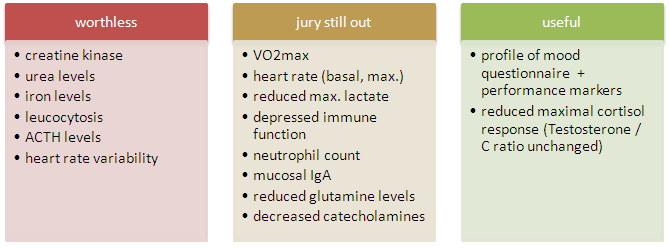
    Figure 2: Overview of selected biomarkers that have been investigated for their usefulness to idenfify over-reaching or overtraining (based on an overview in Purvis. 2010)
    By incorporating and sticking to appropriate recovery phases, both on a short-, as well (and this is often neglected) on a long(er) term basis and keeping an eye on those markers I put in the "useful" column in the above overview of hitherto scientifically investigated biomarkers for overtraining, you should yet hopefully be able to avoid at least "phase three" of the overtraining syndrome, where taking 2-3 months is no longer an option, but a physiological necessity.

    And if you don't have a "profile of mood questionnaire" handy, but still believe in the power of evaluations based on 0-4 scales, I highly suggest you download the free staleness score test Dr. Jack Raglin developed for the US military. It's free, so don't be shy! Here you go for the download: "Training Distress Scale"

    "Strong is the Better Sexy!" Athletes Are Better Role Models Than Sexualized Cover Models For Young Women

    Image 1: Photos of like this,
    showing athletic women,
    during competition, or when
    they train, unfortunately,
    never make it to the magazine
    covers, with their heavily
    photoshop-ed images
    of male and female
    "celebrities".
    Those of you who have not skipped my lengthy introduction to Adelfo's latest blogpost will probably have read between the lines that I personally believe that the influence of attitudinal values and believes about themselves and others on failure and success of what people usually refer to as their "transformation" is largely underrated. On the one hand of the extreme, you have those, who run around telling everyone how "happy" they are with the (mostly pretty chubby) "way they are" only to boil out their eyes, when they get home from work and sit lonely in front of their television. Then, you got those people who acknowledge that they are not really satisfied with the way they look, but that the latter "must" obviously be "a consequence of faulty genes" and that those lucky bastards who were born with cover model physiques had absolutely no clue, what they were talking about, when they are talking about "having a plan", "discipline" and all that blabla (those are the people to whom I recommend reading Adelfo's weekly blogposts, the most). And lastly, at the other end of the extreme, you got those poor critters, who are actually looking quite good and/or are continually making progress, and yet still feel even more miserable about themselves than the aforementioned "I am so happy" chubbies, when they are sitting with a bowl of ice-cream in front of their TV...

    Role models are more than just people we look up to...

    I guess, the latter group was the one Elizabeth A. Daniels had in mind, when she came up with the hypothesis that their young female study participants (age 13-22y) would make different statements with regard to their own physical appearance and attractiveness, when they were confronted with photographs depicting women as (a) sexualized athletes, (b) performance athletes, and (c) sexualized models. To verify this hypothesis, the responses of the 258 adolescent girls (ages 13–18) and 171 college women (ages 18 –22) were assigned to an inductively (meaning based on the scientists interpretation of common motifs in the individual responses) established framework that was constructed around the following  meta-themes, which refer to the physical attributes of the women in the photographs (who were, by the way, no celebrities), "her appearance and attractiveness, her athleticism", or the study participant's feelings about themselves, the women in the pictures and our society, in general (my body/looks, my feelings about her, and society), as well as the role and image of women, in particular.

    Within this framework Daniels conducted a numerical (number of answers per theme in condition), as well as a qualitative (positive, neutral, negative for "her body", "physicality", in general, "self evaluation" and "my physical activity") analysis of the responses and derived a few interesting results.
    Figure 1: Relative frequency of positive, negative and neutral statement with regard to the physical appearance (her body) and athleticism (physicality) of the athletic women and models in the photographs in the three study conditions (data adapted from Daniels. 2012)
    Contrary to what I, personally, would have expected, the young women did provide the most positive responses regarding the "body", i.e. the physical attractiveness of the women in the photographs, when they were confronted with images of "sexualized athletes" (cf. figure 1). Moreover, the photographs of women who engaged in athletic activities elicited mostly neutral responses, yet no negative and at least 28% positive responses.

    Not feeling just as bad and that less often may not sound like much, but...

    Of greater significance in view of the aforementioned influence the continuously influx of stereotypical images of the "ideal body" are yet the responses Daniels filed under positive, neutral or negative "self-evaluation", of which the presentation of photographs of athletic women elicited the least frequent (only 17.1% self-evaluating statements vs. 40% in the sexualized athletes and 53.8% in the sexualized models condition) and most beneficial (20% positive) self-evaluative comments (cf. figure 2). 
    Figure 2: Relative frequency of statements reflecting positive, neutral or negative self-evaluation and positive, negative and neutral attitude towards the personal physical activity of the study participants in the three different study conditions (data adapted from Daniels. 2012)
    Now, at first sight, it may seem that the images of athletic women were thusly at most "less detrimental" to the self-image of these young women. If we do yet take into consideration that adolescent girls and young women are generally very critical and often uncomfortable with the way they look and put an emphasis on the fact that 82.9% of the subjects did not even think of how good or, what is unfortunately more likely, bad they feel about themselves, when they were confronted with the images of athletic women, we could speculate that the self-esteem of young women would benefit if there were more images of women engaged in what Daniels refers to "instrumental activities like playing a sport" in the media to "counterweight to the overly-thin standard portrayal of females currently dominating the media".

    Moreover, the results of another recent study (Appleton. 2012), which demonstrate that engaging in regular physical activity, alone, exerts profound beneficial effects on the body images of both men and women, suggests that the huge beneficial impact the photographs of athletic women had on the girls' and women's attitudes towards their own physical activity (cf. figure 2), could in indirectly promote the self-esteem of the study participants by instigating or reinforcing their interest in physical activity.

    Bottom line: Images of athletes can help you to get active and feel better about yourself!

    And although I must admit that people may be more or less predisposed to succumb to the beauty ideals we are confronted with in the media on a daily basis, there is probably hardly anyone who could resist the profound influence they exert on how we think and feel of ourselves and others. Therefore, I strongly caution against the notion that the results of a study which involves only female subjects (age 13-22y) would be meaningless for older women and men of all age groups, who, despite being less willing to admit it, are by no means immune to the subtle messages of six-pack abs, bootylicious butts and unwrinkled skin of the mostly "photoshop-ed" (i.e. digitally enhanced) physique of those pristine specimen of the human race. The motto "Strong is the Better Sexy!" from the title of this blogpost has thusly the potential to become a mantra for everyone who wants to feel better about himself / herself - irrespective of sex or age.