.

.
marylin monroe
Showing posts with label ph. Show all posts

The Latest Gut Microbiome Modulators: Beneficial Effects of Cacao, Negative Effects of Acidic Water and Preliminary Evidence of the Negative Impact of Gluten & Whole Grains

Pancakes al cacao & your gut: Bad grains and good cacao?
There is an increasing amount of interesting scientific publications on the role of the gut microbiome in health and disease. Unfortunately, the evidence on what exactly influences the number and types of bacteria in our gut in a beneficial way and even what exactly a "beneficial way" actually is, is yet largely unknown.

In today's installment of the SuppVersity Short News, I am going to take a closer look at a selection of recent studies that may shed at least some light at the previously mentioned questions.
You can learn more about the gut & your health at the SuppVersity

Bugs Dictate What You Crave

Sweeteners & Your Gut

Foods, Not Ma- cros for the Gut

Lactulose For Gut & Health

Probiotics Don't Cut Body Fat

The Macrobiotic MaPi2.0 Diet
  • Cacao as a gut microbiome modulator - The first study we're going to look at deals with cacao. Cacao and its effect on the gut microbiome. In said study, 3-week-old Wistar and Brown Norway rats were fed, for 4 weeks, either a standard diet or the following three isoenergetic diets containing increasing proportions of cocoa flavonoids from different sources: one with 0·2 % polyphenols (from conventional defatted cocoa), and two others with 0·4 and 0·8 % polyphenols (from non-fermented cocoa, very rich in polyphenols).

    Only the regular theobromine containing cacao did also reduce the weight gain in the three-week study (Massot-Cladera. 2014).
    What the scientist found, when they analyzed the serum Ig concentrations, faecal IgA levels, microbiota composition and IgA-coating bacterial proportion at the end of the study and compared them to those at the beginning was a significant beneficial effect on the mucosal IgA levels and microbiota composition from all supplements. The 0.2 % cacao diet which contained a higher proportion of theobromine and fibre, however, had a more profound impact on the aforementioned parameters - in spite of the fact that there was less cacao in the diet. Obviously, the caffeine-like bitter alkaloid from cacao is contributes to the beneficial effects of cacao in a similar way as the polyphenols.

    As the body weight data in Figure 1 shows, the theobromine containing conventional cacao was also the only one that was able to reduce the diet induced weight gain in the rats. This could, but does not necessarily have to be related to the higher levels of Bacteroides, Bifidobacterium and Lactobacillus bacteria in the gut of the rodents that received the "cheap" conventional cacao.
  • Acidic water triggers type I diabetes - probably by modulating the gut microbiome - No, I am not trying to advertise bicarbonate, here. I am just reporting the results of a recent study from the Medical University of South Carolina which found that a stain of mice that's particularly susceptible to type I diabetes developed insulitis and hyperglycemia rapidly, only when the mice were maintained on acidic pH water (AW).

    Suggested Article: "High Dietary Acid Load Doubles Risk of Type II Diabetes in Lean Individuals! Causative or Corollary? Plus: Are Grains, not Meats the Main Offenders in Our Diet?" | read more.
    The scientists also observed that this effect could be countered by fecal transplants and was obviously triggered by changes in the diversity of the gut flora that occurred, when the pH of drinking water was in the acidic range and were probably related to the proinflammatory cytokine response in the intestinal mucosa.

    As you as a SuppVersity reader know previous studies in humans have already shown that a "High Dietary Acid Load Doubles Risk of Type II Diabetes in Lean Individuals!" (read more) - Who knows, this could also be related to the effect on the gut microbiome!?
  • Gluten and whole grains as modulators of the gut microbome - In two recent randomized cross-over trials, researchers from the University of Copenhagen determined the impact of dietary gluten or whole grains on the gut microbiome and host metabolic health.

    What the researchers found was what the recent backlash against gluten and "healthy" whole grains on the internet would suggest the already overweight "[p]articipants had slightly elevated fasting glucose levels and increased waist circumference" (Ibrügger. 2014).
    Table 1: Overview of the products used in the randomized controlled cross-over trials (Ibrügger. 2014)
    Whether that's related to the effects on the gut microbome is unfortunately something I can't tell you, yet. Why? Well, the currently available paper refers to a future publication that would outline the detailed results. All I can tell you now is that the study used the products listed in Table 1 and, more importantly, that it is its high statistical power, which, due to the large sample size and the crossover design, "allows detecting even small diffrences in the outcome variables" (Ibrügger. 2014).
Suppversity Suggested: "Stevia Kills Good Gut Bacteria - One Study Enough to Stop Using the Natural Sweetener? Probably Not in View of its Anti-Diabetes, Anti-LDL, Anti-Viral & Anti-Cancer Effects" | more
Bottom line: It's a pity that we still can't tell for sure what the "optimal" gut microbiome looks like. Moreover, the currently available scientific evidence suggests that what is considered "optimal" may well depend on your type of diet and / or your metabolic health.

Against that background the previously presented results offer nothing but a brief glimpse at what may become one of the hottest topics in obesity and diabetes prevention in the future. At the moment, though, all the results and any recommendations that are based on these results have to be considered preliminary. And this is also true for the gluten + whole grain study of which you will certainly read again, here at the SuppVersity | Comment on Facebook!
References:
  • Ibrügger, S., et al. "Two Randomized Cross-Over Trials Assessing the Impact of Dietary Gluten or Wholegrain on the Gut Microbiome and Host Metabolic Health." J Clin Trials 4.178 (2014): 2167-0870.
  • Massot-Cladera, Malen, et al. "Impact of cocoa polyphenol extracts on the immune system and microbiota in two strains of young rats." British Journal of Nutrition 112.12 (2014): 1944-1954.
  • Sofi, M. Hanief, et al. "pH of drinking water influences the composition of gut microbiome and type 1 diabetes incidence." Diabetes 63.2 (2014): 632-644.
    High Dietary Acid Load Doubles Risk of Type II Diabetes in Lean Individuals! Causative or Corollary? Plus: Are Grains, not Meats the Main Offenders in the Modern Diet?

    If you go for green, you are usually on the save side of things... ah pHs ;-)
    You will probably remember the association between higher acid levels (not even out of range), metabolic syndrome, lowered growth hormone release and a plethora of other ill-health effects I already hinted at in "How Could Bicarbonate Help You Lose Fat & Build Muscle" (read more). A new study from the Gustave Roussy Institute in France is now the first large scale study to provide relatively conclusive support for the hypothesis that there is a direct relationship between dietary acid load and the risk of cardiometabolic diseases and type II diabetes (Fagherazzi. 2013).

    Credible evidence from large cohort

    Fagherazzi et al. analyzed data from 66,486 women who were part of the E3N study (Etude Epidémiologique auprès des femmes de la Mutuelle Générale de l’Education Nationale), a French prospective cohort study of 98,995 female teachers, who were followed for incident diabetes over 14 years (the study started in 1999).
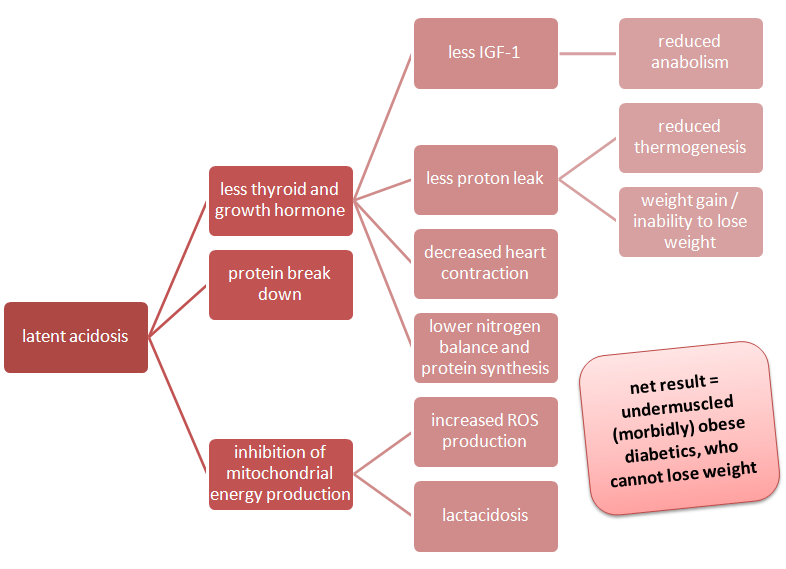
    Latent Acidosis? Why do I care? As you can see in the image to the right, even latent acidosis can reduce thyroid hormone production, increase protein breakdown and inhibit mytochondrial function . The latter leads to increased ROS, lactate production & proton leak, while the former entails decreases in protein synthesis, IGF-1 & cardiac output. These changes have long thought to promote the development of the metabolic syndrome by increasing inflammation and reducing the basal metabolic rate (Berkemeyer. 2009).
    During the 14-year follow-up period, a total of 1,372 cases of incident type 2 diabetes were validated. Fagherazzi et al.'s close analysis of the data revealed that there is a significant association between higher potential renal acid loads (PRALs) and the incidence of type 2 diabetes. Specifically, Fagharazzi et al. point out, ...
    "[...] the highest PRAL quartile, reflecting a greater acid-forming potential, was associated with a significant increase in type 2 diabetes risk, compared with the first quartile (HR 1.56, 95% CI 1.29, 1.90)." (Fagherazzi. 2013)
    A risk increase of 56%, alone, is a pretty impressive figure. What's even more impressive, though, is the fact that the association was significantly stronger among normal-weight women with a BMI <25 kg/m². For them the risk of developing type 2 diabetes almost doubles (+96%), when the dietary acid load is high. That's quite telling in view of the fact their baseline risk of developing T2D is low compared to those of the overweight study participants for whom the additional risk factor "dietary acid load" produced a significant (p = 0.03), but relatively low risk increase of only 28%.

    The characteristics of the pro-diabetic diet

    When we take a closer look at the actual data, there are dozens of statistically highly significant differences between the low and high pH quartiles (most of them with a p-value of p < 0.001). I initially tried to plot the differences, but that got way too chaotic, so I decided to make a list of items such as "higher energy intake (+15%)" indicating that the subjects with a high PRAL value (~the one's who were living on the more acidic side of the divide ;-) had a 15% higher energy intake than the subjects in the low PRAL quartile:
    • It may be coincidence, but in view of the anecdotal link between artificial sweeteners and heart-burn it's probably worth mentioning:  The most acidic study participants consumed 20% more artificially sweetened beverages (more about sweeteners)
      higher energy intake (+15%)
    • lower carbohydrate intake (-10%)
    • higher fat intake (+9%)
    • higher protein intake (+10%)
    • higher animal protein intake (+4%)*
    • lower fiber intake (-20%)
    • higher phosphorus intake (+16%)
    • lower potassium intake (-23%)
    • higher calcium intake (+10%)
    • lower magnesium intake (-22%)
    • higher sodium intake (+26%)
    As a seasoned SuppVersity veteran, you will already have realized where this is heading: Higher energy intake, higher fat intake, hilariously low levels of potassium and magnesium, and salt intakes way beyond the 3g margin - all these are SAD (=standard American diet) hallmarks of the way the average Westerner (even in metropolitan France) eats. The 88% higher cheese intake, the 45% lower fruit + 25% lower veggie intake and 45% more of everyone's favorite "healthy" bread complete the picture that's emerging here: It's the Pizza Hut Diet ;-)

    * The meat is not our only problem!

    You will probably already have been wondering about the "*" and the fact that I highlighted higher animal protein intake (+4%)* in the previous list, right? Don't worry, I am not going to blame our problems on meat and suggest we all go vegan. The actual reason I highlighted the "bad" animal protein is a different one: the corresponding press release that came with the study (some of you may already have read it on Science Daily or other copy+paste 'science news portals'). It goes without saying that whoever wrote the short blurb used the study results for another sweeping blow at animal proteins by citing the following paragraph, and only but the following paragraph from the discussion of the results:
    Suggested read: "Meat-Ology: The Link Between Red Meat, Cooking Techniques & Prostate Cancer" | more
    "A diet rich in animal protein may favour net acid intake, while most fruits and vegetables form alkaline precursors that neutralise the acidity. Contrary to what is generally believed, most fruits such as peaches, apples, pears, bananas and even lemons and oranges actually reduce dietary acid load once the body has processed them. In our study, the fact that the association between both PRAL and NEAP scores and the risk of incident type 2 diabetes persisted after adjustment for dietary patterns, meat consumption and intake of fruit, vegetables, coffee and sweetened beverages suggests that dietary acids may play a specific role in promoting the development of type 2 diabetes, irrespective of the foods or drinks that provide the acidic or alkaline components."(Fagharazzi. 2013)
    Obviously, it's going to be the first part of this paragraph, the one about the bad animal protein, that will get stuck in people's heads. The second part, the one that mentions rather casually that we are talking about total and not specific dietary acid loads, on the other hand, will go unnoticed. 

    Figure 1: Food composition of paleo (top; estimation assumes a high meat intake) and modern US diet in % of total energy intake (Sebastian. 2013) - Don't forget: 1kg of lightly acidic foods are more acid forming than 100g of highly acidic foods!
    Just as the fact that grains, which contribute an estimated 38% of the acid load yielded by the combined net acid-producing food groups in the contemporary diet (Sebastian. 2002), are just as, if not more problematic than the occasional steak of which the mainstream recommendations will tell you that you cannot have it more than once or twice a week, anyway.

    'Paleo reasoning' to the rescue!?

    In an effort to calculate the estimated net acid load of the 'ancestral', 'paleo' or 'whatever-you-want-to-call-it'-diet Sebastian et al. tested several scenarios, the worst of which a high protein, high fat version of the paleo diet (227g of protein, animal-fat content = 46%–63% of animal-food energy) still had a negative net endogenous acid production (NEAP = -7; Sebastian. 2013).

    A low fat variety with a animal to plant food ratio of 35%:65% and an animal fat content of only 26% from animal-food energy and an even higher protein intake of 258g per day had a NEAP value of whopping -78. By "paleo standards" the average Westerner is thus consuming an extremely acidic diet, he is not genetically adapted to...  ;-)
    Table 1: Acid-base value of common foods; positive values signify "acid forming", negative values "alkalizing" effects, the higher the figure the more pronounced the greater the impact of the given food is going to have (Cordain. 2012)
    Paleo logic + scientific evidence = Win!  You all know that I don't buy the mainstream interpretation of the 'we are not adapted to...'-logic and the way it is employed by its followers in an almost religious way and against all scientific evidence.

    What I do buy, however, are conclusions and recommendations that are based on both 'paleo logic' and scientific evidence - conclusions like the one Fagherazzi formulate in the last paragraph of their paper:
    "[The] dietary acid load is directly associated with an increased risk of type 2 diabetes. From a public health perspective, dietary recommendations should not only incriminate specific food groups but also include recommendations on the overall quality of the diet, notably the need to maintain an adequate acid/base balance."
    You want to know what foods Fagherazzi et al. may possibly be referring to? I already expected that. Just have a look at the table to the right, but don't forget: The study at hand does not prove causation. You could as well argue that it's the sum of dietary differences I listed as "characteristics of the pro-diabetic diet" which cause the diabetes. Anyways, the good news is: The solution, i.e. following a whole foods diet, is the same.

    References:
    • Berkemeyer S. Acid-base balance and weight gain: are there crucial links via protein and organic acids in understanding obesity? Med Hypotheses. 2009 Sep;73(3):347-56.
    • Cordain L . AARP The Paleo Diet Revised: Lose Weight and Get Healthy by Eating the Foods You Were Designed to Eat. John Wiley & Sons, Apr 23, 2012
    • Sebastian A, Frassetto LA, Sellmeyer DE, Merriam RL, Morris RC Jr. Estimation of the net acid load of the diet of ancestral preagricultural Homo sapiens and their hominid ancestors. Am J Clin Nutr. 2002 Dec;76(6):1308-16.

    Bicarbonate For Strength Athletes: 25g of Baking Soda Up Your Squat (+27%) & Bench Press (+6%) Within 60 Min

    NaHCO3 probably won't make the burn go away, but it will help you push though it.... and no(!), you don't have to be afraid to retain water - sodium bicarbonate is actually going to lower aldosterone and is thus - if anything - going to have a diuretic effect (Musabayane. 1991). Calcium loss etc. is nothing you have to be afraid of either (Luft. 1990).
    After yesterday's astonishingly popular excursion into dating sciences, we are back to "normal" or as others would call it "extraordinary", here at the SuppVersity today ;-) And to make really sure you know that you're right here we're going to get back into the ergogenic groove with one of my personal favorites: Sodium bicarbonate, NaHCO3 or as your granny calls it, baking soda!

    In the unfortunate case you have no idea, what I am taking about, I'd suggest you briefly go through the previous SuppVersity articles and Facebook posts (e.g. +13% increase the sprinting capacity; sorry for the → typo) about the ergogenic effects of baking soda . Once you've done that it should not really come as a surprise that scientists from the real Human Performance Laboratory  at the Coventry University in the UK found that NaHCO3 will not just for cyclists, runners and rowers, but also for "bench pressers" and "squatters" ;-)

    One thing after the other, though!

    If you know your SuppVersity articles by heart, you are probably thinking about the Kerr study from September 2012, now - right? For the average gymrat, this was probably the most exciting paper on the ergogenic effects of sodium bicarbonate supplementation I've written about (see "22g Baking Soda 60min Before a Old-School 4 x 12RM Leg Workout Allow for a 22 Rep Volume Increase on Hypertrophy Oriented Squat + Leg Press + Leg Extension Quads Routine" | read more).
    A note for those with gastrointestinal problems or an insurmountable gag reflex: I know that downing 25g sodium bicarbonate at once can be disgusting and sends people with weaker stomachs right to the toilette. Fortunately, a 2012 study by Dreher et al. suggests that "serial loading" with several smaller servings of baking soda works at least as well | learn more
    And while the Kerr study was among the first to demonstrate significant beneficial effects of sodium bicarbonate in a strength training scenario, it is - if you come to think of it, actually not that surprising to see that the H+ (=hydrogen ions → acidity) buffering effect works just as well during a high volume leg workout, as it does, during high intensity cycling and sprinting [just a note on the H+ buffer: contrary to beta alanine, bicarbonate buffers the acidity in the blood, not within the muscle cell and will thus have greater effects on the periphery than carnosine the histidine + beta alanine dipeptide you are actually looking for, whenever you take your beta alanine supplement.

    Now while it may not have been surprising that high volume + baking soda does make a perfect match, it is, as you will hopefully agree, not exactly straight forward that we would see similar benefits on the low volume performance test, the 8  men (mean age, height and body mass → 20  ±0.9 years, 1.8  ± 0.1m and 78.4  ± 15.6kg, respectively)  who had been recruited for the study at hand had to perform.

    Three sets of squats and bench presses? Isn't that too little volume for NaCO3 to work?

    All the participants who had at least one year of strength training experience competed  in  team  games  (rugby  union,  soccer, basketball) at the national level and were concomitantly training more than 10 hours per week as part of their regular preseason preparations (those included 3h of resistance training). During the testing conditions to which the subjects had been randomly assigned, all of the performed
    Learn about the best chest exercises in the SuppVersity EMG Series.
    • three sets of bench presses to failure at 80% 1RM, and 
    • three sets of back squats "to failure" at 80% 1RM
    With three minutes of rest between the sets and five minutes of rest between exercises, this is, as I already mentioned, not exactly the workout you would usually expect to benefit (most) from bicarbonate supplementation. Still, the data in Figure 1 tells another story:
    • 0.3g/kg NaHCO3 in 5 ml/kg of artificially sweetened water (NaHCO3), instead of
    • 0.045g/kg NaCL in an artificially sweetened water drink matched for taste
    60 minutes before the two blinded performance tests did the trick - it did increase the mean total reps for squats (+6.7 reps; +27%) and bench preses (+1.5 reps; +6% -- note: I used the values from the table in the full text. They differ from those in the abstract according to which the performance increase would be 7%)
    Figure 1: Back squat and bench press performance in three subsequent sets (Duncan. 2013)
    As it was to be expected due to the low volume and long rest between sets, there was no significant change in blood lactate across time or between conditions. There were however treatment × time interactions for blood pH (p = 0.014) and blood HCO3 concentration (p = 0.001), with the increasing pH and bicarbonate (HCO3) levels in the blood of the NaHCO group being the obvious cause of the highly significant performance benefits.
    Does beta alanine hamper instead of improve your sprinting performance? Learn more in a previous SV Article.
    Baking soda for strength athletes: After the previously cited study by Kerr et al. this is study #2 to prove that the usefulness of baking soda, sodium bicarbonate or NaHCO3 (call it whatever you want) is by no mean, as it was long thought to be, restricted to endurance sports with intermittent sprints. With the study at hand there is enough evidence to believe that it's acute effects are going to be present whenever you're pushing yourself to your own limits and in view of the fact that pushing to the limits, in order to raise the bar is what's driving progress.

    I would therefore be curious to see a long(er) term study (8-12 weeks) taking a look at the cumulative benefits of sodium bicarbonate supplementation on strength and mass gains in trained and untrained individuals. Unfortunately, I suppose that no one with the money to finance that study will share my interest. In the end, a study like this would after all entail the risk of exposing how pathetic the 2.85% performance increase we see in the average beta alanine study actually are (Hobson. 2012).
      Reference: 
      • Duncan MJ, Weldon A, Price MJ. The effect of sodium bicarbonate ingestion on back squat and bench press exercise to failure. J Strength Cond Res. 2013 Oct 11. [Epub ahead of print]
      • Hobson RM, Saunders B, Ball G, Harris RC, Sale C. Effects of β-alanine supplementation on exercise performance: a meta-analysis. Amino Acids. 2012 Jul;43(1):25-37. 
      • Luft FC, Zemel MB, Sowers JA, Fineberg NS, Weinberger MH. Sodium bicarbonate and sodium chloride: effects on blood pressure and electrolyte homeostasis in normal and hypertensive man. J Hypertens. 1990 Jul;8(7):663-70.
      • Musabayane CT, Balment RJ. Renal effects of aldosterone in the sodium bicarbonate infused rat. Ren Fail. 1991;13(2-3):71-6.

      Sodium Bicarbonate (NaHCO3) Increases PGC1-A & Speeds Up Mitochondrial Adaptation - HIIT + Bicarb = Perfect Match

      Study suggests, significant increases in mitochondrial builder PGC1-a with HIIT + bicarbonate
      If this is not your first visit to the SuppVersity, I am confident you've read about the ergogenic effects of sodium bicarbonate aka baking soda before. If you haven't here is the short version: Sodium bicarbonate will act as a systemic acid buffer during workouts. That's in contrast to beta-alanine which works exclusively in the muscle, but has very similar, in some studies albeit significantly more pronounced and first and foremost acute beneficial effects on exercise performance.

      No loading, no waiting, no hoping. You simply wash down 20g of bicarbonate (better 0.3g/kg body weight) before the race of your life and - as long as your tummy can stomach it - see / feel the benefits during the race.
      You can learn more about bicarbonate and pH-buffers at the SuppVersity

      The Hazards of Acidosis

      Build Bigger Legs W/ Bicarbonate

      HIIT it Hard W/ NaCHO3

      Creatine + BA = Perfect Match

      Bicarb Buffers Creatine

      Beta Alanine Fails to HIIT Back
      In his thesis paper, Michael E. Percival investigated the effects of bicarbonate supplementation on the cellular adaptation process in response to high intensity interval training (HIIT).
      "Acute and chronic high-intensity interval exercise is a potent stimulus to influence a number of physiological adaptations with implications for health and athletic performance. [...] Due to the intense nature of this training modality and associated disturbance to muscle pH, which has been implicated in fatigue, it has been hypothesized that augmenting the body’s natural buffering capacity through nutritional means may be a strategy to augment training adaptations. One way of doing this is through the ingestion of NaHCO 3 prior to exercise, which has shown to have ergogenic effects allowing athletes to perform more work with each training session. In addition, greater mitochondrial and performance adaptations are seen when HIIT is preceded by NaHCO3 ingestion even when work is matched (Edge. 2006; Thomas. 2007; Bishop. 2010)."
      Percival's goal was now to finally establish what exactly it is that gives bicarbonate the adaptational edge, so to say. To this ends, Michael E. Percival had his subjects, nine active men (22 ± 2 y; 78 ± 13 kg, VO²peak = 48 ± 8 mL/kg/min; mean ± SD) perform the same 10 x 60 s HIIT cycling protocol on two occasions, either with
      • 0.2 g/kg body weight sodium bicarbonate (BICARB) or 
      • an equimolar dose of a placebo, sodium chloride (PLAC),
      both ingested in two equally sized doses that were ingested 30 minutes after the breakfast - a means to minimize gastrointestinal distress | and in the study at hand it worked: There was not difference in gastrointestinal complaints between placebo and bicarbonate trial.
      Figure 1: Pre vs. post PGC1a and muscular glycogen content (Percival. 2014)
      The two trials were separated by 1 week, the subjects had to perform their 10 all out cycling bouts at an intensity of ~263 ± 40 W - more than enough to bring all of them up to the 90%+ heart rate zone. , interspersed by 60 s of recovery. Total work during each trial was identical for a given subject.
      A brief reminder of the benefits of bicarbonate: Regulation of hydrogen ions (H + ) or pH within homeostatic concentrations is critical for proper physiological function. The factors contributing to the change in muscle pH seen during intense exercise are numerous and the role of each factor remains hotly debated. However, classically it is believed that a large contributor of H + is through the accumulation of lactate produced from glycolysis. Next to internal buffers, which are exhausted relatively quickly, the shuttling of H + and lactate across the sarcolemma is also believed to play an important role in the maintenance of pH during intense exercise. This is due to the extracellular buffering capacity HCO3 - which is believed to promote the efflux of H + from active muscles ( Hollidge-Horvat. 2000; Bishop. 2004).

      Table 1: Overview of the studies Carr et al. reviewed in their meta-analysis (Carr. 2011)
      One way to facilitate this process is obviously the provision of exogenous bicarbonate in form of NaHCO3. According to the most recent meta-analysis by Carr et al. (2011), even acute dosing will lead to performance enhancements of 1.7% during short high intensity activities as sprinting. As Percival points out, it does eventually not matter how "sodium bicarbonate imposes its ergogenic effects, the ability to allow athletes to work harder may enhance the exercise stimulus", anyways, and thus contribute to faster / greater size and strength gains. There is yet also accumulating evidence "that NaHCO3 supplementation can improve adaptations independent of greater work output." One of the underlying factors, i.e. the increase in the mitochondrial builder protein PGC-1a has been identified in the study at hand.
      Figure 2: Bicarbonate increases mitochondrial respiration specifically during longer-duration exercise (Bishop. 2010) - the study at hand does not just confirm the results of the previous rodent study, it does also provide information about the underlying mechanism that's responsible for the accelerated mitochondrial adaptation w/ sodium bicarbonate.
      The latter is important, because otherwise the significant differences in PGC1-a expression (see Figure 1), of which the study at hand indicates that they are the most probably reason for the previously cited significant adapational benefits from bicarbonate supplementation (compare Figure 2), could be a mere function of the training volume.

      Based on the data from blood draws and needle biopsies from the vastus lateralis we can now conclude that it is the increase in PGC-1α mRNA, which was increased after 3 h of recovery to a greater extent in BICARB vs. PLAC (~7- vs. 5-fold, p < 0.05) that is responsible for the enhanced adaptations after chronic supplementation.

      Speaking of which, as I've previously pointed out, I truly believe that the serial loading protocol, as described by Driller et al. (2012) is the most promising dosing scheme for the long(er)-term use of sodium bicarbonate supplements (read my write-up for more information). Issues with increasing blood pressure or calcium loss as they have been reported for very high sodium chloride intakes in susceptible individuals should, as I repeatedly pointed out, not be an issue (Luft. 1990). In pre- and post-menopausal women on high-protein diets, the addition of small amounts of sodium bicarbonate is in fact an effective way to increase calcium retention and thus any potential negative effects on bone health that may arise as a consequence of protein-induced hypercalciuria (Lutz. 1984).
      The increase of PGC1-a is significant, because the signaling protein has previously been shown to exert "IGF-1 Promoting, Myostatin Reducing, Muscle Building Effects" | learn more
      Bottom line: While I am pretty sure that many people will still be more attracted by the shiny ads for beta alanine containing supplements, there is little doubt that baking soda is the cheaper and at least acutely more effective buffering supplement.

      That being said, the elevated PGC1-a levels in the study at hand add to the existing evidence that bicarb is more than a pre-/intra-workout acid buffer. And while it's still not 100% clear if it is a result of an increased use of intra-muscular glycogen or a consequnce of a reduced acid level during exercise, the increase in PGC1-a of which SuppVersity readers know that it has "IGF-1 Promoting, Myostatin Reducing, Muscle Building Effects" (learn more) make chronic sodium bicarbonate supplementation regimen even more interesting than they've been before | Comment on FB!
      References:
      • Bishop, David, et al. "Induced metabolic alkalosis affects muscle metabolism and repeated-sprint ability." Medicine and science in sports and exercise 36.5 (2004): 807-813.
      • Bishop, David J., et al. "Sodium bicarbonate ingestion prior to training improves mitochondrial adaptations in rats." American Journal of Physiology-Endocrinology and Metabolism 299.2 (2010): E225-E233. 
      • Carr, Amelia J., Will G. Hopkins, and Christopher J. Gore. "Effects of acute alkalosis and acidosis on performance." Sports medicine 41.10 (2011): 801-814. 
      • Driller, Matthew W., et al. "The effects of serial and acute NaHCO3 loading in well-trained cyclists." The Journal of Strength & Conditioning Research 26.10 (2012): 2791-2797.
      • Edge, Johann, David Bishop, and Carmel Goodman. "Effects of chronic NaHCO3 ingestion during interval training on changes to muscle buffer capacity, metabolism, and short-term endurance performance." Journal of applied physiology 101.3 (2006): 918-925.
      • Hollidge-Horvat, M. G., et al. "Effect of induced metabolic alkalosis on human skeletal muscle metabolism during exercise." American Journal of Physiology-Endocrinology And Metabolism 278.2 (2000): E316-E329. 
      • Luft, Friedrich C., et al. "Sodium bicarbonate and sodium chloride: effects on blood pressure and electrolyte homeostasis in normal and hypertensive man." Journal of hypertension 8.7 (1990): 663-670. 
      • Lutz, Josephine. "Calcium balance and acid-base status of women as affected by increased protein intake and by sodium bicarbonate ingestion." The American journal of clinical nutrition 39.2 (1984): 281-288.
      • Percival, Michael E. "Sodium bicarbonate ingestion augments the increase in PGC-1α mRNA expression during recovery from intense interval exercise in human skeletal muscle." Diss. McMaster University, 2014.
      • Thomas, Claire, et al. "Effects of high-intensity training on MCT1, MCT4, and NBC expressions in rat skeletal muscles: influence of chronic metabolic alkalosis." American Journal of Physiology-Endocrinology and Metabolism 293.4 (2007): E916-E922.

      Beta Alanine + Bicarbonate = Synergistic Internal + External Muscle H+ Buffer With Disappointing Real-World Benefits

      No matter what this study says, I am pretty sure that the combination of bicarbonate + beta alanine would rule for Tour de France cyclists - at least during the dreaded time-trials.
      In a recent study researchers from the Victoria University and the Queensland University of Technology observed that the combination of the carnonsine pre-cursor beta alanine and sodium bicarbonate will elevate the buffering potential of skeletal muscle in eight apparently healthy, recreationally active men (26.2 ± 1.9 year; 79.8 ± 2.11 kg; 179.0 ± 2.2 cm; VO2peak 51.0 ± 2.5 ml/kg/min) by increasing muscle carnosine and blood bicarbonate levels, respectively.

      So much for the good news, the bad news however is that the performance increases on a repeated sprint test were non-signficant and the expected additive effects of beta alanine and baking soda (sodium bicarbonate) during a 110% cycling capacity test were non-existing.
      You can learn more about beta alanine & bicarbonate at the SuppVersity

      The Hazards of Acidosis

      Build Bigger Legs W/ Bicarbonate

      HIIT it Hard W/ NaCHO3

      BA + Bicarb are Synergists

      Bicarb Buffers Creatine

      Beta Alanine Fails to HIIT Back
      The trial participants were asked to complete 2 exercise tests, over consecutive days, at the end of each of the four co-supplement periods (see fig.  1).
      Figure 1: Design of the study. Each trial consisted of two exercise tests performed over consecutive days. A total of 12 weeks between trials 2 and 3 was implemented to ensure adequate supplement washout time participants randomised to ingest β-alanine during the initial chronic supplementation. MRS Magnetic resonance spectroscopy, RSA repeated sprint ability test, CCT 110 %cycling capacity test. Solid  arrows depict crossover between acute supplementation (Pl and SB). Dotted arrows depict crossover between chronic supplementation (BAl and Pl; Danaher. 2014)
      During the double-blind supplementation periods, the subjects consumed capsulated β-alanine (4.8g/day for four weeks, 6.4g/day for two weeks) or the placebo calcium carbonate (CaCO3). To investigate the superimposition of NaHCO3 (baking soda) with β-alanine, the acute administration of NaHCO3 occurred following each of  the 6-week periods of β-alanine and placebo supplementation.
      Figure 2: The non-existing increases in peak and average performance with beta alanine and - with the exception of one outlier - bicarbonate supplementation is disappointing; value expressed relative to placebo trial.
      This required two trials of either 300 mg/kg body weight sodium bicarbonate or a not wisely chosen "placebo", i.e. CaCO3 (While I have seen this repeatedly, I am asking myself how smart it really si to use calciumcarbonate as a placebo for a bicarbonate, if the carbonate will form HCO3 as soon as it is cleaved from the calcium ion?) , that was administered only once 90 min prior to the exercise bouts of the respective trials and was split into 6 equal doses over the first 50 min of the 90-min pre-exercise period.
      Figure 3: Time to exhaustion, blood pH values during repeated sprint & cycling capacity @110% test (Danaher. 2014)
      Bottom line: This is not the study to support the usefulness of bicarbonate and beta alanine supplementation for power athletes. It may be a study to support the usefulness of bicarbonate supplementation for Tour de France Trials, but it's also another study to show that the ergogenic effects of "buffers" outside of long(er) duration high intensity work like Tour de France time trials may be generally overrated.

      With the study being underpowered, not 100% controlled in terms of the nutritional circumstances of the individual trials and questionable with respect to the use of calcium carbonate as a placebo supplement for sodium bicarbonate and beta alanine, I would be hesitant to discard the use of bicarb and beta alanine and a possible synergy. on the basis of the study at hand, though. Previous studies yielded different results.
      Reference:
      • Danaher, Jessica et al. "The effect of β-alanine and NaHCO3co-ingestion on buffering capacity and exercise performance with high-intensity exercise in healthy males." Eur J Appl Physiol (2014) 114:1715–1724

      Digest This! Fermented Soybean Liquid Destroys Proton Pumps and Thus Impairs Nutrient Absorption

      Image 1: Natto, a traditional Japanese food made
      from soybeans fermented with Bacillus subtilis.
      Does not even look healthy, does it?

      (image from Wikipedia.de, uploaded by Gleam)
      As a studious visitor of the SuppVersity, you have probably banned all conventionally processed soy-containing products from your homes, already (at least I would hope so). Yet, those of you who frequent the various nutrition blogs from the paleo- and similar "healthy-eating" spheres, will probably have come across information about the miraculous benefits that are ascribed to "traditionally fermented" soy products. And, yes indeed, a recent study published in the Journal of Agricultural Food Chemistry (Wang. 2011) was able to reproduce the results of previous studies, which had shown  that fermented soybean liquid alleviates peptic ulcers. Yet, what your soy-friendly nutrition-guru from the XYZ-Blog did not tell you, the fermented soybean liquid does this by destroying your proton pumps.

      Edit: Ola just made a comment on some possible flaws in the study design (cf. bottom of the page) which made me re-read the whole study with the interesting result that what I already took for an hypothesis, only (the "destruction of the proton pump"), is re-phrased in the summary of the paper as destruction of "the acidic microenvironment created by PP [proton pumps]". If this is actually the correct version and the formulation "destruction of the proton pumps" rather the result of incompetent translation, this would put into question, whether the fermentation process really created a toxic variety of soy, or not. As studies dating back to the late 1980s show, there is yet a potential issue with "gut irritants" or rather antigenic foods such as soy and damages to the intestinal wall / epithelium. In how far this holds true for the variety of available soy products (and other antigen containing products, including milk!), would warrant individual investigation, though.
      Wang and his co-workers tested the effects of fermented soybean liquid (FSL), which - other than some Internet sources would have it - "exhibit[s] higher contents of isoflavonoids (2.5-17.3-fold) and essential amino acids (1.5-4.0-fold) than the nonfermented" soybean liquid, on Helicobacter pylori over a 3 month period in 37 volunteers with gastric peptic ulcers (GPU) and found that "FSL administered at 1 g/20 mL tid [...] eradicated Helicobacter pylori (HP) by 82%".
      Image 2: Electron micrograph of H. pylori possessing multiple flagella (negative staining)
      (image by Yutaka Tsutsumi, Fujita Health University School of Medicine)
      Interestingly, though, further experiments including kinetic analysis and the chyme-shelter testing revealed that "direct infection by bare HP [Heliobacter plyori]  cells is unlikely" in gastric peptic ulcer (GPU) patients. So, if fermented soybean liquid alleviates GPU, the mechanism must be one that is independent of its effects on HP - put simply, fermented soybean liquid "destroys" [I am citing from the study here] the proton pumps!

      For those of you, who have not yet read of the nasty effect even over the counter proton pump inhibitors have on nutrient absorption: The proton pumps are those parts of your gut which release H+ ions into the stomach juice, thus acidify it and allow for the first step of digestion to take place. Many of the enzymes involved in this process are released or activated exclusively in an acidic milieu. And optimal PH-control, which is obviously impossible with blocked or even destroyed proton pumps, is a vitally important requisite for optimal nutrient absorption (esp. vitamins, minerals and protein).

      So, a potential of permanently impaired digestion and a higher isoflavonoid load than in the "evil" conventional soy-products? Are you still sold on the idea that fermentation has been practiced for centuries and thus must be a valid way of transforming a "poisonous" food into a panacea?

      11% Increase in Type I Fiber Cross Sectional Area During 12 Weeks of KHCO3 Supplementation: Are Alkali Supplements Fiber-Type Specific Anabolics W/ Add. Metabolic Benefits?

      Muscle toning with bicarbonate? Without weight gain? For some women probably a dream come true ;-)
      I guess, you will be hard-pressed to find another website with a similar amount of information the effects of alakali (mostly sodium bicarbonate) supplementation on exercise performance and metabolism as the SuppVersity. Irrespective of the previous posts on "baking soda" or the recent elaborations on the importance of a well-controlled acid base ratio (learn more), I am quite sure that the results of a recently published study from the Tufts Medical Center and the Bone Metabolism Laboratory, Jean Mayer USDA Human Nutrition Research Center on Aging at Tufts University will come as a surprise even for the most regular visitors among you - to be honest, I was and am still surprised myself ;-)

      So what's the surprise?

      In their 12-week rodent study that was devised to elucidate whether the addition of a neutralizing amount of potassium bicarbonate (KHCO3) to purified diet designed to match the standard acid forming Western way of eating would ameliorate the urinary nitrogen loss and affect the muscle fiber size and number, as well as the levels of circulating and muscle-specific IGF-1 in thirty-six vitamin D sufficient or deficient, 20-month-old, Fischer rats, Lisa Ceglia and her colleagues did not only observe (relative changes in brackets are expressed for vitamin D sufficient / insufficient animals)...
      • higher urinary pH (33% / 34%, after only 6 weeks),
      • lower urinary nitrogen losses (-28% / -42%) and
      • increased circulating 25OHD levels (3% and 15%);
      they also observed significant increases in the cross-sectional area of the soleus muscles of the animals that did not depend on the vitamin D status of the animals.
      Figure 1: Vitamin D levels, 24h urinary Nitrogen / Creatine ratio, cross sectional area of soleus (type I fibers; CSA1) and extensor digitorum longus (EDL; type II fibers, CSA2) after 12 weeks in rodents on KHCO3 supplemented diets with / without adequate vitamin D, data expressed relative to unsupplemented control (Ceglia. 2013)
      As the data in figure 1 goes to show you, this effect was fiber-type specific and was not observed in the extensor digitorum longus (EDL), which is - contrary to the soleus - type II (fast twitch, glycolytic; learn more) fiber dominant. What is surprising though is the fact that the researchers did not observe corresponding increases in muscle weights (p > 0.05).

      Unfortunately, the scientists don't address the "growth vs. weight" discrepancy in the discussion of the results, so that we are left to come up with our own hypotheses to explain why this may have been the case. We know that it cannot be the mere result of decreased food intakes or total body weight - both were virtually identical in all groups (just a note: the muscle weight per total body weight did not differ either). Moreover, the scientists explicitly state that "the lower UNi/Cr could be considered an indicator of reduced muscle proteolysis" - so that common sense would dictate an increase in muscle size and mass as it was in fact observed in previous human studies from the same laboratory:
      "In a 6-week study in 19 healthy adults (average age 62 years), KHCO3 supplementation attenuated a protein-induced rise in UNi/Cr excretion by over 50 % compared to placebo (Ceglia. 2009). A larger study in 162 adults (average age 62 years) given a lower bicarbonate supplement dose or no bicarbonate, also demonstrated a 6 % decline in UNi/Cr excretion (Dawson-Hughes. 2009)." (Ceglia. 2013)
      In fact, the provision of the bicarbonate supplement in the latter of the two studies did also increase the lower extremity power of the healthy older women who participated in the study by 13%; an observation that speaks in favor of the practical relevance of bicarbonate supplements - at least in the context of a normal / low vegetable and correspondingly low dietary alkali intake and that irrespective of the presence / absence of increases in skeletal muscle mass.

      So what's the general mechanism here?

      What about the muscle fiber specificity? The scientists speculate that the difference may simply be mediated by the "size difference of type II fiber subtypes (IIa, IIb, IIx) in rat EDL muscle and an inadequate [study] duration to detect a significant fiber size effect." This alone would, warrant a "larger and longer-term" at the end of which it may be possible to "fully characterize effects of this dietary
      intervention on muscle morphology." (Ceglia. 2013)
      If we simply discard the (as of now inexplicable) absence of increases in muscle weight and focus on the increases in muscle cross-sectional area it would in fact appear as if the alkali-induced improvements in nitrogen retention are the primary cause for the "muscle building" effects, the New Yorker researchers observed.

      The latter appears all the more likely, in view of the fact that neither the provision of vitamin D nor the addition of bicarbonate (or a combination of both) resulted in significant reductions in the catabolic signaling molecules E3 ubiquitin ligases, MURF1 and MAFbx. Still, if we don't assume that the rodents expended much more energy and simply burned off the extra protein it must have gone somewhere, so that the most likely explanation for the inconsistencies would actually be the time-point at which the signaling molecules were measured. After all, a pre- vs. post comparison doesn't tell us what happened during the 12-week supplementation period. Neither do we know whether the acid-base balance does not target a completely different set of anabolic molecules than exercise or protein nutrition so that the scientists may simply have missed measuring the "correct" markers of anabolism / catabolism to be able to fully explain their observations.


      Bottom line: There is still much to be learned about the effects and detailed mechanisms of alkali supplementation. So much, in fact, that the addition of large boluses of potassium bicarbonate to a whole foods diet that includes large amounts of net alkalizing vegetables and fruits (funny how difficult it was to write that this way around and not "fruits and vegetables" ;-) as a means to increase your gains appears to be unwarranted or at least unnecessary at the moment.

      Latent acidoses can set you up to become obese (learn more)
      For someone following a typical Western and or high meat + fat / high grain or otherwise acid forming diet without adequate "vegetable buffer" a medium dose alkali supplement providing ~67.5 mmol of bicarbonate (~647mg of KHCO3 or 800mg NaHCO3/baking soda, which was the dose that has been used in the previously mentioned human study by Dawson-Hughes et al.) ingested twice a day, could yield all sorts of metabolic benefits, of which you have learned in previous posts on sodium bicarbonate and the acid base balance here at the SuppVersity that they go way beyond increases in muscle strength and cross-sectional area and reach into the realms of metabolic disease and even cancer.

      Suggested reads:
      • Calcium, Magnesium, Potassium & Co in Food, Water & Supps - Getting Enough is Easy, Knowing How Much Is Not! (read more)
      • SuppVersity Science Round-Up on Sodium, Potassium, Alkalinity & Co (listen now)
      • Science Round-Up Seconds: The Macro-Mineral Alphabet & the Potential Health Hazards of Diet-Induced Latent Acidosis (read more)
      • Previous SuppVersity posts on sodium bicarbonate (browse all)

      References:
      • Bailey JL, Zheng B, Hu Z, Price SR, Mitch WE. Chronic kidney disease causes defects in signaling through the insulin receptor substrate/phosphatidylinositol 3-kinase/Akt pathway: implications for muscle atrophy. J Am Soc Nephrol. 2006 May;17(5):1388-94. Epub 2006 Apr 12.
      • Ceglia L, Harris SS, Abrams SA, Rasmussen HM, Dallal GE, Dawson-Hughes B. Potassium bicarbonate attenuates the urinary nitrogen excretion that accompanies an increase in dietary protein and may promote calcium absorption. J Clin Endocrinol Metab. 2009 Feb;94(2):645-53. 
      • Ceglia L, Rivas DA, Pojednic RM, Price LL, Harris SS, Smith D, Fielding RA, Dawson-Hughes B. Effects of alkali supplementation and vitamin D insufficiency on rat skeletal muscle. Endocrine. 2013 May 11. 
      • Dawson-Hughes B, Castaneda-Sceppa C, Harris SS, Palermo NJ, Cloutier G, Ceglia L, Dallal GE. Impact of supplementation with bicarbonate on lower-extremity muscle performance in older men and women. Osteoporos Int. 2010 Jul;21(7):1171-9.

      Victorious Veteran: Creatine Monohydrate Still First Class! Usefulness & Safety of “Innovative” Creatine Formulas Questionable.

      If we discount a high protein intake as a regular constituent of a healthy diet, creatine is unquestionable the King of Natural Ergogenics. Its impact on athletics way beyond the Gold’s Gyms of the bodybuilding world is evident from its being cited as “effective and safe” in almost each and every “position stand” published in one of the journals of the various sports & nutritional societies all over the world in regular intervals. Thus, with the (nephro-)toxity myth being finally dispelled, creatine has become a stable in the supplement regimen of both recreational, as well as professional athletes.

      Now, the financial revenue you can make from a non-patentable amino acid that is commonly found in fish and meat products is obviously limited. Thus, the steadily increasing number of players on the supplement market is continuously trying to “reinvent the wheel”, by putting forward a new, better-absorbed, more effect, side-effect free or whatever else the marketing guys had on their minds forms of N-(aminoiminomethyl)-N-methyl glycine (=chemical formula of creatine). These “superior” forms of creatine are then put forward as the must have for every seriously training athlete and/or creatine non-responders (these are people, where – due to various not fully understood mechanisms – creatine has no measurable effect on performance, (intracellular) water retention and body weight) and usually disappear from the market just about at the same time, the first batch has been sold and disappointed customers begin to vent their anger on the blogs and bulletin boards of the fitness world.

      With reference to the purported superiority of novel forms of creatine R. Jäger, one of the leading researchers in the field writes in a recently published paper (Jaeger. 2011), the results of which have previously been presented at the 2010 Creatine in Health and Sports conference:
      […] the efficacy, safety, and regulatory status of most of the newer forms of creatine found in dietary supplements have not been well established. Additionally, there is little to no evidence supporting marketing claims that these newer forms of creatine are more stable, digested faster, and more effective in increasing muscle creatine levels and/or associated with fewer side effects than CM.
      In their extensive review of the literature Jäger et al. dissect many of the commonly held views on the purported “instability” and “low absorbtion rate” of creatine monohydrate, evaluate the different creatine contents of various supplemental forms and their individual solubility, stability and bioavailability. And while some other forms are in fact more soluble…
      Creatine monohydrate dissolves at 14 g/L at 20°C resulting in a neutral pH of 7. A saturated solution of tricreatine citrate in water has a pH of 3.2; whereas a saturated solution of creatine pyruvate even has a pH of 2.6 (pyruvic acid is a stronger acid than citric acid). The decrease in pH results in an increase in solubility: 29 g/L creatine citrate at 20°C, and 54 g/L creatine pyruvate at 20°C. Normalized by the relative amount of creatine per molecule (monohydrate 87.9%, citrate 66%, pyruvate 60%), creatine citrate (19.14 g/L) shows a 1.55-fold and creatine pyruvate (32.4 g/L) a 2.63-fold better solubility when compared with the monohydrate (12.3 g/L).
      The acidity of your stomach is high enough, anyway, so that even if you just swallow the powder it will eventually dissolve, when it comes in contact with your gastric acid - for monohydrate [CM] Jaeger reports the absorption to be as high as 99%.

      Furthermore, pre-solving of creatine in water is counter-indicated, because, as Jaeger et al. write, …
      […] solution precludes the manufacture of shelf-stable standard ingredient. If creatine is not consumed immediately after it has been dissolved in water, it should be stored at a low temperature to retard the degradation.
      So you better throw away your liquid creatine - chances are its 99% degraded even before you bought it from your retailer.

      The instability is even more of concern in the case of Creatine Ethyl Ester (CEE) which has been found to be “actually less stable than CM.” (Child & Tallon. 2007).
      CEE is mostly converted into creatinine under physiological conditions encountered during transit through the various tissues, suggesting no ergogenic effect is to be expected from supplementation of CEE.
      The latter, i.e. creatine ethyl esther, is also less bioavailable
      Figure 1:Changes in total muscle creatine content in response to placebo (PLA), creatine monohydrate (CRT), and creatine ethyl ester(CEE) supplementation (Spillane et al. 2009, cf, fig. 1).
      and studies (Spillane. 2009) suggest that its higher rate of degradation to creatinine may pose a possible health risk.

      Also, while Jaeger et al. report some evidence for the beneficial effects of co-supplementation with glucose, protein or (low dose) D-pinitol, I personally doubt that either of them is necessary to take advantage of the repeatedly proven ergogenic effects you can get from the cheapest, most researches, safest and easiest to obtain form of creatine – creatine monohydrate.

      On a side note: My friends @ironmagazine.com have found an interesting study on the effect of creatine + nitrate, which is currently hyped as “the next big thing”. Although, I suppose that the amount of the carcinogen N-nitrososarcosine, which is a byproduct of their reaction, is hardly high enough to trigger cancerous growth, the lack of direct scientific evidence that creatine nitrate has any beneficial effect over the individual use of nitrates (for pump) and creatine (for performance) at least makes me wonder if you could not eat a buckload of beet roots (high in nitrate) with your creatine monohydrate to achieve the same effect ;-)

      Beta Alanine and Baking Soda (NaHCO3), a Synergistic Duo for 4-min All-Out Sprints Even in Highly Trained Athletes?

      Image 1: I guess many of the competitive track cyclists will be taking beta alanine either on its own, or as part of one of the thousands of proprietary blends in the squillion ergogenic supps you can chose from at your favorite supplement store. I am yet pretty sure that only very few of them have heard that a much more efficient ergogenic aid may be lying around unnoticed in their kitchen.
      If you had to compile a list of proven (and I am not talking about the way "proven" is used by the supplement industry!) ergogenic aids and ordered them by the number of publications, carbohydrates (all types) and protein (including BCAAs and EAAs) would be at the top of the list... from then, things get somewhat more complicated, but I would guess that creatine could actually have the potential to make it to the third place - it would by all means be within the top 5. Whether this is true for beta alanine, which probably would be the #4 on the list of an increasing number of physical culturists, appears yet questionable, to say the least. After all, the number of pertinent publications is, contrary to what common wisdom suggests, not exactly "extensive", to say the least. And the total effect size of 2.85% for bouts of exercise lasting 60-240s (for <60s beta alanine had no effect), which has been calculated by Hobson et al. in a recently published review of the available literature on that subject (Hobson. 2011), is not nearly as earth-shattering as headlines like "the next creatine" would make you believe.

      Beta alanine, baking soda or both? What maximizes 4-min all-out cycling performance?

      Against that background and in view of the results of a recently published study by researchers from the School of Human Life Sciences at the University of Tasmania in Australia (Bellinger. 2012), it could thusly (once more) be advisable that you initially resort to the stuff that is already sitting in your kitchen cabinet, before you spend extra bucks on expensive supplements... I guess, you are now asking yourselves what the hack this idiot is talking about now, so I guess, I best let you know what you have to look for: Baking soda! As a (hopefully) faithful student of the SuppVersity, you will be aware that I am a huge fan of this cheap, readily available and - potential diarrhea aside - side-effect free alkalanizer (cf. "Baking Soda for Stressed White Blood Cells" and "Sodium Bicarbonate, An Ergogenic Aid from Your Kitchen Cupboard").
      Image 2: "Cholesterol is the devil and sodium is his little brother!" Everyone who still believes everything the medical orthodoxy says, please raise your hands!
      A note on the dangers of "salt": Firstly, baking soda is "only" ~28% sodium, which means that for every 4 grams you ingest you get roughly 1 g of sodium. Secondly, it is arguable how much of the sodium is effectively taken up and will be floating around in your blood. As T. Lakhanisky points out in his dossier for the Belgian government: "The uptake of sodium, via exposure to sodium carbonate, is much less than the uptake of sodium via food. Therefore, sodium carbonate is not expected to be systemically available in the body." (Lakhanisky. 2002) And thirdly, there is more and more evidence that suggests that the chloride rather than the sodium content of common table salt (NaCl = NatriumChloride) is the root cause of "sodium induced hypertension" in "sodium sensitive" individuals / animal models. Only recently, a study by Schmidlin et al. showed that chloride loading induced hypertension in the stroke-prone spontaneously hypertensive rat despite profound sodium depletion (Schmidlin. 2010). So, if you asked me, rather than pointing at salt as the #2 on the list of greatest evils (obviously cholesterol is still #1, here) the medical orthodoxy would be better advised to address the imbalances between sodium and potassium, which are so characteristic of the western diet, instead of painting yet another black and white picture where sodium is the bad guy and potassium the dangerous mineral that cannot be sold OTC in dosages >80mg.... but hey, this would be the topic for a whole new blogpost and as gross as it may sound, the chance that you get diarrhea from the baking soda is probably 1000x higher than the remote possibility of increases in blood pressure. A 1990 study by Luft et al. even found that the blood pressure of 10 mildly hypertensive and normal subjects decreased by 5mmHg after 7 days in the course of which they drank 3 liters of sodium bicarbonate containing water per day (Luft. 1990)
      To elucidate the individual and synergistic effects of sodium bicarbonate and / or beta alanine on the cycling performance of 14 highly trained cyclist (age: 25.4y; weight: 71.1kg; VO2Max = 66.6 ml/kg), Bellinger and his colleagues provided their subjects in a double-blind manner with a daily dose of 65mg/kg beta alanine or placebo in capsule form (in a previous study a similar dosing regimen elicited a 57% increase in skeletal muscle carnosine). The subjects had to consume the capsules in four equal doses spread across the day to make sure that the well-known tingling would betray which of the subjects was in the active arm of the study and which received the placebo (interestingly, this still happened in two of the subjects). After the initial 28-day supplementation period in the course of which the subjects had to follow a standardized HIT training program (2 sessions per week: 8x 90%VO2Max for 2.5min followed by 3min recovery at 40%, each) in addition to their regular training which had to be accurately logged, so that the researchers would be able to identify potential confounding factors which could influence the individual results in the two subsequent performance trials. 

      Training log, diet log, wash-out periods - all in the name of science

      Moreover, the subjects were asked to record their dietary intake in the 24h before the first performance trial, so that they could replicate the latter on the subsequent 2nd trial, which took place after a 2-day washout period, so that the subjects which had received the active sodium bicarbonate treatment (0.3g/kg NaHCO3 with 10ml/kg water to wash the capsules down) in the first trial would not derive any remaining benefit from that in the second trial, where the subjects that had previously been assigned to the placebo group, received the NaCHO3-filled capsules, while the others swallowed a placebo 90 minutes before they performed a single 4-min maximal bout of cycling on identical air-braked, front access cycle ergometers.
      Figure 1: Absolute (left) and relative (right) increase in average power and total work during 4-min all out sprints on a cycle ergometer in response to chronic (28-day) beta alanine, acute (90min pre) baking soda, or combined supplementation (data adapted from Bellinger. 2012)
      From the results in figure 1 it is easy to say that beta alanine alone had did not exert statistically significant ergogenic effects during the 4-min all-out cycling bout in this group of highly trained athletes - a finding, by the way, of which the researchers state that it "is consistent with previous literature investigating the effects of β-alanine supplementation on maximal exercise efforts in trained populations". The increases in average power (p = 0.036) and total work (p = 0.044), on the other hand, were likewise not earth-shattering, but statistically significant and could well make the difference between victory and defeat in one of the track cycling races during the upcoming Olympic games in London.

      Sodium bicarbonate only for track cyclists? And what about beta alanine?

      While obviously the fewest of you will be professional track cyclists, some of you may perform other sports which require intermediate all-out sprints in the 2-6 minute range - you, and everyone who is doing some sort of "sprinting" exercise as part of his / her high intensity (interval) cardio training, once in a while could thusly very well benefit from the ph-buffering effects of baking soda - probably even more so than from beta alanine, of which I am still surprised that people are taking it chronically. After all, the wash-out period for beta alanine is >15 weeks and does not appear to depend on either the amount or intensity of exercise that is performed (Baguet. 2009; Stellingwerff. 2011). It would thusly be prudent to load up on carnosine by supplementing ~800mg of beta alanine for 6 weeks once in a while to maximize the intra-muscular buffer-capacity and to use a whopping dose of 0.3g/kg sodium bicarbonate, whenever you feel that you need a small, but statistical significant performance boost or just want to make sure not to get over-acidic during your workouts.