.

.
marylin monroe
Showing posts with label sun. Show all posts

A Fat D-Ficiency! Do You Really Need More Vitamin D or Simply More Fatty Foods? Study Shows, Even 50.000 IU of Vitamin D3 Useless, When You Ingest It Without Fat.

 Image 1: Fatty fish and organ meats aside, whole eggs and full-fat dairy are your best food choices to raise vitamin D levels - I would even venture the guess that they (combined with fish and organ meats) would make supplementation obsolete, even in the Nothern hemisphere (if you "load up" on sun in the summer).
Those of you who have been following my daily blogposts, here at the SuppVersity for more than the last couple of days will be aware that I am one of the few outspoken vitamin D (-supplementation) skeptics. I am by no means doubting the scientific data which clearly indicates that low vitamin D levels (low in medical, not in "Internet blogosphere" terms) are associated with all sorts of diseases. I do not question the hypothesis that, from a biomolecular perspective, vitamin D has more of a hormone than of a "vitamin" (=essential nutrient). And I do not challenge the use of vitamin D(3) supplements by people with low or even borderline low vitamin D levels (although this blogpost may change the way you ingest them ;-). What I do yet call into question is the hilarious idea that every Joe and Jane in the Western hemisphere could benefit from taking "at least 2.000IU of vitamin D" per day.

Re-thinking dietary (=supplemental) vitamin D

Hitherto, the only Joes and Janes who have profoundly benefited from this one-(XL-)size-fits-it-all approach are the producers of respective supplements. Convincing scientific data from controlled studies which would show that the consumption of large amounts >1.000 IU of vitamin D capsule or pill form, exert any verifiable health benefit for someone with normal (or even low-normal) vitamin D levels is absent. The (remote?) possibility that there actually is no benefit, aside, there are yet a few other possible explanations why - epidemiological data aside - scientific evidence for the benefits of vitamin D3 supplementation in a non-vitamin-D-deficient cohort is still lacking:
    Image 2: Who would buy all those toxic, but expensive drugs, if it turned out that by taking a non-patentable "vitamin" the diseases they were invented for could be prevented?
  1. Lack of financial interest from the side of the pharma companies: Vitamin D is obviously non-patentable and if it could, as many people believe, prevent diabetes, stroke, heart disease and cancer, the use of respective supplements would obviously put the pharmaceutical industry out of business.

    Note
    : The pharmaceutical industry has already been trying to come up with patentable vitamin D analogues, of which they claim that they would lack the largely non-existent negative side-effects of the real vitamin - I guess, you can you tell which way the wind is blowing?!

    Financial revenue could thusly be a major factor, as it is obviously pretty costly to set up a tightly controlled, appropriately powered randomized, placebo-controlled study on healthy people. Even large scale epidemiological studies, on the other hand, can be done by a group of graduate students, by just plugging into respective databases and doing some more or less sophisticated statistical evaluations on existing data sets.

  2. Insufficient dosing or study periods that are simply too short to yield results: I have, in the past seen studies, even I, as a avowing skeptic, would not cite to underline my argument that we do not have enough scientific evidence that supplemental vitamin D is not the savior people may make you believe. I mean, if you assign a group of say 20 people to 400IU of vitamin D for 4 weeks and see no changes in a handful of pretty random markers of health and disease, this is unquestionably not an argument against the potential usefulness of vitamin D supplementation.

  3. Adding vitamin D3 supplements to a "healthy" low fat diet: Assuming that this point has immediately caught your eye, I want to encourage you to read the rest of this blogpost, as this, i.e. the necessity of adequate amounts of dietary fat, to absorb vitamin D3 is what the rest of this post will revolve around.
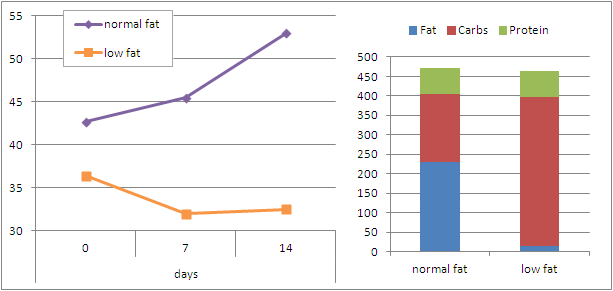
Fatty fish, eggs, organ meats, full fat organic (raw) dairy products - all those good foods which have been banned from YourPlate (at least if it contains what the US government's MyPlate suggests is healthy) are not only high in vitamin D, they are also high in fat. Against that background and in view of the fact that our ancestors did not buy their vitamin D at the local health food store, it is only reasonable to assume that our digestive tract was designed to absorb the little additional vitamin D we are supposed to get from foodstuff (you know that I am a firm believer in the power of sunlight - even beyond vitamin D) in the presence of fat. And guess what, a recent study, which was obviously not published in the Journal of the American Medical Association (cf. 1. in the previous list of possible explanations for the lack of conclusive scientific evidence on the usefulness of vitamin D supplementation), shows exactly that: without the concomitant presence of significant amounts of dietary fat, even 50.000IU of supplemental vitamin D3 have no effect on the serum levels of 25(OH)D, the active form of vitamin D (Raimundo. 2011, cf. figure 1).
Figure 1: 25(OH)D levels of 30 healthy men and women after ingestion of 50.000IU vitamin D3 supplement in conjunction with a normal or low fat breakfast (data calculated based on Raimundo. 2011)
And, as the detailed macronutrient breakdown in figure 1 (right) shows, the "high fat" breakfast the 30 young (~27y), healthy, non-obese, vitamin-d sufficient men (n=12) and women (n=18) ingested with a 50.000IU vitamin D3 capsule in the morning after an overnight fast, did not even consist of eggs and bacon. It was comprised of whole milk, white bread with bologna, and vegetable oil margarine and the whole milk aside, probably not much healthier than the skim milk, white bread with fruit jelly, and fruit salad breakfast the low-fat group had to eat. The additional 23.9g of fat did nevertheless make a huge difference, as far as the absorption and subsequent utilization of the vitamin D3 supplement is concerned.

No fat, no sun, no vitamin D - regardless of supplementation

Image 3: Get your D from the sun, if you can!
In view of the fact that the subjects were advised to "avoid sun exposure and changes in their usual eating pattern [which were probably low in dietary vitamin D] for the next two weeks", it is thusly hardly surprising that contrary to the "high fat" (I deliberately labeled it "normal fat" in figure 1 ;-) group, the subjects in the low fat breakfast group suffered a -11% decline in 25(OH)D serum levels over the 14-day follow up period, which other than the inter-group difference of 35% (!), did not reach statistical significance (mainly due to the small number of participants, where inter-subject variability renders even relatively profound differences "statistically non-significant").


And while the scientists concede that the small scale of the study, the lack of detailed recordings of the subjects' dietary vitamin D intake in the course of the 14-day follow up period and the reliance on 25(OH)D level as single surrogate for serum vitamin D levels (remember that we are actually talking about a whole host of "vitamins D") are limitations of their study, Raimondo et al. are nevertheless right to conclude that their "findings can have important implications to define the adequate dietary intake of vitamin D"... implications, which may well go beyond the mere recomendation to take your vitamin D with fat. After all, increased absorption would mean decreased need for supplementation and who knows whether you could not easily satisfy your dietary vitamin D requirements without any supplements, if you just set the "low-to-no fat, no dangerous organ meats" dietary recommendations at naught?

Sun-Burn Free Tanning Bed Tan, But 4x Increased Cancer Risk Even W/Out A Single Sunburn! Plus: Carotene + X Cocktail Protects and Tans You From the Inside Out!

Even if you don't get burned tanning beds pose a risk factor!
I am not aware who invented the myth, but I am quite sure it's the tanning bed industry that propagates it: Tanning in what Germans call the "Asi-Toaster" (literal translation "a toaster for nackers") is safe!

If we put some faith into the results of a recent study from the Department of Dermatology at the University of Minnesota this is a fatal error. "Toasting" yourselves on a tanning bed increases your risk of developing skin cancer by 287%! Or, if you like that better, it almost quadruples (4x) it!

The results Rachel Isaksson Vogel and her colleagues from the University of New Mexico Cancer Center and the Brown University present in their latest paper in the Journal of the National Cancer Institute (JNCI) will probably be quite shocking for some of you who relied on the ability of the UV-filters in tanning beds to reduce the increase in cancer risk (Vogel. 2014).
There are better ways to get your vitamin D than tanning beds, learn more the SuppVersity

How Much To Take?

Leucine, Insulin & Vitamin D

Vit. D Speeds Up Recovery

Overlooked D-Sources

Vitamin D For Athletes!

Vitamin D Helps Store Fat
If you look at the data that's based on an analysis of the tanning practices of 1852 subjects, it becomes pretty obvious: The protection the filters appear to offer against sunburns does not translate into cancer protection! On the contrary!
Figure 1: Risk of melanoma by ever use of indoor tanning among individuals who tanned indoors without burning and never users stratified by lifetime burns from sun as estimated using logistic regression (n = 1852; cf. Vogel 2014).
If you scrutinize the data in Figure 1 you will have to admit that it is obvious that those of the subjects who were cautious enough not to expose themselves to "real sun" to avoid getting burned, were the ones with the highest melanoma risk due to tanning bed radiation! Those who avoid the sun like a plague have a 4x higher risk even after adjustment for
  • What else can protect you? Peer reviewed evidence for skin cancer protective effects exist from:
    • milk thistle (Katiyar. 2005)
    • melatonin (Janjetovic, 2014)
    • calcium (1g) + 400IU vitamin D3  (-37% in women with increased risk; Tang. 2011)
    • retinol (25,000IU/day; cf. Moon. 1997)
    • retinol and zinc + riboflavin and niacin + vitamin C and molybdenum (at 1-2x the RDA; cf. Blot. 1993)
    Too much antioxidants, on the other hand have been shown to increase cancer risk in women (#68%; cf. Hercberg. 2007). Against that background, a reasonable amount of controlled sun exposure and a coretene rich diet offer  probably the best protection.
    sex, age at reference date (in years), 
  • eye color (gray/blue, green, hazel, or brown), 
  • hair color (red, blond, light brown, or dark brown/black), 
  • skin color (very fair, fair, light olive, vs dark olive, brown, very dark brown, or black), 
  • freckles (none, very few, few, some/many), 
  • moles (none, very few, few, some/many), 
  • income (≤$60,000, >$60,000, missing), 
  • education (completed college, did not complete college), 
  • family history of melanoma (yes, no, missing), 
  • lifetime routine sun exposure (continuous), 
  • lifetime sun exposure from outdoor activities (continuous), 
  • lifetime sun exposure from outdoor jobs (continuous), and 
  • lifetime sunscreen use (continuous) 
using propensity score methods in two-sided statistical tests. In other words, while the raw data on the left hand side is confounded by being at high risk and avoiding the real sun, the data on the right hand side (orange bars) is not!

Now you want a supplemental alternative / adjunct, right?

Against that background the promised "supplemental tanning formula" which consists of pretty ordinary supplements, you can find on the shelves of every larger Internet-retailer will probably become even more interesting, right?
Table 1: Tanning of different body regions before and after treatment with the supplement combo ()
I have to admit, the results scientists from the Laboratoire OENOBIOL in Paris recorded are not very impressive (see Table 1), but the difference was significant and - and this may be even more important - the ingredients, i.e. 3mg beta carotene, 3mg lycopene. 5mg vitamin E (alpha tocopherol), and 30mg vitamin C (ascorbic acid) were ingested in a no-tanning scenario.
You want to kill two birds with one stone? Try "Tomatorade(R)" and get your daily tanning (Postaire. 1997) and cancer protective (Aust. 2005) dose of lycopene right from nature.
Bottom line: The fact that the "supplemental tanner" worked even in a no-sun-exposure scenario is interesting, because lycopene, in particular has been shown to be preferentially destroyed by UV radiation, in the course of the tanning process. The slight tan the subjects developed upon it's supplement restoration is thus only the cosmetic side of the benefits one can derive from this combo. What makes it really interesting, though, is that it will simultaneously build the skins defenses against UV-radiation and could thus be used in conjunction with reasonable (=partial shade) sun exposure to develop a beautiful and healthy tan without havin' to resort to the aforementioned "Asitoaster" and/or drugs like melanotan.
Reference: 
  • Aust, Olivier, et al. "Supplementation with tomato-based products increases lycopene, phytofluene, and phytoene levels in human serum and protects against UV-light-induced erythema." International journal for vitamin and nutrition research 75.1 (2005): 54-60. 
  • Blot, William J., et al. "Nutrition intervention trials in Linxian, China: supplementation with specific vitamin/mineral combinations, cancer incidence, and disease-specific mortality in the general population." Journal of the National Cancer Institute 85.18 (1993): 1483-1491.
  • Green, Adèle, et al. "Daily sunscreen application and betacarotene supplementation in prevention of basal-cell and squamous-cell carcinomas of the skin: a randomised controlled trial." The Lancet 354.9180 (1999): 723-729. 
  • Hercberg, Serge, et al. "Antioxidant supplementation increases the risk of skin cancers in women but not in men." The Journal of nutrition 137.9 (2007): 2098-2105.
  • Janjetovic et al. "Melatonin and its metabolites ameliorate UVB-induced damages in human epidermal keratinocytes." Journal of pineal research (2014). Ahead of print.
  • Katiyar, Santosh K. "Silymarin and skin cancer prevention: anti-inflammatory, antioxidant and immunomodulatory effects (Review)." International journal of oncology 26.1 (2005): 169-176.
  • Lappe, Joan M., et al. "Vitamin D and calcium supplementation reduces cancer risk: results of a randomized trial." The American journal of clinical nutrition 85.6 (2007): 1586-1591.
  • Moon, Thomas E., et al. "Effect of retinol in preventing squamous cell skin cancer in moderate-risk subjects: a randomized, double-blind, controlled trial. Southwest Skin Cancer Prevention Study Group." Cancer Epidemiology Biomarkers & Prevention 6.11 (1997): 949-956.
  • Postaire, Eric, et al. "Evidence for antioxidant nutrients‐induced pigmentation in skin: Results of a clinical trial." IUBMB Life 42.5 (1997): 1023-1033.
  • Tang, Jean Y., et al. "Calcium plus vitamin D supplementation and the risk of nonmelanoma and melanoma skin cancer: post hoc analyses of the women's health initiative randomized controlled trial." Journal of Clinical Oncology 29.22 (2011): 3078-3084.
  • Vogel, et al. "Exposure to Indoor Tanning Without Burning and Melanoma Risk by Sunburn History." JNCI J Natl Cancer Inst (2014) 106(7): dju112 doi:10.1093/jnci/dju112