As Meaghan E. Maddigan, Duane C. Button and David G. Behm from the Memorial University of Newfoundland rightly point out, "the back squat is a traditional resistance training exercise." (Maddigan. 2014).
The use of resisted sled exercises, on the other hand, is a relatively new phenomenon of which we don't even know yet how it compares to the classics.
Accordingly, Maddigan et al. set out to compare the muscle activation between squatting and sled pushing on the activity of leg and trunk muscles in ten healthy resistance-trained men in the context of a randomized crossover design study.
Farmer's Walk or Squat? Is Strong- men T. For You?
Full ROM ➯ Full Gains - Form Counts!
Cut the Weight, Add the Vibe - Vibration Plates
Up Your Squat by 25% With Sodium Bicarbonate
The study consisted of 2 preparation sessions and 2 testing sessions. Electromyographic (EMG) activity of the rectus femoris, biceps femoris, gastrocnemius, lower erector spinae, and the transversus abdominis/ internal obliques (TrA/IO) were monitored during a 20-step maximum push with the weighted sled apparatus and a 10 repetition maximum with a bilateral back squat.
All ten subjects were healthy resistance-trained men (age 24.6 years, mass 84.5 kg, height 178.3cm) who had at least 2 years of resistance training and squat experience and were also familiar with performing the sled exercises (however, the volume of squat experiences exceeded sled training volumes or training durations).
Figure 1: Average root mean square (RMS) EMG recorded in exercise phase 1, 2, and 3 (EMG signal was calculated over a 1-second segment of the concentric contraction phase of each step or repetition) from (A) rectus femoris, (B) biceps Femoris, (C) gastrocnemius, and (D) erector spinae during the concentric portion of the sled and squat exercises. Open circles represent the sled condition, whereas the filled squares represent the squat condition (Maddigan. 2014).
As you can see in Figure 1 there were nonsignificant trends for the rectus femoris ( p = 0.092: 8.6– 16.7%) and biceps femoris ( p = 0.09: 10.5–32.8%) to demonstrate higher activity with the sled and squat exercises, respectively. A result based on which you could conclude that
squatting is better for the quads, while
sled pushing is th better hamstring exercise
Maddigan et al. also observed main effects for condition with 61.2% greater gastrocnemius EMG with the sled exercise ( p = 0.01) and 74.5% greater erector spinae EMG activity with the squat (p = 0.002). For the transversus abdominis/ internal obliques, however, there were no significant differences between the exercises for the.
Building the Jack-of-All-Traits Legs Workout With Squats, Jump Squats and Body Weight Plyometrics? At Least for Physical Education Students that Seems to Work | more
Bottom line: As the authors write in their conclusion, "the sled and squat exercises provided similar EMG activity for the quadriceps, hamstrings, and ransversus abdominis/ internal obliques." In that the squat may be more favorable for developing the quads, while the sled is the better hamstring activator and calf (gastrocnemius) builder.
As Maddigan et al. say, the decision which of the exercises is "best" for you will depend "on the movement-training specificity of the sport" you compete in. "[E]ither exercise may be used in a training program while acknowledging the differences in gastrocnemius and erector spinae activity." (Maddigan. 2014)
One question remains, though. Will the long-term adaptations reflect the different EMG-activation in the study at hand? To a certain extend this will probably be the case, whether and to which extent you would make better progress with one over the other exercise and if it makes sense to do both (maybe in an A-B workout style) will still have to be elucidated | Comment on Facebook!
References:
Maddigan, Meaghan E., Duane C. Button, and David G. Behm. "Lower-Limb and Trunk Muscle Activation With Back Squats and Weighted Sled Apparatus." Journal of strength and conditioning research/National Strength & Conditioning Association 28.12 (2014): 3346-3353.
Training till you drop? Well with some ATP 30 minutes before your workout it may take a couple of minutes / workout sessions more to "drop" ;-)
If you drive a Porsche that runs on super you would not put crude oil in the tank, would you? Well, why do you eat carbohydrates and fats then, when ATP, i.e. adenosine triphosphate, is the "fundamental energy unit" in our bodies? Why don't we guzzle ATP all day to run with the speed of light and lift with the force of an elephant? When? Well before, during and after a workout - sounds right, hah?
Ok, ok, we are not "meant" to do so, I know... but even if you managed to keep the "paleo logic" out of the equation for once, there would be another stumbling block. Oral ATP is - supposedly - not bioavailable, at least that's what many people think.
"ATP supplements are not orally bioavailable."
In fact, Arts et al. even used the words in the subheading of this paragraph as the title to the paper in which they describe the results of their 2012 randomized, placebo-controlled cross-over study that involved eight healthy volunteers who received 5,000mg of oral ATP per day (Art. 2012). In order to make sure that they did not simply use an inappropriate delivery route Art et al. even used three different delivery routes: Two types of pH-sensitive, enteric-coated pellets (targeted at release in the proximal or distal small intestine), and a naso-duodenal tube. Increases in ATP were not measured with any of the preparations, though.
In previous studies even 5,000mg of ATP were "in and out" in 2x30 min and the 1250mg dosage (top) did not leave any significant impression, the only sign. effect was an increase in uric acid (not shown; Coolen. 2011)
Being aware of both this and a previous study on the effects of chronic oral ATP administration (5,000mg/day) by researchers from the same research group that concluded
"On the basis of these findings, we seriously question the claimed efficacy of oral ATP at dosages even lower than that used in the present study" (Coolen. 2011),
I was pretty surprised, when I hit upon a recent study in the Journal of the International Society of Sports Nutrition that says: Oral ATP supplementation works! ATP does - at least this is what the study suggests - "enhance muscular adaptations" and "prevent decrements in performance following overreaching".
That certainly sounds like something ATP could do - if it actually made it to the muscle cells. So is it possible that the previous studies were flawed? Are we missing something? I guess so. Firstly, the results of any ATP measurements will depend on the ATP pool you chose to analyze or as Wilson et al. rightly point our:
"[T]he biological pool where ATP is measured will determine the results of bioavailability analysis. If sampled in venous portal blood, oral ATP is indeed bioavailable" (Wilson. 2013)
Now exactly this, i.e. an analysis of the venous portal blood was what Coolen et al. didn't do. It is still interesting that there was a minor systemic increase with the highest dose of ATP in the Coolen, though. After all this tells us something about the absorption kinetics and thus the ideal time to ingest ATP supplements, which should accordingly be ~30min before a workout. And indeed, 30min is exactly the timespan between the ingestion of 400mg of ATP (in the form of ATP disodium) and the first set of the resistance training sessions in the Wilson study.
Overreaching tapering and ATP supplementation
Apropos, resistance training, the 24 subjects (3 dropouts during the study, so that N=21) were resistance trained men with a mean age of 23.4 ± 0.7 years and an average one-repetition maximum of 1.71 ± 0.04, 1.34 ± 0.03 and 2.05 ± 0.04 times their own bodyweight for squat, bench presses and deadlifts, respectively. Obviously none of them was taking steroids, other performance enhancing supplements, smoking pot ... you know the rest of the list ;-)
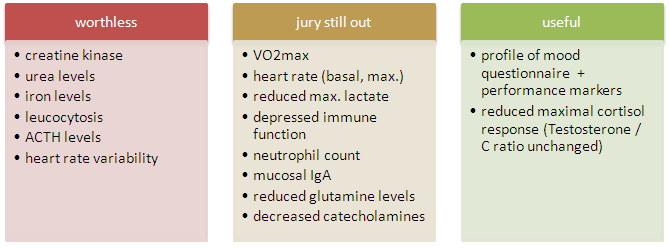
Contrary to strategic overreaching, which can be highly productive, there is nothing beneficial about overtraining. Unfortunately, it is pretty difficult to objectively determine where one ends and the other begins. Learn more about useful, less useful and totally useless markers I suggest you surf over to this previous SuppVersity article.
"The protocol was divided into three phases. Phase one consisted of a three times per week non-linear periodized RT program for weeks 1–8, modified from Kraemer et al. (2009). Phase two consisted of a two-week overreaching cycle during weeks 9–10. Finally, phase three consisted of participants tapering for weeks 11 and 12. Muscle mass and body composition were measured at baseline and at the end of weeks 4, 8, and 12. Muscle strength, vertical jump power, Wingate peak power (PP), creatine kinase (CK), C-reactive protein (CRP), free and total testosterone, and perceived recovery were measured at baseline and after weeks 4, 8, 9, 10 and 12." (Wilson. 2013)
I know that (at least some of) you are not really interested in these details, at least not before they have not had the following questions answered: "Ho much more muscle?", "How how much less fat?" and not just as popular "How much stronger?". I guess figure 1 should answer all these questions, doesn't it?
Figure 1: Changes in body composition and total strength after 4, 8 and 12 weeks (Wilson. 2013)
Now, of the changes Wilson et al. observed the slightly more pronounced increases in fat loss was clearly statistically non-significant. The rest of the parameters, on the other hand, showed statistically significant inter-group differences. Among these, I personally consider effect the ameliorative effects of the ATP supplementation had on the the strength decrements that occurred in the placebo group aver the overreaching most significant. Why? Well, only with the provision of ATP did the overreaching period lead to the strength (and thus performance) gains trainers and trainees expect.
Similarly beneficial effects were also observed for the protein breakdown. Despite being slightly increase in the regular training phase, the latter was significantly reduced by the ATP supplements, when the subjects were overreaching.
"We can speculate that under normal conditions of training, when glycogen levels are likely adequate those participants supplementing with ATP were able to maintain higher intensities, which would result in higher rates of protein breakdown. However, when exposed to greater training frequencies, glycogen levels are likely to be depleted, thus preventing higher intensities from being performed." (Wilson. 2013)
Against that background it should be obvious that the provision of ATP during phases of intense pre-season / pre-competition training could in fact boost the training outcome to new heights by bolstering the strength (and mass) increases during the taper after a typical pre-season overreaching phase.
If your training log tells you that you neither gained weight nor strength in the past two months, you'd just waste your money if you bought an ATP supplement before you fixed your broken workout and nutrition regimens. If you have no clue how to do that, I suggest you start with the Step-By-Step Guide to Your Own Workout Routine and set up a new routine that's in line with your social life, training status and current goals (open with IE or FF).
Bottom line: Irrespective of my initial (healthy ;-) skepticism, I must admit that the results Wilson et al. present in their most recent paper are not just impressive, they are also credible. With an excellent safety profile (none of the blood parameters Wilson et al. tested showed any abnormalities) and a mechanism of action that should offer synergies with the current staple supplements many of you are using, the provision of 400mg ATP ~30min before a workout (remember: In this case timing will probably matter) could actually produce visible changes to the figure and figures you see in the mirror and your training log, respectively.
If you are not pushing yourself hard enough, are chronically overtraining, don't have your diet in check, don't get enough sleep and have thus not made any gains in the past months, however, you better save your money and return to the drawing board to come up with a better training and nutrition plan, first.
References:
Arts IC, Coolen EJ, Bours MJ, Huyghebaert N, Stuart MA, Bast A, Dagnelie PC. Adenosine 5'-triphosphate (ATP) supplements are not orally bioavailable: a randomized, placebo-controlled cross-over trial in healthy humans. J Int Soc Sports Nutr. 2012 Apr 17;9(1):16.
Coolen EJ, Arts IC, Bekers O, Vervaet C, Bast A, Dagnelie PC. Oral bioavailability of ATP after prolonged administration. Br J Nutr. 2011 Feb;105(3):357-66.
Kraemer WJ, Hatfield DL, Volek JS, Fragala MS, Vingren JL, Anderson JM, Spiering BA, Thomas GA, Ho JY, Quann EE, Izquierdo M, Hakkinen K, Maresh CM: Effects of amino acids supplement on physiological adaptations to resistance training. Med Sci Sports Exerc. 2009, 41(5):1111–1121
Wilson JM, Joy JM, Lowery RP, Roberts MD, Lockwood CM, Manninen AH, Fuller JC, De Souza EO, Baier SM, Wilson SMC, Rathmacher JA. Effects of oral adenosine-5[prime]-triphosphate supplementation on athletic performance, skeletal muscle hypertrophy and recovery in resistance-trained men. Nutrition & Metabolism 2013, 10:57.
Actually, it would make as much sense to split this part of the SuppVersity EMG Series in two, if not three individual analyses, as it would to split your leg workout over two if not three days. In practice, however, most trainees go through the grueling torture of the dreaded "leg day", just once a week and thus I will mirror this practice by writing a similarly gruelingly long blogpost on the best exercises for the major
Image 1: The major muscle groups of your legs. Quadriceps, adductors, abductors, gluteus, hamstrings, gastrocnemius & soleus
the quadriceps (red) - powerful extensors of the knee joint;crucial in walking, running, jumping and squatting; strongest and leanest muscle in the human body
the gluteus (yellow) - three muscles that make up the buttocks: the gluteus maximus muscle, gluteus medius muscle and gluteus minimus muscle;
the hamstrings (blue) - comprises the semitendinosus, semimembranosusand the short and long head of the biceps femoris, of which the former extend the hip when the trunk is fixed, flex the knee and medially (inwardly) rotate the lower leg, when the knee is bent, while the latter extend the hip (e.g when we begin to walk), flex the knee and laterally (outwardly) rotate the lower leg when the knee is bent
as well as the "minor" muscle groups of your legs
the adductors (cyan) & abductors (magenta) at the inside and outside of the tighs, and
the gastromenicus (light green) & soleus (highlighter green), the major muscles of your calves
In the end it is the the muscular development of all of them that eventually distinguishes the men from the boys. And by the way, playing football or, here in Germany, soccer, is no excuse for not training your legs!
Chest
Biceps
Back
Core
Legs
Triceps
Shoulders
Navigate the SuppVersity EMG Series - Click on the desired body part to see the optimal exercises.
In view of the sheer amount of information this part of the EMG Series is going to contain, I will, without further elaborations, go right into an analysis of the most effective exercises, as measured by electromyography (10 male resistance-trained subjects, mean age 22y, mean body-fat 13%; data from Boeckh-Behrens & Buskies. 2000) for all the major and supposedly minor muscle groups of your legs. I. The best exercises for the four heads of the quadriceps Those of you who have read any of the previous parts of this series will already be familiar with the idea of "isolation" being more of a shift in which part of a muscle takes the greatest hit and not so much about training a single strain of a complex muscle such as the quadriceps with its (who would have guessed) four heads. If I am talking about "best exercises for the inner, outer or whatever part" of any given muscle - and this goes for the whole EMG series - what is meant by that is a relative increase in intensity in a given part of a muscle over the rest. Always keep that in mind.
Image 2: Turns out the hack squat is the most effective exercise. In that, going deep (50° knee angle) is only slightly more taxing on the quads than the standard and much safer 90° knee angle.
The most effective exercises with standard equipment:
Hack squats, lying on machine, 50° knee angle
Hack squats, lying on machine, 90° knee angle
Squats, barbell, 70° knee angle
45° leg press, 90° knee angle
Squats, barbell, 90° knee angle
Squats, barbell, 40° knee angle
If you take a look at the results in detail (figure 1), you will notice that the differences between the most (hack squats down to a knee angle of 50°) and the least effective exercise (leg extensions) are far from being earth-shattering.
Figure 1: Relative EMG activity of all four heads of the quadriceps during hack squat, leg press, squat and leg extension variations in comparison to barbell squatting to parallel (knee angle 75°); data adapted from Boeckh-Behrens & Buskies. 2000
What I consider of particular importance is that both in the case of the hack- as well as in the case of the "standard" barbell squat, going beyond parallel (knee angle <70°) is not worth the increased risk of injury (cf. figure 2).
Figure 2: Shear and compressive forces during squat exercise measured at different knee angles; expressed as percentage of the sum of body weight + load (data adapted from a compilation in Escamilla. 2000)
While the EMG activity of the quads may be marginally improved in the case of the hack squat (+0.38%), doing one's squats "ass to the ground", as some people like to call it, actually reduces the quad activity by -10.34%.
Image 3: 45° leg press with a hip angle of 85°; the smaller hip angle (compared to the hack squat) translates into a -16% lower activity of the quadriceps femoris (image everkinetic.com)
Did you know that the smaller the angle of your hip joint (this is in most cases equivalent to the more upright you are sitting or lying on a machine), the smaller is the EMG activity of the quadriceps femoris. During the hack squat exercise, for example the angle of your hip joint is ~100°, the 45° leg press facilitates an angle of ~85° and on the seated leg press the angle is only ~50°. While this does not lead to an 1:1 reduction in EMG activity, the latter is in fact, -16% and -22,5% smaller for the 85° and 50° hip joint angles on the respective exercises.
Training the inner and outer part of the quads Now, if you are a bodybuilder, you will probably be trying to build those "teardrops" (for all real experts who have no clue what those gym-bros refer to as "teardrops", this is the m. vastus medialis, cf. image 3), which actually does not so much look like a tear drop, as it sometimes takes shedding a few tears to get it growing. With respect to the m. vastus medialis Boeckh-Behrens and Buskies have to say that
[the inner part of the quadriceps] is maximally activated via variants of the horizontal leg presses / hack squats - either deep [knee angle <70°] with less weight or not deep [knee angle >70°] with more weight - variations in weight and knee angle tend to be equivalent.
So after all, even your "tear drops" benefits most if you just keep doing those exercises that hammer the quads, i.e. all four heads, as a whole. A slightly narrower stance, however, may be advantageous, while the positioning of the feet, i.e. parallel or with your feet pointing outward at a 30° angle seems to be negligible (+/- 0.25%).
Figure 3: Relative EMG activity of the outer part of the quadriceps (m. vastus lateralis) during barbell squat and single legged squat variations in comparison to barbell squatting to 90° knee angle; data adapted from Boeckh-Behrens & Buskies. 2000
Image 4: Inner (vastus medialis), medial (vastus intermedius & rectus femoris) and outer (vastus lateralis) parts of the "quads"
As you can see in figure 3, things are quite different, when it comes to the outer part of the "quads". Whereas the standard squat with high loads provides maximal muscle stimulation of the m. vastus lateralis, even if you do not even go down parallel to the floor (knee angle 70°), doing the "full squat" down to 40° with an appropriately lighter weight takes away -18% of the stimulus. Similar results can be seen for the isolation exercise single legged squats, where likewise the principle for maximal muscle stimulation reads more weight, greater knee angles (not going past parallel) - a principle, which can also help you keep injury free, as long as you do not wrench it as long as it say more weight and a smaller knee angle, in which case it is a safe bet that you would hurt yourself - probably sooner, than later. Training the medial part of the quads In view of what has been said before with regards to the maximal activation of the fashionable "teardrop" muscle, it is not really surprising that the usual suspects, i.e. the hack squat and the leg press are among the most effective exercises for the medial part of the quads, i.e. the m. vastus intermedius and the m. rectus femoris, as well.
Figure 4: Relative EMG activity of the medial part of the quadriceps (vastus intermedius & rectus femoris) during selected exercises in comparison to hack squats to a 50° knee angle; data adapted from Boeckh-Behrens & Buskies. 2000
Figure 4 does yet go to show you that there is one relatively unknown "special exercise" for soccer players, as Boeckh-Behrens and Buskies like to call it, that outperforms even the hack squat. It's basically the leg kick you see the ladies do with those straps attached to their ankles in order to build one of those J'Lo-ish behinds, but in this case you do it the other way around, or, as the authors suggest, "think of kicking a ball". The +19% higher EMG activity compared to the hack squat (similar results have been found for the standard leg extensions vs. squats by scientists from the Marquette University in Milwaukee, Wisconsin; Ebben, 2009), suddenly makes, what you probably regarded as one of those ridicolously girly exercises, look like a worthwile addition to your regimen... well, at least, in case you are one of those rare exceptions who have an underdeveloped rectus femoris ;-)
Speaking of girly exercises... while it certainly is manly to squat 500lbs, it is not advisable to do so on a daily base. Even the strongest men in the world regard their training sessions asexactly that, the "process of developing the bodily vigour and endurance by systematic diet and exercise, so as to fit for some athletic feat" (Oxford English Dictionary, "training"), or, in other words, as the means to an end. Remember: King-size egos rarely built king-size quads.
II. The Best Exercises for The Gluteus maximus
Image 5: Atlantic Fitness' interpretation of what Boeckh-Behrens & Buskies call a "hip pendulum"
If you have already taken a look at the data in figure 5, you are probably now asking yourself what this strange leg curl variety that is supposed to activate the glutes ~2.3x as effective as a deadlift is all about. Those of you who read the core-episode of this series and the information about the best exercises for the erector spinae, in particular, will be familiar with its name, however. In essence, this is a standard leg curl, but instead of pushing your ties into the pad you are lying on, you try to lift them up, i.e. to curl your hips back, and forcefully contract the muscles of your lower back, your gluteus maximus and your hamstrings. If that's too complicated for you or just doesn't feel right, you can still look out for what Boeckh-Behrens & Buskies call a "hip pendulum" (cf. image 5) and use that instead.
Figure 5: Relative EMG activity of the m. gluteus maximus during selected exercises in comparison to deadlifts using a weight that matches your own body weight; data adapted from Boeckh-Behrens & Buskies. 2000
Of the exercises without additional weight, only leg kick variations, particularly if they are done with peak contractions and/or ankle weights, provide appreciable muscle stimuli, the intensity of which is about equal to to the leg kicks on the hip pendulum (cf. figure 4). III. The Best Exercises for the Hamstrings For the hamstrings the good old lying leg curls are what biceps curl are for the two-headed muscle of your upper arm. And, in fact, the results of the EMG measurements by Boeckh-Behrens & Buskies confirm that generations of trainees cannot be wrong. Similar to the concentration curls in the case of the biceps, only the use of intensity techniques, i.e. partials in the stretch position or peak contractions elevates the already phenomenal EMG values of the standard variety of the lying leg curls to 134% and 112% of the activity measured on the reference exercise (cf. figure 5)
Figure 6: Relative EMG activity of the muscles of the hamstrings during selected exercises in comparison to standard lying leg cursl; data adapted from Boeckh-Behrens & Buskies. 2000
Done correctly, i.e. with a leg angle of 100°, the leg or hip lift is the only body-weight exercise that can compete. With <50% of the muscle activity of the standard lying leg curls, hyperextensions, on the other hand, will do little for your hamstring development.
Did you know that doing partials and peak contractions is particularly effective eccentric exercises? On concentric exercises such as the squat, on the other hand, they increase your chance of getting injured and contribute little to the efficiacy of your training. Tip: If you are talking to your gym partner or, god-behold, your clients about these intensity techniques, you better not call them "X-reps "- otherwise you could be charged by some clever business men who know how to relable training techniques that have been around ever since the early days of physical culture in order to monetize on these "revolutionary new training techniques".
Image 6: An adductor machine, as you probably know it from your gym, as well.
IV. The Best Exercises for Adductors and Abductors
As you probably have expected, the adductor and abductor machines that are mostly operated by the female gym members, are the reference exercises to train the muscles on the inner and outer sides of your tighs. Unfortunately the build of these machines varies from one manufacturer to another, so that you can hardly be sure whether or not your adductor machine will produce the same muscular activation as the ones used in the study. The same holds true for the funky hip pendulum machine, the use of which as an adductor or abductor trainer is pretty tricky, anyways.
Figure 7: Relative EMG activity of the adductors and abductors during selected exercises in comparison to the respective machines (since the exact value for the abductor machine was not given by the authors, the latter is an estimation based on the rank of the exercise); data adapted from Boeckh-Behrens & Buskies. 2000
Viable alternatives for these machine based exercises are the cable adduction(moving leg pulled in before the stabilizing leg) and, probably to the surprise of those among you who refrain from doing body weight exercises completely, the side bridge with hip abduction.When you are squatting, on the other hand, only the adductors are significantly involved in stabilizing the movement. To further increase their activity, you can do your hack squats with a wider stance and your toes facing slightly outward (30°), which will increase the load on your adductors and intensify the exercise by +3%. V. The Best Exercises for the Calves While chicken legs are no exception especially in many of the fitness oriented gyms, toothpick calves are becoming more and more the rule, especially among those trainees who love to do their endless cardio sessions on an elliptical. At the same time few people want to spend an adequate amount of time in training their calves. It is thus all the more important to know which exercises are effective and which are not.
Figure 8: Relative EMG activity of the calf muscles during selected exercises in comparison to the standing calf raises; data adapted from Boeckh-Behrens & Buskies. 2000
As you can see, you cannot avoid doing any variety of calf raises unless you are satisfied with a >65% reduction in muscle activity of the calves when you are doing your lying leg curls for your hamstrings. That being said, there are a few tweaks that make the exercises even more effective. The first, thing you can always incorporate are peak contractions and forced contractions in the stretched position. Moreover, it is imperative that you do not actively bend the knees during the seated calf raise (no bouncing!), if you do not want to reduce the muscle activity by -11%. And in a similar vein, you also do not want to mess with foot position, because (surprisingly?) the parallel foot position is the one that activates the inner, as well as the outer part of the m. gastrocnemius maximally (cf. figure 8)!
Figure 9: Relative EMG activity of the m. gastrocnemius with different foot positions; data adapted from Boeckh-Behrens & Buskies. 2000
In that, it is worth mentioning that the overall activation of the calves is maximized during standing and bent-over (donkey) calf raises, while the m. soleus activity is highest when you do seated calf raises.
A rule of thumb with regards to the activation of m. gastrocnemius vs. m. soleus is "maximize knee angle (as in standing calf raises or donkey calf raises) to maximize gastrocnemius, minimize knee angle (as in seated calf raises) to maximize soleus activity". Note: It is nonetheless imperative (especially if you are using higher loads) not to forcefully lockout your knees, in order to avoid injury.
Image 7: "Real men" ain't ashamed of doing donkey calf-raises like Dave Draper and Arnold used to do it ;o)
Last but not least, a short note on the "high reps for calves"-myth. While I do not question that many trainees just don't feel their calves working, if they do not go into the 50+ rep range, this is not due to the anatomy, the fiber type or whatever crazy anomaly of the calf muscle, but simply due to a faulty execution of the respective exercises. Bouncing, not utilizing the full range of motion and insufficient time under tension (1 sec up, 1-2 sec hold, 3 sec down, would be an appropriate way to go), the by far commonest mistake I see in the gym is turning your calf into a toe exercise by not pushing from the balls of your feet, but from the toes. Now guess what, it takes some time until your toes are finally fatigued and your calves get some work to do ... what would you say, maybe 20-30 reps? Hmm... that would mean that of your 50 reps of calf raises 30 are toe raises and the last 20 actually train your calves - does not sound particularly effective, does it? V. Conclusion: Too Much Work for a Single Day! Now, that you have arrived at the end of this concise and yet super-long write-up on leg training, you should actually ask yourself how and why you have hitherto packed all that stuff into a single workout. Well, I guess, after all, this is a very reasonable question. Nevertheless, fitness competitors and body builders alike have demonstrated time and again that a single "leg day" per week can suffice to build spectacular legs. Is this all genetics or are those guys (and, of course girls) spending the whole day in the gym?
Video 1: Arnold leg training compilation; only the strong will survive ;-)
Did you know that Arnold Schwarzenegger, as a teenager took a barbell into the woods, where he and his friends squatted till they couldn't stand. This does not go to say that this would be the way to go for anyone - especially not the drug free weekend warrior who just wants to keep in shape, but leg-day or not, whenever you train your legs you should take a look at your toothsticks and ask yourself "How many sets have I done for chest, biceps and triceps this week?" If you did more for those than your did for your legs, you better add another set of squats.
Well, I guess some of the "pros" actually spend the whole day in the gym, but a lot of dedication aside, most of them also use an array of "special equipment" to make those workouts extra productive. My personal experience, on the other hand, tells me that legs can in fact sustain much more volume than many trainees claim from themselves (cf. "Did you know...", above). Yet, while I would think that it was possible to do at least a single working set of all "optimal" exercises, the "EMG-optimized routine" I am going to suggest below deliberately shifts the focus from those "optimal" isolation exercises to the optimal varieties of those compound movements that have built such incredible powerful 38"+ tighs on which Tom Platz and some other old school bodybuilders were walking through the gym.
Did you know that compound exercises such as squats and deadlifts have been found to increase the hormonal response to strength training? Well, I guess you did. What may however be news to you is that these temporary increments are hardly going to exhibit those steroid-like effects some trainees seem to be expecting. This does not mean that the value of these exercises is overrated (on the contrary!), but rather that the increase in GH or testosterone after an intense squatting workout is corollary to, not causative of the efficiacy of these exercises.
The reason for that is quite simple: While a set of barbell squats may not activate your glutes like the strange hip pendulum, your quads like the Beckham-ish leg kicks and your adductors like the girly adductor machine, it will nevertheless build adequate power and mass in all three of these muscles, fortify your core, your calves, your upper back and even help with conditioning and fat loss. In other word, as gruelling as they may seem compared to some of the machine based isolation stuff, compound exercises will still give you the most bang, in this case muscle and strength gains, for your bucks, i.e. the time you spent and the energy you invest in the gym.
Image 8: As long as you are injury free, there is noo way to get around squatting - one way or another (image everkinetic)
If you cannot do squats use leg press machines instead.
As a beginner always have a qualified trainer show you how to squat.
An EMG-optimized routine There is of course a myriad of ways of combining the individual exercises, my personal recommendation for overall leg development (based on EMG measures) would yet be as follows*:
Squats - to parallel (70°), 6-10 reps
Hack squats - to 90°, 8-12 reps
Leg curls - peak contract. or partials, 10-12 reps Superset:
Donkey calf raise - peak contract., 12 reps
Seated calf raise - partials, 12 reps Optional
Adductor machine - 12-15 reps
Abductor machine - 12-15 reps
You may notice that I do not make volume (i.e. set) recommendations. This is due to the fact that I found that everyone has to find what works best for him / her in terms of optimal volume and training frequency. This may also change over time / according to lifestyle factors / nutrition and supplementation.
This photo from motivationblog.org borders sexism, but you must understand ladies: Men are simple and lazy folks and you know about the importance of squats, anyways, right?
No, you're not mistaken exercise and fat loss science (at least statistically your favorites) in a single blogpost. And as if that was not already enough, two of my favorites are also part of the game:
For one thing the subjects in the latest study from the National Institute of Fitness and Sports in Kanoya, Kagoshima, Japan deals with ways to tackle childhood obesity and for another thing, the results are quite impressive, despite the ingenious simplicity of the approach the scientists used to improve the body composition, increase the fitness level and build muscle strength and size in their adolescent study particpiants:
Do 100-rep body weight squats everyday after school!
For the ninety 13.7 ± 0.6 boys who participated in the study this meant that they were squatting to parallel for roughly 3 minutes 4-6 times per week, without extra weight.
Now you are probably thinking about some of the pampered and fattened Chinese children and how a body weight squat for them equals your 5-RM max, right? As unfortunate as it may be that this could in fact be the case, we are talking about Japan, here - not China - and our young subjects were by no means sedentary couch potatoes. On the contrary, they were 100% average Japanese school boys from a pilot school in Kagoshima (Japan). There were kids who played table tennis (n = 12) and volleyball (n = 11), participated in track and field (n = 5), and Japanese archery (n = 8) in the active arm of the study and baseball (n = 24) and soccer (n = 22) players, as well as boys who were swimming(n = 5) and practicing kendo (n = 3), regularly. In fact,
"[t]he number of times participating in a week and duration involved in their athletic activities in a day were 5.0 ± 2.0 days/week and 2.4 ± 0.9 h/day respectively." (Takai. 2013)
And what's more, all of the active students did take part in competitions at a regional level. The effects you see in figure 1 were thus not of the "Biggest Loser" variety.
Figure 1: Changes in body composition (left) muscle size and strength (right) in adolescent boys after 8 weeks of doing 100 body weight squats 4-5x per week (Takai. 2013)
Ok, the total amount of body fat, the boys lost was not earth shattering, but contrary to the aforementioned "biggest losers" there was not much be lost in the first place; plus, and this is really important, whenever we are talking about body recompositioning in adolescents. The effect was highly squat-specific and not a result of a group specific growth spurt (body height increased 6-7% in both groups in the course of the 8 weeks. Let's not forget: There is more to physical culture & health than fat loss!
I know that fat loss probably is the "sexiest" benefit the (almost daily) squat episodes had, but let's not forget about the rest, i.e.
increases in lean body mass,
increases in muscle thickness and strength of the knee extensors, and
improved vertical jump height.
Which are certainly enough to validate the scientists conclusion that this simple and above all highly practical "exercise regimen" is a ...
"feasible and effective method for improving body composition, the strength capability of the knee extensors and jump performance in adolescent boys." (Takai. 2013)
I guess few of you will consider themselves "adolescent boys" any longer. Thinking of my 90-year old grandpa who did his squats and push ups every morning and made the German Sports Batchwith ease even in the summer before he passed away, I am however pretty sure that you will be hard pressed to find a man or women of any age who would not benefit from something as practical and time-efficient as doing 100 squats every morning before they hop under the shower.
Watching TV & eating junk is only part of the equation; what's missing here is the lack of sleep kids don't get, when they watch TV canned with coke and energy drinks all night (learn more).
A primer on frequent activity!? If you look at the number of studies associating the time you spend in a sedentary state with health outcomes ranging from cardiovascular disease over diabetes up to stroke and Alzheimer's that have been published only within the last months, it becomes more and more evident that the four workouts you may be squeezing into your tight "sit on your but and work" schedule ain't enough to keep you healthy, as long as you spend most of the rest of your time sitting (worst of all in front of a screen; cf. Wijndaele. 2007; Mark. 2008; George. 2013).
Now this wouldn't be science if there was not someone with counter-evidence such as Chaput et al. or Kwon et al. (2013), who found that moderate-to-vigorous (MVPA; ≥488 counts per 15 s) activity could very well protect adolescents from getting obese - whether the same applies to old(er) individuals is yet another story. That this probably ain't the case is supported by a study that's less than a week old and was published in the electronic version of the renowned journal Diabetologia ahead of print. According to Henson et al. who used "objectively measured" activity levels, breaks from sedentary time and total physical activity and MVPA of subjects with increased type II diabetes risk "were significantly inversely associated with measures of adiposity, but not with any other cardiometabolic variables after adjustment for sedentary time and BMI" (Henson. 2013; see Celis-Morales (2012) if you don't believe that using accelerometers instead of questionnaires makes a difference)).
My best bet is that we will never get a definite answer on this chicken or egg question, but an "in office" or "launch break" mini-workout is certainly not going to harm you - the same goes for taking the stairs instead of the elevator, for using the bike instead of the car or for walking to the small supermarket around the corner if you just forgot to buy some tomatoes or whatever.
The only thing that startles me is the absence of increases in sprint performance. It's difficult to say, but if you take a closer look at the baseline sports the participants were engaged in, my best bet is that the 24 baseball and soccer players in the control group, or rather their sports-specific training regimen are responsible for the difference. On the other hand, if we expand on this thought of confounding factors that may skew the study results, we would also have to expect that these boys should have major "fat burning advantage" over their table tennis, volleyball and esp. Japanese Archery counterparts in the active group. That being said, on a level playing field, the effect size may, in fact have been even more pronounced if the scientists had simply randomized the participants to the squat ad control groups.
If you also have something to hold to and do underhand chins, you can do a whole and in fact very effective full-body even when you are traveling. I mean, you still remember that the underhand pull-up is a formidable biceps exercise, as well (learn more)?
Tweaks / adjuncts like these may well be able to rekindle and maintain constant progress - especially in terms of physical conditioning and explosive performance. Not to mention that adding 50 push ups and pull-ups to the equation would make a perfect "travelers workout", which can be performed wherever you can bring and install a doorway pull-up bar. And if you can't do 50 in a row, just use a rest pause technique: Do as many as you can, rest, take 10-12 deep breaths and continue counting from where you stopped in your previous "set" until you hit the targeted rep range.
References:
Celis-Morales CA, Perez-Bravo F, Ibañez L, Salas C, Bailey ME, Gill JM. Objective vs. self-reported physical activity and sedentary time: effects of measurement method on relationships with risk biomarkers. PLoS One. 2012;7(5):e36345.
Chaput JP, Lambert M, Mathieu ME, Tremblay MS, O' Loughlin J, Tremblay A. Physical activity vs. sedentary time: independent associations with adiposity in children. Pediatr Obes. 2012 Jun;7(3):251-8.
George ES, Rosenkranz RR, Kolt GS. Chronic disease and sitting time in middle-aged Australian males: findings from the 45 and Up Study. Int J Behav Nutr Phys Act. 2013 Feb 8;10:20.
Henson J, Yates T, Biddle SJ, Edwardson CL, Khunti K, Wilmot EG, Gray LJ, Gorely T, Nimmo MA, Davies MJ. Associations of objectively measured sedentary behaviour and physical activity with markers of cardiometabolic health. Diabetologia. 2013 Mar 1.
Kwon S, Burns TL, Levy SM, Janz KF. Which Contributes More to Childhood Adiposity-High Levels of Sedentarism or Low Levels of Moderate-through-Vigorous Physical Activity? The Iowa Bone Development Study. J Pediatr. 2013 Jan 7.
Mark AE, Janssen I. Relationship between screen time and metabolic syndrome in adolescents. J Public Health (Oxf). 2008 Jun;30(2):153-60.
Smith MM, Sommer AJ, Starkoff BE, Devor ST. Crossfit-based high intensity power training improves maximal aerobic fitness and body composition. J Strength Cond Res. 2013 Feb 22.
Takai Y, Fukunaga Y, Fujita E, Mori H, Yoshimoto T, Yamamoto M, Kanehisa H. Effects of Body Mass-Based Squat Training in Adolescent Boys. Journal of Sports Science and Medicine. 2013; 12:60-65.
Wijndaele K, Duvigneaud N, Matton L, Duquet W, Delecluse C, Thomis M, Beunen G, Lefevre J, Philippaerts RM. Sedentary behaviour, physical activity and a continuous metabolic syndrome risk score in adults. Eur J Clin Nutr. 2009 Mar;63(3):421-9. Epub 2007 Oct 31.
No, this is no photo from the study. Obviously the LLLT was applied to the legs, but LLLT is also used for shoulder and general muscle pain.
I am usually very skeptical when it comes to therapies that sound extremely cool on paper, but have hitherto only proven to improve markers of muscle damage and/or growth. Before I saw the latest paper from the Universidade Federal de Ciências da Saúde de Porto Alegre (Baroni. 2015) low level laser therapy aka LLLT fell into this exact category of promising, but not proven post-exercise recovery therapies (Baroni 2010a, b).
Said study involved thirty healthy male subjects without previous training/LLLT experience were randomized into three groups.
Read more short news at the SuppVersity to learn more about training & nutrition.
Exercise Research Uptake Nov '14 1/2
Exercise Research Uptake Nov '14 2/2
Weight Loss Supplements Exposed
Exercise Supplementation Quickie
Exercise Research Uptake Jan 12, 2015
Read the Latest Ex. Science Update
The subjects in the control group remained sedentary for the whole 8-week study period. The subjects who had been randomized to the training (TG) and training + LLLT (TLG) groups, on the other hand, were engaged in an 8-week knee extensor isokinetic eccentric training program.
Figure 1: Application points (black circles) used for LLLT (Baroni. 2014)
"Volunteers allocated in TG and TLG were engaged in an 8-week knee extensor eccentric training program. Training sessions were performed twice a week (except for the 1st and 5th weeks), with a minimum interval of 72 h between ses sions. Subjects performed only one training session in the 1st training week to allow for progressive introduction to the training regimen and to avoid having participants undertake an exercise session in the presence of clinical symptoms of exercise-induced muscle damage, such as delayed onset mus cle soreness (Byrne et al. 2004). At the 5th training week, only one training session was performed because the training volume was increased from three to four sets of 10 maximal eccentric contractions.
Each training session was initiated by a 5-min warm-up exercise on a cycle ergometer, followed by eccentric exercises on the isokinetic dynamometer performed according to the protocol of Baroni et al. (2010a). Before each eccentric contraction, the limb was extended passively to 30° of knee flxion and subjects were encouraged to per form a maximal contraction of the knee extensor as soon as the dynamometer arm reached this position. In response to the subject’s extensor torque, the dynamometer drove the seg ment to 90° of knee flxion (range of motion = 60°) at an angular velocity of 60° s−1. A 1-min rest period was respected between sets and verbal encouragement was provided by team throughout the training session" (Baroni. 2014).
Obviously, only the subjects from TLG were treated with LLLT (wavelength = 810 nm; power output = 200 mW; total dosage = 240 J) before each training session, too.
Figure 2: Muscle size and peak torque changes over the course of the 8-week study (Baroni. 2014).
Knee extensor muscle thickness and peak torque were assessed through ultrasonography and isokinetic dynamometry, respectively; and as the data in Figure 2 indicates. Using the low-level laser therapy using a Thor Photomedicine infra-red laser cluster probe consisting of fie GaAlAs laser diodes (810 nm) immediately before each training session with the probe held stationary in skin contact at a 90° angle with slight pressure had significant effects on the outcome of the 8-week eccentric strength training protocol.
How exactly does this work? On a molecular level LLLT has been shown to increase the body's natural anti-oxidant activity (Avni. 2005), boost the mitochondrial respiratory chain activity (Silveira. 2009) and increase the ATP production (Karu. 1995). In conjunction, these effects are probably the reason for both the performance and hypertrophy enhancing effects of LLLT. Further studies are yet warran- ted to identify how they add up / interact.
I am still a bit concerned that most of the research comes from one research group only. Nevertheless, the evidence that the previously recorded LLLT induced decreases in muscle damage (Baroni. 2010a) and fatigue (Baroni. 2010b) are practically relevant in terms of increased size and strength gains is finally there. Whether this warrants spending the money on an expensive LLLT device does yet remain just as questionable as the usefulness of cheaper copy cat machines you can buy on the Internet.
That being said, I will keep you in the loop as far as future studies are concerned. Studies of which I hope that they will (a) use previously trained athletes and (b) a more realistic leg workout that incorporates leg presses and/or squats, as well. These studies would complement the evidence we have from acute studies which have already proven the efficacy of phototherapy after both resistance training (Ferraresi. 2011) and endurance training sessions (de Brito. 2012). | Comment on Facebook!
References:
Avni, Dorit, et al. "Protection of skeletal muscles from ischemic injury: low-level laser therapy increases antioxidant activity." Photomedicine and Laser Therapy 23.3 (2005): 273-277.
Baroni, Bruno Manfredini, et al. "Low level laser therapy before eccentric exercise reduces muscle damage markers in humans." European journal of applied physiology 110.4 (2010a): 789-796.
Baroni, Bruno Manfredini, et al. "Effect of light-emitting diodes therapy (LEDT) on knee extensor muscle fatigue." Photomedicine and laser surgery 28.5 (2010b): 653-658.
Baroni, Bruno Manfredini, et al. "Effect of low-level laser therapy on muscle adaptation to knee extensor eccentric training." European journal of applied physiology (2014): 1-9.
Byrne C, Twist C, Eston R. Neuromuscular function after exercise-induced muscle damage: theoretical and applied implications. Sports Med 34 (2014):49–69.
de Brito Vieira, Wouber Hérickson, et al. "Effects of low-level laser therapy (808 nm) on isokinetic muscle performance of young women submitted to endurance training: a randomized controlled clinical trial." Lasers in medical science 27.2 (2012): 497-504.
Ferraresi, Cleber, et al. "Effects of low level laser therapy (808 nm) on physical strength training in humans." Lasers in medical science 26.3 (2011): 349-358.
Karu, T., L. Pyatibrat, and G. Kalendo. "Irradiation with He Ne laser increases ATP level in cells cultivated in vitro." Journal of Photochemistry and photobiology B: Biology 27.3 (1995): 219-223.
Silveira, Paulo CL, et al. "Evaluation of mitochondrial respiratory chain activity in muscle healing by low-level laser therapy." Journal of Photochemistry and Photobiology B: Biology 95.2 (2009): 89-92.