.

.
marylin monroe
Showing posts with label creatine monohydrate. Show all posts

Creatine a Proven Non-Anabolic! It's the Increase in Training Intensity that Will Give You the Hypertrophic Edge.

Image 1: Still my creatine supplement
of choice: plain creatine monohydrate
You've been taking CreaMegaSuperBol (or whatever the name of the next "improved" creatine product may be), the fanciest new creatine product on the market, and despite spending 50 bucks still do not look like Phil Heath (not even like Jay Cutler ;-)? Well, you must be a creatine non-responder, then - no... Actually not! If there is someone to blame for the misery, it's certainly not your parents, who would be responsible for your "genetic disadvantage", you cannot even blame the supplement producer, because those guys also have to make a living. The one person you probably do not want, but have to blame is YOU!

Take some responsibility for your gains!

Now that I got your attention, let me give you a simple explanation of why you did not gain despite taking truckloads of creatine: you did not train hard enough! Although even the earliest studies on creatine back in the 1990s clearly state that the muscle building effect of creatine is most likely related to its ability to increase training performance (Vandenberghe. 1997; Volek. 1999), and not vice versa, the colorful ads producers of "next generation creatine supplements" *haha* are plastering print and online magazines, message boards and lately even video portals with appear to convey the expression that creatine would actually build muscle. In an article that was published ahead of print in Nutritional Research exactly one week ago, Andreo Fernando Aguiar and his colleagues from the Universities of Sao Paulo and Mato Grasso bust this myth once and for all.

Illustration 1: Sketch of the exercise regimen (Aguir. 2011, fig. 1) and schematic illustration of the linear progression.
In their study the Brazilian scientitsts put 32 male Wistar rats (80 days old, body weight 250-300g) on a "high-intensity exercise program" for 5 weeks. Five times per week the poor critters were thrown into a 38cm deep vat of water, where they had to jump to the water surface to gasp for air. Each jump the animals executed counted as "one rep". After one week of "practicing" the scientists strapped a vest with a weight (50% of the body weight of the animals) to the rats' chests and had them perform 4 sets of 10 reps, i.e. 4x10 jumps to the surface with +50% body weight load in the first and second week, + 60% of their body weight in the third and fourth week and +70% of their body weight in the last of the five weeks (cf. illustration one for a graphical outline of exercise regimen and study design).

Although this obviously was a progressive training program. It was not adaptive! Meaning a rat that could have done say another rep, or could have used +65% instead of +60% of its body weight would still go with the same number of reps and the same weight as his peers. In other words - the workload was identical regardless of whether the rats received their 0.5g/kg creatine per day or not (the human equivalent for the dosage used in the study would be 0.08g/kg or 6.5g/day for an 80kg human being and is thusly equivalent to what has been shown to produce strength and size gains in human studies).
Figure 2: Muscle cross sectional area in µm² of 2-3 months old, 250-300 g, male Wistar rats after creatine supplementation and/or 5 weeks resistance training in combination or isolation (Aguir. 2011)
As the effects of training and/or creatine supplementation in figure 2 go to show. Identical workloads (control + training vs. Training + crea) produce identical increases in muscle cross sectional area (CSA), which is the standard measure of hypertrophy in skeletal muscle in response to exercise and supplementation.
Figure 2: Hypertrophy effect creatine supplementation and/or 5 weeks resistance training in combination or isolation on muscle weight and muscle weight to body weight ratio in 2-3 months old, 250-300 g, male Wistar rats  (Aguir. 2011)
And in a similar veign, there were no differences in the increase in muscle weight (something you cannot measure in humans unless you could convince them that, "in the name of science", they would have to sacrifice their soleus muscle, which, by the way, the anesthetisized and decapitated rats probably would not have volunteered to do either) and the ratio of muscle to body weight between the trained and the trained + supplemented group.
Figure 3: Increase in muscle size in sedentary men on 800mg testosterone enanthate for 10 weeks (Bhasin. 1996)
It is important to note that the effects of creatine are in that completely different from those of a "real anabolic" like testosterone enanthate which has been shown in a 1996 study by Bhasin et al. to significantly increase triceps and quadriceps size in 20 "normal" men with prior experience in weight lifting (age 26+/-6y; BMI 26+/-3), even in absence of any exercise training (cf. figure 3), if it is injected at a weekly dose of 600mg for 10 weeks (Bhasin. 1996).
If you add to that that creatine supplementation alone did not have any statistically significant effect on the muscle cross sectional area (figure 1), muscle weight or the muscle weight to body weight ratio (figure 2) Aguir et al. have more than enough evidence to
reject the hypothesis that Cr supplementation promotes an additional hypertrophic effect on the
skeletal muscle independent of a greater training intensity on Cr-supplemented muscle in relation to Cr-nonsupplemented muscles [...] any benefits of Cr supplementati on hypertrophy gains during resistance training may not be attributed to a direct anabolic effect on the skeletal muscle.
Illustration 1:The Pharmacokinetics of Creatine (Part I/II) - if you want to know more about creatine I suggest you read part 1 and part 2 of the respective installment of the Ask Dr. Andro Series, here at the SuppVersity. I promise you are in for some surprises ;-)
That being said, you better get your ass back to the gym and put another plate onto the bar (even a 2.5pound plate suffices if you keep making progress) instead of lamenting that your creatine is bunk or that it was your parents fault that you are a "creatine non-responder". Working your ass off is the way to go, if you want to see those gains the guy at GNC promised you, when he took your 50 bucks for whatever "advanced" creatine supplement he may have conned you into wasting your money on.

Which reminds me - and I am deliberately repeating myself here - to remind you that there still is not a single study which shows that creatine-whatever would produce statistically significant greater strength or muscle gains than the tried and proven, good old (and I know boring) creatine monohydrate. If you insist to spend a few more bucks go for CreaPure to make sure you get a high quality bulk poweder - everything else is an investment in yet another of those colorful ads that may have fooled you or your bros at the gym to believe that creatine was in fact a natural anabolic.

Ask Dr. Andro: The Pharmacokinetics of Creatine (Part II/II) - How Is Creatine Transported into the Muscle?

Illustration 1: There is a bunch of things that could potentially go wrong with creatine uptake: The creatine from dietary sources could be mal-absorbed (1) in the small intestine, (2) not make it into the cell, or (3) be excreted too readily either before or immediately after it was transported into the muscle.
Question from Learner (via comments): Do Creatine Transporters behave the same as glucose transporters? (I.e., serum insulin binds to cellular insulin receptors, which causes Transporters to migrate from inside the cell to the plasma membrane - and the Transporters then pull in the external glucose.)

Answer Dr. Andro: As you may have noticed, I took the freedom to set Learner's question into a broader context. A context I broached in my dissertations on Athletic Edge Nutrition's new creatine product Creatine RT on Tuesday, Aug 16, 2011. Thus, the questions I will be trying to answer (unfortunately, I have to rely on existing studies and do not have my own lab, here ;-) are the following ones:

  1. How does creatine get into the blood? (cf. Part I)
  2. How does creatine get into the muscle?
  3. What can influence these processes?
Those of you who have already read part I of this installment of "Ask Dr. Andro", will know that, in view of the fact that this is quite an extensive topic, I decided to tackle it in a two part series, where in part 1 (yesterday) I focused on the issue of creatine absorption into the bloodstream, from where I will now go on to explain how the creatine eventually gets stored in the cells of your muscle or cleared by your kidneys (steps 2 and 3 in illustration 1).

How does creatine get into the muscle?

Now that the creatine molecules have successfully passed your digestive tract they are floating largely unbound (binding affinity of creatine to plasma proteins is less than 10%) in your bloodstream. Whatever happens from now on, is called "clearance" in pharmacological terms - this is counterintuitive at first, but it stands in line with what I have already stressed in my blogpost on Creatine RT, Athletic Edge's creatine monohydrate + Russian tarragon formula. You may remember that Jäger et al. assumed that the smaller increase in plasma creatine they observed upon co-administration of Russian tarragon indicated greater "creatine clearance", which would equal greater muscular creatine uptake. Now, it is true that upon supplementation, the main pathway by which your body "disposes" of the increasing level of serum creatinine is skeletal muscle, but firstly, the tarragon extract could have interfered with the absorption of creatine, for example by modifiying gastric pH levels or intestinal permeability (this is not completely unlikely, since this herb has traditionally been used to cure upset stomachs, cf. Tarragon Central), and secondly, muscular creatine uptake is obviously one way the creatine could have been "cleared" from the bloodstream, the kidneys are yet another.
Image 1: Caffeine + Creatine = Increased renal clearance? Yes! Increased renal clearance = lower performance? No!
Did you know that the longstanding myth that caffeine would counter the beneficial effects of creatine on exercise performance and lean mass gains is bunk despite the fact that caffeine does in fact increase urinary creatine clearance? In a recently published paper on the effect of co-adminsistration of caffeine + creatine to rats (Franco. 2011), the scientists observed statistically significant increases in urinary creatine clearance (+38% after the loading phase with 0.43g/kg creatine and +29% in week 6 of the maintenance phase) over creatine alone when the latter (0.143 g/kg creatine) was administered with 15mg/kg caffeine (human equivalent 2.4mg/kg; ~200mg or 2 small cups of coffee for an 80kg human). When it comes to the real-world results you are looking for, this is yet not likely to be significant.

While the increase in urinary loss may increase the time it will take until your muscle creatine stores are saturated, a study by Lee et al. which compared the effects of creatine alone and creatine + caffeine at a much higher dose equivalent to 480mg or 5 cups of coffee found that "caffeine ingestion after creatine supplements augmented intermittent high-intensity sprint performance" (Lee. 2011) - any fears that drinking coffee or even taking stims could completely negate the beneficial effects of creatine are thus unwarranted.
While researchers initially believed that renal creatine clearance would be equivalent to the glomerular filtration rate (GFR) of roughly 7.0L/h, Poortmans et al. found that, under unsupplemented conditions, creatine clearance is 0.3-0.8L/h, which clearly supports a previously forumlated hypothesis that creatine is reabsorbed and thus "recycled" by the kidneys. Evidence from supplementation studies, where the renal clearance rate increased to 9-22L/h supports the idea that (McCall. 2008)
[a]s blood concentrations increase and more creatine is filtered, less reabsorption occurs and a greater percent age of creatine will be lost in the urine [...] as skeletal muscle approaches its capacity to store creatine, the kidney and possibly other tissues are responsible for the removal of creatine from the blood.
If we follow Mc Call's line of thought and assume that renal creatine clearance is essentially determined by the filling level of muscular creatine stores, it becomes obvious that supplementation with agents that increase creatine transport into the cell would be most beneficial in the "loading phase" (max. 7), when there is actually enough "room" for the creatine to be "stored" within the cell.

Creatine storage - how does that work after all?

A pros pos storage, it's actually quite telling that we know much more about what happens to the creatine molecules within the cell, than about how they actually get there. If you are interested in how scientists initially believed that phosphocreatine (PCr) "would represent the long sought-for 'immediate' source of energy for muscle contraction" I suggest you read Chapter one of the aforementioned compendium Creatine and Creatine Kinase in Health and Disease (ed. Salomons. 2008). For our purposes here it is most important to know that the capacity of our organs (skeletal muscle, kidney and possibly other tissues) is limited and creatine clearance (remember, this includes both the uptake by muscle tissue, as well the urinary clearance by the kidneys) decreases when muscular creatine stores increase (cf. figure 1).
Figure 1: Serum creatine levels (in µM) upon administration of identical doses of creatine at the beginning (first dose) and in the course (steady state) of creatine supplementation (based on McCall. 2008)
This is taken into account with the standard dosing regime, which - after an initial loading phase - uses smaller doses over time. McCall and Persky, explain this as follows:
[...] during early doses (i.e., doses within the first one to three days) when clearance is high, doses of 10 to 15 g per day will give blood concentrations greater than the Km [this is the creatine level in the blood, where creatine transport into the cell maxes out] for the creatine transporter. As the muscle becomes saturated and clearance decreases, it may be necessary to ingest 3 to 5 g of creatine a day to maintain similar blood concentrations.
The higher serum creatine levels upon steady state supplementation you can see in the data in figure 1 clearly substantiate this assumption. Together with the previously mentioned inverse relation of serum creatine to urinary creatine loss, it should also be obvious that taking "loading doses" of more than 10g per day for an extended period of time will at best fill the muscular creatine stores of the rats and cockroaches in the sewer (in case they happen live right next to your sewer pipe ;-)

What controls the muscular creatine transporter?

In order to understand the fundamental biochemical underpinnings of this interplay of dietary, serum and intra-muscular creatine, we do yet still have to identify the pathway by which the creatine molecules eventually get into the muscle. According to the most fundamental (and essentially oversimplified) cell model, a cell is a three-dimensional entity that is surrounded by a protective wall - the cell wall. This wall, of which most of you will have heard that it consists of phospholipids (note the word "lipid" indicates that fats! not proteins are the fundamental building blocks of the cell membrane), has the fascinating characteristic of being selectively permeable. Under physiological conditions transporter proteins function as "gate-keepers" and "taxi-drivers". They select and pick up specific molecules from the bloodstream and carry them across the "border" and into the cell (cf. illustration 2).
Illustration 2: A transporter like the creatine transporter is an active gatekeeper within the cell membrane.
One of the best-known and most-studied group of these transporters is the solute carrier family 6, which play an important role in neurotransmitter regulation in the brain. In the early and late 1990s the gamma-aminobutryic acid (GABA) and norepinephrine transporters were among the first of these Na+/Cl- dependent neurotransmitter transporters to be discovered. It is due to their dependence on the electrical potential between negative Cl- and positive Na+ molecules that they have also become known as neurotransmitter:sodium symporters (NSS, Saier. 1999). They are functionally identical to the likewise Na+-dependent amino acid carriers for taurine, betaine and creatine.

Image 2: β-Guanidinopropionate
competes with creatine for transpor-
tation across the cell membrane
Contrary to many other carriers, the creatine transporter (CT) is yet highly specific for creatine. Among the few exceptions which compete with creatine transport across the cell membrane is β-Guanidinopropionate. Those of you who follow my advice and scrutinize the nutritional information on the labels of their supplements, may be rubbing their eyes in disbelief, now, because Guanidino Propionic Acid or β-GPA is one of the standard ingredients in many pre-workout products (cf. Supplement Shootout, NO-Xplode). The reason for that probably (I would have to ask the producers, though ;-) is its hypoglycemic effect (Meglasson. 1993), which will probably remind you of Athletic Edge's Russian tarragon (see above) or of a 2009 study Rocic et al. which found remarkably similar effects for creatine, itself (Rocic. 2009).

So after all creatine and β-GPA share the same transporter and artemisia dracunculus (Russian tarragon, RT), creatine and β-GPA share the same beneficial effect on muscular insulin sensitivity. Now, Jäger et al. suggest that by increasing insulin sensitivity their RT extract would increase muscular creatine uptake. While this does seem to make sense, the results of Rocic et al. who found creatine to be equally effective as metformin in reducing blood glucose levels would suggest that creatine administration alone should increase it's own uptake ;-) This formally logical, but not very realistic conclusion is yet undermined by the established effect of guanidino propionic acid, which despite identical effects on insulin sensitivity, decreased creatine uptake by muscle cells by 82% (Willot. 1999) in vitro!
Image 3: Of sugar and salt, the "worst enemies" of many dieting body builders and figure athletes, salt and not sugar (or insulin) turns out to be creatine's most eager supporter on its way across the cell membrane (img. squidoo.com)
In the context of insulin sensitivity, it is interesting to note that Willot also tested the hypothesis that insulin would increase creatine uptake into the cell and found that "insulin had no effect on 14C-labeled creatine uptake at concentrations and under conditions in which effects are seen on glucose uptake glycogen synthesis and glycolysis." This finding does not essentialy contradict previous (Green. 1996), as well as very recent findings (Pittas. 2010), which support the idea of increased creatine retention upon coadministration of insulinogenic nutrients such as carbohydrates and/or protein , because "those may be owing to the expression of the creatine transporter, as opposed to acute effects on the transporter" (Willot. 1999). While it should be mentioned that a previous study by Oodom et al. found a 2x increase in creatine accumulation (again, not uptake! Oodom. 1996) after incubation with 3nM/ml insulin for 48h. The latter lacks real world significance, since even after high-carb meals blood insulin levels do hardly get up to 0.3-0.4pM/ml!.

In view of the fact that a -82% decrease in the Na+ concentration of the incubation medium reduced the creatine uptake by 77%, the addition of sodium to your creatine drink may be of greater importance than the fattening loads of simple carbs, anyway.
A 2003 study by Brault et al. confirms Willot's findings on the effect of guanidino propionic acid on creatine influx and retention into skeletal muscle. In the course of seven weeks on a β-GPA-enriched chow the muscular creatine levels of Brault's laboratory animals dropped by -85% (Brault. 2003). Notwithstanding, the flip side of this apparently undesirable effect of β-GPA are increased insulin sensitivity and, more importantly, at least in this context, profoundly augmented creatine uptake.
Figure 2: Effect of 7 weeks of β-GPA supplementation followed by 3 weeks of creatine supplementation on creatine and β-GPA content of the white gastrocnemius muscle in rats; data expressed relative to maximal concentrations (40µmol/g) of the two molecules (data calculated based on Brault. 2003).
Yet while the β-GPA induced creatine depletion increased creatine uptake in the subsequent supplementation phase (week 7+) by +24% and +33% in the soleus and the red gastrocnemius, respectively, creatine uptake in the glycolytic white muscle fibers of the gastrocnemius stayed constant. On the other hand, the white fibers of the gastrocnemius showed the expected decrease (-45%) in creatine uptake, when creatine was supplemented for 7 weeks at 0.85g/kg/day (~11g for 80kg human being) without prior β-GPA-induced creatine depletion (Brault. 2003a).
Figure 3: Creatine uptake (y-axis, in nmol/h/g) as a function of intramuscular creatine content (x-axis, in µmol/g) as measured by Brault. 2003.
These observation go challenge the previously formulated hypothesis that muscular creatine uptake via creatine transporter would always be linearly dependent on intra-muscular creatine stores. While this seems to be the case for the red, oxidative muscle fibers (violet regression in figure 3), the fast-twitch white glycolytic fibers appear to react assimilate creatine at a constant rate (green regression in figure 3) up to a certain threshold (in Brault's rat study that was ~17µmol/g, which is about +30% more than the maximal creatine content measured in red fibers in the same study), at the creatine uptake suddenly drops (cf. figure 3). What is even more confusing, though is that the insignificant changes in the creatine transporter protein expression measured by the scientists reflect neither the linear decrease nor the constant uptake rates. As Brault et al. point out "it is presently unclear what process may modulate Cr uptake" with high / low intra-muscular creatine levels. Possible mechanisms, according to Brault are...
  • with increasing intracellular creatine levels the Na+ gradient, which is necessary to drive the creatine into the cell, could become insufficient (unlikely)
  • with more creatine in the cell the release process that takes place once the creatine transporter enters the cell may slow down, as if the "taxi driver" would not find a parking lot 
  • the number of creatine transporters in the sarcolemmal membrane could be modulated according to intracellular creatine content in a similar manner as the expression of GLUT-4 is modulated by exercise (Goodyear. 1998)
  • high intramuscular creatine levels could lead to posttranslational modification of the creatine transporter, similar to what we see in its "relatives", the GABA/taurine transporters, whose activity
    is modified by protein phosphorylation
In fact, a 2002 study by Wang et al. (Wang. 2002) found an increase in creatine transporter phosphorylation that correlated with a reduction in creatine uptake and Zhao et al. observed a 38% increase in creatine uptake in response to a 30% reduction in serine phosphorylation of the CrT (Zhao. 2002). While it is thus most likely that posttranslational modification, something you probably have encountered in one of my blogpost related to the Akt/mTOR cascade, before is the underlying mechanism that controls how effective our "creatine shuttle" works, the unfortunate truth is that this does not go to tell us how we could possibly influence this process.

Conclusion - little do we know about the actual process of creatine uptake

If you look back at what you may or may not have learned from the second part of this write-up, you may notice that I have artistically evaded a direct response to Learner's question whether "creatine transporters behave the same as glucose transporters". Nevertheless, you should have been able to read between the lines that ...
  • despite studies showing increased creatine retention (not celullar uptake or creatine transporter protein expression) upon co-administration of insulinogenic nutrients (carbohydrates in Green. 1996 and carbohydrates + protein in Pittas. 2010), in-vitro studies have shown that insulin has no direct effect on muscular creatine uptake (Willot. 1999) - unless supraphysiological doses are used
  • at least in red oxidative muscle fibers, there is an inverse linear relationship between intra-muscular creatine levels and creatine uptake (Brault. 2003)
  • increases and decreases in creatine uptake are not mediated by respective increases in creatine transporter protein expression (Brault. 2003)
  • the most likely hypothesis explaining how intra-cellular creatine levels control the "effectivity" of the creatine transporter is via posttranslational modification, of which we do not yet know for sure how to influence it (the fact that tarragon and other insulin-sensitizers appear to increase creatine uptake could as well be related to changes in the phosphorylation of the creatine transporter as their insulin-sensitizing effects could be related to dephosphorylation of )
It would yet be unfair to leave you with all those additional gaps in your under understanding of the pharmacokinetics of creatine without a few words on the most important aspect of creatine supplementation, i.e. what works in practice.
Image 4: If its not the insulin, then
maybe a steadier influx of creatine
into the blood which can explain the
increased creatine retention upon co-
administration of carbohydrates.
A final note on the issue of carbohydrates: In view of what I have stated in the first installment of this series, i.e. the increase in gastric emptying time due to carbohydrate (and other foodstuff), an alternative explanation for the increase in creatine retention (again, not uptake ;-) upon co-administration of carbohydrates or carbohydrates + protein could be the steadier incline in plasma creatine levels. While the 1996 study by Green lacks the respective data, the figures in Pittas (2010) clearly show that creatine clearance in the creatine-only group increases dramatically after the initial spike in serum creatine levels 30min after the administration of 5g creatine. In view of the negative results of Willot's in-vitro studies on the effects of physiological levels of insulin on creatine uptake and the fact that renal creatine clearance increases with serum creatine levels, while the muscular uptake is maxes out at a relatively low threshold (10-100µM) is surpassed, it is at least possible that it is the steady influx of creatine into the bloodstream and not the insulinogenic effects of carbohydrates that facilitates creatine retention (I hope you remember from the first part of this series that the reduction in creatine influx into the blood due to degradation in the stomach is probably negligible, as long as the dose is large enough to reach blood levels beyond the Km value of 10-100µm)
As I have already hinted at in part I of this installment of "Ask Dr. Andro", for most of us, it does not really matter whether it takes 3, 5 or 10 days until the creatine stores in our muscles are saturated. Moreover, even high quality creatine monohydrate is so "dirt cheap" that you do not really have to care about potential losses (in the 0.3-0.6mg/day range) due to caffeine supplementation or potentially sub-optimal creatine retention in the absence of large boluses of fattening carbohydrates. Personally, I would just stick to what has been working for generations of trainees, now: plain creatine monohydrate taken at a dose of 10-15g/day for 3-5 days followed by a maintenance dose of 3-5g/day.

Are Elevated Iron and Uric Acid Levels Too Much of a Price to Pay for a Creatine-Induced 11% Performance Increase?

Video 1 (GSSI): Notre Dame's Michael Floyd goes all out on the Wingate test (click to watch)
I guess you could say that these are the "classic days", here at the SuppVersity, contrary to my previous post on choline, which is - judged by the few people who still use it today, an "old school supplement" (cf. "Choline: Stronger, Faster, Leaner & More Muscular, or Just Another Dumb-and-Barbell Story?") - yesterday's post on caffeine highlighted the efficacy of a potent ergogenic aid and metabolic activator, with the effects of which most of us are so familiar that we are alway tempted to turn to useless crap like raspberry ketones, when what we are already doing is not only tried and proven, but based on respectable scientific data even more effective than the latest "innovation" from the snake oil industry. And let's be honest, haven't we all been tempted by one or another "new creatine", as well?

+11% peak performance in one week, solely from 5x4g of creatine per day!

A a matter of fact, creatine monhydrate does in fact share the same fate of being proven, but "boring" staple supplement and although that alone should be incentive enough to address the unquestionably outstanding +11% in anaerobic peak performance, +5% in continuous anaerobic performance and a +6% increase in total workload in a classic wingate anaerobic performance test speak, Barros et al. observed in a group of trained male subjects in response to a 7-day creatine loading protocol (20g creatine monohydrate, in 5 doses spread across the day, not glucose / sugar added; cf. Barros. 2012) After all, my gut tells me that the contemporary changes in the concentration of iron in the blood of the subjects in the the creatine arm of the study could revoke the mainstream-media fearmongerish hoopla over the purported dangers of the #1 natural ergogenic.
Figure 1: Basal iron, FRAP, malondialdehyde (MDA) and uric acid levels before and after 7-day supplementation with 5x4g of creatine monohydrate per day (based on Barros. 2012)
I mean, there is no debating, the level of iron in the blood of the creatine supplemented undergraduate students (age, 23.1 ± 5.8 years; height, 175.4 ± 2.3 cm; weight, 81.1 ± 9.3 kg) all of whom had been avid trainees for at least 6 months did increase by no less than 94.3%, while the subjects in the placebo group experienced a -21% reduction of these highly reactive molecules (Just as an aside, the decline in serum iron in the placebo group and the significant difference in baseline levels between the random groups, alone, render any implications at least questionable; I mean, wouldn't you expect the serum parameters to stay the same, when you do nothing extraordinary, aside from popping some sugar pills?).
Figure 2: Changes in wingate anaerobic performance (left) and exercise induced changes iron, FRAP, malondialdehyde (MDA) levels during the wingate test at the end of the supplementation period (based on Barros. 2012)
In conjunction with the likewise highly significant increase in uric acid levels, conventional (blogosphere-)wisdom, which constantly ignores the antioxidative nature of uric acid, which acts as efficient antioxidant and chelating agent for iron ions (Karlsson. 1997), limits the oxidation of polyunsaturated fatty acid in the erythrocyte membrane and prevents hemolysis (= the rupture of red blood cells) in vitro (Einsele. 1987), would suggest that taking creatine takes a close second to fructose on the list of the villains of the bad, bad "neolithic" century.
How dangerous is the creatine induced increase in iron?

Image 1 (Paramount Pictures): I guess, it must have been creatine monohydrate, then, that turned Robert Downey Jr. into Ironman ;-)
Now, despite the as of late publicly propagated concerns about increased iron levels and their potential causative role in the etiology of insulin resistance and diabesity (obesity + diabetes), recent scientific evidence suggests that "high iron", such as all previous scapegoats people like to hold liable, just to make sure not to admit that it is the sickening combination of laziness, convenience and unsound dietary advice that is at the heart of the current obesity epidemic.

Huang et al., for example, did observe a direct effect of iron overload on diabetes risk - the latter was however a result of hereditary hemochromatosis (a genetic defect in iron metabolism) in their 2011 rodent trial (Huang. 2011). Results from two more recent studies by Silva et al. also indicate that the metabolic disturbances lead to differential expressions of the proteins involved in the metabolism of iron and thus substantiate the associative (and not causative) nature of the relation between high iron / ferritin and the metabolic syndrome (Silva. 2011; Silva. 2012).
Iron not causative? So why does phlebotomy help, then? If you read my post on the recently published data from the first controlled human trial that investigated the effects of phlebotomy on markers of blood glucose management, you will be aware that the measures they took, e.g. the HOMA-IR, are not really appropriate to assess the effects of this particular treatment (cf. "Phlebotomy: Can You Bleed Yourself Healthy and Lean?"). Furthermore, it is only logical that the removal of some of this "highly inflammable stuff" from an inflamed body will provide health benefits, even if the latter was totally benign for someone who has a lot less inflammation going on.
What is even more important, though, is that the difference between exercise-induced increases in serum iron and diet and diabesity-related increases in the storage form of iron, ferritin, in the liver. This is particularly true in view of the fact that our understanding of the former, i.e. the exercise induced release of iron into the blood stream is more than limited (Roberts. 1989; Smith. 1994). What we do see in the Barros study, however, is that the overall effect of creatine is rather anti- than pro-oxidative, since the increase in overall antioxidative capacity (as indicated by the changes in the iron-specific FRAP essay; cf. figure 1) did not just...
  • negate the potential negative effects of increased basal iron levels (see lowered baseline MDA levels post supplementation in figure 1), it also 
  • countered the exercise-induced lipid oxidation during the 2nd wingate test (as indicated by lower MDA levels; cf. figure 2). 
Eventually, the scientists say, the increase in antioxidant activity that is brought about by the ingestion of 20g/day creatine irrespective of whether you exercise or not could actually yield "general health benefits" (Barrios. 2012); and I would like to add that evidence for Parkinson's disease, Alzheimer's disease, amyotrophic lateral sclerosis, recovery from ischemia and, guess what, diabetes already exists (Tarnopolsky. 2000;"Creatine Ameliorates Type II Diabetes")! Certainly not bad for one of those bodybuilding supplements, "anabolics" or "gateway drugs", as creatine is often mislabeled , when a 100% clueless "journalist" tries to get the attention of his editor-in-chief, wouldn't you agree?

Suggested readings (some also mentioned in the text):
References:
  1. Barros MP, Ganini D, Lorenço-Lima L, Soares CO, Pereira B, Bechara EJ, Silveira LR, Curi R, Souza-Junior TP. Effects of acute creatine supplementation on iron homeostasis and uric acid-based antioxidant capacity of plasma after wingate test. J Int Soc Sports Nutr. 2012 Jun 12;9(1):25. 
  2. Huang J, Jones D, Luo B, Sanderson M, Soto J, Abel ED, Cooksey RC, McClain DA. Iron overload and diabetes risk: a shift from glucose to Fatty Acid oxidation and increased hepatic glucose production in a mouse model of hereditary hemochromatosis. Diabetes. 2011 Jan;60(1):80-7.
  3. Orozco MN, Solomons NW, Schümann K, Friel JK. Response of urinary biomarkers of systemic oxidation to oral iron supplementation in healthy men. Food Nutr Bull. 2012 Mar;33(1):53-62. 
  4. Roberts D, Smith DJ. Effects of high-intensity exercise on serum iron and α1-antitrypsin in trained and untrained men. Clin Sports Med 1989, 1:63–71.
  5. Silva M, Bonomo Lde F, Oliveira Rde P, Geraldo de Lima W, Silva ME, Pedrosa ML. Effects of the interaction of diabetes and iron supplementation on hepatic and pancreatic tissues, oxidative stress markers, and liver peroxisome proliferator-activated receptor-α expression. J Clin Biochem Nutr. 2011 Sep;49(2):102-8.
  6. Silva M, de Brito Magalhães CL, de Paula Oliveira R, Silva ME, Pedrosa ML. Differential expression of iron metabolism proteins in diabetic and diabetic iron-supplemented rat liver. J Biochem Mol Toxicol. 2012 Mar;26(3):123-9. 
  7. Smith DJ, Roberts D. Effects of high volume and/or intense exercise on selected blood chemistry parameters. Clin Biochem 1994, 27:435–440.
  8. Tarnopolsky MA. Potential benefits of creatine monohydrate supplementation in the elderly. Curr Opin Clin Nutr Metab Care. 2000 Nov;3(6):497-502.

Don't Want to Sacrifice Your Strength on the Altar of Cardio Training? Creatine Monohydrate to the Rescue! Differential Effects on HIIT / Steady State, Legs / Chest

Women can use creatine, too ;-)
It's not too long ago that I'd stuck to the word "creatine" in the headline of today's SuppVersity article. In view of the fact that four years after the publication of Ralf Jäger's study on the inefficiency of all super-innovative novel forms of creatine in 2011 people obviously have forgotten that the only ones who benefits from any of these "advanced" creatines are patent holders and supplement producers, I thought it may be a good idea to make sure nobody abuses this article to pimp his patented "super creatine" ;-) And in case you are worried about the alleged instability of creatine, just take it with some baking soda (learn more).

Now that we've done away with the "advanced creatine" lies, we can get to the actual news... or, well, actually it's not really surprising that Vítor de Salles Painelli and his colleagues from the University of Sao Paulo (hi Lucio ;-) end the abstract to their latest paper in the European Journal of Applied Physiology stating that "the acute interference effect on strength performance observed in concurrent exercise may be counteracted by Cr [creatine] supplementation", is it?
You can learn more about creatine at the SuppVersity

Creatine Doubles 'Ur GainZ!

Creatine, DHT & Broscience

Creatine Better After Workout

ALA + Creatine = Max Uptake?

Creatine Blunts Fat Loss?

Build 'Ur Own Buffered Creatine
Certainly not, as a SuppVersity reader you are after all long aware of the fact that this "interference" is hilariously overrated and creatine the #1 non-hormonal strength builder on the market.

If you take a closer look at the effects the 5km pre-workout run (10 min rest before the workout), the subjects had to perform before in a continuous (at 90 % of the anaerobic threshold velocity-Atv) or intermittent (1:1 min running at VO2max vs. walking) fashion, are yet not what you maybe thought the "Altar of Endurance Training" would look like.
Figure 1: Changes in leg press and bench press strength endurance after continuous 5-km continuous (CE) and intermittent (1 min running at VO2max, 1min walking) aerobic exercise (de Salles Painelli. 2014)
And as the data in Figure 1 goes to show you, 5km at a comparatively high intensity do (much in contrast to a 5km run on non-workout days) will significantly reduce the performance on a subsequent 1-RM or strength endurance test on the leg- and bench-press.
Figure 2: Changes in leg press and bench press maximal strength after continuous 5-km continuous (CE) and intermittent (1 min running at VO2max, 1min walking) aerobic exercise (de Salles Painelli. 2014)
If you compare the effects of the 20g/day of creatine the subjects consumed for 7 days before the first exercise test (preload) and at at dosage of 5g/day for the rest of the study period, on strength endurance (Figure 1) and maximal strength (Figure 2) you will realize that the effects are exercise and muscle part dependent.
  • Your strength endurance on the bench will suffer significantly less from a 5km run to the gym, than your maximal strength - no wonder, it's after all not really used when you're running.
  • The intense intermittent 5km run will reduce your strength endurance on the leg press to a significantly higher degree than the continuous run.
In the end, it does yet not matter what you do. As long as you take your creatine you are on the winning streak. An when all is said and one, there may even be a small increases in 1RM as it was observed in the study at hand after either continuous (bench press and leg press) or intermittent (bench press) aerobic exercise in the creatine group - in other words, as long as you're "on creatine", the 5-km run can actually be ergogenic ... well, okay "non-significantly ergogenic" ;-)
Creatine is not just a performance enhancer, it's also a potent non-ROS reducing antioxidant | more
Bottom line: Aside from the fact that I deem it necessary to repeat that (a) you don't need anything but pure creatine monohydrate and that (b) it's not necessary to flood the system with 20g of creatine everyday for a whole week, if you are not taking part in a study and need your creatine stores to supersaturate within the next 7 days, I have little to add to the results of this study...

Ok, maybe one thing: If you want to take only two supplements, they must be whey protein and creatine. And honestly, you don't really need anything else.
Reference:
  • de Salles Painelli, Vítor, et al. "Creatine supplementation prevents acute strength loss induced by concurrent exercise." European Journal of Applied Physiology (2014): 1-7.
  • Jäger, Ralf, et al. "Analysis of the efficacy, safety, and regulatory status of novel forms of creatine." Amino Acids 40.5 (2011): 1369-1383.

Supercharging Creatine With Baking Soda: Study Shows Increased Peak Power and Endurance - Plus: How Bicarbonate Could Help You Lose Fat & Build Muscle

The pH of your urine is not a reliable measure of your bodies acid base-status
I have written about the "love affair" of creatine and baking soda before. Once, in the "The Pharmacokinetics of Creatine" series (Part I, Part II), where I outlined how you can "brew" your own KreAlkalyn replacement using creatine and NaHCO3, and another time back in 2010, when I discussed the data from a dissertation by James J Barber, who had conducted a preliminary investigation into the joint ergogenic effects of N-Amidinosarkosin (creatine) and NaHCO3 (baking soda) on the repeated sprint performance of recreational athletes.
You can learn more about beta alanine & bicarbonate at the SuppVersity

The Hazards of Acidosis

Build Bigger Legs W/ Bicarbonate

HIIT it Hard W/ NaCHO3

BA + Bicarb are Synergists

Bicarb Buffers Creatine

Beta Alanine Fails to HIIT Back
The complete results of a follow up investigation by Barber, who now works at the Human Performance Laboratory at the California Polytech State University, are going to be published in the next issue of the Journal of Strength and Conditioning Research (Barber. 2012); and they underline what you, as a diligent student of the SuppVersity, knew all along: Baking soda is not only cheaper than 99% of the commercially available supplements, it is also more ergogenic than the average junk the guy at GNC is trying to sell to you.

Soda? But that must be bad for you?! False!

For their study, the researchers recruited a group of 13 healthy previously trained (>5h of aerobic and >2h of HIT per week) young men (age 21.1 ± 0.6 yrs, BMI 23.5 ± 0.5 kg/m²; VO2Max 66.7 ± 5.7 ml/kg-min). In a double-blinded crossover fashion (meaning that each participant had to complete every condition, i.e. "crossover", and neither he, nor the researchers knew whether he had been given the active or the placebo treatment, i.e. "double-blinded"), the men had to consume a supplement containing either
  • placebo: 20g maltodextrin + 0.5g/kg maltodextrin,
     
  • creatine (only): 20g creatine + 0.5g/kg maltodextrin, or
     
  • creatine + NaHCO3: 20g creatine + 0.5g/kg baking soda*

    * for all supplement the total dosage was divided into four smaller doses, which were to be taken at 9:00 a.m., 12:00 p.m., 6:00 p.m., and 10:00 p.m.; the subjects also completed a 48h dietary recall and were asked to consume identical foods during each condition
before their peak power, mean power, relative peak power, and bicarbonate concentrations were assessed during six subsequent 10-second repeated Wingate sprint tests on a cycle ergometer with 60s rest periods between each sprint. To preclude any carry-over effects from previous tests, or rather supplementation, each experiment was followed by a three-week washout period.
Figure 1: Total and relative peak power output (left) and relative peak power output in the individual trials (right; data adapted from Barber. 2012)
As you can see in figure 1, Barber et al. were able to confirm his initial results. Interestingly, only the creatine + NaHCO3, yet not the creatine only regimen elicited statistically significant increases in both the relative power output (in W/kg; p < 0.05 for both) and the total power output (p < 0.05 only in the creatine + NaHCO3 trial; cf. figure 1, left). Moreover, the creatine + NaHCO3 supplementation lead to "the greatest attenuation of decline in relative peak power over the 6 repeated sprints." (cf. figure 1, right).

Creatine + baking soda: Additive or synergistic effects

An interesting question the scientists probably ignored, because their GNC guy did not yet tell them about the "extraordinary superiority of buffered creatine", is whether the ~37g of sodium bicarbonate the subjects ingested simply added to the beneficial effects the 20g of creatine had on the repeated sprint performance of the athletes, or whether the baking soda also decreased the breakdown and facilitated the uptake of creatine (cf. figure 2)
Figure 2: Relative increase in creatine in dry muscle mass of horses, after supplementation with creatine monohydrate, Kre-Alkalyn or Gastner's patented creatine + sodium carbonate +sodium hydrogen carbonate formula (posted first in "The Pharmacokinetics of Creatine: Part 1/2" based on Gastner. 2010)
And while it may not be important for your HIIT sessions, whether the mechanism behind the performance increase is additive of synergistic, it could well make the one-rep difference on a deadlift or bench press competition, in the course of which each additional phosphocreatine molecule counts.
"Cholesterol is the devil and sodium is his little brother!" Everyone who still believes everything the medical orthodoxy says, please raise your hands!
A note on the dangers of "salt": Firstly, baking soda is "only" ~28% sodium, which means that for every 4 grams you ingest you get roughly 1 g of sodium. Secondly, it is arguable how much of the sodium is effectively taken up and will be floating around in your blood. As T. Lakhanisky points out in his dossier for the Belgian government: "The uptake of sodium, via exposure to sodium carbonate, is much less than the uptake of sodium via food. Therefore, sodium carbonate is not expected to be systemically available in the body." (Lakhanisky. 2002) And thirdly, there is more and more evidence that suggests that the chloride rather than the sodium content of common table salt (NaCl = NatriumChloride) is the root cause of "sodium induced hypertension" in "sodium sensitive" individuals / animal models. Only recently, a study by Schmidlin et al. showed that chloride loading induced hypertension in the stroke-prone spontaneously hypertensive rat despite profound sodium depletion (Schmidlin. 2010). So, if you asked me, rather than pointing at salt as the #2 on the list of greatest evils (obviously cholesterol is still #1, here) the medical orthodoxy would be better advised to address the imbalances between sodium and potassium, which are so characteristic of the western diet, instead of painting yet another black and white picture where sodium is the bad guy and potassium the dangerous mineral that cannot be sold OTC in dosages >80mg.... but hey, this would be the topic for a whole new blogpost and as gross as it may sound, the chance that you get diarrhea from the baking soda is probably 1000x higher than the remote possibility of increases in blood pressure. A 1990 study by Luft et al. even found that the blood pressure of 10 mildly hypertensive and normal subjects decreased by 5mmHg after 7 days in the course of which they drank 3 liters of sodium bicarbonate containing water per day (Luft. 1990)
If you add to that all the previously reported benefits you can derive from a few tablespoons of baking soda
  • +34% time to exhaustion and +91% total work during HIIT (Feb 29, 2012)
  • synergistic and superior effects compared to beta alanine (Feb 20, 2012)
  • protection against stress induced oxidative damage to white blood cells (Nov 28, 2011)
  • increased performance in tennis players (Nov 4, 2010)
and obviously Barber's own previously reported results, you may understand why I urged our common friend Adelfo Cerame Jr to supplement with bicarbonate throughout his whole contest prep.

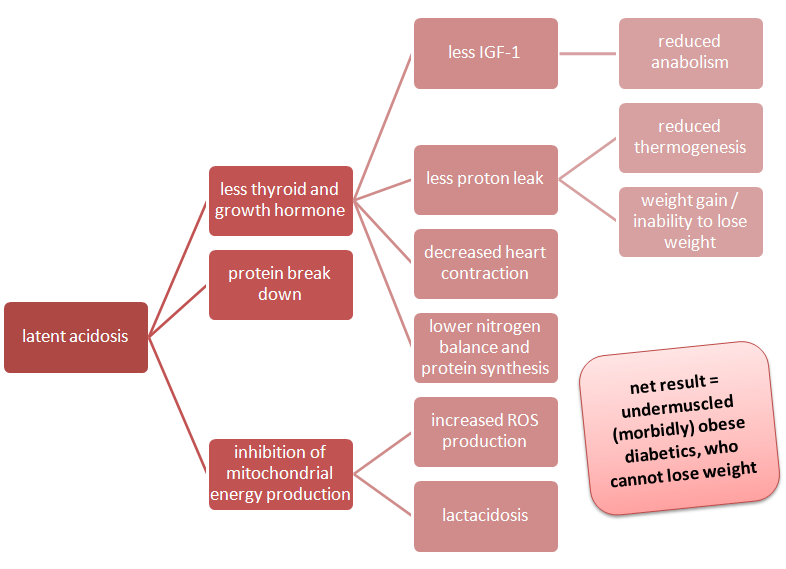
Latent metabolic acidosis hampers weight loss and muscle gains

Figure 3: The contribution of latent acidoses to the obesity epidemic and maybe even your inability to build muscle and/or lose weight
(based on Berkemeyer. 2009)
And even when you are not interested in your performance, a 2009 paper by Shoma Berkemeyer is by no means the only, nor the first article that linking an increased hydrogen ion concentrations (latent acidity, which can be countered by dietary bicarbonate) to weight gain and the obesity epidemic (Berkemeyer. 2009, cf. my summary in figure 3).

In view of the fact that even a latent H+ surplus could apparently compromise your efforts to lose fat and build muscle, it should be obvious that you better make sure to have enough alkalizing greens (and optional supplemental bicarbonate; not necessarily 30g, though ;-) in your diet - no matter if the whole acid/base balance issue, esp. the role of a high protein intake, is still very controversial.
More scientific evidence for the combination of bicarbonate & creatine in a more recent article | read it!
Practically speaking, what do I do? Since loading is not necessary unless you have a competition right ahead and this is the first time you take creatine you just take 3-5g of creatine monohydrate with approximately the same amount of sodium bicarbonate per day.

Larger doses of sodium bicarbonate as they would be used for acute performance enhancing effects are (almost certainly) not necessary to increase the efficacy of creatine. If you want the acute benefits, but get diarrhea from 15-20g of bicarbonate, I suggest you try to serial load.

Victorious Veteran: Creatine Monohydrate Still First Class! Usefulness & Safety of “Innovative” Creatine Formulas Questionable.

If we discount a high protein intake as a regular constituent of a healthy diet, creatine is unquestionable the King of Natural Ergogenics. Its impact on athletics way beyond the Gold’s Gyms of the bodybuilding world is evident from its being cited as “effective and safe” in almost each and every “position stand” published in one of the journals of the various sports & nutritional societies all over the world in regular intervals. Thus, with the (nephro-)toxity myth being finally dispelled, creatine has become a stable in the supplement regimen of both recreational, as well as professional athletes.

Now, the financial revenue you can make from a non-patentable amino acid that is commonly found in fish and meat products is obviously limited. Thus, the steadily increasing number of players on the supplement market is continuously trying to “reinvent the wheel”, by putting forward a new, better-absorbed, more effect, side-effect free or whatever else the marketing guys had on their minds forms of N-(aminoiminomethyl)-N-methyl glycine (=chemical formula of creatine). These “superior” forms of creatine are then put forward as the must have for every seriously training athlete and/or creatine non-responders (these are people, where – due to various not fully understood mechanisms – creatine has no measurable effect on performance, (intracellular) water retention and body weight) and usually disappear from the market just about at the same time, the first batch has been sold and disappointed customers begin to vent their anger on the blogs and bulletin boards of the fitness world.

With reference to the purported superiority of novel forms of creatine R. Jäger, one of the leading researchers in the field writes in a recently published paper (Jaeger. 2011), the results of which have previously been presented at the 2010 Creatine in Health and Sports conference:
[…] the efficacy, safety, and regulatory status of most of the newer forms of creatine found in dietary supplements have not been well established. Additionally, there is little to no evidence supporting marketing claims that these newer forms of creatine are more stable, digested faster, and more effective in increasing muscle creatine levels and/or associated with fewer side effects than CM.
In their extensive review of the literature Jäger et al. dissect many of the commonly held views on the purported “instability” and “low absorbtion rate” of creatine monohydrate, evaluate the different creatine contents of various supplemental forms and their individual solubility, stability and bioavailability. And while some other forms are in fact more soluble…
Creatine monohydrate dissolves at 14 g/L at 20°C resulting in a neutral pH of 7. A saturated solution of tricreatine citrate in water has a pH of 3.2; whereas a saturated solution of creatine pyruvate even has a pH of 2.6 (pyruvic acid is a stronger acid than citric acid). The decrease in pH results in an increase in solubility: 29 g/L creatine citrate at 20°C, and 54 g/L creatine pyruvate at 20°C. Normalized by the relative amount of creatine per molecule (monohydrate 87.9%, citrate 66%, pyruvate 60%), creatine citrate (19.14 g/L) shows a 1.55-fold and creatine pyruvate (32.4 g/L) a 2.63-fold better solubility when compared with the monohydrate (12.3 g/L).
The acidity of your stomach is high enough, anyway, so that even if you just swallow the powder it will eventually dissolve, when it comes in contact with your gastric acid - for monohydrate [CM] Jaeger reports the absorption to be as high as 99%.

Furthermore, pre-solving of creatine in water is counter-indicated, because, as Jaeger et al. write, …
[…] solution precludes the manufacture of shelf-stable standard ingredient. If creatine is not consumed immediately after it has been dissolved in water, it should be stored at a low temperature to retard the degradation.
So you better throw away your liquid creatine - chances are its 99% degraded even before you bought it from your retailer.

The instability is even more of concern in the case of Creatine Ethyl Ester (CEE) which has been found to be “actually less stable than CM.” (Child & Tallon. 2007).
CEE is mostly converted into creatinine under physiological conditions encountered during transit through the various tissues, suggesting no ergogenic effect is to be expected from supplementation of CEE.
The latter, i.e. creatine ethyl esther, is also less bioavailable
Figure 1:Changes in total muscle creatine content in response to placebo (PLA), creatine monohydrate (CRT), and creatine ethyl ester(CEE) supplementation (Spillane et al. 2009, cf, fig. 1).
and studies (Spillane. 2009) suggest that its higher rate of degradation to creatinine may pose a possible health risk.

Also, while Jaeger et al. report some evidence for the beneficial effects of co-supplementation with glucose, protein or (low dose) D-pinitol, I personally doubt that either of them is necessary to take advantage of the repeatedly proven ergogenic effects you can get from the cheapest, most researches, safest and easiest to obtain form of creatine – creatine monohydrate.

On a side note: My friends @ironmagazine.com have found an interesting study on the effect of creatine + nitrate, which is currently hyped as “the next big thing”. Although, I suppose that the amount of the carcinogen N-nitrososarcosine, which is a byproduct of their reaction, is hardly high enough to trigger cancerous growth, the lack of direct scientific evidence that creatine nitrate has any beneficial effect over the individual use of nitrates (for pump) and creatine (for performance) at least makes me wonder if you could not eat a buckload of beet roots (high in nitrate) with your creatine monohydrate to achieve the same effect ;-)