.

.
marylin monroe
Showing posts with label aerobic exercise. Show all posts

Endurance Athletes Bath in Cortisol: Dose-Dependent Elevations in Hair Cortisol of Triathletes and Runners.

Image 1: There are two types of endurance exercise - the one that is healthy for obese diabetics and the one that chronically stresses and, in the worst case, eventually kills healthy but overambitious hobby athletes; the photo shows a collapsed runner at the 2007 London Marathon, where 22 of his comrades died
(source thisislondon.co.uk)
In view of the fact, that the series of blogposts on High Intensity Interval Training (HIIT) I made in the course of the last weeks were pretty popular, I thought it may also be of interest that there are interesting new results on the effects of resistance training which goes beyond the common "we took 12 obese sedentary post-menopausal women and had them ride a stationary bike for 45min three times a week" approaches, as well. One of these studies happens to come from a group of German scientists from the Universities of Dresden, Marburg and Hamburg (Kirschbaum. 2011); and the results underline my previous comments on the difference between endurance exercise as it is understood by the medical orthodoxy (and as I described it in the previous sentence) and endurance exercise as many hobby athletes and fitness enthusiasts define it. While the former is unquestionably beneficial for obese diabetics or anyone else who would otherwise sit on the couch watch TV and stuff himself with potato chips and ice-cream, 3x45 min of riding a bike probably won't improve the physical condition of a reasonable conditioned hobby athlete. Now, the Kirschbaum study shows quite convincingly that the opposite extreme, i.e. jogging / running and training loads way beyond 40km per week, comes with another certainly more annoying sting in the tail: chronic stress.

In their study, Clemens Kirschbaum et al. analyzed the hair samples of 304 amateur endurance athletes (long-distance runners, triathletes and cyclists; 190 females, 114 males,  mean age ~38 years) and 70  active control subjects (all recruited at local sport events or from friends and family of the authors ;-) and found on average +42% higher hair cortisol concentrations in the endurance athletes.
Figure 1: Relative increase in hair cortisol levels in endurance athletes compared to controls (Kirschbaum. 2011)
As figure 1 goes to show the increase and, more specifically, it's statistical significance largely depended on the type and the duration of exercise. While both cycling and 10k runs increased cortisol levels by about +36%, in this group there were too many "outlayers", i.e. persons with either much higher or much lower cortisol levels, for this increase to reach statistical significance (as defined by a p-value of p<0.05, meaning that chances that this observation happens to be mere coincidence are <5%). In the study participants who stated that they were running half-marathons, triathlons and marathons, on the other hand, the increases in cortisol (+36%, +48% and +66%) were statistically significant, and in case of the marathon runners even dead (consider this a "forerunner" of what may befall marathon junkies) certain.
Figure 2: Relative increase in hair cortisol levels of endurance runners in relation to average weekly training load in kilometers (calculation based on a regression with r=0.32, indicating a below average precision; Kirschbaum. 2011))
If we disregard any reservations concerning the general validity of hair analysis as long-term marker of cortisol levels (recent studies like Manenschijn. 2011 a.o. would suggest that they are valid), Kirschbaum et al. are thusly right to conclude that their data suggests ...
that repeated physical stress of intensive training and competitive races among endurance athletes is associated with elevated cortisol exposure over prolonged periods of time.
Even more important is their advice that, due to the possibly important implications of these findings, it would be necessary to study potentially detrimental effects on the somatic and mental health of the athletes in the future! Well, I probably don't have to tell you that the SuppVersity is going to be the place, where you will read about those studies first ;-)

Eccentric Exercise IGF1 & Athlete's Heart; Long or Short Intervals, Both Improve Arterial Stiffness. Plus: Exercise Heals Wounds & Makes You Rust Proof Within One Year!

Controlled exhaustion = positive adaptation; continuous exhaustion = wear and tear = one out of 57,002 who suffer from cardiac arrest during a marathon (data based on Webner. 2012)
As announced on Saturday, already this is a "special edition" of the On Short Notice series, focusing exclusively on exercise related studies. With
  • two studies on heart health
  • one on wound healing and the last one on the 
  • bullet proof endogenous anti-oxidant system of trained athletes, 
this installment of the "Exercise News Roundup" and two studies on different HIIT, it does however have both a health, as well as a HIIT focus.

I know that does not sound as sexy as being big and buffed, but what's the use of that if you don't fit the coffin, you're about to need, when your looks are more important to you than your health?


IGF-Response to exercise implicated in "athletes heart" A group of polish researchers describes in their latest paper that's been published ahead of print in the International Journal of Sports Medicine, how the differential IGF-1 response to eccentric (ECC) and concentric (CON) arm exercise in 10 trained strength athletes (1.5-2.0 h on 3-5 days weekly) and 10 age-matched healthy non-trained subjects could explain the differences in the degree of left ventricular hypertrophy, the scientists had measure via M-mode and 2D Doppler echocardiography beforehand (Zebrowska. 2012).

IGF1 and left ventricular hypertrophy (LVH): The correlation stands out of question, but what about the implications? Is this a causative relationship? And what's more: How dangerous are LVH  and having an athlete's heart, at all?
The athletes with LVH did not only have higher IGF-1 levels at baseline (52±5 nM vs. 46±7 nM for controls, p<0.05), they also showed a significantly more pronounced IGF-1 response during the eccentric (ECC) exercise test, with athletes with LVH exhibiting 30% higher and athletes without LVH 15% higher IGF-1 levels than untrained controls (54±6 nM). Moreover, both CON and ECC exercise resulted in higher serum IGFBP-3 levels in LVH athletes compared to controls (242±57 and 274±58, athletes, vs. 215±63 and 244±67, controls, nM, p<0.05), while no differences in other hormones were found between groups. Yet though the scientists' conclusion that these findings would "suggest a role of IGF-1, possibly released from contracting muscle, in stimulating LV hypertrophy in resistance training" is certainly right, we would be ill-advised to jump to any conclusions, hastily by simply (and faultily) equating correlation and causation, here.

Moreover, we should acknowledge that the previously accepted paradigm that LVH, per se, is a bad thing that has to be avoided at all costs is actually not supported by empirical evidence, or as Florescu et al. have it "'Supranormal' cardiac function in athletes is due to better endothelial and arterial function, related to lower oxidative stress, with optimized ventriculo-arterial coupling; athlete's heart is purely a physiological phenomenon, associated with 'supranormal' cardiac function, and there are no markers of myocardial fibrosis." (Florescu. 2010)... in short: in the absence of myocardial fibrosis, a big heart is nothing you will die from - how IGF-1 could actually prevent the latter, i.e. the occurrence of fibrotic structures due to uncompensated growth of the heart muscle, would yet be the topic for another quite lengthy blogpost ;-)


This image shows a study participant of another study during a VO2 max test on the exact same bike Rakobowchuk et al. used (WSCU.edu). Wrt to the protocols the researchers remark "the protocols involved an identical total training volume and time commitment but differed regarding metabolic stress" With the HIIT trial inducing greater metabolic stress due to the longer periods at supra-amaximal workloads (cf. Turner. 2006).
Heavy or moderate interval training equally heart healthy - at least if you take their effect on arterial stiffness and heart rate dynamics as a measure. That's the message of an article that was published ahead of print in the European Journal of Applied Physiology at then end of last week. During a six-week experiment, Mark Rakobowchuk and his colleagues from the University of Essex and the University of Leeds investigated which of the following protocols (all performed three times per week, for a total of 18 session; 2min warm-up for each; cf. Rakobowchuk. 2012),
  • MIIT - moderate intensity interval training consisting of 10s : 20s cycles at 120% of the pretraining max. workrate : 20W for 30, 35 and 40min (bi-weekly progression), or
  • HIIT - high intensity interval training consisting of 30s : 60s cycles at 120% of the pretraining max. workrate : 20W for 30, 35 and 40min (bi-weekly progression),
would elicit more favorable changes in carotid artery stiffness, blood pressure, and heart rate variability in a group of 20 healthy, previously untrained young men and women (n = 7 men and 13 women; age 23.5y; BMI 23).

Trainees who want to increase their VO2max should still do HIIT, because only the subjects in the HIIT training group achieved statistically significant increases with respect to this outcome measure (+14% in HIIT vs. +3% VO2 max in MIIT).
Just as the scientists had speculated, their hypothesis that irrespective of the metabolic stress, which would be higher in the HIIT vs. the MIIT trial, the total volume, which was identical would determine the overall adaptive response. For them it was therefore not surprising that all measured parameters of  heart health, i.e.blood pressure, heart rate dynamics and carotid arterial stiffness, improved without significant inter-group differences. Most notably, though, those with the highest arterial stiffness before the trial saw the greatest reductions!


Figure 2: Additional exercise sped up the wound healing process only in the obese rodents, not the lean ones (Pence. 2012)
Exercise speeds healing of subcutaneous wounds in obesity. This was allegedly observed only in obese rodents, but since the underlying mechanism was neither mediated by gene or protein expression of proinflammatory cytokines interleukin-1A and tumor necrosis factor-alpha or the anti-inflammatory cytokine interleukin-10 in the wounds, I felt it was still worth mentioning, also because it is, as the scientists point out,
"the first report of an exercise effect on wound healing that is unrelated to alterations in wound site inflammation." (Pence. 2012) 
Future trials will have to elucidate whether clotting and homeostasis, which occur in the earliest stage of wound healing, approximately 30 min after the trauma may be involved in this phenomenon.

In this context, some of you will probably remember my recent post on the "Antithrombotic effects of caffeine blunt platelet activity in response to interval training" that exercise increases the tendency of your blood to clot - a tendency that does obviously come handy, when you are bleeding. That the increase in coagulation factors came into effect only in the obese, yet not in the normal weight control, in turn, could be related to the presence of existing hemostastic imbalances due to obesity which would have been corrected by the 30min of treadmill running the rodents in the exercise groups performed at a pace of 12 m/min on a 5% incline for the final 30 min of the light period (0930–1000 h), three days before until five days after the wounding.

A bunch of maggots on a diabetic wound.
Be that as it may, there are more than enough sedentary, "SAD dieting" (and the standard high fat diet rodents are fed in studies like this is nothing but a clone of the S-tandard A-merican D-diet) full-blown or pre-diabetic obese human beings who could likewise benefit from as little as 30min of daily aerobic activity. I mean think about it, if you could thus avoid having 50-100 maggots being placed on those nasty diabetic wounds (see picture on the right) that would never heal without those tiny critters secreting their salivary juices onto the wound to liquefy and subsequently ingest and further degrade the dead tissue in their gut, you can hardly argue that this is too much to ask for, can you?


"Rust proof" athletes don't need vitamin pills with copious amounts of anti-oxidants and don't have to be afraid of fruit with their synergistic blend of small, but highly effective and synergistic amounts of vitamins and polyphenols, either.
Oxidation proof after 1 year+ of regular aerobic + anaerobic training. According to a paper that's soon going to be published in Medicine & Science in Sports & Exercise trained athletes between the ages of 21 and 35yrs who had been participating in a structured exercise training program (including both aerobic and anaerobic) for the past 12 months, with each session lasting no less than 45 min per session, as well as no less than three sessions per week, are virtually "rust proof".

That's at least my allegedly nonchalant interpretation of the non-existent increases in serum markers of oxidation the scientists from the University of Memphis observed in their 12 male subjects (BMI 25kg/m², body fat 12.8%; VO2Max 20 ml/kg/min) in response to four training sessions separated by 1 wk.

The Sessions were counterbalanced and included either a no-exercise condition (subjects simply rested for the entire period) or one of the these three:
  • MISS - moderate intensity + duration steady state: 70% HR reserve for 60min; total time: 60min with 60min of actual work
  • HIIT - high intensity + moderate duration interval sprints: 5x60s at 100% + 225s recovery yielding a 1:3.75 work-to-rest ratio ("Within each interval, subjects were instructed to pedal between 80 and 100 rpm for the first 45 s, and then for the final 15 s, subjects were instructed to pedal as fast as possible"); total time: 20 min with 300s of actual work
  • MaxIIT - maximal intensity + short duration interval: 10x15s at a wattage of 200% of VO2max, followed by 116s of recovery (1:7.7 work-to-rest ratio); total time: 20 min with 150s of actual work
All exercise bouts were performed on the same cycle ergometer used for the GXT, and subjects reported to the laboratory in the morning (0600–0900 h) after a minimum 10-h overnight fast. The HR was continuously monitored via Polar (TM) HR monitors and blood was drawn at the end of the 20-min rest period  (corresponding to the immediate postexercise blood samples) and 30 and 60 min after the 20-min rest period (corresponding to the postexercise blood samples).
Figure 3: Total antioxidant capacity (TEAC), SOD, CAT and GPx values immediately (0min), 30min and 60min after the respective exercise bouts (data based on Farney. 2012)

The respective total work performed during the trials was 461.1kJ, 96.9kJ, 96.9kJ for the MISS, HIIT and MaxIIT trials, respectively, the perceived exertion was highest in the MaxIIT trial (16.7 vs. 15.6 for HIIT and 13.5 for MISS), while the maximal heart rate 171.7bpm was achieved in the HIIT trial. Still,
"No differences were noted in malondialdehyde, H2O2, advanced oxidation protein product, or NOx between conditions or across time (P > 0.05) [while the a]ntioxidant capacity was generally highest at 30 and 60 min after exercise and lowest at 0 min after exercise." (Farney. 2012; my emphases)
If you will, you could even go one step further and argue that the total antioxidant capacity increases in well-rested, well conditioned athletes in response to exhaustive exercise bouts. Though, this increase reaches statistical significance in the MaxIIT trial only (see figure 3).
Hungry for more news? Visit the SuppVersity on Facebook!
That's it for today, ... but only as far as SuppVersity posts go. In about 2h at 1PM (EST), to be precise you can - if you want - listen to me on Super Human Radio. I am going to pick up on the topic of the first hour which is "Moderate Alcohol Consumption how (Un-)Healthy is it really" and do my best to provide some insights into the discrepancy that exists between reliable scientific evidence, the media coverage on the topic and Mr Average Joe's interpretation of the latter. And if you ain't into booze, just work out ;-) [update: download the podcast]

References:
  • Farney TM, McCarthy CG, Canale RE, Schilling BK, Whitehead PN, Bloomer RJ. Absence of blood oxidative stress in trained men after strenuous exercise. Med Sci Sports Exerc. 2012 Oct;44(10):1855-63.
  • Pence BD, Dipietro LA, Woods JA. Exercise Speeds Cutaneous Wound Healing in High-Fat Diet-Induced Obese Mice. Med Sci Sports Exerc. 2012 Oct;44(10):1846-1854.
  • Rakobowchuk M, Harris E, Taylor A, Cubbon RM, Birch KM. Moderate and heavy metabolic stress interval training improve arterial stiffness and heart rate dynamics in humans. Eur J Appl Physiol. 2012 Sep 16.
  • Turner AP, Cathcart AJ, Parker ME, Butterworth C, Wilson J, Ward SA (2006) Oxygen uptake and muscle desaturation kinetics during intermittent cycling. Med Sci Sports Exerc 38:492–503.
  • Webner D, Duprey KM, Drezner JA, Cronholm P, Roberts WO. Sudden cardiac arrest and death in United States marathons. Med Sci Sports Exerc. 2012 Oct;44(10):1843-5.
  • Zebrowska A, Waśkiewicz Z, Zając A, Gąsior Z, Galbo H, Langfort J. IGF-1 Response to Arm Exercise with Eccentric and Concentric Muscle Contractions in Resistance-Trained Athletes with Left Ventricular Hypertrophy. Int J Sports Med. 2012 Sep 7.

Less Than 15mg of DHEA Exert Identical Beneficial Effects on Insulin Sensitivity as 1h of Cardio 5x Per Week. Both Effects Mediated Via Increases in Intra-Muscular DHT

Image 1: It has long been established that diabetics have particularly low DHEA levels (Loviselli. 1994), but what's the chicken and what's the egg here?
It is quite funny, sometimes you don't hear about certain supplements, (pro-)hormones, exercise-modalities etc. in years and then, all of a sudden, there are two studies on the respective topic in one week; and moreover, two pretty interesting ones! Last Friday, exactly 7 days ago, you've read here at the SuppVersity about the muscle-protective effects of low-dose dehydroepiandrosterone (DHEA) supplementation during a 5-day intense multiple-type exercise protocol (cf. "DHEA Blunts Muscle Damage During 5 Days of Combined Endurance, Strength and HIIT Training in Young Men"). Today, I have another interesting set of data for you - data which could not just shed some light onto the underlying mechanisms of the said protective effects against skeletal muscle damage, but also on DHEA's beneficial effects on insulin sensitivity.

Not younger, but leaner with a minimalist dose of DHEA?

In a 6 week trial, and thus over a more than eight times longer timespan than in the previously mentioned human study on skelatal muscle damage, Koji Sato and his (or her?) colleagues from the Ritsumeikan University, the Senshu University and the University of Tsukuba (all in Japan, as you probably already suspected) investigated the effects a low dose of DHEA (human equivalent: 0.16mg/kg per day => 10-15mg/day) supplementation on the insulin, QUICKI (=quantitative insulin-sensitivity check index) and intramuscular DHEA and DHT (dihydrotestosterone) levels in sedentary or exercised dietary obese male rodents.
Figure 1: Relative insulin levels, QUICKI, intramuscular DHEA and DHT content in obese male rodents after 6 weeks of DHEA or combined DHEA + exercise (1h, 5days/week) treatment (data adapted from Sato. 2012)
As you can see in figure 1 the effects of both 5x/week running on a treadmill (ETA: 1h) and orally administered DHEA were profound. If you compare the "exercise only" group (red) to the two DHEA groups (green and violet), you will yet notice interesting parallels. Not only were the decreases in serum insulin and the increases (=improvements of insulin sensitivity) in the QUICKI test very similar, the exercise regimen alone yielded a +56% increase skeletal muscle DHEA content and a +71% increase in DHT.

Exercise increases intramuscular DHEA & DHT...
 
Figure 2: Hormonal cascade from DHEA to DHT; all enzymatic conversions can take place on a systemic and intra-cellular level!)
At least the latter, i.e. the increase in DHT should not be news to you if you have been following the in-depth articles at SuppVersity over the past couple of months. From the Intermittent Thoughts on DHT you know that exercise in general and HIT endurance exercise in particular has been found to boost intramuscular dihydrotestosterone levels, as well. The bros, or friends of bros among you, will probably also have heard the horrific stories about creatine monohydrate leading to increased levels of DHT (van der Merve. 2009), of which every reasonable person must actually assume that they are nothing but a downstream effect of increased training loads and/or improved adaptation... I mean, think about it "paleo style": Why would the mammalian body (rodent and human appear to react alike here) increase the DHEA and, via 5-alpha reductase (cf. figure 2), the dihydrotestosterone levels in response to high volume exercise, if not as a means of adaptation?

Oral DHEA + exercise = double-whammy against obesity

The combined treatment, or I should say the exogenous support of the exercise induced changes had - and this is not visible from the data in figure 1, astonishingly profound effects on the diet induced weight gain of the lab animals. While all other rodents became fatter, those in the exercise + DHEA group remained at a steady body weight level; an observation the researchers comment as follows:
Although DHEA administration and exercise training each produced beneficial effects, 6-weeks of combination treatment were more effective for obesity. The precise mechanisms that reduced abdominal fat weight in the combination group remain unclear, yet we can propose several plausible hypotheses. 2 weeks of DHEA administration has been shown to activate fatty acid metabolism-related enzymes, such as long-chain fatty acyl-coenzyme A synthase, and to increase free CoA levels in liver (Mohan. 1998; Mohan. 1990). In addition, exercise training is  known to reduce adipogenesis via upregulation of fatty acid metabolism and increased energy expenditure (Hou. 2003). Therefore, 6-weeks of combination treatment may have promoted additive reductions in abdominal fat volume.

In other words, while DHEA increases the efficacy of fatty acid oxidation, exercise takes care of the increase in energy expenditure which is - all convictions wrt to "calories don't count" and the "calories in vs. calories out"-hypothesis aside - still a fundamental prerequisite that the fatty acids do actually get burned and are not released into circulation to be restored or replaced a couple of hours later.

"Ok, I am just ordering some DHEA, how much should I take?"

Before you head over to the online vendor of your choice to make sure you get your share of DHEA before the FDA hears that it could hamper the sales of diabetes drugs and removes it from the OTC market, I would like to remind you that despite the fact that Sato et al. rightly claim that a "combination treatment [with DHEA and DHT] may be more beneficial than either therapy alone", a cursory glance on the data in figure 1 should suffice to tell you that those additional benefits as statistically significant as they may be are just that "additional" and that exercise alone yielded about equal results, is free of negative and full of beneficial side effects (update: as long as you don't overtrain; thanks Stapedius for this important note) and does not have the same host of studies refuting its efficacy as DHEA has (Clore. 1995).

It is nevertheless intriguing that a hormone the medical orthodoxy has, more or less all of a sudden, dropped like a hot potato and declared "questionable" and "ineffective" is now, roughly 15-20 years being rediscovered... and I am pretty sure that this was not the last DHEA study you will see and read about here at the SuppVersity ;-)

References:
  1. Clore JN. Dehydroepiandrosterone and body fat. Obes Res. 1995 Nov;3 Suppl 4:613S-616S. Review.
  2. Hou CW, Chou SW, Ho HY, Lee WC, Lin CH, Kuo CH. Interactive effect of exercise training and growth hormone administration on glucose tolerance and muscle GLUT4 protein expression in rats. J Biomed Sci. 2003 Nov-Dec;10(6 Pt 2):689-96.
  3. Loviselli A, Pisanu P, Cossu E, Caradonna A, Massa GM, Cirillo R, Balestrieri A. [Low levels of dehydroepiandrosterone sulfate in adult males with insulin-dependent diabetes mellitus]. Minerva Endocrinol. 1994 Sep;19(3):113-9.
  4. van der Merwe J, Brooks NE, Myburgh KH. Three weeks of creatine monohydrate  supplementation affects dihydrotestosterone to testosterone ratio in college-aged rugby players. Clin J Sport Med. 2009 Sep;19(5):399-404.
  5. Mohan PF, Cleary MP. Effect of short-term DHEA administration on liver metabolism of lean and obese rats. Am J Physiol. 1988 Jul;255(1 Pt 1):E1-8.
  6. Mohan PF, Ihnen JS, Levin BE, Cleary MP. Effects of dehydroepiandrosterone treatment in rats with diet-induced obesity. J Nutr. 1990 Sep;120(9):1103-14.
  7. Sato K, Iemitsu M, Aizawa K, Ajisaka R. Testosterone and DHEA activate the glucose metabolism-related signaling pathway in skeletal muscle. Am J Physiol Endocrinol Metab. 2008 May;294(5):E961-8. Epub 2008 Mar 18.
  8. Sato K, Iemitsu M, Aizawa K, Mesaki N, Ajisaka R, Fujita S. DHEA administration and exercise training improves insulin resistance in obese rats. Nutr Metab (Lond). 2012 May 30;9(1):47. [Epub ahead of print]

Don't Want to Sacrifice Your Strength on the Altar of Cardio Training? Creatine Monohydrate to the Rescue! Differential Effects on HIIT / Steady State, Legs / Chest

Women can use creatine, too ;-)
It's not too long ago that I'd stuck to the word "creatine" in the headline of today's SuppVersity article. In view of the fact that four years after the publication of Ralf Jäger's study on the inefficiency of all super-innovative novel forms of creatine in 2011 people obviously have forgotten that the only ones who benefits from any of these "advanced" creatines are patent holders and supplement producers, I thought it may be a good idea to make sure nobody abuses this article to pimp his patented "super creatine" ;-) And in case you are worried about the alleged instability of creatine, just take it with some baking soda (learn more).

Now that we've done away with the "advanced creatine" lies, we can get to the actual news... or, well, actually it's not really surprising that Vítor de Salles Painelli and his colleagues from the University of Sao Paulo (hi Lucio ;-) end the abstract to their latest paper in the European Journal of Applied Physiology stating that "the acute interference effect on strength performance observed in concurrent exercise may be counteracted by Cr [creatine] supplementation", is it?
You can learn more about creatine at the SuppVersity

Creatine Doubles 'Ur GainZ!

Creatine, DHT & Broscience

Creatine Better After Workout

ALA + Creatine = Max Uptake?

Creatine Blunts Fat Loss?

Build 'Ur Own Buffered Creatine
Certainly not, as a SuppVersity reader you are after all long aware of the fact that this "interference" is hilariously overrated and creatine the #1 non-hormonal strength builder on the market.

If you take a closer look at the effects the 5km pre-workout run (10 min rest before the workout), the subjects had to perform before in a continuous (at 90 % of the anaerobic threshold velocity-Atv) or intermittent (1:1 min running at VO2max vs. walking) fashion, are yet not what you maybe thought the "Altar of Endurance Training" would look like.
Figure 1: Changes in leg press and bench press strength endurance after continuous 5-km continuous (CE) and intermittent (1 min running at VO2max, 1min walking) aerobic exercise (de Salles Painelli. 2014)
And as the data in Figure 1 goes to show you, 5km at a comparatively high intensity do (much in contrast to a 5km run on non-workout days) will significantly reduce the performance on a subsequent 1-RM or strength endurance test on the leg- and bench-press.
Figure 2: Changes in leg press and bench press maximal strength after continuous 5-km continuous (CE) and intermittent (1 min running at VO2max, 1min walking) aerobic exercise (de Salles Painelli. 2014)
If you compare the effects of the 20g/day of creatine the subjects consumed for 7 days before the first exercise test (preload) and at at dosage of 5g/day for the rest of the study period, on strength endurance (Figure 1) and maximal strength (Figure 2) you will realize that the effects are exercise and muscle part dependent.
  • Your strength endurance on the bench will suffer significantly less from a 5km run to the gym, than your maximal strength - no wonder, it's after all not really used when you're running.
  • The intense intermittent 5km run will reduce your strength endurance on the leg press to a significantly higher degree than the continuous run.
In the end, it does yet not matter what you do. As long as you take your creatine you are on the winning streak. An when all is said and one, there may even be a small increases in 1RM as it was observed in the study at hand after either continuous (bench press and leg press) or intermittent (bench press) aerobic exercise in the creatine group - in other words, as long as you're "on creatine", the 5-km run can actually be ergogenic ... well, okay "non-significantly ergogenic" ;-)
Creatine is not just a performance enhancer, it's also a potent non-ROS reducing antioxidant | more
Bottom line: Aside from the fact that I deem it necessary to repeat that (a) you don't need anything but pure creatine monohydrate and that (b) it's not necessary to flood the system with 20g of creatine everyday for a whole week, if you are not taking part in a study and need your creatine stores to supersaturate within the next 7 days, I have little to add to the results of this study...

Ok, maybe one thing: If you want to take only two supplements, they must be whey protein and creatine. And honestly, you don't really need anything else.
Reference:
  • de Salles Painelli, Vítor, et al. "Creatine supplementation prevents acute strength loss induced by concurrent exercise." European Journal of Applied Physiology (2014): 1-7.
  • Jäger, Ralf, et al. "Analysis of the efficacy, safety, and regulatory status of novel forms of creatine." Amino Acids 40.5 (2011): 1369-1383.

Man or Woman, Trunk or Leg Fat - Adding a Full Body Strength Workout to Your Aerobics Will Burn the Fat Off!

Image 1: "Get up and move!"
Doing cardio is better than doing nothing. In the end, aerobic training does yet rarely produce those changes in body composition most "dieters" have in mind, when they embark on their daily jogging regimen and combine those with the latest and greatest diet fad they read about in magazines or on the Internet. If these people just added a few strength workouts to the equations, though, their bodies would begin to change; and what's even more exciting, according to a soon to be published study from the Pamukkale University in Denizli, Turkey, they will do that in the absence of any dietary changes and in exactly those problem areas, men and women usually hate the most about themselves: The trunk, for men, and the legs, for women (Sanal. 2012).

"Dieting"? Why, if working out alone elicits favorable changes in body composition?

The 92 healthy, yet sedentary and overweight men and women in the study were randomly assigned to either aerobics only (AE) or the combined aerobic + resistance exercise (ARE) regimen. Dropout rates (N=12 and N=11) were identical between the two 12-week interventions, which involved
  • AE: 3x per week 15 min @50-80% maximum heart rate in the 1st, 4x per week 20-30min in the 2nd and 5x per week 30-45min in the 3rd month aerobic training on the cycle ergometer
  • AER: Same as AE but additionally 2x per week full-body workouts with 2 min rest between sets and 3-6 sets of 10 repetitions @50% of their 1RM in the first 6 weeks, and 2-3 sets of 10 repetitions @75-80% of the 1RM during the second 6-week phase of the study
With the resistance protocol simply being added on top of the initially light aerobic workouts, it is quite clear that aside from the fundamental beneficial effects of strength training, the subjects in the AER group would capitalize on the overall higher workload, as well. After all, it is not very likely that the formerly sedentary study participants suddenly lead a more active life outside of their scientifically prescribed duties.
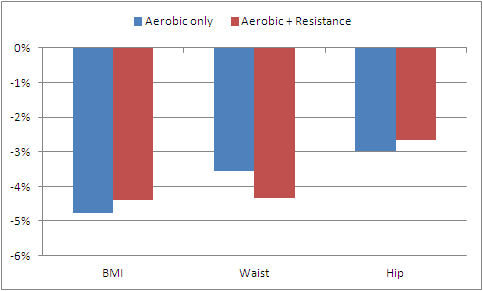
Figure 1: Relative changes in BMI, waist circumeference and hip circumference during the 12-week study period (calculated based on Sanal. 2012)
Against that background it may be initially counter-intuitive that the resistance aerobics + resistance training group did not lose more weight than their lazier peers (cf. figure 1), if you look at the data in figure 2, however, it becomes obvious why doing aerobics only really is not worth it, if your goal is to look better and get healthier, which both depend mainly on reducing your body fat levels, and not your body weight!
Figure 2: Relative changes in fat (FM) and fat free mass (FFM) in the course of the 12-week study period (DEXA data; calculated based on Sanal. 2012)
The dual-energy X-ray absorptiometry (DEXA; very precise method to measure the exact body composition) data confirms what every good trainer will be telling his clients, when they complain about "not losing weight" - the highly desirable changes in body composition are oftentimes not detectable with regular scales; and as this example shows, sometimes not even with my favorite tool, the measurement tape!

Men are different women, too, and strength training works for both!

And though this may sound like yet another prejudice, my personal experience tells me that women are usually much much more focused on the non-significant figures on the scale. Against that background I feel that the detailed analysis of sex difference with respect to the relative loss in body fat and increases in lean mass are of paramount importance, because they confirm: It does not matter if you are a man or a woman. If you want to look better, you got to lift weights!
Figure 3: Additional changes in body composition in aerobic + resistance training vs. aerobic only group (data calculated based on Sanal. 2012)
And while the added bonus of resistance training may be overall larger in men, than in women. It should be noted that the decrease in fat which was present in both groups, happened to be prominent in exactly those body parts which are usually held to contain sex-specific fat depots, i.e. the pot-bellied trunks of obese men and the "they are too fat for my skinny jeans" legs of chubby women.

Get going, don't stop eating, damnit!

Image 2: Some of you may remember my previous blogpost on the superior effect of HIIT vs. classic "cardio" on appetite and energy intake in obese boys. This is also why the SBSG Fat Loss Workout relies on both LISS and HIIT training.
Aside from the sex-specificity, this study provides an even more substantial argument in favor of exercise and against the "exercise just makes you hungry" hypothesis than the previously cited study (cf. "Dr. Oz Was Right, Taubes Wrong"). The question should thus no longer be "Shall I add exercise to my diet?", but rather which diet is most appropriate to propel the exercise-induced changes in body composition I am striving for.

In view of the fact that the study participants in this study, simply continued on their regular dietary regimen, you can only speculate how profound the changes would have been if the same 5x per week aerobic + 2x strength training regimen had been combined with a revised, not even necessarily energy deficient whole foods diet!?

HIIT Not as Effective in Building Mitochondria as Previously Thought? Study Puts Question Mark Behind Low Volume HIT & Minimalist Short Interval + Long Rest HIIT Regimen

Have you been running for nothin'?
It has gotten a somewhat quiet around HIIT, as of late and while I suspect the abating hype is mostly due to the fact that it is f***ly intense, a recent human study from the McMaster University in Hamilton, Ontario, Canada, would suggest that a the previously reported long-term effects may in fact have been overblown. At least with a "minimal" volume, in this case 6x30s wingate sprints with 4 min rest in-between, the expected increases in mitochondrial firepower was not see in their study and if those don't occur this could mean that you are working your ass off for nothing.
You can learn more about HIIT at the SuppVersity

Never Train To Burn Calories!

Tabata = 14.2kcal /min ≠ Fat Loss

30s Intervals + 2:1 Work/Rec.

Making HIIT a Hit Part I/II

Making HIIT a Hit Part II/II

Triple Your Energy Exp.
I do yet have a good reason to use the conditional, here. In view of the estrogen-related sexual differences in the adaptational response to exercise the fact that the Canadian researchers had 8 guys in their HIIT group and 5 men and 4 women in their work-matched steady group could be a serous design-flaw - a flaw which renders the comparison of 4x30s wingate all out cycling tests w/ 4 min break or a workmatched (see Figure 1) 4 min steady state exercise trial.
Figure 1: Comparison of total workload, peak power output, mean power output, work duration and ratings of perceived exerction between the intermittent and steady state acute trials (Cochran. 2014)
Moreover, and for this I have to credit the researchers, themselves, there is a huge difference between the reported absence of mitochondrial adaptations and the general beneficial effects on the fitness level of the recreatinally trained subjects, which increased to a similar extend in both the intermittent (HIIT) 6 week exercise study (three short training sessions per week) as it did in a second classic steady-state exercise trial in the course of which the subjects had to perform their traning in a classic high intensity steady-state fashion.

Acute vs. long-term effects - a question of total volume?

It is this comparison of the long-term effects which eventually yielded different results for the work-matched intermittent and steady-state regimen. For the acute training, on the other hand, there were no significant differences in any of the measured parameters (see Figure 2)
Figure 2: When it's done at high intensities and with identical workloads intermittent and continuous exercise produce identical acute effects (Cochran. 2014)
Aside from the expression of Acetyl-CoA carboxylase and the lactate levels after the exercise session, there was an identical use of muscle glycogen (-25% within only 2min! for the HIIT trial!) and even the phosphorylation of p38 MAPK and PGC-1α expression were identical (4x increased, 3h after the workout).

In the "long run", in this case 6 weeks, Cochran et al. did yet observe differences not between their HIIT and steady state protocols, but between their current and previous results by Burgomaster et al. (2008), where a similar protocol did yield the changes in mitochondrial enzyme markers that were absent in the study at hand.

As Cochran et al. correctly point out, a 1:1 comparison of their data to the findings of Burgomaster is not exactly scientifically valid. There was after all no direct direct comparison between the CONT and INT protocols in the study at hand. Still, a recent review by Bishop et al. (2013) suggested that training volume is more important for increasing mitochondrial content than training intensity and the volume in the previously cited study by Burgomaster was higher - 50% higher (6 vs. 4 wingates).

The volume difference alone may thus explain the missing changes in citric acid synthase activity and the disappointing absence of increases in GLUT4, MCT1 and MCT4, which would signal an increased propensity to use both glucose and fat as a substrate.
Calm down, but don't be too lazy. In view of the many previous studies in which HIIT triggered the highly desirable increases in mitochondrial firepower and given the fact that both the HIIT and steady state (HIT) trial lead to significant improvements in VO2max, I would not discount high intensity interval training as a feasible means to increase your mitochondrial firepower.

To build mitochondria, shorter rest times and more intervals appear to be more effective | learn more
What we should maybe keep in mind, though, is that not all HIIT regimen are created equal (learn more). In fact, we've seen just that before with an advantage of higher volume and longer intervals in a previous article I've written about interval training. And in case you want it quick your HIIT protocol should probably have shorter rest times (10s) and more intervals 8x20s - similar to the one in the study by Ma et al. I wrote about in "4x4 Minutes of HIIT Per Week That's All It Takes For Already Well-Conditioned Individuals to Stimulate Mitochondrial Growth ➯ 15% Increase in VO2Max, Peak & Mean Power" | read more.
Reference:
  • Burgomaster, Kirsten A., et al. "Similar metabolic adaptations during exercise after low volume sprint interval and traditional endurance training in humans." The Journal of physiology 586.1 (2008): 151-160.
  • Cochran, Andrew JR, et al. "Intermittent and continuous high‐intensity exercise training induce similar acute but different chronic muscle adaptations." Experimental physiology (2014).
  • Ma, J. K., Scribbans, T. D., Edgett, B. A., Boyd, J. C., Simpson, C. A., Little, J. P., & Gurd, B. J. (2013). Extremely low-volume, high-intensity interval training improves exercise capacity and increases mitochondrial protein content in human skeletal muscle. Open Journal of Molecular and Integrative Physiology, 3, 202.

Exercise Order Reloaded: Testosterone Advantage of Doing Weights First Does Not Persist over 24 Week Study Period ➲ Strength Gains Identical, But GH Difference is Suspicious

Could the "wrong" exercise order be holding you back?
If you take a look at the SuppVersity articles with the keyword "exercise order" (click here to do that now), you will probably find "good" arguments for both: Doing cardio before and  doing cardio after weights - this begs the question, whether it is merely a question of personal preference, doesn't it?

I, for my part, have done both in the past and didn't notice much of a difference. For mere time reasons I do my cardio completely separate from my workouts, but in general, I would probably do longer 20min+ low intensity steady state cardio after the workouts. Not the least for the beneficial effects of very low intensity exercise on both metabolic and performance markers of recovery (Corder. 2000).
You can learn more about workout routines at the SuppVersity

What's the Right Training 4 You?

Hypertrophy Blueprints

Fat Loss Support Blueprint

Strength Training Blueprints

Study Proves: Overtraining Exists

Recovering from the Athlete's Triad
If we take a look a the results of a recent study by Moritz Schumann et al., these acute recovery effects may yet have about as little effect on the real-world outcome of your training sessions as the temporary reduction in testosterone the researchers from the Public University of Navarra, the Edith Cowan University and the University of Connecticut observed in those 12 of their ca. 30 years old, ca. 179 cm tall and ca. 79 kg heavy male, recreationally active study participants who had been randomized to the "cardio before weights" (E + S: endurance before strength training) group. It goes without saying that the exercise prescriptions for the E+S and S+E groups were identical:
Additional read: "Cardio&Strength What Do I Do First?" Plus: Could the Answer Be Sex-Specific?" | more
"During the first 12 weeks of training, the subjects per formed according to their corresponding training group either 2x[1E + 1S] or 2x[1S + 1E] per week.

During the second 12 weeks, the frequency was increased so that two combined training sessions were performed in every 1st and 4th week and three combined training sessions in every 2nd and 3rd week (i.e., 2x[1E + 1S] or 2x[1S + 1E] or 3x [1E + 1S] or 3x[1S + 1E], respectively). " (Schumann. 2014)
For the "E" in "E + S", the subjects cycled on a regular ergometer at an intensity that was controlled by heart rate zones determined from subjects’ individual aerobic and anaerobic threshold obtained during the baseline measurement at week 0 and 24. 
Figure 1: Overview of the 24-week study protocol (Schumann. 2014)
They were asked to maintain a constant pedaling frequency at about 70–80 rpm during each training session, while the magnetic resistance of the ergometer was used to achieve the prescribed cycling intensity:
"The endurance program consisted of both steady-state and interval exercise sessions while the intensity was progressively increased from low (below the aerobic threshold) to high (above the anaerobic threshold) throughout both 12-week periods." (Schumann. 2014)
If you add the 30-50 minutes it took the subjects to complete the periodized (circuit training 2-4 sets of all exercises at 15-20 reps  40-60% in week 1-2; 2-5 sets of 8-10 reps @80-85% during the rest of the study) strength training routine, that consisted of exercises for the lower and upper body, i.e.
  • lower body -bilateral dynamic leg press, as well as both bilateral (weeks 1–7 and 13–18) and unilateral (weeks 8–12 and 19–24) dynamic knee extension and flexion -
  • upper body - vertical shoulder press and lat pull down, as well as exercises commonly used to improve trunk stability -,
to the 30–50 min of cardio the subjects performed on each of their three weekly workouts, the total duration of the workouts would be 60–100 min for each combined training session.

Post workout testosterone = statistically significant, practically irrelevant difference

In view of the fact that the total training time, the exercises and the workout frequency were identical, the previously mentioned inter-group differences in post-workout testosterone are attributable to the exercise order - irrespective of whether they were mediated by a reduced performance in the strength training session or whatever crazy counter-evidence you were just about to mention in the comments ;-)
Figure 2: Serum testosterone concentrations during loading and recovery before (a) and after (b) the combined
training (left); changes in basal serum markers after 24 weeks of training (right; Schumann. 2014).
If you take a closer look at Figure 2, you will also notice that the initial difference in post-workout testosterone levels (left) is lost over the course of the 24-week study period. Against that background and in view of the inter-mediate increase in testosterone in the E+S vs. S+E group, it is not surprising that the relevant outcomes, i.e. the 1-RM, the increase in maximal voluntary contractile force (MVC) and the gain in aerobic power didn't differ between the S+E vs. E+S groups.
Figure 3: Rel. change in performance parameters within the 24 week study period (left); acute responses and recovery of maximal isometric leg press force (MVcmax) before (a) and after (b) the combined training (right; Schumann. 2014).
What is interesting though and may even be interpreted as evidence to support my previous suggestion to do "cardio after weight" for its beneficial effects on recovery is the slightly more pronounced decrease in creatine kinase in the S+E group (see Figure 3). Even if we take into consideration that CK is not the reliable marker of muscle damage everyone says it was (Chrismas. 2014), the relative CK values may still serve as a proxy of recovery, which could be enhanced with cardio after weights.
The GH response would also speak in favor of "weights first": With post-workout GH levels of 54.4 vs. 13.7 in week 1 and 56.7 vs. 19.1 mIU/l in week 24, the difference between the groups is huge and could be associated with an increased consumption of fatty acids post-workout, as well as greater increases in muscle fiber size as it was observed by West et al. (2012) in their seminal paper on the correlations between exer- cise induced changes in GH, testosterone, cortisol & co on the one, and size and strength gains, on the other hand.
Bottom line: If the study at hand was able to prove one thing, it would be be the non-significance and absurdity of the never-ending debate about "cardio before or after weights". While you may argue that doing light intensity cardio on your off-days has the "activity on almost 7 days of the weeks health advantage", there really isn't a reasonable argument why you would prefer doing it before or after your strength training sessions that would apply to everyone.

Irrespective of the potential GH advantage, I discussed in the box to the right, my suggestion would thus be: If you cannot or don't want to separate cardio and strength training, listen to my body and do whatever you feel suits you better.

If that's cardio before weights and thus not what I prefer, personally, that's perfectly fine - I mean, if I meet someone to talk to while doing cardio, I will also prepone my cardio workout and hit the weights afterwards ;-)
Reference:
  • Chrismas, Bryna CR, et al. "Reproducibility of creatine kinase: how useful is this measurement tool?." International Journal of Exercise Science: Conference Proceedings. Vol. 10. No. 1. 2014.
  • Corder, Keith P., et al. "Effects of active and passive recovery conditions on blood lactate, rating of perceived exertion, and performance during resistance exercise." The Journal of Strength & Conditioning Research 14.2 (2000): 151-156.
  • Schumann, Moritz, et al. "The order effect of combined endurance and strength loadings on force and hormone responses: effects of prolonged training." European journal of applied physiology (2014).
  • West, Daniel WD, and Stuart M. Phillips. "Associations of exercise-induced hormone profiles and gains in strength and hypertrophy in a large cohort after weight training." European journal of applied physiology 112.7 (2012): 2693-2702.