.

.
marylin monroe
Showing posts with label COX. Show all posts

On Short Notice: Worst Transfat Offenders Cookies & Co + Cinnamophilin For Joints + Tomato Powder Battles Cancer Like Aspirin + Creatine Protects Cell Walls + Carboholism Starts in the Womb, Intermittent Fasting Helps... + More!

Image 1 (lecker.de): They may look cute and harmless, but they are just one of the many incarnations of the worst transfatty acids offenders in the diets of the "average American" cake, cookie and pastry lovers. Believe it or not: Some of them manage to eat almost 100g of the proatherogenic fats per day (!)
Saturday and therefore time for a handful of "On Short Notice" news. We've got some ground to cover, today, so let's get started right away: We will start out by taking a look at the joint-healing / -protective effects of cinnamophilin, a compound from the roots of the cinnamomum trees. We will reconsider the importance of adiponectin for the non-obese physical culturist, switch from aspirin to tomato powder as our cancer prevention "drug" of choice and re-appreciate the newly discovered cell-protective value of a supplement 90% of you are probably already taking: creatine! Once we are done with that we revisit the potential connection between chronically low blood glucose, chronic catecholamine over-expression and the chronic fatigue syndrome. We will then take a look at how high carb diets and intermittent fasting of pregnant rats program the orexin A expression in the brains of their offspring and how that can predispose them to become obese.

During a brief water-break we will discard the idea of hyperhydration as idiotic and decide against carrying another kg of water weight around for the rest of this installment of "On Short Notice". Eventually we will reject pulses as a new staple diet food due to their potential to damage our gut mucosa and their strange gender-specific effects on insulin release and shake our heads over the average and not so average American's daily trans-fatty acid intake, which borders - in some cases - the 100g (!) ceiling of unhealthy absurdity.
  • Image 2: I must admit that I am not 100% sure if you would see similar benefits from regular cinnamon, not just because it is probably not from Cinnamomum philippinense, but also because the active ingredieant cinnamophilin has originally been extracted from the roots of the tree, not it's bark, which is what regular cinnamon is made from - it is obviously likely that some, yet probably lower amounts, would also be contained in the bark and a teaspoon of regular cinnamon probably won't hurt, anyway (cf. Wu. 1994 and Lu. 2012)
    Do your joints a favor and dig up some cinnamomum roots. While I am honestly not sure if cinnamophilin content of regular cinnamon (-bark) vs. Cinnamomum philippinense (nor whether this stuff is even in the bark, which is the raw material for "regular" cinnamon - a paper by Wu would suggest that it is extracted from the roots; cf. Wu. 1994), as it was used in a recently published study from College of Medicine, Taipei Medical University, will be sufficient, it is relatively certain that the anti-inflammatory effects of this highly lipophilic antioxidant and free radical-scavenging agent, which has also been shown to inhibit thromboxane synthase and the thromboxane A2 receptor (means it will reduce unwanted blood clots; Yu. 1994), to block Na+ and Ca2+ inward currents in rat cardiac cells (means it helps to protect the contractile function of your heart; Su. 1999), and to reduce brain infarction and protect against transient focal cerebral ischemia (rodent studies by Lee. 2005 & 2009), would silence any ongoing joint inflammation.
    And while Ju et al. can only speculate about the exact mechanism it appears to involve the modulation of NF-κB or ERK/p38 MAPK downregulation and/or suppresion of p-c-Jun pathways. Since both are involved in the etiology of other inflammatory, degenerative diseases, as well, it appears almost certain that there will soon be more exciting applications for yet another medicinal component from your kitchen cupboard.
  • Adipokines are not necessarily your friend - not even adpinonectin: Despite being the latest and (supposedly) greatest of the powerful cytokines that are released from your body fat, may keep you healthy when you are fat, it's negative correlation Pisto et al. observed in an epidemiological cross-sectional study involving 54 normotensive, non-smoking men with normal OGTT, clearly suggests that increasing adiponectin expression probably ain't the best way to get big and buffed (Pisto. 2012). Rather than that, you better diet and work out till you are big and buffed and wait for adiponectin (and leptin, which was by the way not significantly correlated with muscle size after adjustment for total adiposity) to fall in place.
  • Image 3: Tomato(powder)'s aspirin-like anti-cancer effects could be another reason for the health benefits of the so-called Mediterranean Diet
    Tomato powder mimics aspirins cancer protective effects At least in the gastrointestinal tract the COX-2 inhibition of tomato powder appears to exert similar protective effects against colorectal cancer (Tuzcu. 2012); and in view of the fact that the rodents in the Turkish study were fed a 5% enriched chow you would however not even have to consume tons of it - 90g or 1.14g/kg body weight would suffice ;-) If that's still more than you want or can stomach, just eat more tomatoes and/or (even better) tomato paste, which is quasi the water-containing version of the dry extract.
    And if you can't do tons of either, don't forget: Just like all the bad junk that may not be a problem if you ingested just junk A and maybe junk B, from time to time, becomes really nasty once C, D, E, etc. join the assault, it may be the pound of tomatoes you ate over the course of the last 2 weeks that helped you to avoid that the literal last straw that would otherwise not have broken the camel's but your back.
  • Figure 1 : Lipid vesicle permabilization after exposure to melittin + (1) NaCl , (2) 100 mM DMBG), (3) Creatine, or (4) PCr (Tokarska-Schlattne. 2012).
    (Phospho-)Creatine protects lipids in cell walls! In their latest paper a group of French and Swiss researchers report that they demonstrated for the first time that phosphocreatine (PCr), the explosive power, short-term energy substrate you are trying to increase, when you are taking creatine (monohydrate or whatever else), is more than just an energy source (Tokarska-Schlattne. 2012). As the data in the figure 1 shows, it has direct protective effects on the lipid fraction of your cells as well. And while this observation does not make creatine a bit more effective, it does provide another piece to the puzzle that explains why it is also useful in so many sports-unrelated areas such myopathies and a plethora of neurodegenerative diseases.
  • Constant subphysiological glycemia (= hypoglycemia without symptoms) could be the reason that you centrally fatigue, after all the constant elevation of epinephrine and glucagon, Ana María Arbeláez and her colleagues observed in a cleverly conducted study, where they limited the glucose levels in 8 healthy human volunteers to 65 mg/dL (3.6 mmol/L) for two hours showed a constant elevation of epinephrine and glucagon (Arbeláez. 2012). That the latter will only work for so long hardly suffice to keep you functioning normal (by no means optimal) should be clear... So how do you prevent that? Don't overtrain, don't undereat, don't eat only protein and don't be f***ing scared of eating as much carbs and fats, as you need to fuel an active lifestyle (Arbeláez. 2012).
  • Figure 2: Orexin A expression in the PvNP in the offstring of rat dams on different pregnancy diets
    You have the choice: Obese or normal kids? It all depends on the way you eat during pregnancy, at least that is the result of a soon-to-be-published study in Brain Research (, which found that compared to the normal pregnancy diet, a diet with an extra load of carbohydrates lead to a lower body weight at birth, but increased orexin A expression in the parvocellular part of the paraventricular nucleus (PvNP) which predisposed the rat pubs of the high carb dams to gain weight at a faster rate and catch-up and overtake the rodents from the control group after no more than 9 weeks.
    Another 10 weeks later, the rodents born to rats in the high carb group were already the heaviest of the four experimental groups and still as hungry as before.
    Now that alone would not necessarily make a SuppVersity news, if the scientists had not, without even noticing made a (imho) very relevant discovery. In addition to the group with free access to normal chow, they had another group which mimicked the time-restricted feeding pattern in the high fat and high carb groups, who received their chow only within a fixed 6h window, which would essentially equate to intermittent fasting; and while I doubt that the results reach statistical significance, it is still quite telling that the pubs born to the intermittently fastest (IF) rats on the regular diets, were normal weight at birth, had the lowest orexin A (hunger signal expressed in the brain) expression in the PvNP and were subsequently the lightest at the 19 week weight in...
    I still wouldn't suggest you start to fast intermittently, just because you notice you are pregnant, after all we don't know whether or how this translates to humans and if the pubs of the IF-dams were not simply undermuscled and therefore exhibited a lower body weight.
  • Image 4: As long as you got a couple of tables with water, sugary electrolyte bevarages, or even better salted coconut water along the roadside, you don't need to carry another 2lbs of water weight with you on your 1/2 marathon races.
    If you want to carry another kilo of useless weight around in the heat, go on and practice hyperhydration, otherwise you better stick to a bottle of water with some salt and sugar in it on your next 18km TT run in the heat (and cold). This is the actually not very surprising take home message of a recently conducted randomized cross-over trial from the University of Sherbrooke, in Canada, in the course of which Pierre-Yves Gigou and his colleagues investigated the effects of hyperhydration (=water loading) with 26 mL/kg bodyweight of a 130 mmol/L sodium solution before four successive 4.5 km blocks alternating between 2.5 km at 1% and 2 km at 6% gradient on a treadmill (Gigou. 2012).
    For the well-trained triathletes in the study, it did not make a difference whatsoever, as long as they could guzzle away their 500ml of gatorade during the 80-90min of running they were fine.
  • Are pulses superfoods, for women only or simply not suitable for daily consumption? It appears that similar to their nasty brethren, the soybeans, yellow peas, chickpeas, navy beans and lentils have the potential to become e hip diet food that could do more harm than good, especially to its male consumers. In a recently conducted study, a group of researchers from the University of Toronto found that pulses can help both men and women lose weight without prescribed caloric restriction (Mollar. 2012).
    Image 5: Pulsing of protein is something you are familiar with, but what about eating pulses.. yeah, we are talking about yellow peas, chickpeas, navy beans and lentils; that stuff your grandma maybe told your patents to eat from time to time. Are they the good twin of the evil soy bean?
    Contrary to the subjects in the calorically restricted "control" arm (-500kcal/day) of the study, the overweight or obese (mean BMI 32.8 kg/m²) adults in the pulse group, who were provided with a whopping dose of five cups of pulses per week (on average 896 g/week), had reduced their energy intake ad-libitum to about the same level as their peers "involuntarily" and accordingly seen similar reductions in body weight, waist circumference, systolic and diastolic blood pressure (statistical significance for intergroup differences were non-significant, i.e.  p >> 0.05, for all). At the end of the 8 week period there were however a couple of unwanted side-effects: While the minimal increase in HDL form the pulses would certainly count as a plus, increasing  C-peptide levels already suggest that there appears to be a problem with the glucose management in the pulse-eaters.
    And in fact, while the average female participants insulin AUC (the area under the insulin curve is a measure for the total amount of insulin the pancreas spills out in response to an oral glucose tolerance test, as it was performed in the study at hand) did go down by 13.9%, there was a profound increase (27.3 % in males) in the male pulse eaters.
    Figure 3 (radiancenutrition.com): Daily consumption of pulses appears appears to entail the risk of developing leaky gut.
    And even the women would have been better off (at least from a glucose tolerance perspective) without their yellow peas, chickpeas, navy beans and lentils - on the classic diet, they lost the same amount of weight and improved their insulin response by 24.2% and thus still 19.4% more than the men (the men had a reduction of -4.8 % in insulin AUC) and 10.3% more than with the pulse diet. I am therefore not convinced whether the scientists' euphoric conclusion that the "frequent consumption of pulses in an ad libitum diet reduced risk factors of the MetSyn [metabolic syndrome] and these effects were equivalent, and in some instances stronger, than counselling for dietary energy reduction" is not a little too optimistic - and that despite the fact that the HOMA-IR Mollar et al. reference as their indicator of improved insulin sensitivity suggests that they may be right...
    And before I forget it, the significant, but still meager improvements in LDL scientists from the University Saskatchevan report in another pulse diet study from the same supplement to the British Journal of Nutrition involving only elderly subjects would not convince me to eat 2x150g of beans, chickpeas, peas or lentils every day, either (Abeysekara. 2012) - why? Contrary to Whitlock et al. who are apparently not very concerned about the "abrasive" effect of pulses on the thickness of the mucosa in the gut (-25% in rodent experts; cf. Whitlock. 2012), I am not going to open up my "internal doors" to foreigners for a minuscule reduction in LDL, alleged improvements in glucose metabolism (see above) and some weightloss that comes about because you are so bloated that you become anorexic by twice let alone thrice daily pulse consumption.
  • Figure 5: Fat, TFA intake across age groups and sources (Kris-Etherton. 2012)
    Transfats (TFA): Cakes, cookies, pies and pastries are the worst offenders That's the unsurprising finding of the latest analysis of data from the National Health and Nutrition Examination Survey (NHANES; data from 1999-2002; Kris-Etherton. 2012). Among the 16,669 individuals (age ≥3 years) the median TFA intake was 2.3 % of calories (5 g/day) with 0.9–4.5 % of energy (1.5–13.1 g/day) over different quintiles of intake. The mean (that's the arithmetic mean vs. just the value right in the middle, which is the median) TFA intake was 2.5 % of energy (6.1 g/day).
    The overall range of TFA intakes in the highest quintile was almost crazily broad and ranged from already health compromising 8.8 up to 92.4 g/day. In view of the fact that the lions-share of this shit (sorry, but I just can't find a better name for it) came from cakes, cookies, pies, and pastries, the easiest solution to the problem and a major relief to the future public health insurance system in the US would be to ban this junk from the supermarkets or at least require the use of TFA-free and heat-stable fats in their production... but I think we all know that this is not going to happen, anytime soon.
"What? That's it, already?" If that's what you are just thinking I suggest you take a detour to the SuppVersity Facebook Wall and check out how Citrulline may protect your brain from aging, how your heart might protect itself by becoming insulin resistant and many other recent news from the realms of exercise, nutrition and health science!

References
  • Arbeláez AM, Rutlin JR, Hershey T, Powers WJ, Videen TO, Cryer PE. Thalamic Activation During Slightly Subphysiological Glycemia in Humans. Diabetes Care. 2012 Aug 13.
  • Abeysekara S, Chilibeck PD, Vatanparast H, Zello GA. A pulse-based diet is effective for reducing total and LDL-cholesterol in older adults. British Journal of Nutrition. 2012; 108:S103-S110.
  • Beck B, Richy S, Archer ZA, Mercer JB. Early and persistent up-regulation of hypothalamic orexigenic peptides in rat offspring born to dams fed a high-carbohydrate supplement during gestation. Brain Research. 17 August 2012.
  • Gigou PY, Dion T, Asselin A, Berrigan F, Goulet EDB. Pre-Exercise Hyperhydration-Induced Bodyweight Gain Does Not Alter Prolonged Treadmill Running Time-Trial Performance in Warm Ambient Conditions. Nutrients. 2012; 4(8):949-966.
  • Kris-Etherton PM, Lefevre M, Mensink RP, Petersen B, Fleming J, Flickinger BD. Trans Fatty Acid Intakes and Food Sources in the U.S. Population: NHANES 1999-2002. Lipids. 2012 Aug 18.
  • Lu YC, Hsiao G, Lin KH, Hsieh MS, Jayakumar T, Wu TS, Sheu JR. Cinnamophilin Isolated from Cinnamomum philippinense Protects against Collagen Degradation in Human Chondrocytes. Phytother Res. 2012 Aug 18.
  • Lee EJ, Chen HY, Lee MY, et al. Cinnamophilin reduces oxidative damage and protects against transient focal cerebral ischemia in mice. Free Radic Biol Med. 2005; 39: 495–510.
  • Lee EJ, Chen HY, Hung YC, et al. Therapeutic window for cinnamophilin following oxygen-glucose deprivation and transient focal cerebral ischemia. Exp Neurol. 2009; 217: 74–83.
  • Mollard RC, Luhovyy BL, Panahi S, Nunez M, Hanley A, Anderson GH. Regular consumption of pulses for 8 weeks reduces metabolic syndrome risk factors in overweight and obese adults. British Journal of Nutrition. 2012;108:S111-S122.
  • Pisto P, Santaniemi M, Turpeinen JP, Ukkola O, Kesäniemi YA. Adiponectin concentration in plasma is associated with muscle fiber size in healthy middle-aged men. Scand J Clin Lab Invest. 2012 Sep;72(5):395-402.
  • Su MJ, Chen WP, Lo TY, Wu TS. Ionic mechanisms for the antiarrhythmic action of cinnamophilin in rat heart. J Biomed Sci. 1999;6: 376–386.
  • Tokarska-Schlattner M, Epand RF, Meiler F, Zandomeneghi G, Neumann D, Widmer HR, Meier BH, Epand RM, Saks V, Wallimann T, Schlattner U. Phosphocreatine interacts with phospholipids, affects membrane properties and exerts membrane-protective effects. PLoS One. 2012;7(8):e43178. 
  • Tuzcu M, Aslan A, Tuzcu Z, Yabas M, Bahcecioglu IH, Ozercan IH, Kucuk O, Sahin K. Tomato powder impedes the development of azoxymethane-induced colorectal cancer in rats through suppression of COX-2 expression via NF-κB and regulating Nrf2/HO-1 pathway. Mol Nutr Food Res. 2012 Aug 1.
  • Whitlock KA, Kozicky L, Yee AJH, Ha C, Morris J, Field CJ, Bell RC, Ozga JA, Chan CB. Assessment of the mechanisms exerting glucose-lowering effects of dried peas in glucose-intolerant rats. British Journal of Nutrition. 2012;108:S91-S102. 
  • Wu TS, Leu YL, Chan YY, Yua SM, Tenga CM, Sua JD. Lignans and an aromatic acid from Cinnamomum philippinense. Phytochemistry. June 1994;36(3):785–788
  • Yu SM, Ko FN, Wu TS, Lee JY, Teng CM. Cinnamophilin, a novel thromboxane A2 receptor antagonist, isolated from Cinnamomum philippinense. Eur J Pharmacol. 1994; 256: 85–91.

Overtraining, Inflammation, Insufficient Repair: Scientists Shed Some More Light on the Counterproductive Triad of Ups & Downs in Testosterone, IL-6, IL-10, COX II & Co

Image 1: Part of Christian Bale's protocol to become the skinny Machinist was, you guessed it, overtraining - accompanied by undereating, the results (left) were profound.
The debate on the practical implications and even the existence of a certain physical condition that is generally referred to as "overtraining" is probably one of the most longstanding debates in the realms of physical culture. From a scientific point of view, it stands out of question that the same exercises that turn a stringbean into a heavily muscled berserk can also change him back into a stringbean, when the narrow yet tremendously productive margin between "just enough" and "already too much" is repeatedly exceeded. Scientists from the Department of Sports Medicine at the Shanghai University of Sport probed the underlying causes of this phenomenon and came up with a few interesting observations (Xiao. 2012).
Update: My friend Carl Lanore from Super Human Radio happened to read this post, yesterday and as chance would have it, had a show scheduled with Brooks Kubik on the issue of Overtraining and How it Pertains to General Health, he called me and we had a nice round-table discussion on air. So, in case you are interested, here is the podcast.
Overtraining is determined by an imbalance of pro- and anti-inflammatory factors

While many of  the results of their 11-week rodent study are not actually new (e.g. weight loss, drop in testosterone, etc. figure 1) and their significance for the average physical culturist, who won't be following an exclusively treadmill based exercise protocol are questionable, their findings pertaining to the cytokine response to overtraining could shed some light onto the underlying molecular underpinnings of both skeletal muscle atrophy and hypertrophy.
Figure 1: Study design (left) and relative changes in body weight, hemoglobin and testosterone compared to sedentary control in the overtrained rodents (data calculated based on Xiao. 2012)
It does not take much to identify the profound imbalance in pro- and anti-inflammatory cytokines the three weeks of excessive exercise brought about (cf. figure 2). In order to be able to understand how these changes affect your gains and eventually even make it impossible for your body to repair the damage you are doing on a daily basis, it is yet important to understand what the physiological role of the individual cytokines is.
Figure 2: Changes in inflammatory and anti-inflammatory factors (left) and change in gastrocnemius weight and ratio of body weight to gastrocnemius weight in the overtrained rat immediately after the protocol (OT) or after recovery (OTR; data calculated based on Xiao. 2012)
While most of you will probably be familiar with the "bad guys", IL-6, TGF-beta1, the physiological role of the "good guys", interleukin 10 (IL-10), cyclooxygenase II (COX II) or the more or less exotic urokinase type plasminogen activator (uPA) could be all Greek to you, even though they may be the ones which make the exercise induced gains we often take for granted possible:
  • IL10 is the "calming" counterpart to IL-6 and co. it acts directly on monocytes and inhibits the synthesis of pro-inflammatory cytokines such as IFN-γ, IL-2, IL-3, TNFα & Co.
     
  • COX in particular has been identified as a necessary factor for satellite cell activity (Hill. 2003) and muscle regeneration (Bondesen. 2004)
  • The inhibition of COX activity by ingestion of nonsteroidal anti-inflammatory drugs (NSAIDs) has been shown to to suppress the increase in mixed muscle protein synthesis due to exercise (Trappe. 2002
  • COX-2 null mutants also showed less macrophage invasion of injured muscle during regeneration (Bondesen. 2004), a factor about which you should have read in the Intermittent Thoughts on Building Muscle (Part II) that is a critical factor for the recruitment and "installation" of satellite cells into damaged or growing muscle tissue.
     
  • Urokinase type plasminogen activator (uPA) promotes the migration of numerous cell types, including macrophages, activated peripheral blood monocytes, endothelial cells, smooth muscle cells, and myoblasts (Novak. 2004). 
  • Several studies have shown that the accumulation of macrophage the damaged muscle was impaired in uPA-null mice (Lluis. 2001; Koh. 2005), with the result being impaired repair of the muscle tissue.
  • uPA increase the so-called hepatocyte growth factor, a paracrine signalling molecule that tells progenitor cells to "get going" and is required for skeletal muscle regeneration (Sisson. 2009), as well as the proliferation, migration and fusion of satellite cells (Bonavoaud. 1998; Munoz-Canoves. 1997; Fibbi. 2001) . 
You could thus summarize the results as follows, the profound skeletal muscle damage cannot be repaired, because
  1. the downregulation of IL-10 exasperates the inflammatory reaction to exercise induced muscle damage
  2. the reduction of COX II inhibits or mitigates the protein synthetic response to exercise
  3. low COX II and uPA levels counteract the necessary replacement of damaged, let alone the installment of new myonuclei from quiescent progenitor cells (satellite cells)
The results are profound and, as the body weight to gastrocnemius weight ratio in the OTR group suggests, had detrimental effects on the body composition of the rodents (cf. figure 2, right). So, unless your goal is to be skinny and you are willing to overtrain to stay that way for the rest of your life, you better stick to a reasonable training volume and allow your body the rest it needs to recover and grow.

Practical implications: Questionable

Yet while the study results should have made it pretty clear and yes, this means dragging yourself to the gym with delayed-onset-muscle soreness (DOMS) that requires "treatment" with NSAIDs is no longer an option, it is of little help to determine where exactly the initially mentioned margin begins and where it ends. I believe I have given you a couple of good starting points in the Step By Step Guide to Your Own Workout Regimen, but in the end, the number of factors which will influence both the position as well as the width of this margin are so numerous that is would be unrealistic to assume that any study, rodent or human, aerobic or anaerobic, one or twelve week, ... will ever provide you with the answer to the question I know you were just about to type into the comment area of this post: "Am I already training too much? Or would it be better if..."
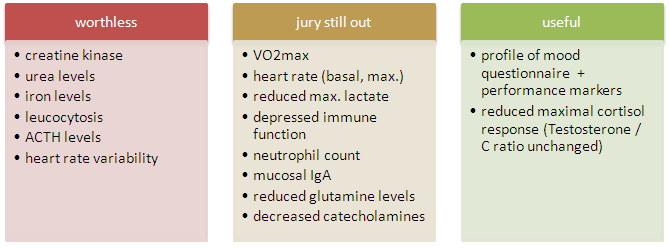
Figure 3: Overview of selected biomarkers that have been investigated for their usefulness to identify over-reaching or overtraining (first published in "The Overmotivational Roots of Overtraining"; based on an overview in Purvis. 2010)
What could yet potentially come out of this data is a test kit, one which would probably be a more reliable indicator of overtraining than DOMS or the creatine kinase levels which have long been touted as a potential candidate to distinguish between load and overload (cf. figure 3 and "The Overmotivational Roots of Overtraining"). Whether we will see respective test kits being available for the average Joe or Jane, is yet as questionable as whether the latter won't still rather waste his / her money on the latest and greatest supplement scam than on an optimized training routine. After all, a good personal trainer should - without any fancy tool-kits - be able to prescribe a routine that may not be 100% optimal, but will at least keep you within the repeatedly mentioned margin of productive overload, today!

References:
  • Bonavaud S, Charriere-Bertrand C, Rey C, Leibovitch M P, Pedersen N, Frisdal E, Planus E, Blasi F, Gherardi R, Barlovatz-Meimon G. Evidence of a non-conventional role for the urokinase tripartite complex (uPAR/uPA/PAI-1) in myogenic cell fusion. J Cell Sci 1997; 110 : 1083 – 1089
  • Bondesen B A, Mills S T, Kegley K M, Pavlath G K. The COX-2 pathway is essential during early stages of skeletal muscle regeneration. Am J Physiol 2004; 287 : C475 – C483
  • Fibbi G, Barletta E, Dini G, Del Rosso A, Pucci M, Cerletti M, Del Rosso M. Cell invasion is affected by differential expression of the urokinase plasminogen activator/urokinase plasminogen activator receptor system in muscle satellite cells from normal and dystrophic patients. Lab Invest 2001; 81 : 27 – 39
  • Hill M, Goldspink G. Expression and splicing of the insulin-like growth factor gene in rodent muscle is associated with muscle satellite (stem) cell activation following local tissue damage. J Physiol 2003; 549:409 – 418  
  • Koh T J, Bryer S C, Pucci A M, Sisson T H. Mice deficient in plasminogen activator inhibitor-1 have improved skeletal muscle regeneration. Am J Physiol 2005; 289 : C217 – C223 
  • Lluis F, Roma J, Suelves M, Parra M, Aniorte G, Gallardo E, Illa I, Rod-riguez L, Hughes S M, Carmeliet P, Roig M, Munoz-Canoves P. Urokinase-dependent plasminogen activation is required for efficient skeletal muscle regeneration in vivo. Blood 2001; 97 : 1703 – 1711
  • Munoz-Canoves P, Miralles F, Baiget M, Felez J. Inhibition of urokinase-type plasminogen activator (uPA) abrogates myogenesis in vitro. Thromb Haemost 1997; 77 : 526 – 534
  • Novak M L, Bryer S C, Cheng M, Nguyen M H, Conley K L, Cunningham A K, Xue B, Sisson T H, You J S, Hornberger T A, Koh T J. Macrophage-specific expression of urokinase-type plasminogen activator promotes skeletal muscle regeneration. J Immunol 2011; 187 : 1448 – 1457 
  • Sisson T H, Nguyen M H, Yu B, Novak M L, Simon R H, Koh T J. Urokinase-type plasminogen activator increases hepatocyte growth factor activity required for skeletal muscle regeneration. Blood 2009; 114 : 5052 – 5061
  • Trappe T A, White F, Lambert C P, Cesar D, Hellerstein M, Evans W J. Effect of ibuprofen and acetaminophen on postexercise muscle protein syn-thesis. Am J Physiol 2002; 282 : E551 – E556
  • Xiao W, Chen P, Dong J. Effects of Overtraining on Skeletal Muscle Growth and
    Gene Expression. Int J Sports Med. 2012 May 16. [Epub ahead of print]

Citrulline as Substrate Switch. Galactose as Workout Fuel, Glycogen Repletion Not Urgent, 2x a Day 6x a Week = Too Much For Your Antioxidant System, Astaxanthin For IgA

Actually it's not the burn during the workout that matters, but I don't have to tell you that, do I? (pic i-am-beast.com)
What do you do with a whole host of interesting exercise-related nutrition news that are piling up in your archive, but are too good to be "burned" as short links with one sentence of text on the SuppVersity Facebook Wall?

Right! You compile all those news into a potpourri, attach the label "SuppVersity News Potpourri" to it and blow them out in a blogpost of their own. A post that covers the whole peri-workout window as well as the short-/long-term effects on exercise on your anti-oxidant and immune system.

Sounds good? Well, then go ahead...
  • Immediate post-workout glycogen repletion in endurance athletes probably useless (Carlsohn. 2013) While the hormonal response and the long-term effects of running around with depleted glycogen levels are a totally different animal, the latest research from the University Outpatient Clinic Potsdam in Potsdam, Germany, clearly suggests that the immediate post-run glycogen-repletion with 1.5g/kg body weight of fast acting carbs per hour is useless...

    Do you remember my "Glycogen-free muscle growth" post(s) from 2011?
    ...at least with respect to the 5,000m running performance of the twelve recreational runners (4m/8w; 1.73 ± 0.11 m, 69.1 ± 13.4 kg). who were involved in Carlsohn et al.'s study.
    "Running time during 5,000-m time trials did not differ between bTT (1,305 ± 140 s), following CARB (1,276 ± 125 s) or PLA (1,285 ± 124 s, p= .85). There were no differences in RPE (bTT 18.3 ± 0.3, CARB 18.7 ± 0.3, PLA 18.8 ± 0.9; p= .48), bLa/min, PLA 187 ± 3 beats/min; p= .96).
    In view of these results it should actually not necessary to formulate a "bottom line", but alas...

    Bottom line: "[T]he rationale of recommending immediate carbohydrate intake following exhausting exercise to 5,000-m runners might be questioned" (Carlsohn. 2013). Please keep in mind though that not repleting your glycogen stores at all is not an option - the myth that's been partially busted by the study at hand is that you must do that as fast as possible to maintain maximal performance - not that you must do it at all. 
  • "High" galactose foods ?
    Honey3.10g
    Fermented yoghurt1.30g
    Beets, canned, regular pack, solids and liquids0.80g
    Celery, raw0.66g
    Cherries, sweet, raw0.59g
    Bockwurst, pork, veal, raw0.48g
    Corn, sweet, yellow, canned, whole kernel, drained solids0.36g
    Beans, navy, mature seeds, raw0.34g
    Snacks, pretzels, hard, plain, salted0.22g
    Spices, curry powder0.21g
    Spices, mustard seed, yellow0.20g
    Spices, paprika0.19g
    Babyfood, fruit, plums with tapioca, without ascorbic acid, strained0.19g
    Spices, ginger, ground0.19g
    Spices, basil, dried0.19g
    Kiwi fruit, (chinese gooseberries), fresh, raw0.17g
    Cereals, oats, instant, fortified, plain, prepared with water (boiling water added or microwaved)0.16g
    Cheese, mozzarella, whole milk0.15g
    Spices, cloves, ground0.15g
    Cheese, parmesan, grated0.15g
    Spices, oregano, dried0.15g
    Fast foods, cheeseburger; single, regular patty, with condiments0.15g
    Plums, raw0.14g
    Peas, green (includes baby and lesuer types), canned, drained soilds, unprepared0.14g
    Cereals, oats, instant, fortified, plain, dry0.13g
    Fish, fish portions and sticks, frozen, preheated0.13g
    Figs, dried, uncooked0.13g
    Babyfood, plums, bananas and rice, strained0.12g
    Egg, whole, raw, fresh0.11g
    Avocados, raw, all commercial varieties0.10g
    Crackers, saltines0.07g
    Snacks, tortilla chips0.07g
    Egg, white, raw, fresh0.07g
    Snacks, tortilla chips, nacho cheese0.07g
    Peaches, raw0.06g
    Melons, cantaloupe, raw0.06g
    Galactose as alternative workout fuel (Duckworth. 2013) - A recent study from the Leeds Metropolitan University in the UK demonstrates that
    "ingesting a solution containing galactose before and during exercise can positively affect postexercise satiety and energy balance throughout the day, compared to a more readily available and widely consumed form of carbohydrate" (Duckworth. 2013)
    The scientists conclude that based on the observations they made, when they provided nine recreationally active eumenorrheic females (mean age 22y; weight 63.3kg) with either 45g galactose (GI~20) or glucose (GI~89) drinks prior to (300 ml) and at every 15 min during a low intensity steady state jog at 65% of their VO2Peak
    Note: I guess, it goes without saying that 45g of galactose this is more galactose than you can stomach from ingesting any "high galactose" foods; see table on the right, data in g/100g).
    The scientists measured the substrate oxidation, postexercise satiety and subsequent energy intake on three occasions (GLU, GAL, placebo) and found that
    • the plasma glucose levels were significantly greater throughout the exercise and in the rest period, when the subjects ingested the glucose drink,
    • there were no differences in carbohydrate oxidation, and
    • perceived hunger was significantly lower throughout the galactose compared to both the glucose and placebo trials
    What may yet be most significant for the average trainee trying to shed some weight is the difference in net energy balance, i.e. the difference between energetic costs of the workout, on the one hand, and the energy intake from the glucose / galactose supplement and the food intake during the post-exercise ad-libitum test lunch and the remainder of the day, which was negative only in the placebo and the galactose trial.
    Bottom line: If you want to shed some body fat and cannot go without an intra-workout beverage pick galactose over glucose, but do a "test run" before you try that in public - the monosaccharide is notorious for its socially not acceptable effects on the evaporations from your gastrointestinal tract ;-)
    "Does the Usefulness of Vitamin E Supplementation Depend on Your Activity Level?" It is possible that only those benefit who are already overtaxing their system and will thus need additional protection (learn more)
  • Exercise is stressing, but the long-term results are what's associated with improved antioxidant capacity (Lundström. 2013) The data Lundström et al. have collected in their recent 3-week trial involving fourteen 26-year-old volunteers who performed two "strenuous" (intensity targeted to 75% of VO2max) endurance training sessions per day (6 days a week) does in a way underline the validity of the hormesis hypothesis. Despite the fact that the increase in oxidative stress in response to the the allegedly hefty (for non professional athletes) two-sessions a-day, 6-days a week was not significant, the latter was facilitated / buffered by highly significant declines in the total plasma antioxidant capacity (AO).

    However, aside from the fact that the AO levels did not fully return to baseline after the subsequent 4-week recovery period, the most intriguing results of the study at hand is the highly significant negative (meaning "if A is high, B is low") correlation between fat-free mass and oxygen uptake, on the one hand, and oxidation stress, on the other.
    Bottom line: With both of the former, i.e. fat-free mass and oxygen uptake while you exercise, being hallmark features of physical fitness you cannot increase without working out, the balancing act, every trainee has to master is to find the exact i +1 load of stress that allows for adequate recovery and super-compensation in the time to the next workout / mesocycle.
  • Low Immunoglobuli, high cortisol and health While there appears to be a general relation between suppressed sIgA and high cortisol levels, on the one hand, and ill-health effects on the other. The latter is not sports-specific (Volkmann. 2006), and elite athletes are, despite suppressed IgA levels capable of normal responses to novel oral vaccinations, "indicating that mucosal immune mechanisms are intact" (Gleeson. 2000).
    Astaxanthin supplementation can ameliorate minor sIgA dump in athletes (Baralic. 2013) Study shows, supplementation with 4mg/day of astaxanthin can ameliorate the decrease in sIgA (marker of immune health) in young soccer players following 2h of exercise.

    There are yet two things you have to consider, when you read studies like these:  (a) Scientific evidence of the significance of immunoglobolin measures is not fully conclusive, and (b) the changes placebo group were not even significant.
    Note: In view of the fact that "[t]he clinical significance of [immunoglobolin changes] in acquired immunity with acute exercise and training remains unknown" (Walsh. 2011), the scientists' conclusion that "astaxanthin supplementation might serve as a countermeasure to sIgA changes associated with continuous intense training", must be taken with some caution wrt to its real-world benefits. 
  • Citrulline shifts substrate utilization towards carbs (Faure. 2013) With this last item in today's Exercise Science Potpourri, we are actually coming back to the an issue that has been in the SuppVersity news pretty regularly as of late: the amount fat / glucose you burn during a workout. I guess, I have made my personal perspective that fatty acid oxidation rates during exercise are hilariously overrated pretty clear. This does yet not stop me from pointing you towards the results of a soon-to-be-published study from the Université Paris Descartes the results of which would suggest that supplemental citrulline could work as a "fuel switch".

    Do you remember the December 2011 SuppVersity news on citrullines anti-catabolic effects (go back!)
     The significant downregulation of oxidative enzymes from the Krebs cycle and mitochondrial respiratory chain, the French scientists observed in a group of male Sprague-Dawley rats, when theyy re-fed them after a 12-week period of dietary restriction with a citrulline supplemented diet (+5g/kg chow and thus equivalent to what human studies have been using) compared to the standard chow with an iso-caloric mix on non-essential amino acids added) would at least suggest that "citrulline supplementatio [...] seems to induce a switch in muscle energy metabolism, from aerobia towards anaerobia" (Faure. 2011).

    Now, I did already point out that this is not necessarily a bad thing, but they cannot - as you may speculate now - explain the beneficial effects the original NO-supplement ingredient l-arginine on blood glucose management (learn more), because Faure et al. were able to show that "citrulline action is not direct and is not related to arginine" (Faure. 2013).
    Figure 1: Activity of enzymes involved in the oxidation of fatty acids; data expressed relative to baseline levels  on ad-libitum diet (Faure. 2013)
    Against that background another effect that was brought about by the high citrulline diet could yet be even more of a major metabolic disadvantage: The increase in metabolically highly glucoes guzzling unflexible type-IIb fibers (see figure 1; learn more), which has been associated with low / non-existent adiponectin levels by Krause et al. (2008).
    We have to be careful though, with respect to the interpretation and potential implications of these results. Why? Well, there are actually countless reasons: (a) Human beings are no rodents and normal rodents are no athletes, (b) the potential impact of a higher baseline protein intake or the absence of the calorie restriction before the supplementation period (c) different short (study at hand = 1 week) vs. long-term effects, (d) the possible (beneficial ?) involvement of mTOR, which has been shown to be activated by citrulline in previous trials (cf. SuppVersity Dec 28, 2011 and/or Le Plénier. 2011) (e) the fact that some athletes may benefit from the same shift towards glucose and the relative increase in type IIb fibers (not bodybuilders, though!) (f) ... I could go on with this list, but I guess you will see that there is no reason to panic.

    Take the Faure study as further evidence for our lack of understanding of the the complex effects and interplay of nutritional and supplemental amino acids on our health and don't forget to come back to the SuppVersity if you want to keep up with the "state of the art" ;-)


That's it for today! I hope you enjoyed the "ride" and stay tuned for future exercise, nutrition and health science potpourris - write-ups of which I believe they are a necessary and interesting intermediate between the mini-items on Facebook (don't forget to head over there and check out today's 9+ news items) and the elaborate "regular" SuppVersity articles.

References:
  • Baralic I, Đorđević B, Đuričić I, Šobajić S, Stanković I, Dikić N (2013). Salivary IgA response to astaxanthin supplementation in young soccer players. Proceedings of the Nutrition Society, 72, E7.
  • Carlsohn A, Heydenreich J, Engel T, Kratzenstein S, Mayer F. Does immediate carbohydrate intake following glycogen-depleting exercise affect next day’s 5000 m time trial performance? International Journal of Sport Nutrition and Exercise Metabolism.  2013; 23(S1 -S15).
  • Duckworth LC, Backhouse SH, Stevenson EJ, O’Hara JP. Effect of galactose ingestion before and during exercise on substrate oxidation and subsequent energy intake in females. International Journal of Sport Nutrition and Exercise Metabolism.  2013; 23(S1 -S15).
  • Le Plénier, S., Walrand, S., Noirt, R., Cynober, L., Moinard, C., Effects of leucine and  citrulline versus non-essential amino acids on muscle protein synthesis in fasted rat: a common activation pathway? Amino Acids. 2011.
  • Krause MP, Liu Y, Vu V, Chan L, Xu A, Riddell MC, Sweeney G, Hawke TJ.Adiponectin is expressed by skeletal muscle fibers and influences muscle phenotype and function. Am J Physiol Cell Physiol. 2008 Jul;295(1):C203-12. 
  • Stuart CA, McCurry MP, Marino A, South MA, Howell ME, Layne AS, Ramsey MW, Stone MH. Slow-Twitch Fiber Proportion in Skeletal Muscle Correlates with Insulin. Responsiveness. J Clin Endocrinol Metab. 2013 Mar 20. 
  • Volkmann ER, Weekes NY. Basal SIgA and cortisol levels predict stress-related health outcomes. Stress and Health. 2006; 22: 11–23. 
  • Walsh NP, Gleeson M, Shephard RJ, Gleeson M, Woods JA, Bishop NC, Fleshner M, Green C, Pedersen BK, Hoffman-Goetz L, Rogers CJ, Northoff H, Abbasi A, Simon P. Position statement. Part one: Immune function and exercise. Exerc Immunol Rev. 2011;17:6-63. Review.