.

.
marylin monroe
Showing posts with label cheese. Show all posts

A Fat D-Ficiency! Do You Really Need More Vitamin D or Simply More Fatty Foods? Study Shows, Even 50.000 IU of Vitamin D3 Useless, When You Ingest It Without Fat.

 Image 1: Fatty fish and organ meats aside, whole eggs and full-fat dairy are your best food choices to raise vitamin D levels - I would even venture the guess that they (combined with fish and organ meats) would make supplementation obsolete, even in the Nothern hemisphere (if you "load up" on sun in the summer).
Those of you who have been following my daily blogposts, here at the SuppVersity for more than the last couple of days will be aware that I am one of the few outspoken vitamin D (-supplementation) skeptics. I am by no means doubting the scientific data which clearly indicates that low vitamin D levels (low in medical, not in "Internet blogosphere" terms) are associated with all sorts of diseases. I do not question the hypothesis that, from a biomolecular perspective, vitamin D has more of a hormone than of a "vitamin" (=essential nutrient). And I do not challenge the use of vitamin D(3) supplements by people with low or even borderline low vitamin D levels (although this blogpost may change the way you ingest them ;-). What I do yet call into question is the hilarious idea that every Joe and Jane in the Western hemisphere could benefit from taking "at least 2.000IU of vitamin D" per day.

Re-thinking dietary (=supplemental) vitamin D

Hitherto, the only Joes and Janes who have profoundly benefited from this one-(XL-)size-fits-it-all approach are the producers of respective supplements. Convincing scientific data from controlled studies which would show that the consumption of large amounts >1.000 IU of vitamin D capsule or pill form, exert any verifiable health benefit for someone with normal (or even low-normal) vitamin D levels is absent. The (remote?) possibility that there actually is no benefit, aside, there are yet a few other possible explanations why - epidemiological data aside - scientific evidence for the benefits of vitamin D3 supplementation in a non-vitamin-D-deficient cohort is still lacking:
    Image 2: Who would buy all those toxic, but expensive drugs, if it turned out that by taking a non-patentable "vitamin" the diseases they were invented for could be prevented?
  1. Lack of financial interest from the side of the pharma companies: Vitamin D is obviously non-patentable and if it could, as many people believe, prevent diabetes, stroke, heart disease and cancer, the use of respective supplements would obviously put the pharmaceutical industry out of business.

    Note
    : The pharmaceutical industry has already been trying to come up with patentable vitamin D analogues, of which they claim that they would lack the largely non-existent negative side-effects of the real vitamin - I guess, you can you tell which way the wind is blowing?!

    Financial revenue could thusly be a major factor, as it is obviously pretty costly to set up a tightly controlled, appropriately powered randomized, placebo-controlled study on healthy people. Even large scale epidemiological studies, on the other hand, can be done by a group of graduate students, by just plugging into respective databases and doing some more or less sophisticated statistical evaluations on existing data sets.

  2. Insufficient dosing or study periods that are simply too short to yield results: I have, in the past seen studies, even I, as a avowing skeptic, would not cite to underline my argument that we do not have enough scientific evidence that supplemental vitamin D is not the savior people may make you believe. I mean, if you assign a group of say 20 people to 400IU of vitamin D for 4 weeks and see no changes in a handful of pretty random markers of health and disease, this is unquestionably not an argument against the potential usefulness of vitamin D supplementation.

  3. Adding vitamin D3 supplements to a "healthy" low fat diet: Assuming that this point has immediately caught your eye, I want to encourage you to read the rest of this blogpost, as this, i.e. the necessity of adequate amounts of dietary fat, to absorb vitamin D3 is what the rest of this post will revolve around.
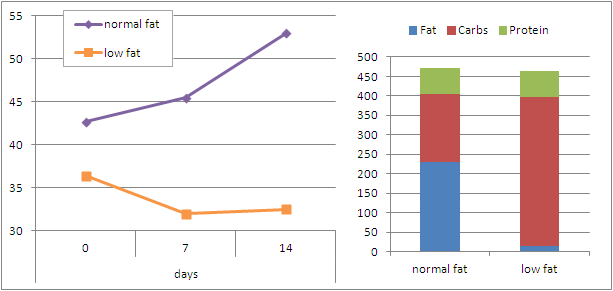
Fatty fish, eggs, organ meats, full fat organic (raw) dairy products - all those good foods which have been banned from YourPlate (at least if it contains what the US government's MyPlate suggests is healthy) are not only high in vitamin D, they are also high in fat. Against that background and in view of the fact that our ancestors did not buy their vitamin D at the local health food store, it is only reasonable to assume that our digestive tract was designed to absorb the little additional vitamin D we are supposed to get from foodstuff (you know that I am a firm believer in the power of sunlight - even beyond vitamin D) in the presence of fat. And guess what, a recent study, which was obviously not published in the Journal of the American Medical Association (cf. 1. in the previous list of possible explanations for the lack of conclusive scientific evidence on the usefulness of vitamin D supplementation), shows exactly that: without the concomitant presence of significant amounts of dietary fat, even 50.000IU of supplemental vitamin D3 have no effect on the serum levels of 25(OH)D, the active form of vitamin D (Raimundo. 2011, cf. figure 1).
Figure 1: 25(OH)D levels of 30 healthy men and women after ingestion of 50.000IU vitamin D3 supplement in conjunction with a normal or low fat breakfast (data calculated based on Raimundo. 2011)
And, as the detailed macronutrient breakdown in figure 1 (right) shows, the "high fat" breakfast the 30 young (~27y), healthy, non-obese, vitamin-d sufficient men (n=12) and women (n=18) ingested with a 50.000IU vitamin D3 capsule in the morning after an overnight fast, did not even consist of eggs and bacon. It was comprised of whole milk, white bread with bologna, and vegetable oil margarine and the whole milk aside, probably not much healthier than the skim milk, white bread with fruit jelly, and fruit salad breakfast the low-fat group had to eat. The additional 23.9g of fat did nevertheless make a huge difference, as far as the absorption and subsequent utilization of the vitamin D3 supplement is concerned.

No fat, no sun, no vitamin D - regardless of supplementation

Image 3: Get your D from the sun, if you can!
In view of the fact that the subjects were advised to "avoid sun exposure and changes in their usual eating pattern [which were probably low in dietary vitamin D] for the next two weeks", it is thusly hardly surprising that contrary to the "high fat" (I deliberately labeled it "normal fat" in figure 1 ;-) group, the subjects in the low fat breakfast group suffered a -11% decline in 25(OH)D serum levels over the 14-day follow up period, which other than the inter-group difference of 35% (!), did not reach statistical significance (mainly due to the small number of participants, where inter-subject variability renders even relatively profound differences "statistically non-significant").


And while the scientists concede that the small scale of the study, the lack of detailed recordings of the subjects' dietary vitamin D intake in the course of the 14-day follow up period and the reliance on 25(OH)D level as single surrogate for serum vitamin D levels (remember that we are actually talking about a whole host of "vitamins D") are limitations of their study, Raimondo et al. are nevertheless right to conclude that their "findings can have important implications to define the adequate dietary intake of vitamin D"... implications, which may well go beyond the mere recomendation to take your vitamin D with fat. After all, increased absorption would mean decreased need for supplementation and who knows whether you could not easily satisfy your dietary vitamin D requirements without any supplements, if you just set the "low-to-no fat, no dangerous organ meats" dietary recommendations at naught?

Dairy - The Good, the Bad or The Ugly? Latest Studies On Heart Disease, Diabetes, Cancer, Obesity and Co. Plus: What Dairy Peptides Do For Your Heart, Gut, Brain, etc.

Do you take Liz Hurley's word and set all warnings about the "non-paleo-ness" of dairy in general and milk in particular at naught? Or do you put faith into the "got milk?" campaign? Personally, I'd suggest not to do one or the other. I'd rather suggest you join me and take a look at a selection of recent studies.
If you've been following the SuppVersity Facebook News and / or have read previous SuppVersity articles on milk and dairy, you will be aware that I am not exactly convinced that the mere existence of allergic reactions and the "fact" that "our ancestors did not drink milk before ..." *put your favorite guesstimate here* allows for the conclusion that we are "not meant" to consume cow's milk. I am nevertheless open to scientific arguments that would convince me that dairy is bad for me - it's just that I don't see this evidence outside of "western diet + dairy makes you fat and that makes you sick" contexts.

What I do see, though, are papers such as the one Sandra Abreu or the recent review by Flávia Galvão Cândido et al. - studies that tell us that the intake of milk is negatively associated with the clustering of cardiometabolic risk factors in adolescents (Abreu. 2013), and reviews which conclude that "the consumption of low-fat dairy products may be an important strategy to prevent and control T2DM [type 2 diabetes]" (Cândido. 2013).

The evidence that dairy is bad for us all is simply not there

But hey, ... let's tackle the evidence one by one. I mean, there is plenty of news-worthy material here and we don't want the fun to be over prematurely, do we? So, let's start with a brief sketch of what Sandra Abreu and her colleagues from the University of Porto base their assessment that the intake of milk, but not total dairy, yogurt, or cheese, is negatively associated with the clustering of cardiometabolic risk factors in Spanish adolescents - shall we?
No! Full-fat dairy is not bad for you: While most of the epidemiological studies with their hilariously unreliable food questionnaires appear to suggest that only low fat dairy was good for your heart, a recent study from the Harvard School of Public Health found a clever way to test the association more objectively. Instead of questioning their subjects, 2837 US adults aged 45 to 84 years, they tested the amount of certain phospholipids in their blood and found that "plasma phospholipid 15:0, a biomarker of dairy fat, was inversely associated with incident CVD [-19%] and CHD [-26%]." (de Oliveira Otto. 2013) The fact that other dairy related phospholipids were not associated (neither positive nor negative) with cardiovascular and coronary heart disease risk does yet, as the scientists rightly point out, warrant further investigation.
"To test th[e] hypothesis [that a higher dairy product intake is associated with lower cardiometabolic risk factor clustering in adolescents], a cross-sectional study was conducted with 494 adolescents aged 15 to 18 years from the Azorean Archipelago, Portugal. We measured fasting glucose, insulin, total cholesterol, high-density lipoprotein cholesterol, triglycerides, systolic blood pressure, body fat, and cardiorespiratory fitness. We also calculated homeostatic model assessment and total cholesterol/high-density lipoprotein cholesterol ratio. For each one of these variables, a z score was computed using age and sex. A cardiometabolic risk score (CMRS) was constructed by summing up the z scores of all individual risk factors. High risk was considered to exist when an individual had at least 1 SD from this score. Diet was evaluated using a food frequency questionnaire, and the intake of total dairy (included milk, yogurt, and cheese), milk, yogurt, and cheese was categorized as low (equal to or below the median of the total sample) or “appropriate” (above the median of the total sample). The association between dairy product intake and CMRS was evaluated using separate logistic regression, and the results were adjusted for confounders." (Abreu. 2013)
I know that sounds really sophisticated, but in the end, it's just standard procedure for cross-sectional studies like this - studies with one unfortunate downside: It's impossible to detect causal relationships. 
Figure 1: Dietary intake in the low and "adequate" dairy-, milk-, yogurt-intake groups (Abreu. 2013)
Keep that in mind, when you take a closer look at the data in Figure 2 which indicates that the average adolescent milk connoisseur of whom you can see in Figure 1 that he / she consumes significantly more energy on a daily basis has a significantly reduced cardiometabolic risk (predicted by cardiometabolic risk score; CMRS):
Figure 2: Cardiometabolic risk in "adequate" vs. low dairy, milk, yogurt and cheese consuming adolescents; adjusted for parental education , pubertal stage, low-energy reporter, energy intake, total fat , protein , and dietary fiber intake.
I personally was surprised to see a statistically significant protective effect only with milk - it's not that I had expected to see that for all forms of dairy, but based on previous studies I would have expected the fermented yogurt products to outperform conventional milk.

The negative effects of cheese on the other hand are by no means surprising. Food logs do after all include all types of "cheese" including the fake yellow vegetable oil based cheese analogues the kids shovel down with their pizzas, burgers and the rest of the fast food dirt. A high cheese intake has thus (unfortunately) become an indicator of low diet quality and the results of the study at hand hardly a credible marker that cheese is bad for you.

If 95% of your "dairy intake" comes from pizza, you are unlikely to see...

... any of the following benefits of dairy peptides, Blanca Hernández-Ledesma, María José García-Nebot, Samuel Fernández-Tomé, Lourdes Amigo, and Isidra Recio summarized in a soon-to-be-published review in the peer-reviewed scientific journal International Dairy Science:
  • Figure 3: Reduction of systolic blood pressure in mmHg per mg/kg of the said peptide you consume - mind the logarithmic scale(!); data calculated based on rodent studies summarized in Hernández-Ledesma (2014)
    Cardiovascular health effects due to the antihypertensive, anti-inflammatory, general antioxidant and hypocholesterolaemic properties of various dairy peptides
  • Intestinal health effects due to the ability of dairy peptides to modulate and regenerate the gut mucosa, increase mineral absorption, exert local anti-inflammatory effects at the gastrointestinal level
  • Antidiabesity effects that are related to both direct pro-insulinogenic effects of dairy peptides ant their ability to increase satiety. 
  • Central nervous system relaxant and antinociceptive (pain-killing) effects
  • Immune health which is promoted by antimicrobial and immunomodulatory peptides that are either already present in dairy or arise during the digestion process
  • Anticancer effects that are mediated by the overall anti-inflammatory properties of certain dairy peptides, as well as direct anti-proliferative effects of dairy
Now, it goes without saying that you won't see the same effect from eating some goat kefir as Miguel et al. (2010) observed it, when they administered fraction 58-68 of goat casein to their lab rodents, but the data in Figure 3 can explain the well-established blood pressure lowering effects of dairy in general and the whey and casein induced BP reduction Figueroa et al. observed only recently in a study with obese women (Figueroa. 2013; see SuppVersity Facebook News).
Bottom line: You can't expect dairy to fully protect you against diabesity, cancer and a leaky, you can't expect it to lean you out in days, and you can't expect it to build muscle overnight, but you can expect general health benefits not detriments from incorporating a variety of fermented and unfermented dairy products into your diet - as long as you ain't lactose intolerant.

"Are Camels the Better Cows? Cancer, CVD, Allergies,Infections & More - Camel Milk Prevents or Fixes All These Ailments" | more
One thing you should keep in mind, though, is the unfortunate fact that the amount of "non-dairy" cheese, cream and other products is increasing by the day. Especially the former, the fake yellow vegetable oil based cheese analogues is something you want to avoid. The same goes for many of low fat products. While much of the "magic" is in the peptides, most of the commercially available "diet" products contain tons of sugar and all sorts of questionable additive to make up for the loss of color, taste and texture that's brought about by the removal of the fat. And lastly all products that extend the shelf-life to "eternity" by adding questionable preservatives.
References
  • Abreu, S., Moreira, P., Moreira, C., Mota, J., Moreira-Silva, I., Santos, P. C., & Santos, R. (2013). Intake of milk, but not total dairy, yogurt, or cheese, is negatively associated with the clustering of cardiometabolic risk factors in adolescents. Nutrition Research.
  • Cândido, F.G., Ton, T. S., & Alfenas, R. D. C. G. (2013). Dairy products consumption versus type 2 diabetes prevention and treatment; a review of recent findings from human studies. Nutr Hosp, 28(5), 1384-1395.
  • de Oliveira Otto, M. C., Nettleton, J. A., Lemaitre, R. N., Steffen, L. M., Kromhout, D., Rich, S. S., ... & Mozaffarian, D. (2013). Biomarkers of dairy fatty acids and risk of cardiovascular disease in the multi‐ethnic study of atherosclerosis. Journal of the American Heart Association, 2(4), e000092.
  • Figueroa, A., Wong, A., Kinsey, A., Kalfon, R., Eddy, W., & Ormsbee, M. J. (2013). Effects of Milk Proteins and Combined Exercise Training on Aortic Hemodynamics and Arterial Stiffness in Young Obese Women With High Blood Pressure. American Journal of Hypertension, hpt224. 
  • Freedman, B. J. (1980). Sulphur dioxide in foods and beverages: its use as a preservative and its effect on asthma. British Journal of Diseases of the Chest, 74, 128-134.
  • Hernández-Ledesma, B., García-Nebot, M.J., Fernández-Tomé, S., Amigo, L.,
    Recio, I., Dairy protein hydrolysates: Peptides for health benefits, International Dairy Journal(2014), ahead of print
  • Iammarino, M., Di Taranto, A., Palermo, C., & Muscarella, M. (2011). Survey of benzoic acid in cheeses: contribution to the estimation of an admissible maximum limit. Food Additives and Contaminants: Part B, 4(4), 231-237.

Fat Advantage: 61% Lower Rates of Metabolic Syndrome in High Fat, 101% Higher Rates in Low Fat Dairy Lovers

"Got milk" is not the question health conscious supermen and -women should pose. "Got full fat milk, fermented dairy and cheese" is the line to remember (the original image was part of the "Got Milk Campaign")
While diet fads come and go, the advice the wise (not seldom obese or otherwise sick) experts on the boards and panels of our well-meaning governments is calling "dietary recommendations" is about as resistant to reform as the dreaded MSRA strains are to the antibiotics doctors are throwing at you whenever you sneeze. Against that background the recent trend we are seeing with respect to an increase in the recommended amount of dietary protein does almost amount to a quantum leap; a leap with a significant caveat, however. A fat caveat, so to say:
"A healthy diet includes [...] lean meats, poultry, fish, beans and fat-free or low-fat dairy products" (NIH. 2012).
Luckily, you as a SuppVersity reader do not have to rely on the NHI's thwarted interpretations of the latest research they claim to use, when they are "turning discovery into health" (no joke, this is a literal citation from the footer of the NHI website!), but can compare it to my thwarted interpretations of the latest research and cherry picked data ;-)

Cherry pick of the day: Longitudinal large scale study on dairy intake and metabolic health

 For Today, this means that you get to enjoy the latest results of a large scale observational study from the University of Sydney that's based on datasets from the Blue Mountains Eye Study (BMES) a population-based cohort study of common eye diseases and other health conditions in residents aged 49 years and over in the Blue Mountains area, west of Sydney. A longitudinal study the baseline information was obtained in 1992/1994 from  and complemented by follow-up ten years later.

The data sets included food frequency questionnaires, as well as anthropometric and biochemical assessments all of which were included in the present analysis of the association betweenn dairy consumption with the ten-year incidence of Metabolic syndrome (MetSyn) and type 2 diabetes. What's so special about this dataset, is that the food questionnaires were actually detailed enough to assess the effects of full- and low-fat dairy, separately - a very important advantage, as a cursory glance at the data in figure 1 reveals.
Figure 1: Odds ratios (95% confidence intervals) of incident metabolic syndrome according to quartiles of reduced/low fat,
regular fat and total dairy product intake (data based on Louie. 2012; adjustments for age and sex (basic model), smoking status, physical activity (metabolic equivalents), dietary glycemic load, fibre from vegetables, total energy intake and family history of type 2 diabetes (model 1) and calcium (model 2))
While the standard analysis for total dairy consumption (figure 1, left) yielded neither conclusive, nor statistically significant results (the p-values for the different models can be found in the upper right corner of the respective graphs). The categorization into low- and high fat dairy and the adjustments for age and sex (basic model), smoking status, physical activity (metabolic equivalents), dietary glycemic load, fibre from vegetables, total energy intake and family history of type 2 diabetes (model 1) and calcium (model 2) yields very clear and, after adjustment for calcium intake, pretty unflattering result the formulators of the afore mentioned "dietary recommendations" will probably file in their already bristling "statistical outliers"-folder:
  • after adjustment for calcium intake subject in quartiles 2 / 3 / 4 of low-fat dairy are 50% / 145% / 101% more likely to be struck by metabolic syndrome, than those in the lowest quartile of low fat dairy intake (p = 0.043), while
  • subjects in the highest quartile of full-fat dairy intake are - depending on the adjustments made -  48% / 59% / 61% less likely (base model / model 1 / model 2) to suffer frommetabolic syndrome, than those in the lowest quartile of high fat dairy intake (p-values:  0.018 / 0.004 / 0.004)
Yet while the scientists are well aware, that these results stand in stark contrast to the initially cited dietary recommendations, is it not this contrast that surprises them, but rather the fact that a similar significant benefit was not observed for type II diabetes, which is, after all, one of the hallmark features of the rather loosely defined triad of obesity, insulin resistance and cardiovascular disease(s), we usually refer to as 'metabaolic syndrome':
"Due to its higher saturated fat content, regular fat/high fat dairy products were previously believed to increase the risk of type 2 diabetes as a high saturated fat intake is associated with insulin resistance . However, cohort studies and a meta-analysis now suggest otherwise, with higher regular fat/high fat dairy consumption being considered mostly neutral or protective for type 2 diabetes. The results of the present study are consistent with these findings that higher regular fat dairy consumption may be protective of MetSyn and type 2 diabetes. The potential harmful effects of higher saturated fat from regular fat dairy products may have been offset by the protective components of regular fat dairy such as trans-palmitoleate, a fatty acid nearly unique to ruminant foods. Circulating level of trans-palmitoleate was shown to be significantly associated with reduced risk of type 2 diabetes (Q5 vs Q1: 62% reduced risk, p-trend < 0.001). Moreover, the protective effect of trans-palmitoleate may be exerted via the suppression of hepatic fat synthesis, where the latter was strongly associated with insulin resistance." (Louie. 2012; my emphases)
In view of these mechanism, it is all the more surprising that the study at hand and many previous studies didn't find any significant correlations between (regular fat) dairy intake and type II diabetes.

Reduction in metabolic risk, but no effect on type diabetes? Hold on...

Wolverine could be the only face of the "Got Milk" campaign who does not have to care about potential negative health effects of homogenized milk.
And upon a cursory read of the latest literature it does in fact seem as if "null findings" like this, were nothing special. Only recently by Sluijs et al. who had analyzed datasets from a nested case-cohort within 8 European countries of the European Prospective Investigation into Cancer and Nutrition Study (n = 340,234; 3.99 million person-years of follow-up) includind a random subcohort (n = 16,835) and incident diabetes cases (n = 12,403; cf. Slujis. 2012):
"This large prospective study found no association between total dairy product intake and diabetes risk. An inverse association of cheese intake and combined fermented dairy product intake with diabetes is suggested, which merits further study." (Sluijs. 2012)
If we do yet take a closer look at the actual results the actually not so surprising truth is that there was a statistically significant inverse association with diabetes for cheese (p = 0.01) and fermented dairy (p = 0.02).

An association that suggests a 12% reduction in diabetes risk in those study participants who consumed the most cheese and fermented dairy (cheese, yogurt, and thick fermented milk)

And since you all know your real foods, I guess I don't have to tell you that despite the fact that there are low fat varieties of cheese yogurts and other fermented milk products, 90% of them contain way more than the 1.5% let alone 0.1% fat the allegedly healthy low fat "milk" is boasting of. Mere coincidence? I don't think so. Reason to assume that low-fat milk will make you sick? No, but certainly not an argument to avoid the full-fat variety simply because it contains fat (which is the only argument the average dietitian has to favor low- over full-fat dairy products).

Mutant Milk!? New Research Fuels the Flames on Hushed Up Concerns About Ill Health Effects of Homogenized Milk 
Ask Dr. Andro: Are Colostrum and Milk Products in General Healthy Muscle Builders, a Waste of Money or Toxic Waste?
All about milk: Browse past news and articles at the SuppVersity
^ Suggested reads
Additional recent dairy science:Similar beneficial findings for all-cause mortality and fermented dairy (yet inconclusive results for CVD and diabetes) come from the recently published Whitehall II study (4526 subjects,72 % men, mean age 56 years; Soedamah-Muthu. 2012) and for dairy intake during adolescents and diabetes (-38% risk reduction for 2 servings per day or more) from a reanalysis of somewhat questionable data (who remembers exactly how much dairy he had during his adolescence?) from the Nurses' Health Study II cohort that comprises 37,038 women who completed a food-frequency questionnaire about their diet during high school were followed from the time of return of the questionnaire in 1998-2005 (Malik. 2012).


References:
  • Louie JC, Flood VM, Rangan AM, Burlutsky G, Gill TP, Gopinath B, Mitchell P. Higher regular fat dairy consumption is associated with lower incidence of metabolic syndrome but not type 2 diabetes. Nutr Metab Cardiovasc Dis. 2012 Sep 26. pii: S0939-4753(12)00193-7. 
  • Malik VS, Sun Q, van Dam RM, Rimm EB, Willett WC, Rosner B, Hu FB. Adolescent dairy product consumption and risk of type 2 diabetes in middle-aged women. Am J Clin Nutr. 2011 Sep;94(3):854-61.
  • NIH. Health in the News: Love Your Heart. February 2012. < http://newsinhealth.nih.gov/issue/feb2012/feature1 > retreived Oct 02, 2012.
  • Soedamah-Muthu SS, Masset G, Verberne L, Geleijnse JM, Brunner EJ. Consumption of dairy products and associations with incident diabetes, CHD and mortality in the Whitehall II study. Br J Nutr. 2012 Jun 7:1-9.
  • Sluijs I, Forouhi NG, Beulens JW, van der Schouw YT, Agnoli C, Arriola L, Balkau B, Barricarte A, Boeing H, Bueno-de-Mesquita HB, Clavel-Chapelon F, Crowe FL, de Lauzon-Guillain B, Drogan D, Franks PW, Gavrila D, Gonzalez C, Halkjaer J, Kaaks R, Moskal A, Nilsson P, Overvad K, Palli D, Panico S, Quirós JR, Ricceri F, Rinaldi S, Rolandsson O, Sacerdote C, Sánchez MJ, Slimani N, Spijkerman AM, Teucher B, Tjonneland A, Tormo MJ, Tumino R, van der A DL, Sharp SJ, Langenberg C, Feskens EJ, Riboli E, Wareham NJ; InterAct Consortium. The amount and type of dairy product intake and incident type 2 diabetes: results from the EPIC-InterAct Study. Am J Clin Nutr. 2012 Aug;96(2):382-90.