.

.
marylin monroe
Showing posts with label NSAIDs. Show all posts

Science Round-Up Seconds: PGC-1 Alpha 4 Unlocks Muscle Growth, Alpha Lipoic Acid & Dietary N-6 Overload, Aspirin & Other NSAIDs Your Liver & Overall Mortality

Myotubes under the microscope - vehicle (top, normal size), clenbuterol (+100% protein content, middle), clenbuterol + PGC1a4 inhibition (+50% protein content, bottom)
Actually I would hope that you have by now already listened to yesterday's installment of the SuppVersity Science Round-Up. If you did, you are one of a group of highly privileged trainees who already knows why not all PGC1-alpha is created equal and how the alpha-4 isoform does appear to be the missing link between myostatin, on the one hand, and IGF-1 on the other. If you have already listened to the show, you may also have noticed that I was pretty excited about the publication of the Ruas paper (Ruas. 2012). Firstly this study has almost everything you could expect from cutting edge science: A in-vitro tudy to elucidate the basic mechanisms, an in-vivo rodent study involving both wild-type and genetically modified mice and - much to my own surprise - an in-vivo exercise part. And secondly, the results provides the missing link I personally have been looking for, when I wrote the Intermittent Thoughts on Building Muscle Series (click here for the summary and overview of the individual parts) - the link between IGF-1 and myostatin and the reason working out will always make you stronger and bigger and not bigger and weaker, as it is the case in the poor myostatin-knockout mice. Ah... I almost forgot: Third- and lastly, the fact that the researchers induced their hypertrophy effects in a specific part of their study by administering clenbuterol, which then did what I have likewise written about before (see "The Clenbuterol Myostatin Connection"), which is decreasing the expression of myostatin and thus producing skeletal muscle hypertrophy, yet as we now know not directly, but rather in consequence to its PGC-1 a4 promoting effects (+400%!) and the respective downstream effects on myostatin, which were non-existent, when the scentsts blocked PGC-1 a4 expresson (see images on the right)... 

I guess, you need to be somewhat geeky to find that exciting, but anyway. If you don't I'd still recommend you take a listen to the show - it's well worth it, even for totally normal exercise enthusiasts ;-)

And now for the actual seconds

Since the Ruas study appeared on my "radar" quasi in the last minute. We did not get to talk about several of the things I have announced and just to make sure you are not going to be disappointed, once you have gone through the following findings, I will address the acidity / alkalinity issue in a separate post in the future. It requires some more detailed elaborations - but the wait is going to be worth it ;-)

ALA rescues the liver from toxic N-6 overload

Actually this item would have fitted in pretty neatly with the things I explained about the different isoforms of PGC-1 alpha and how they appear to be regulated by diet / energy energy intake and expenditure via AMPK, on the one hand, and MAPKs, i.e. 'switches' that are triggered by stress, as the wear and tear of exercise, for example would be one. Now, we have already talked about the latter aspect, so that I guess I can get right to the not so novel, but still intriguing insights a  group of scientists from the Cerrahpaşa Medical Faculty Medical Biology Department at the Istanbul University  bring to the table as far as the former pathway is concerned (Kaya-Dagistanli. 2012).


In their 8-week experiment, Kaya-Dagistanli and her colleagues confirmed two things, of which I don't even know what would be the more important result:
Figure 1: Fibrosis and fatty degeneration scores in the control group (normal diet) and the high omega-6 group w/ and w/out ALA Kaya-Dagistanli. 2012)
  1. The administration of a diet that contained 60% fat from safflower oil, 20% kcal carbohydrate and 20% kcal protein (51% of the fat from n-6, n-6:n-3 ratio of 15.4) did produce major changes not only in the GSH levels, a measure of the total antioxidant capacity in the livers of the 24 Wistar rats, the relatively short time span was even enough to increase the fibrosis and fatty degenration scores by ~10x (see figure 1) compared to the rodents on the low fat standard chow in the control group (only 12% fat total, 39.1% n-6, n-6 : n-3 ratio of 9.3).
  2. The addition of 35 mg/kg DL-alpha lipoic acid (human equivalent: 5.7mg/kg; ~500mg/day) from week 4 to week 8 reduced both the negative effects of the omega-6 overload on GSH and the pathological degeneration of the liver, but could not fully restore it to normal levels.
Not just in view of the fact that ALA could not totally blunt the detrimental effects of the n-6 diet, but also in view of the fact that rodents on the regular diet did not see any benefits (remember: if you are not fat and metabolically deranged ALA ain't necessary, probably counterproductive; "Lean & Muscular W/ alpha lipoic acid?"), I personally gravitate towards (1), as far as the more significant finding is concerned. After all, it goes to show you that you simply have to the absolute (and relative?) amount of omega-6 fatty acids in your diets and can go without any such supplements as high dose fish oil and/or alpha lipoic acid. Bottom line: Don't bang your head against the wall and you won't need a helmet ;-)

NSAIDs liver cancer, chronic liver disease and other nasty ways to die

It's quite a happy coincidence that the December issue of the Journal of the National Cancer Institute held yet another intriguing study on the potentially beneficial health effects of the use of NSAIDs, which had been addressed in August already, when Jacobs et al. have gotten quite some public attention with their paper on aspirin use and the decrease in all-cause mortality (Jacobs. 2012). The novel paper that's based on prospective data on 300,504 men and women aged 50 to 71 years who had participated in National Institutes of Health-AARP Diet and Health Study and has been written by a group of scientist who actually work at the National Cancer Institute (Sahasrabuddhe . 2012), did not deal with a slightly different research question, i.e. does the use of aspirin and other NSAIDs offer protection against liver cancer (hepatocellular carcinoma) and death due to chronic liver disease, it also offers a slightly more sophisticated analysis of the (a) the frequency of NSAID use and potential interactions. Still, I decided to summarize the main findings of both, also in view of the fact that we are dealing  wih different cohorts (study subjects in the Jacobs paper were 100,139 men and women with no history of cancer in the Cancer Prevention Study II Nutrition Cohort).
Figure 2: Main results (hazard ratios) of two of the latest epidemiological studies into the effects of aspirin and other NSAIDs on liver cancer, death due to chronic liver disease (left) and aspirin alone on all cause mortality (right; data based on Sahasrabuddha. 2012 & Jacobs. 2012)
With the "demarcation lines" being present at 1.0 (meaning normalized risk) it is pretty easy to see that at least with respect to liver health and all-cause-mortality and solely based on epidemiological evidence, aspirin appears to be one of those "miracle drugs" everyone can benefit from. We have to be cautious however, when we compare everyone with ourselves, after all - and pretty much stands out of question - the protective effects of aspirin and the slightly less unambiguous and as far as hepatic cancer goes, even detrimental effects of other NSAIDs are mediated by...
  • the modulation of inflammation via inhibition of the COX enzymatic pathways necessary for the synthesis of prostaglandins
  • the ensuing decreases in epithelial proliferation and angiogenesis, as well as an
  • increased apoptosis (regular cell death) and ameliorations in the inflammatory response and inflammatory cytokines via non-COX mediated pathways
Now, if you remember the previous study about ALA and how useful it can be if you are the kind of person who hammer his head... ah, I mean who still has not gotten the message that the formerly hailed omega-6 PUFAs from the "healthy corn and vegetable oils" are not a bit healthy, on the one hand, and how superfluous (if not detrimental) the same supplement is for someone who does not exhibit exuberant inflammation to begin with, this certainly does put the results into perspective.


Apropos perspective, I am not quite sure how you like the perspective that this is it, for today, but I would be pleased if you took that as an incentive to come back tomorrow and check out the next installment of SuppVersity On Short Notice and for the time being, I still have a couple of facebook news, I am sure you will enjoy:
  • Scientists from the UK and New Zealand do pretty damn good job pimping the sales of low fat products - learn what the press release does not tell you (read more)
  • German scientists find: Bisphenol A clogs calcium channels - don't know if you'd agree with them that the good news is that it appears to be reversible (read more)
  • Grazing is for fat cows, only  - women who want to be lean better eat like a human, i.e. three square meals not more that's it - this will also help with blood triglyceride management (read more
  • more, much more ;-) 
Any you know, facebook is a fast media, so expect more news to be posted even before the official next SuppVersity article will hit the main site ;-)

    References:
    • Jacobs EJ, Newton CC, Gapstur SM, Thun MJ. Daily aspirin use and cancer mortality in a large US cohort. J Natl Cancer Inst. 2012 Aug 22;104(16):1208-17.
    • Kaya-Dagistanli F, Tanriverdi G, Altinok A, Ozyazgan S, Ozturk M. The effects of alpha lipoic acid on liver cells damages and apoptosis induced by polyunsaturated fatty acids. Food Chem Toxicol. 2012 Nov 28.
    • Ruas et al. APGC-1aI soform Induced by Resistance Training Regulates Skeletal Muscle Hypertrophy. Cell, December 7, 2012; 151:1319–1331. 
    • Sahasrabuddhe VV, Gunja MZ, Graubard BI, Trabert B, Schwartz LM, Park Y, Hollenbeck AR, Freedman ND, McGlynn KA. Nonsteroidal Anti-inflammatory Drug Use, Chronic Liver Disease, and Hepatocellular Carcinoma. J Natl Cancer Inst. 2012 Dec 5;104(23):1808-14.

      Shedding Some Light on the Leaky Gut <> Exercise Connection. Plus: 20+ Things You Should or Shouldn't Do to Protect and Restore the Integrity of Your Intestinal Wall

      Have you ever felt nauseated after a workout? Or does your protein supplement gives you diarrhea only if you take it right after a workout? Both can be related to the toll  exercise can take on the integrity of your intestinal tract.
      To be honest, I was quite surprised that I did not get a hell lot of hatemail in response to the the 'MSG heals the gut study' I posted last Sunday... Be that as it may, I feel sort of awkward to have opened Pandora's box without proving you with some betters tools than mono-sodium glutamate (MSG) to seal the box, or rather your leaky gut, again. Therefore I decided to post this mini-feature on a particular issue all of us will be dealing with: An exercise induced increase in gut permeability. As you are going to see, there are a lot of similarities to the 'classic' leaky gut, which is often implicated in the etiology of chronic inflammatory bowel diseases. In order to understand these similarities, but also the few, yet important differences, we will have to lay some theoretical groundwork.

      "What exactly is a leaky gut?"

      The easiest way to answer this question would be to say: "That's what everybody and his mama is talking about these days". This definition as concise (and precise) as it may be, is yet about as productive as the talk that's at its heart. So, instead of relying on hearsay, let's rather briefly recap how intestinal wall actually works.

      Since the intestines are meant to let nutrients and fluid pass, a certain degree of leakiness is absolutely natural. Problems arise only, when the self-regulatory system is broken and/or the permeability exceeds a normal / healthy threshold (img. by Mariana Ruiz).
      The mucosal layer of the intestinal tract is made up of epithelial cells, so-called enterocytes which are connected to one another by specialized proteins. These proteins form the tight junctions (TJ) - a term, you will probably have encountered numerous times before. The main constituents of this kit in between the enterocytes are proteins such as occludin, zona-occludens and claudins. Together, the array of enterocytes and the tight junction form the the intestinal barrier, which allows the absorption of nutrients and water, while preventing the translocation of harmful substances from the gut into the bloodstream.

      The integrity of this barrier is influenced by the phosphorylation state of the proteins within the tight junctions.The exact interactions are compilcated and can be looked up elsewhere (Banan. 2005). What's important for you to realize is that during prolonged exercise which is necessarily accompanied by an increase in core temperature, cardiovascular and thermoregulatory responses compromise intestinal blood flow.

      With the core temperature usually being lower than the temperature in your intestines, the temperature of your gut can easily approach 41°C during a workout.That's more than your epithelial cells can handle and can lead to structural damage of the 'patches' in the tight junctions + epithelial cell layer (Lambert. 1985).

      HIIT veterans or weight lifters are not off the hook

      Now, the last paragraph may have sounded as if only long endurance workouts like 10k-runs or marathons could entail damage to the intestinal cells. That's however not the case, since the redirection of the blood away from the splanchnic arteries and to the working muscle that's even more pronounced in high(er) intensity exercise, will initiate an ischaemia reperfusion cycle which can entail oxidative damage not during, but interestingly after the the workout, when the blood rushes back into the intestines (Wijck. 2011).

      Take home message: There are two distinct pathways that contribute to the leaky gut during and after a workout (a) heat and (b) ischaemic/reperfusion stress. Both influcne the phosphorylation state of the proteins in the tight junctions and will thus increase the permeability of the gut lining.

      It stands to reason that the combination of high intensity and long durations, as you will find it in an ultra-marathon runner, for example, is particularly detrimental to the integrity of the intestinal wall, so that it is not exactly surprising that (ultra-)endurance athletes have the highest prevalence (60-90%) of gastrointestinal distress that which manifests in the form of diarrhoea, nausea, stomach problems, bloating and intestinal cramps (Worobetz.1985; Peters.1999; Jeukendrup.2000)

      There is more than one thing you can to to protect, heal and restore your gut integrity

      The fact that a "leaky gut" is like an open door not just for exogenous toxins or live bacteria, but also for their 'endotoxic poop' is probably no news for you. In fact, it is also the reason why you want to either prevent the pathological increases in gut permeability, in the first place, and/or (re-)seal the gut as soon as possible after your workouts. In this regards, there are three fundamental and easily implementable strategies that should always be employed before you even think about using specific supplements:
      • Figure 1: HSP 70 offers protection against endotoxins (LPS) in vivo (top) and in vitro (bottom; Dokladny. 2010)
        Despite the possible ischaemic / reperfusion stress short high intensity exercise bouts like sprinting are generally less taxing on the integrity of the tight junctions than longer duration medium intensity aerobic workouts. Avoiding these particularly gut-stressing workouts and/or taking special precautions before and after marathons and other endurance events would thus be strategy #1 to keep the epithelial cell layer intact and pathogens and toxins from entering the circulation.
      • The natural intracellular expression of heat shock proteins (HSPs) can protect the tight gut junctions during and/or help their restoration after a workout. Just like all our endogenous protection systems the production of HSPs can be trained. Giving your body the time it needs to accommodate by making small, but consistent steps towards longer and/or more intense workouts would therefore be strategy #2.
      • That leaves us with strategy #3, of which I hope all of you will be using anyway - even if you have not been aware of its gut protective effect, yet: The provision of adequate fluid supply before, during and after a workout (Lambert. 2008).
      As the workout durations become longer and longer and/or the respective intensities higher and higher, solely relying on your bodies self-healing capacity and adequate hydration may seize to work, though. Despite the fact that our bodies accommodate to the ever increasing demand for intracellular protection against heat stress by upregulating the HSP expression (athletes have higher HSP expression to a standardized endurance training protocol than normal individiuals; cf. Fehrenbach. 2000), there is - just as with about every adaptive response - a certain threshold, when hormesis, i.e. the beneficial adaptation to a manageable amount of stress, is no longer an option.

      From "A" as in arginine to "Z" as in zinc - a list of things to keep the gut lining intact

      While there has been quite a lot of research as of late into which dietary supplements and even regular foodstuff would be able to modulate the heat shock proteins in order to prefer the desired downstream benefits on gut integrity, the number of compounds of which it is reasonable to assume that they can actually make a difference is still very small:
      • Colostrum supplementation to cell cultures has been shown to increase the expression of HSP-70 in human epithelial cells; studies with human subjects are rare and ambiguous:  While Marchbank et al., have been able to show that bovine colostrum truncates the increase in gut permeability caused by heavy exercise in athletes (Marchbank. 2011), Buckley et al. actually observed detrimental effects of 8 weeks of bovine colostrum supplementation on the exercise induced gut permeability in runners (Buckley. 2009).The explanation for these discrepencies is not clear, but may be related to the longer duration / different intensity of the exercise protocols, or differences in the immunoglobolin, peptide or amino acid composition of the supplements.
      • Zinc in general and specifically polaprezinc, a zinc based anti-ulcer drug, which has primarily been used in Japan as a means to seal leaky Japanese guts, show some promises, as in the treatment and prevention of increased intestinal permeabilty (Zhang. 2009). It is thought that zinc is critical for tight junction assembly and has been shown to be critical in the protection of the gut lining from the chronic toxic assault of alcohol (Zhong. 2010). That being said, you should keep in mind that alcohol will deplete your bodies zinc stores, so that it cannot be said, if someone with an adequate zinc intake would benefit to the same degree as a zinc deficient alcoholic. Moreover, as "natural" as they may be, even essential minerals like zinc don't come without potential side effects (cf. "After 120 Days Rodents on Diets Containing 2xRDA of Zinc Develop Metabolic Syndrome", read more).
      • Glutamine has been used as treatment for patients suffering from irritable bowel syndrome and Crohn’s disease and has been shown to actively increase the expression of HSP70 in critically ill patients (Jonas. 1999; Ziegler. 2005).  
      • Berberine could be an ideal addition to glutamine (thx to Maxim Okhrimenko for pointing that out in the comments); berberine does not only modulate the TNF-alpha response in the intestines and increases AKT, but has also been shown to maintain / rescue intestinal glutamine transport and glutaminase activity (Gu. 2009; Amasheh. 2010; Li. 2010; Niu. 2011)
      • Probiotics are still an 'under-researched' newcomer and though there is some preliminary evidence pointing to the efficacy of probiotic therapy as a means of improving gut function and enhancing the integrity of the intestinal tight junctions, the ideal supplement regimen, as well as its long-term effects will still have to be elucidated in human studies. Studies by Ewaschuk et al. have yet already shown that the impact factors released from Bifidobacteria infantis can offer a certain degree of protection against experimentally induced colitis in rodents (Ewaschuk. 2008). As far as exercise specific studies are concerned, a recently published paper by Lamprecht et al. is probably the first peer reviewed human study to report allegedly "borderline significant" beneficial effects on gut permeability (measured only indirectly by quantifiying the zonolin conent of the feces) and TNFalpha expression in response to a multi-species probiotics (1010 CFU/day, Ecologic®Performance orOMNi-BiOTiC®POWER) in 23 trained men (Lamprecht. 2012; the study was partially funded with a grant from Winclov, the manufacturer of the respective supplements).
      • Butyrate, yet not all short chain fatty acids, have recently been found to decrease gut permeability (Ferreira. 2012). Both data from human studies, as well as exercise specific data is yet still absent.
      • Hydroxypropyl methylcellulose (HPMC), which is a non-fermentable fiber, has been shown to protect rodent guts from a high fat diet induced increase in gut permeability (Kim. 2012), as in the case of butyrate its efficacy (and when you think about athletes, tolerability) will yet still have to be confirmed in human trials.
      • L-Arginine (and AAKG) as a source of nitric oxide, which is necessary to protect the gut barrier from invaders could have a protective effect, as well (Quirino. 2012); and though this effect is not exercise specific, we know that arginine requirements increase in states of chronic stress, it would therefore be logical that supplementation with l-arginine, or even better AAKG, which comes with a precursor to glutamine will have beneficial effects on the tightness of the guts of intensely training athletes, as well (suggested read: BCAAs, glutamine and ammonia detox) .
      • Oats, maybe due to their beta glucan content and their ability to increase the production of short-chain fatty acids in the large intestine, oats offer protection against alcohol induced increases in tight junction permeability (Tang. 2009); exercise specific studies have yet to be conducted, though.Personally I would yet not be surprised if this would turn out to be very effective (note: as long as they are not cross-contaminated, oats are 100% gluten-free)
      • Goats milk (powder) has been shown to be equally effective as colostrum in reducing heat and thus most likely exercise induced gut permeability (Prosser. 2004)
      • Lactoferrin, a multifunctional protein of the transferrin family that is present in milk may have protective effects against LPS-mediated intestinal mucosal damage and impairments of the barrier function in intestinal epithelial cells (Hirotani. 2008)
      • Vitamin A in adequate amounts is necessary to maintain gut integrity; it is likely that this is all the more true if gut integrity and immune function are additionally challenged by strenuous exercise (Quadro. 2000)
      I guess, I could find even more supplements (and foods) that may help you protect or restore your gut lining, but let's be honest: As important and beneficial eating and supplementing the right things may be, all your efforts would be foiled if you eat foods and supplements that will have the opposite effect on your gut lining. So here is the complementary and likewise non-exhaustive list of stuff you'd better avoid (at least in high doses) if you want to keep your tight junctions intact and your gut from becoming leaky:
      Figure 2: Gliadin peptides induce the release of zonulin which in turn interacts with the tight junctions and increases the diffusion of small molecules (∼350 Da) across the cell membrane. Whether the tight junctions open up wide enough to allow for free diffusion of whole gliadin peptides, whose molecular weight is at least 2000 Da, remains to be determined, though (Heyman. 2011)
      • Alcohol will wreak havoc on the permeability of your intestines; probably in consequence of its depleting effect on ileal zinc concentration (Zhong. 2010).
      • Gliadin (in wheat/gluten) does actively promote the release of zonolin and the widening of the tight junctions (see figure 2); whether you will notice that or not, depends on the occurrence and extent of an immune response as it is characteristic for Celiac patients. I guess, it's actually not necessary to say that all sorts of other allergens, respectively the ensuing inflammatory response to being exposed to them will have detrimental effects on the integrity of your gut, as well, right?
      • ALA, EPA and DHA the dietary omega-3 fatty which may help sooth tight junction permeability in states of chronic inflammation will actually increase it, when the baseline inflammation is already low or they are consumed in excess (Usami. 2001; Roig-Pérez. 2010)
      • Copper and iron increase tight junction permeability of caco-2 cells via distinct mechanisms (Ferruzza. 2002)
      • Capsaicin, piperine and other hot spices do not only cause a burning sensation in your mouth, it literally burns your intestinal cell lining, as well (Johri. 1992; Tsakura.2007)
      • Quercitin by blocking the increase in HSP-70 will increase the suceptibility of your gut to exercise induced increases in permeablity (Kuennen. 2011)
      • NSAIDs like aspirin and ibuprofen increase the permeability of the gut ad amplify the potentially detrimental effects of exercise (Lambert. 2007)
      Obviously, only few of the last mentioned offenders are exercise specific, but if you start working out with already compromised gut integrity, you can hardly complain if a couple of grams of glutamine, or whatever else you may have picked from the previous list, don't effectively protect your intestinal wall from damage. What's even more important though is that you understand the Janus-faced nature of anti-oxidants and anti-inflammatory compounds. As beneficial as they may be in situations of chronic or acute pathologic inflammation, NSAIDs, quercitin and even your beloved omega-3 can eventually extinguish the 'controlled fire' your body needs to keep all immune and metabolic functions simmering along nicely (suggest reads: "Are you stressed enough for a longer life?" and "Inflammation is a True Fat Burner").

        References:
        • Amasheh M, Fromm A, Krug SM, Amasheh S, Andres S, Zeitz M, Fromm M, Schulzke JD. TNFalpha-induced and berberine-antagonized tight junction barrier impairment via tyrosine kinase, Akt and NFkappaB signaling. J Cell Sci. 2010 Dec 1;123(Pt 23):4145-55.
        • Banan A,Zhang LJ, Shaikh M,et al. theta Isoform of protein kinase C alters barrier function in intestinal epithelium through modulation of distinct claudin isotypes: a novel mechanism for regulation of permeability. J Pharmacol Exp Ther. 2005; 313:962–82.
        • Buckley JD, Butler RN, Southcott E, Brinkworth GD. Bovine colostrum supplementation during running training increases intestinal permeability. Nutrients. 2009 Feb;1(2):224-34.
        • Dokladny K, Lobb R, Wharton W, Ma TY, Moseley PL. LPS-induced cytokine levels are repressed by elevated expression of HSP70 in rats: possible role of NF-kappaB. Cell Stress Chaperones. 2010 Mar;15(2):153-63. Epub 2009 Jun 24. 
        • Ewaschuk JB, Diaz H, Meddings L, Diederichs B, Dmytrash A, Backer J, Looijer-van Langen M, Madsen KL. Secreted bioactive factors from Bifidobacterium infantis enhance epithelial cell barrier function. Am J Physiol Gastrointest Liver Physiol. 2008 Nov;295(5):G1025-34. 
        • Ferruzza S, Scacchi M, Scarino ML, Sambuy Y. Iron and copper alter tight junction permeability in human intestinal Caco-2 cells by distinct mechanisms. Toxicol In Vitro. 2002 Aug;16(4):399-404. 
        • Gu L, Li N, Li Q, Zhang Q, Wang C, Zhu W, Li J. The effect of berberine in vitro on tight junctions in human Caco-2 intestinal epithelial cells. Fitoterapia. 2009 Jun;80(4):241-8.
        • Heyman M, Abed J, Lebreton C, Cerf-Bensussan N. Intestinal permeability in coeliac disease: insight into mechanisms and relevance to pathogenesis. Gut. 2012 Sep;61(9):1355-64.
        • Hirotani Y, Ikeda K, Kato R, Myotoku M, Umeda T, Ijiri Y, Tanaka K. Protective effects of lactoferrin against intestinal mucosal damage induced by lipopolysaccharide in human intestinal Caco-2 cells. Yakugaku Zasshi. 2008 Sep;128(9):1363-8.
        • Jeukendrup AE,Vet-Joop K, Sturk A,et al. Relationship between gastrointestinal complaints and endotoxaemia, cytokine release and the acute-phase reaction during and after a long-distance triathlon in highly trained men.Clin Sci (Lond). 2000;98:47–55. 
        • Jonas CR, Ziegler TR. Potential role of glutamine administration in inflammatory bowel disease. Nestle Nutr Workshop Ser Clin Perform Programme. 1999;2:217-30.
        • Johri RK, Thusu N, Khajuria A, Zutshi U. Piperine-mediated changes in the permeability of rat intestinal epithelial cells. The status of gamma-glutamyl transpeptidase activity, uptake of amino acids and lipid peroxidation. Biochem Pharmacol. 1992 Apr 1;43(7):1401-7.
        • Kim H, Bartley GE, Young SA, Davis PA, Yokoyama W. HPMC supplementation reduces abdominal fat content, intestinal permeability, inflammation, and insulin resistance in diet-induced obese mice. Mol Nutr Food Res. 2012 Sep;56(9):1464-76. 
        • Kuennen M, Gillum T, Dokladny K, Bedrick E, Schneider S, Moseley P. Thermotolerance and heat acclimation may share a common mechanism in humans. Am J Physiol Regul Integr Comp Physiol. 2011 Aug;301(2):R524-33.
        • Lambert GP, Gisolfi CV, Berg DJ, Moseley PL, Oberley LW, Kregel KC. Selected contribution: Hyperthermia-induced intestinal permeability and the role of oxidative and nitrosative stress. J Appl Physiol. 2002 Apr;92(4):1750-61; discussion 1749. PubMed PMID: 11896046.
        • Lambert GP, Boylan M, Laventure JP, Bull A, Lanspa S. Effect of aspirin and ibuprofen on GI permeability during exercise. Int J Sports Med. 2007 Sep;28(9):722-6.
        • Lambert GP, Lang J, Bull A, Pfeifer PC, Eckerson J, Moore G, Lanspa S, O'Brien J. Fluid restriction during running increases GI permeability. Int J Sports Med. 2008 Mar;29(3):194-8.
        • Lamprecht M, Bogner S, Schippinger G, Steinbauer K, Fankhauser F, Hallstroem S, Schuetz B, Greilberger JF. Probiotic supplementation affects markers of intestinal barrier, oxidation, and inflammation in trained men; a randomized, double-blinded, placebo-controlled trial. J Int Soc Sports Nutr. 2012 Sep 20;9(1):45. 
        • Li N, Gu L, Qu L, Gong J, Li Q, Zhu W, Li J. Berberine attenuates pro-inflammatory cytokine-induced tight junction disruption in an in vitro model of intestinal epithelial cells. Eur J Pharm Sci. 2010 Apr 16;40(1):1-8.
        • Marchbank T, Davison G, Oakes JR, Ghatei MA, Patterson M, Moyer MP, Playford RJ. The nutriceutical bovine colostrum truncates the increase in gut permeability caused by heavy exercise in athletes. Am J Physiol Gastrointest Liver Physiol. 2011 Mar;300(3):G477-84.
        • Musch MW, Sugi K, Straus D, Chang EB. Heat-shock protein 72 protects against oxidant-induced injury of barrier function of human colonic epithelial Caco2/bbe cells. Gastroenterology. 1999 Jul;117(1):115-22. 
        • Niu L, Qiao W, Hu Z, Li N, Huang Q, Gong J, Li Q, Zhu W, Li J. Berberine attenuates lipopolysaccharide-induced impairments of intestinal glutamine transport and glutaminase activity in rat. Fitoterapia. 2011 Apr;82(3):323-30.
        • Peters HP, Bos M, Seebregts L,et al. Gastrointestinal symptoms in long-distance runners, cyclists, and triathletes: prevalence, medication, and etiology. Am J Gastroenterol. 1999; 94:1570–81. 
        • Prosser C, Stelwagen K, Cummins R, Guerin P, Gill N, Milne C. Reduction in heat-induced gastrointestinal hyperpermeability in rats by bovine colostrum and goat milk powders. J Appl Physiol. 2004 Feb;96(2):650-4.
        • Quadro L, Gamble MV, Vogel S, Lima AA, Piantedosi R, Moore SR, Colantuoni V, Gottesman ME, Guerrant RL, Blaner WS. Retinol and retinol-binding protein: gut integrity and circulating immunoglobulins. J Infect Dis. 2000 Sep;182 Suppl 1:S97-S102.
        • Roig-Pérez S, Cortadellas N, Moretó M, Ferrer R. Intracellular mechanisms involved in docosahexaenoic acid-induced increases in tight junction permeability in Caco-2 cell monolayers. J Nutr. 2010 Sep;140(9):1557-63.
        • Ruiz M. Wikipedia contributors, 'Tight junction', Wikipedia, The Free Encyclopedia, 10 November 2012, 07:58 UTC, <http://en.wikipedia.org/w/index.php?title=Tight_junction&oldid=522300074> accessed 25 November 2012
        • Tang Y, Forsyth CB, Banan A, Fields JZ, Keshavarzian A. Oats supplementation prevents alcohol-induced gut leakiness in rats by preventing alcohol-induced oxidative tissue damage. J Pharmacol Exp Ther. 2009 Jun;329(3):952-8.
        • Tsukura Y, Mori M, Hirotani Y, Ikeda K, Amano F, Kato R, Ijiri Y, Tanaka K. Effects of capsaicin on cellular damage and monolayer permeability in human intestinal Caco-2 cells. Biol Pharm Bull. 2007 Oct;30(10):1982-6.
        • Usami M, Muraki K, Iwamoto M, Ohata A, Matsushita E, Miki A. Effect of eicosapentaenoic acid (EPA) on tight junction permeability in intestinal monolayer cells. Clin Nutr. 2001 Aug;20(4):351-9.
        • van Wijck K, Lenaerts K, van Loon LJ,et al. Exercise-induced splanchnic hypoperfusion results in gut dysfunction in healthy men.PloS One. 2011; 6.
        • Worobetz LJ,Gerrard DF. Gastrointestinal symptoms during exercise in Enduro athletes: prevalence and speculations on the aetiology.N Z Med J 1985; 98:644–6.
        • Zhang B, Guo Y. Supplemental zinc reduced intestinal permeability by enhancing occludin and zonula occludens protein-1 (ZO-1) expression in weaning piglets. Br J Nutr. 2009 Sep;102(5):687-93.
        • Zhong W, McClain CJ, Cave M, Kang YJ, Zhou Z. The role of zinc deficiency in alcohol-induced intestinal barrier dysfunction. Am J Physiol Gastrointest Liver Physiol. 2010 May;298(5):G625-33. 
        • Ziegler TR, Ogden LG, Singleton KD, Luo M, Fernandez-Estivariz C, Griffith DP, Galloway JR, Wischmeyer PE. Parenteral glutamine increases serum heat shock protein 70 in critically ill patients. Intensive Care Med. 2005 Aug;31(8):1079-86

        Health & Exercise Quickie: Vitamin D Deficiency, Taurine & Glycine. Multiple Sclerosis & Epstein-Barr. Paracetamol & Muscle Gains. Gender & Fatigue from Workouts. HIIT, LISS & Appetite. Plus: Scientists Debate: Light vs. Heavy Weights

        While there is a positive trend in the percentage of US adults who meet the 2008 federal physical activity guidelines according to which they have to "devote at least 150 minutes/week to moderate, or 75 minutes/week to vigorous intensity exercise, or an equivalent combination", the number of people who have gotten the message that a combination of both strength and aerobic training (red line) is much more efficient than doing just aerobics (blue line) remains the same (CDC. 2012)
        48%! That's the SuppVersity figure of the week and the percentage of US adults aged 18 and over who met the 2008 federal physical activity guidelines for aerobic activity in 2012 - that's 5% more than in 1997. It would be better to see it up in the 75%+ region, but it's nice to see that more and more people are devoting at least 150min/week to moderate intensity exercise, or 75 minutes/week to vigorous intensity exercise, or an equivalent combination.

        What's not so nice is that people are still way too focused on aerobics and the number of US citizens that's combining resistance and aerobic training to reach their exercise goals is stagnating below 20%. Moreover, best-agers and baby boomers, who would probably benefit even more from some weight lifting than the 36% of the young men (age 18-24) who make up the lion's share of the 'real' physical culturists who know about the importance of both, 'weights' and 'cardio', are - if they work out at all - still sticking to the tried and disproven LISS only regimen.

        On Short Notice, today: A Health & Exercise Quickie

        Apropos "LISS" as the headline of today's On Short Notice news quickie already gave away, light intensity steady state aerobic training aka LISS is one of the exercise related topics today. We will however start out with the health related news... and don't wonder that the first post is about polar bear health. I promise you will be intrigued, when you've read it ;-)
        • 'Westernized' polar bears' bones look as if they would need vitamin D supplements, in reality all they are probably missing is sufficient taurine in their diet. I don't know but maybe you've asked yourself before: "How on earth can a white bear survive in the Arctic, when his nose is the only part of his skin that's exposed to the sun and would thus be able to produce vitamin?" (Please mind that this is not a serious question ;-) He eats his vitamin D!

          Scientists speculate: Their cousins in captivity suffer from rickets and fractures due to secondary vitamin D deficiency in consequence of insufficient taurine intake.
          Ok, first question first answer, but what about question #2: "How come that the clubs of his brethren and cousins in captivity get rickets and fractures as if they were vitamin D deficient, although they get the exact same amount of vitamin D from mother's milk and their later diet (sometimes the latter is even supplemented) as their wild counterparts?" Answer? No idea? Well, if you ask the researchers from the The University of Tennessee Health Science Center the answer is (Cheesney. 2009): A lack of taurine in the diet.

          Taurine plays a fundamentally important role in the conjugation of ursodeoxycholic acid to TUDCA and facilitates the uptake of fatty acids and fat soluble vitamins. With insufficient taurine in the diet polar beers (and human beings) can probably drink as much vitamin D in olive oil or whatever other fat base they deem more appropriate then dry tabs without any effects on their 25-OHD => calcitonin levels and consequently bone health (suggested read "Fat D-Ficiency! Study Shows, Even 50.000 IU of Vitamin D3 Useless, When You Ingest It Without Fat").

          Moreover, a recent guinea pig study from Department of Internal Medicine at the Medical College of the National Cheng Kung University suggests that glycine could be another 'pro vitamin D amino acid' due to its beneficial effect on the liver and subsequent protection of disturbances in vitamin D metabolism and low 25-OHD levels (Chen. 2008) - now, what if any of these, i.e. taurine or glycine, or simply insufficient bile acid, which incidentally depends on the consumption of the "bad, bad" cholesterol (cf. Kern. 1994), is the actual reason of the rampant vitamin D deficiency in our meat-, fat- and cholesterol-o-phobic societies?
        • "Low vitamin D and remote EBV infection may be associated with clinical MS breakthrough within 2-3 years." (Décard. 2012) Usually I don't simply copy the study titles, but this one says it all. Even before the first symptoms of multiple sclerosis occur, i.e. in the so-called pre-CIS (=clinically isolated syndrome) interval, patients with quiescent multiple sclerosis have 50% lower 25OHD levels than their healthy peers and - what could actually be the causal factor, here - three times higher Epstein-Barr specific IgG levels (EBNA1). Can these observations a group of scientists from the Department of Neurology at the St. Josef-Hospital of the Ruhr-University Bochum in Bochum, German, really be mere coincidence?

          Figure 1: While it would be best never to be infected with Epstein-Barr your risk of EP-related MS is more than twice as high if you are exposed late (Ascherio. 2010)
          At least as far as the Epstein-Barr relation goes the answer of a 2010 review of the literature would be 'no, probably no coincidence' (Ascherio. 2010). It appears to be established that Epstein-Barr (EB) plays a pivotal role in the etiology of MS. Based on the observation that people without EB are virtually MS free, and the fact that their own previous research has clearly shown that late infections with EP increase your risk to develop MS by more than 2x (compared to people who have been exposed in childhood; see figure 1), Ascherio et al. argue that it is very unlikely that EP is not at least the trigger, if not the ultimate cause of MS.

          The scientists also refer to the hygiene hypothesis which has been advanced by other authors before, unfortunately, however, getting rid of the 'cleanliness' and exposing your immune system to the training it needs by exposing yourself to the virus at an earlier age, is of little use, if not totally stupid. After all it would only reduce your risk to develop MS to a level that's still more than 1,000% higher than in people who have never been exposed to the virus in the first place (see figure 1).

          Due to the inconclusive data on the long and short term effects of Epstein-Barr infections on the B-cell and T lymphocyte response, the Ascherio et al. are not yet sure about the exact mechanism by which EP stimulates, triggers or drives the development of MS. All that can be said with relative certainty is that Epstein-Bar infections contribute to the increase in multiple sclerosis. Aside from the previously mentioned correlations the mere fact that those regions of the world where Epstein-Barr is quasi non-existent are virtually MS free is probably the best evidence of its involvement in autoimmune attacks on your brain. So if you want to protect yourself you better make sure you don't get infected!  Since EP is part of the herpes family and transmitted via saliva this is unfortunately not exactly easy...
        • Figure 2: Overall there is no statistical significant downside to chronic paracetamol supplementation, but there is a slight advantage for the NSAID free group in term of increases in lower body strength - the time course (not shown) of the strength gains was by the way identical for both groups, as well (Jankowski. 2012)
          Paracetamol does not interfere with muscle gains in elderly men. The issue whether or not NSAIDs will interfere with resistance training induced gains in skeletal muscle is certainly relevant for everyone. If there is one group of people for whom it could be of paramount importance, though, this would be the men and women in their best ages (>50 years) who have finally realized that muscle is not just metabolic currency, but a true life insurance.

          Against that background the most recent results from the College of Nursing at the University of Colorado Anschutz Medical Campus may be important news (Jankowski. 2012). I mean, if the use of N-acetyl-4-amniphenol (ACET) aka paracetamol would hamper or even forestall muscle gains, the training efforts of the men and women who take ACET would be to no avail.

          Now the good news is that the chronic use of paracetamol at a daily dose of 1,000mg did not reduce the lean mass gains in the 17 men (age >50y) who actually participated (instead of giving up) in all of the 3-5 days A/B resistance training sessions
          • workout A: R three sets of lateral pull down, bench ress, hip abduction and adduction, biceps curls, seated row, and ssisted chin ups
          • workout B: overhead press, leg press, triceps xtension, knee extension and flexion, heel raise, and shoulder external rotation
          • warm up / cool down: 10 min warm-up on the treadmill, a stair climing intermezzo after the first warm up sets and another 10 min cool down
          that were performed with at 80% of the 1-RM and with at least 1 day off in-between over a period of 16 weeks.

          The chronic ingestion of paracetamol is not advisable regardless of its negligible detrimental effects on skeletal muscle gain. Only recently, Kane et al. have shown that older people in are particularly prone to the hepatoxic effects of this (imho falsely OTC available) NSAID (Kane. 2012). If there is no way around it, because you cannot stand the pain, a safer (at least for the liver) and more effective medical approach could be the combination of tramadol (75 mg), a weak opioid analgesic, with low dose of paracetamol (325-650mg, max!; cf. Pergollizzi. 2012).
          In as much as the nonexistent negative effects are good news, they are likewise strange news, because according to the expression of proteins involved in the protein synthetic response to exercise, it should actually have hampered the gains:
          "[...] in the ACET group that the expressions of the anabolic gene p70S6K and the catabolic gene MAFbx were significantly reduced at week 16 of PRT. Given that the increases in FFM in response to PRT were not significantly different between the groups, it is possible that the suppression of catabolic signaling was sufficient to offset reductions in anabolic signaling in the ACET group." (Jankowski. 2012)
          As the authors point out future studies will have to elucidate the exact mechanism this at first sight contradictory results.

          In the mean time Jankowski et al. do yet speculate that the loss of prostaglandin signalling and supsequent increases in p70S6K, the protein that's responsible for muscle protein synthesis may be countered by the normalizing effects paracetamol exerts on the expression of Akt, the ameliorative effect on the overexpression of nitric oxide synthase (iNOS) and the reduction of the age-relatedly increased myocyte apoptosis.
        • Compared to Hope Solo or Serena Williams Olympian Brian Lochte, is probably a weakling - of course only as far as the fatigabilty of his skeletal muscle is concerned - as far as the risk do develop the Athlete's Triad is concerned, this may yet be advantage.
          Men and women tire differently - men (once more ;-) the weaker sex Let's face it guys,  we are weaklings. At least this is what Beth W. Glace and her colleagues from the Nicholas Institute of Sports Medicine and Athletic Trauma at the Lenox Hill Hospital in New York report in their latest paper. Other than the quadriceps muscles of our significant others, our muscles fatigue after 2h of cycling with intermittent one minute sprints every 20 minutes.

          In women, in this particular case just like their male counterparts trained cyclists or triathletes with a training load of at least 100km per week, on the other hand, it's solely the central nervous system fatigue that will keep them from cycling 'forever'. Unfair, right? Us men have to battle both, central as well as local muscular (=peripheral) fatigue.

          Now what seems nothing but advantageous can however turn against you. In a way the low fatigability of female muscle is also part of the reason why are way more susceptible to the athlete's triad (click here to learn more) than men: They are simply able to work their CNS into the ground, because their peripheral musculature is less prone to exhaustion.
        • Recent study puts question mark behind assumed appetite reducing benefit of HIIT sprints vs. classic aerobics - but does that mean that aerobics is the way to go? Not yet in press, but already intriguing are the results of a recent study by  Kevin Deighton et al. from the School of Sport at the Loughborough University who say that they found that ...
          "[a]n acute bout of endurance exercise resulted in lower appetite perceptions in the hours after exercise than sprint interval exercise and induced a greater 24 h energy deficit due to higher energy expenditure during exercise" (Deighton. 2012)
          Figure 3: Intentionally or not, based on the conclusion of the abstract you would probably not have expected to see these results (data adapted from Deighton. 2012)
          Now this sentence from the abstract certainly suggests that sprinting would have nothing but negative effects. The actual data you see in figure 3 does yet tell you something different. The sprinters may have had increased ghrelin and lower PYY levels with the expected downstream effects on perceived hunger, but this did not translate into significant differences in food intake. In other words, even longish sprint exercises like the ones in the study at hand won't put you at danger of overeating - despite transient increases in ghrelin levels.

          In fact, the increased ghrelin amplitude can actually be an advantage (see August 04, 2012) and the calories in vs. out calculation the scientists do is so irrelevant to the real world health and body composition effects of exercise that I refuse to repeat it here ("No, you cannot eat that extra piece of layer cake because you ran on the treadmill earlier today" ;-)

          In the end, comparisons like this always suggest you had to choose between doing one or another mode of "cardio", when a combination of both, i.e. cycling HIIT and LISS, yet not both in one session, would be the most productive way to go. And no, Mr. Taubes, none of them is "just going to make you hungry" (see "Every Dog Has His Day: Dr. Oz Was Right, Exercise Does Not "Just Make You Hungry", But Reduces Energy Intake!")
        • Researchers debate the "low vs. high weight" conundrum. In the editorial to the next issue of the Journal of Applied Physiology Mark D. Schuenke, Jennifer Herman, and Robert S. Staron reject the criticism they received from Nicolas Burd et al. for the pro heavy weights arguments they put forward in their recently published study on the effects of high vs. low weight training (Schuenke. 2012a; covered on the SuppVersity on October 01, 2012). Now while this back and forth between the two groups does not deliver any new data, I believe that it is still interesting and highly educative to see how science is actually a matter of negotiated not set truths. So, let's see how Schuenke et al. respond to Burd's assertion that ...
          Figure 4: Changes in body composition (left) and changes in muscle fiber cross-sectional area in response do different training regimen (Schuenke. 2012a; this study was discussed here on the SuppVersity on October 01, 2012)
          "[t]he authors’ views continue to contribute to a resistance training doctrine that is incorrect, most notably the belief that heavier weights are better concept. This conclusion is likely due to the relative dearth of quality studies assessing the hypertrophy potential of lower load resistance training paradigms, in contrast to the large number of studies employing ‘traditional’ resistance training intensities (*70 % of maximal strength).
          Clearly, evidence exists to support the concept that light(er) loads can support training-induced muscle hypertrophy both independently and by comparison to heavy loads. We would propose that so long as the stimulus is an overload, performed with high effort (fatigue), and progressive then even the most seasoned lifters would see progression,  at the very least no regression, in strength or muscle mass." (Burd. 2012)
          I will briefly summarize the most important points the researchers from the University of New England College of Osteopathic bring forward to defend their "go heavy or go home" argumentation:
          • The list of previous studies which confirm the the efficacy of training with high(er) weight for "optimal" gains in hypertrophy and strength is extensive.
          • Low load training is not as Burd et al. suggest "simply a milder form of low-load blood flow restrictive exercise", of which the researchers state that it is "interesting".
          • Schuenke et al. specifically refer to a Y2k study by Takadara et al. which shows that without the cuffs light loads don't build anything (Takadara. 2000).
          • The researchers point out that the claim by Burd et al. that "maximal muscle fiber activation can be achieved in any circumstance as long as the effort is to failure is unwarranted and unsubstantiated".
          • The study by Mitchel et al. Bird et al. cite to prove their hypothesis may not report significant differences between knee extensions performed at 30 % of 1RM for 3 sets, 80 % of 1RM for 1 set, or 80 % of 1RM for 3 sets as far as the isometric strength and hypertrophy between the three types of training are concerned, but
            "[t]his result is not surprising considering the following: (1) no control group was used, (2) each subject trained each limb using a different protocol (cross-over effect), (3) only one single-joint exercise was used (low volume versus a much higher volume of training used, for example, in Schuenke et al.: 3 sets each of leg press, squat, and knee extension), and (4) only fiber types I and II were delineated (severely limiting interpretation of the results).
            In that the last parentheses is obviously another direct criticism of what Schuenke would probably call "cherry picking" studies and specific results to support an unwarranted hypothesis.
          Based on this line of argumentation, Schuenke et al. conclude their deliberations on the note:
          One should not forget that it's not only about light vs. heavy, but in as much about appropriate and inappropriate weights. If you go by the quantity of the evidence there is however no debating that those weights are too light - probably even for a Lady in her best years.
          "Low-load training appears to have some merit. How-ever, our data support the use of high-load, high-intensity resistance training to maximize fiber hypertrophy and strength. In addition, heavy loading of the muscle has an impact on bone and other connective tissues which are minimized/lacking using low-load training. Finally, Burd et al. appear to oversimplify the field of exercise physiol-ogy. To claim that any training load (light or heavy) con-fers the same physiological adaptations as long as the end point is volitional failure is shortsighted and similar to claiming that running for any distance or time will elicit the same effects as long as fatigue is reached." (Schuenke. 2012)
          If you asked me, both are right. While I personally tend to agree with Schuenke, the main reason that I do is that the heavy weights approach is tried and proven, while - just as Burd says - the sceintific evidence pertaining to low weights is scarce and ambiguous and the anecdotal evidence from 'big guys' is non-existent. I am still curious about the next move(s) on both sides of this divide. And by the way, conflicts like these have always been among the driving forces of scientific progress, so I am pretty sure that we as trainees can only benefit from this debate as well as potential follow-up studies, both groups will feel inclined to conduct in order to 'prove' their point.
        That's all for today! I hope you enjoyed the stay, all have electricity and an intact water supply ... I mean it's nice if you have a fully charged iPhone to get your daily dose of SuppVersity news, but even I have to concede that some other things in live are way more elementary.

          References
          • Ascherio A, Munger KL. Epstein-barr virus infection and multiple sclerosis: a review. J Neuroimmune Pharmacol. 2010 Sep;5(3):271-7.
          • Burd NA, Moore DR, Mitchell CJ, Phillips SM. Big claims for big weights but with little evidence. Eur J Appl Physiol. 2012 Oct 20. 
          • CDC. Early Release of Selected Estimates Based on Data From the January–March 2012 National Health Interview Survey. September 2012
          • Chen CY, Wang BT, Wu ZC, Yu WT, Lin PJ, Tsai WL, Shiesh SC. Glycine ameliorates liver injury and vitamin D deficiency induced by bile duct ligation. Clin Chim Acta. 2012 Oct 23-
          • Chesney RW, Hedberg GE, Rogers QR, Dierenfeld ES, Hollis BE, Derocher A, Andersen M. Does taurine deficiency cause metabolic bone disease and rickets in polar bear cubs raised in captivity? Adv Exp Med Biol. 2009;643:325-31.
          • Deighton K, Barry R, Connon CE, Stensel DJ. Appetite, gut hormone and energy intake responses to low volume sprint interval and traditional endurance exercise. Eur J Appl Physiol. 2012 Oct 31.
          • Décard BF, von Ahsen N, Grunwald T, Streit F, Stroet A, Niggemeier P, Schottstedt V, Riggert J, Gold R, Chan A. Low vitamin D and elevated immunoreactivity against Epstein-Barr virus before first clinical manifestation of multiple sclerosis. J Neurol Neurosurg Psychiatry. 2012 Aug 11.
          • Kane A, Mitchell SJ, Carroll PR, Matthews S, Hilmer SN. Characteristics of older and younger patients with suspected paracetamol toxicity. Australas J Ageing. 2012 Sep;31(3):190-3.
          • Kern F Jr. Effects of dietary cholesterol on cholesterol and bile acid homeostasis in patients with cholesterol gallstones. J Clin Invest. 1994 Mar;93(3):1186-94.
          • Kappenstein O, Vieth B, Luch A, Pfaff K. Toxicologically relevant phthalates in food. EXS. 2012;101:87-106.
          • Pergolizzi JV Jr, van de Laar M, Langford R, Mellinghoff HU, Merchante IM, Nalamachu S, O'Brien J, Perrot S, Raffa RB. Tramadol/paracetamol fixed-dose combination in the treatment of moderate to severe pain. J Pain Res. 2012;5:327-46.
          • Schuenke MD, Herman JR, Gliders RM, Hagerman FC, Hikida RS, Rana SR, Ragg KE, Staron RS. Early-phase muscular adaptations in response to slow-speed versus traditional resistance-training regimens. Eur J Appl Physiol. 2012a Oct;112(10):3585-95.
          • Schuenke MD, Herman J, Staron RS. Preponderance of evidence proves "big" weights optimize hypertrophic and strength adaptations. Eur J Appl Physiol. 2012b Oct 25.
          • Sioen I, Fierens T, Van Holderbeke M, Geerts L, Bellemans M, De Maeyer M, Servaes K, Vanermen G, Boon PE, De Henauw S. Phthalates dietary exposure and food sources for Belgian preschool children and adults. Environ Int. 2012 Nov 1;48:102-8.
          • Takarada Y, Takazawa H, Sato Y, Takebayashi S, Tanaka Y, Ishii N. Effects of resistance exercise combined with moderate vascular occlusion on muscular function in humans. J Appl Physiol. 2000; 88:2097–2106.

          DOMS - Delayed Onset Muscle Soreness: What Is DOMS & How Can It Be Managed? Science, Strategies, Supplements

          Whether the text on this photo is actually true or not will be discussed in part II of this series, for now we are going to restrict ourselves to an analysis of the underlying reasons of DOMS and means to prevent that the pain becomes unbearable.
          An article by Alex Leaf (CPT)

          If you train regularly I’m sure you’re well aware of it, especially the morning following a heavy training session. Delayed onset muscle soreness (DOMS) is the sensation experienced upon waking the next morning and lasting upwards of 72 hours after a heavy exercise session.

          It is most commonly brought about through unaccustomed eccentric muscle action causing a disruption of connective and/or contractile tissue (Cheung. 2003). It is not a singular mechanism but rather a result of several mechanisms beginning with microtrauma followed by an inflammatory response (Lewis. 2012).

          Does DOMS influence exercise performance?

          Although DOMS may make you rethink taking the stairs the next day, its effect on exercise is minimal. This assumes, of course, that you aren’t training the same muscles the very next day. It’s been shown that DOMS impairs force output for up to 24 hours following exercise and even alters the agonist-antagonist muscle activity through reducing motor unit discharge rates (Vila-Chã, Hassanlouei, Farina, & Falla, 2012).
          A word of caution: The regular use of NSAIDs as a means to counter delayed onset muscle damage is not a sustainable strategy for any athlete who cares about the health of his intestinal tract and liver. So you better make sure to stick to occasional use, only.
          The latter could be attributed to a self-protection mechanism to prevent further damage, as DOMS has also been shown to alter walking and running biomechanics (Paschalis, et al., 2007). But like I said, this only matters if you are training the same muscles the very next day. Assuming you have a rest day or are on some form of a split-routine, DOMS is not a contributor to perceived exertion (Haddad, et al., 2013).

          What can be done to prevent or diminish DOMS?

          Numerous treatment strategies have been investigated to help alleviate DOMS and restore maximal function to the muscles (Cheung, Hume, & Maxwell, 2003).
          • Figure 1: Disruption, inhibition, proteolysis and inflammation - these are the tree main phases trough which you will be going after a hard workout. The "thing" that hurts, though, is the inflammation in step three - the "onset" part in "DOMS" ;-)
            Nonsteroidal anti-inflammatory drugs have shown dosage-dependent effects with little reason to believe that the occasional use will negatively affect muscle growth (Ticchi, 2009). However, given their reported impairment of satellite cell activity, longer-term NSAID use may well be detrimental (Schoenfeld, 2012).
          • Warm water immersion (Hassan, 2011) but not cryotherapy (Howatson & Van Someren, 2003) has also demonstrated alleviating effects in the majority of respective trials.
          • Similarly, massage has shown varying success that is probably attributable to the type and timing of the massage. Stretching, which is also recommended as a means to prevent or even counter DOMS, on the other hand, has no science to support its effectiveness as an effective DOMS killer (Torres. 2012).
          And then of course there is exercise, which has shown to be one of the most effective means of reducing the symptoms of DOMS, although the pain relief is temporary and will resume again following the cessation of exercise (Cheung, Hume, & Maxwell, 2003). More than likely this is due to the break-up and removal of waste products within the muscles via increased blood flow, and also due to an increased endorphin release during exercise (Hough, 1900).
            Remember: Irrespective of whether or not DOMS may be necessary for muscle growth (this will be explicitly discussed in part II of this article), some researchers believe that the use of large amounts of anti-oxidant supplements can counter some the beneficial health effects of exercise (Peterneli & Coombes, 2011), (Ristow & Schmeisser, 2011)

            What about foods, nutrients and supplements?

            Suggested Read: "Pre-regeneration with a warm bath!?" | read more
            The best supplement for reducing DOMS isn’t a supplement per se, but rather supplementing the workout with nutrients. Consuming milk or a milk-based carbohydrate/protein supplement immediately post-workout has been shown to limit reductions in muscle performance and symptoms of DOMS 24 and 48 hours later (Cockburn, Stevenson, Hayes, Robson-Ansley, & Howatson, 2010), and these benefits can be achieved with a mere 500 mL – roughly two cups – of milk (Cockburn, Robson-Ansley, Hayes, & Stevenson, 2012).

            The reductions in muscle soreness are more than likely do to the high-quality protein of the milk rather than the carbohydrates or fats (Flakoll, Judy, Flinn, Carr, & Flinn, 2004). One study using BCAAs found that about 5g taken before a high volume squat exercise had significantly reduced levels of DOMS and preservation of power output 48 hours post-exercise compared to an isocaloric carbohydrate placebo (Shimomura, et al., 2006).  Five grams of BCAAs is the equivalent of just under 700mL – three cups – of milk, which just so happens to be the amount used in another study that found chocolate milk to reduce DOMS more so than an isocaloric carbohydrate drink (Gilson, et al., 2010). And if you aren’t a fan of milk, all this is about 20 to 25 grams of milk protein around training sessions.

            More specific supplements

            While it may help with DOMS, n-acetyl-cystein (NAC) is also one of the likely candidates that could theoertically blunt the exercise induced inflammation to a degree that would actually hamper the adaptive processes that's at the heart of strength, mass and performance gains (read more & learn about hormesis)
            These classics these classics, there is evidence from peer-reviewed randomized controlled trials that all of the following supplements can help ameliorate / prevent DOMS, as well:
            • 1,800mg of the antioxidants EGCG and N-acetyl-cysteine taken pre-exercise were associated with less muscle soreness the next day (Kerksick. 2010),; 
            • 2g of L-carnitine L-tartrate daily (Volek. 2002), and 
            • 8g of citrulline malate prior to training (Pérez-Guisado. 2010) 
            The usual suspects, vitamins C and E show mixed results, at best (McGinley, Shafat, & Donnelly, 2009). Moreover, super-dosing antioxidants may blunt the beneficial effects of exercise via interfering with important physiological processes (Peterneli & Coombes, 2011).
            Part IPart II
            Just a reminder: This is a two-part series on Delayed Onset Muscle Soreness. You can switch back and forth between part I "What Is DOMS & How Can It Be Managed? Science, Strategies, Supplements" & part II "No Pain, No Gain? Is DOMS Necessary to Build Muscle?" by clicking on the images to the left.
            Other supplements may even increase DOMS. The most effective naturally occurring statin, Red Yeast Rice, contains lovastatin which has been shown to increase markers of muscle damage following exercise (Thompson, et al., 1997). Diuretic compounds (Cleary, Sitler, & Kendrick, Dehydration and Symptoms of Delayed-Onset Muscle Soreness in Normothermic Men, 2006) and thermogenic agents (Cleary, Sweeney, Kendrick, & Sitler, 2005) may also exacerbate DOMS if fluid intake is not adequate.
            There is still one important question to answer:  We have learned that delayed onset muscle soreness is an almost inevitable consequence of microscopic muscle damage, but usually does not affect athletic performance or perceived exertion if you are not training the same muscles the next day. We also analyzed a variety of treatment strategies and supplements that may reduce DOMS. So I suppose the only question left to answer is:
            Is DOMS necessary for muscular hypertrophy?
            I mean, it’s “No pain, no gain…” - isn’t it? Come back to next Sunday for Part II of this two-part series and find out!
            Take home messages: Let's just briefly recapitulate what we've learned already in today's first installment of this two-post series on delayed onset muscle soreness:
            • DOMS is a result of exercise induced microtrauma.
            • Eccentric and unaccustomed exercises are particularly prone to induce DOMS.
            • DOMS will impair the muscular force production immediately after a workout
            • Unless you train the same muscle group on subsequent training days, its effects on athletic performance or perceived exertion are negligible
            Measures to counter DOMS include NSAIDs, warm-water immersion, massage and light exercise to mobilize the muscle. Supplements to prevent / ameliorate DOMS include (milk) protein and BCAA supplements, n-acetyl-cysteine, l-carnitine tartrate, citrulline and green tea (EGCG). Statins and statin-like OTC supplements such as red yeast rice, but also diuretics and some thermogenic agents can increase DOMS.
            References
            • Cheung, K., Hume, P., & Maxwell, L. (2003). Delayed onset muscle soreness : treatment strategies and performance factors. Sports Medicine, 33(2), 145-164. 
            • Cleary, M. A., Sitler, M. R., & Kendrick, Z. V. (2006). Dehydration and Symptoms of Delayed-Onset Muscle Soreness in Normothermic Men. Journal of Athletic Training, 41(1), 36-45.
            • Cleary, M. A., Sweeney, L. A., Kendrick, Z. V., & Sitler, M. R. (2005). Dehydration and symptoms of delayed-onset muscle soreness in hyperthermic males. Journal of Athletic Training, 40(4), 288-297. 
            • Cockburn, E., Robson-Ansley, P., Hayes, P. R., & Stevenson, E. (2012). Effect of volume of milk consumed on the attenuation of exercise-induced muscle damage. European Journal of Applied Physiology, 112(9), 3187-3194.
            • Cockburn, E., Stevenson, E., Hayes, P. R., Robson-Ansley, P., & Howatson, G. (2010). Effect of milk-based carbohydrate-protein supplement timing on the attenuation of exercise-induced muscle damage. Applied Physiology, Nutrition, and Metabolism, 35(3), 270-277.
            • Flakoll, P. J., Judy, T., Flinn, K., Carr, C., & Flinn, S. (2004). Postexercise protein supplementation improves health and muscle soreness during basic military training in marine recruits. Journal of Applied Physiology, 96(3), 951-956
            • Gilson, S. F., Saunders, M. J., Moran, C. W., Moore, R. W., Womack, C. J., & Todd, M. K. (2010). Effects of chocolate milk consumption on markers of muscle recovery following soccer training: a randomized cross-over study. Journal of the International Society of Sports Nutrition, 7(19).
            • Haddad, M., Chaouachi, A., Wong, d. P., Castagna, C., Hambli, M., Hue, O., & Chamari, K. (2013). Influence of fatigue, stress, muscle soreness and sleep on perceived exertion during submaximal effort. Physiology & Behavior, 119, 185-189..
            • Hassan, E. S. (2011). Thermal therapy and delayed onset muscle soreness. The Journal of Sports Medicine and Physical Fitness, 51(2), 249-254. 
            • Hough, T. (1900). ERGOGRAPHIC STUDIES IN MUSCULAR FATIGUE AND SORENESS. Journal of the Boston Society of Medical Sciences, 5(3), 81-92. 
            • Howatson, G., & Van Someren, K. A. (2003). Ice massage. Effects on exercise-induced muscle damage. The Journal of Sports Medicine and Physical Fitness, 43(4), 500-505. 
            • Kerksick, C. M., Kreider, R. B., & Willoughby, D. S. (2010). Intramuscular adaptations to eccentric exercise and antioxidant supplementation. Amino Acids, 39(1), 219-232.
            • Lewis, P. B., Ruby, D., & Bush-Joseph, C. A. (2012). Muscle soreness and delayed-onset muscle soreness. Clinics in sports medicine, 31(2), 255-262. 
            • McGinley, C., Shafat, A., & Donnelly, A. E. (2009). Does antioxidant vitamin supplementation protect against muscle damage? Sports Medicine, 39(12), 1011-1032.
            • Paschalis, V., Giakas, G., Baltzopoulos, V., Jamurtas, A. Z., Theoharis, V., Kotzamanidis, C., & Koutedakis, Y. (2007). The effects of muscle damage following eccentric exercise on gait biomechanics. Gait & Posture, 25(2), 236-242
            • Pérez-Guisado, J., & Jakeman, P. M. (2010). Citrulline malate enhances athletic anaerobic performance and relieves muscle soreness. Journal of Strength and Conditioning Research, 24(5), 1215-1222.
            • Peterneli, T. T., & Coombes, J. S. (2011). Antioxidant supplementation during exercise training: beneficial or detrimental? Sports Medicine, 41(12), 1043-1069.
            • Ristow, M., & Schmeisser, S. (2011). Extending life span by increasing oxidative stress. Free Radic Biol Med, 51(2).
            • Schoenfeld, B. J. (2012). The use of nonsteroidal anti-inflammatory drugs for exercise-induced muscle damage: implications for skeletal muscle development. Sports Medicine, 42(12), 1017-1028.
            • Shimomura, Y., Yamamoto, Y., Bajotto, G., Sato, J., Murakami, T., Shimomura, N., . . . Mawatari, K. (2006). Nutraceutical effects of branched-chain amino acids on skeletal muscle. The Journal of Nutrition, 136(2), 529S-532S. 
            • Thompson, P. D., Zmuda, J. M., Domalik, L. J., Zimet, R. J., Staggers, J., & Guyton, J. R. (1997). Lovastatin increases exercise-induced skeletal muscle injury. Metabolism, 46(10), 1206-1210.
            • Ticchi, S. J. (2009). The effect of nonsteroidal anti-inflammatory drugs on muscle recovery and strength after injury. The University of Toledo
            • Torres, R., Ribeiro, F., Alberto Duarte, J., & Cabri, J. M. (2012). Evidence of the physiotherapeutic interventions used currently after exercise-induced muscle damage: systematic review and meta-analysis. Physical Therapy in Sport, 13(2), 101-114. 
            • Vila-Chã, C., Hassanlouei, H., Farina, D., & Falla, D. (2012). Eccentric exercise and delayed onset muscle soreness of the quadriceps induce adjustments in agonist–antagonist activity, which are dependent on the motor task. Experimental Brain Research, 216(3), 385-395.
            • Volek, J. S., Kraemer, W. J., Rubin, M. R., Gómez, A. L., Ratamess, N. A., & Gaynor, P. (2002). L-Carnitine L-tartrate supplementation favorably affects markers of recovery from exercise stress. American Journal of Physiology - Endocrinology and Metabolism, 282(2), E474-E482.

            Overtraining, Inflammation, Insufficient Repair: Scientists Shed Some More Light on the Counterproductive Triad of Ups & Downs in Testosterone, IL-6, IL-10, COX II & Co

            Image 1: Part of Christian Bale's protocol to become the skinny Machinist was, you guessed it, overtraining - accompanied by undereating, the results (left) were profound.
            The debate on the practical implications and even the existence of a certain physical condition that is generally referred to as "overtraining" is probably one of the most longstanding debates in the realms of physical culture. From a scientific point of view, it stands out of question that the same exercises that turn a stringbean into a heavily muscled berserk can also change him back into a stringbean, when the narrow yet tremendously productive margin between "just enough" and "already too much" is repeatedly exceeded. Scientists from the Department of Sports Medicine at the Shanghai University of Sport probed the underlying causes of this phenomenon and came up with a few interesting observations (Xiao. 2012).
            Update: My friend Carl Lanore from Super Human Radio happened to read this post, yesterday and as chance would have it, had a show scheduled with Brooks Kubik on the issue of Overtraining and How it Pertains to General Health, he called me and we had a nice round-table discussion on air. So, in case you are interested, here is the podcast.
            Overtraining is determined by an imbalance of pro- and anti-inflammatory factors

            While many of  the results of their 11-week rodent study are not actually new (e.g. weight loss, drop in testosterone, etc. figure 1) and their significance for the average physical culturist, who won't be following an exclusively treadmill based exercise protocol are questionable, their findings pertaining to the cytokine response to overtraining could shed some light onto the underlying molecular underpinnings of both skeletal muscle atrophy and hypertrophy.
            Figure 1: Study design (left) and relative changes in body weight, hemoglobin and testosterone compared to sedentary control in the overtrained rodents (data calculated based on Xiao. 2012)
            It does not take much to identify the profound imbalance in pro- and anti-inflammatory cytokines the three weeks of excessive exercise brought about (cf. figure 2). In order to be able to understand how these changes affect your gains and eventually even make it impossible for your body to repair the damage you are doing on a daily basis, it is yet important to understand what the physiological role of the individual cytokines is.
            Figure 2: Changes in inflammatory and anti-inflammatory factors (left) and change in gastrocnemius weight and ratio of body weight to gastrocnemius weight in the overtrained rat immediately after the protocol (OT) or after recovery (OTR; data calculated based on Xiao. 2012)
            While most of you will probably be familiar with the "bad guys", IL-6, TGF-beta1, the physiological role of the "good guys", interleukin 10 (IL-10), cyclooxygenase II (COX II) or the more or less exotic urokinase type plasminogen activator (uPA) could be all Greek to you, even though they may be the ones which make the exercise induced gains we often take for granted possible:
            • IL10 is the "calming" counterpart to IL-6 and co. it acts directly on monocytes and inhibits the synthesis of pro-inflammatory cytokines such as IFN-γ, IL-2, IL-3, TNFα & Co.
               
            • COX in particular has been identified as a necessary factor for satellite cell activity (Hill. 2003) and muscle regeneration (Bondesen. 2004)
            • The inhibition of COX activity by ingestion of nonsteroidal anti-inflammatory drugs (NSAIDs) has been shown to to suppress the increase in mixed muscle protein synthesis due to exercise (Trappe. 2002
            • COX-2 null mutants also showed less macrophage invasion of injured muscle during regeneration (Bondesen. 2004), a factor about which you should have read in the Intermittent Thoughts on Building Muscle (Part II) that is a critical factor for the recruitment and "installation" of satellite cells into damaged or growing muscle tissue.
               
            • Urokinase type plasminogen activator (uPA) promotes the migration of numerous cell types, including macrophages, activated peripheral blood monocytes, endothelial cells, smooth muscle cells, and myoblasts (Novak. 2004). 
            • Several studies have shown that the accumulation of macrophage the damaged muscle was impaired in uPA-null mice (Lluis. 2001; Koh. 2005), with the result being impaired repair of the muscle tissue.
            • uPA increase the so-called hepatocyte growth factor, a paracrine signalling molecule that tells progenitor cells to "get going" and is required for skeletal muscle regeneration (Sisson. 2009), as well as the proliferation, migration and fusion of satellite cells (Bonavoaud. 1998; Munoz-Canoves. 1997; Fibbi. 2001) . 
            You could thus summarize the results as follows, the profound skeletal muscle damage cannot be repaired, because
            1. the downregulation of IL-10 exasperates the inflammatory reaction to exercise induced muscle damage
            2. the reduction of COX II inhibits or mitigates the protein synthetic response to exercise
            3. low COX II and uPA levels counteract the necessary replacement of damaged, let alone the installment of new myonuclei from quiescent progenitor cells (satellite cells)
            The results are profound and, as the body weight to gastrocnemius weight ratio in the OTR group suggests, had detrimental effects on the body composition of the rodents (cf. figure 2, right). So, unless your goal is to be skinny and you are willing to overtrain to stay that way for the rest of your life, you better stick to a reasonable training volume and allow your body the rest it needs to recover and grow.

            Practical implications: Questionable

            Yet while the study results should have made it pretty clear and yes, this means dragging yourself to the gym with delayed-onset-muscle soreness (DOMS) that requires "treatment" with NSAIDs is no longer an option, it is of little help to determine where exactly the initially mentioned margin begins and where it ends. I believe I have given you a couple of good starting points in the Step By Step Guide to Your Own Workout Regimen, but in the end, the number of factors which will influence both the position as well as the width of this margin are so numerous that is would be unrealistic to assume that any study, rodent or human, aerobic or anaerobic, one or twelve week, ... will ever provide you with the answer to the question I know you were just about to type into the comment area of this post: "Am I already training too much? Or would it be better if..."
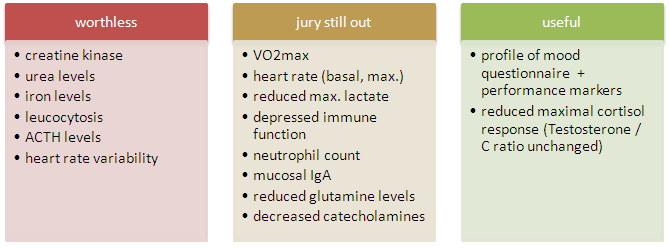
            Figure 3: Overview of selected biomarkers that have been investigated for their usefulness to identify over-reaching or overtraining (first published in "The Overmotivational Roots of Overtraining"; based on an overview in Purvis. 2010)
            What could yet potentially come out of this data is a test kit, one which would probably be a more reliable indicator of overtraining than DOMS or the creatine kinase levels which have long been touted as a potential candidate to distinguish between load and overload (cf. figure 3 and "The Overmotivational Roots of Overtraining"). Whether we will see respective test kits being available for the average Joe or Jane, is yet as questionable as whether the latter won't still rather waste his / her money on the latest and greatest supplement scam than on an optimized training routine. After all, a good personal trainer should - without any fancy tool-kits - be able to prescribe a routine that may not be 100% optimal, but will at least keep you within the repeatedly mentioned margin of productive overload, today!

            References:
            • Bonavaud S, Charriere-Bertrand C, Rey C, Leibovitch M P, Pedersen N, Frisdal E, Planus E, Blasi F, Gherardi R, Barlovatz-Meimon G. Evidence of a non-conventional role for the urokinase tripartite complex (uPAR/uPA/PAI-1) in myogenic cell fusion. J Cell Sci 1997; 110 : 1083 – 1089
            • Bondesen B A, Mills S T, Kegley K M, Pavlath G K. The COX-2 pathway is essential during early stages of skeletal muscle regeneration. Am J Physiol 2004; 287 : C475 – C483
            • Fibbi G, Barletta E, Dini G, Del Rosso A, Pucci M, Cerletti M, Del Rosso M. Cell invasion is affected by differential expression of the urokinase plasminogen activator/urokinase plasminogen activator receptor system in muscle satellite cells from normal and dystrophic patients. Lab Invest 2001; 81 : 27 – 39
            • Hill M, Goldspink G. Expression and splicing of the insulin-like growth factor gene in rodent muscle is associated with muscle satellite (stem) cell activation following local tissue damage. J Physiol 2003; 549:409 – 418  
            • Koh T J, Bryer S C, Pucci A M, Sisson T H. Mice deficient in plasminogen activator inhibitor-1 have improved skeletal muscle regeneration. Am J Physiol 2005; 289 : C217 – C223 
            • Lluis F, Roma J, Suelves M, Parra M, Aniorte G, Gallardo E, Illa I, Rod-riguez L, Hughes S M, Carmeliet P, Roig M, Munoz-Canoves P. Urokinase-dependent plasminogen activation is required for efficient skeletal muscle regeneration in vivo. Blood 2001; 97 : 1703 – 1711
            • Munoz-Canoves P, Miralles F, Baiget M, Felez J. Inhibition of urokinase-type plasminogen activator (uPA) abrogates myogenesis in vitro. Thromb Haemost 1997; 77 : 526 – 534
            • Novak M L, Bryer S C, Cheng M, Nguyen M H, Conley K L, Cunningham A K, Xue B, Sisson T H, You J S, Hornberger T A, Koh T J. Macrophage-specific expression of urokinase-type plasminogen activator promotes skeletal muscle regeneration. J Immunol 2011; 187 : 1448 – 1457 
            • Sisson T H, Nguyen M H, Yu B, Novak M L, Simon R H, Koh T J. Urokinase-type plasminogen activator increases hepatocyte growth factor activity required for skeletal muscle regeneration. Blood 2009; 114 : 5052 – 5061
            • Trappe T A, White F, Lambert C P, Cesar D, Hellerstein M, Evans W J. Effect of ibuprofen and acetaminophen on postexercise muscle protein syn-thesis. Am J Physiol 2002; 282 : E551 – E556
            • Xiao W, Chen P, Dong J. Effects of Overtraining on Skeletal Muscle Growth and
              Gene Expression. Int J Sports Med. 2012 May 16. [Epub ahead of print]