.

.
marylin monroe
Showing posts with label ATP. Show all posts

Orally Administered ATP (400mg) Increases Muscle Mass, Size and Performance Gains in Complex 12-Week Study With Previously Strength-Trained Subjects

Training till you drop? Well with some ATP 30 minutes before your workout it may take a couple of minutes / workout sessions more to "drop" ;-)
If you drive a Porsche that runs on super you would not put crude oil in the tank, would you? Well, why do you eat carbohydrates and fats then, when ATP, i.e. adenosine triphosphate, is the "fundamental energy unit" in our bodies? Why don't we guzzle ATP all day to run with the speed of light and lift with the force of an elephant? When? Well before, during and after a workout - sounds right, hah?

Ok, ok, we are not "meant" to do so, I know... but even if you managed to keep the "paleo logic" out of the equation for once, there would be another stumbling block. Oral ATP is - supposedly - not bioavailable, at least that's what many people think.

"ATP supplements are not orally bioavailable."


In fact, Arts et al. even used the words in the subheading of this paragraph as the title to the paper in which they describe the results of their 2012 randomized, placebo-controlled cross-over study that involved eight healthy volunteers who received 5,000mg of oral ATP per day (Art. 2012). In order to make sure that they did not simply use an inappropriate delivery route Art et al. even used three different delivery routes: Two types of pH-sensitive, enteric-coated pellets (targeted at release in the proximal or distal small intestine), and a naso-duodenal tube. Increases in ATP were not measured with any of the preparations, though.

In previous studies even 5,000mg of ATP were "in and out" in 2x30 min and the 1250mg dosage (top) did not leave any significant impression, the only sign. effect was an increase in uric acid (not shown; Coolen. 2011)
Being aware of both this and a previous study on the effects of chronic oral ATP administration (5,000mg/day) by researchers from the same research group that concluded
"On the basis of these findings, we seriously question the claimed efficacy of oral ATP at dosages even lower than that used in the present study" (Coolen. 2011),
I was pretty surprised, when I hit upon a recent study in the Journal of the International Society of Sports Nutrition that says: Oral ATP supplementation works! ATP does - at least this is what the study suggests - "enhance muscular adaptations" and "prevent  decrements in performance following overreaching".

That certainly sounds like something ATP could do - if it actually made it to the muscle cells. So is it possible that the previous studies were flawed? Are we missing something? I guess so. Firstly, the results of any ATP measurements will depend on the ATP pool you chose to analyze or as Wilson et al. rightly point our:
"[T]he biological pool where ATP is measured will determine the results of bioavailability analysis. If sampled in venous portal blood, oral ATP is indeed bioavailable" (Wilson. 2013) 
Now exactly this, i.e. an analysis of the venous portal blood was what Coolen et al. didn't do. It is still interesting that there was a minor systemic increase with the highest dose of ATP in the Coolen, though. After all this tells us something about the absorption kinetics and thus the ideal time to ingest ATP supplements, which should accordingly be ~30min before a workout. And indeed, 30min is exactly the timespan between the ingestion of 400mg of ATP (in the form of ATP disodium) and the first set of the resistance training sessions in the Wilson study.

Overreaching tapering and ATP supplementation

Apropos, resistance training, the 24 subjects (3 dropouts during the study, so that N=21) were resistance trained men with a mean age of 23.4  ±  0.7 years and an average one-repetition maximum of 1.71 ± 0.04, 1.34 ± 0.03 and 2.05 ± 0.04 times their own bodyweight for squat, bench presses and deadlifts, respectively. Obviously none of them was taking steroids, other performance enhancing supplements, smoking pot ... you know the rest of the list ;-)
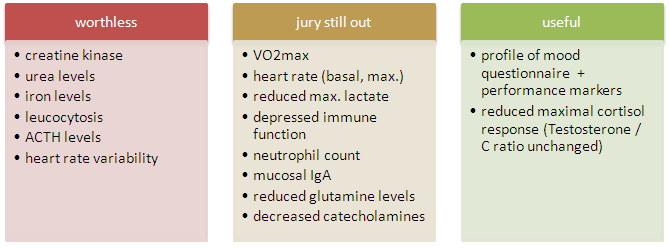
Contrary to strategic overreaching, which can be highly productive, there is nothing beneficial about overtraining. Unfortunately, it is pretty difficult to objectively determine where one ends and the other begins. Learn more about useful, less useful and totally useless markers I suggest you surf over to this previous SuppVersity article.
"The protocol was divided into three phases. Phase one consisted of a three times per week non-linear periodized RT program for weeks 1–8, modified from Kraemer et al. (2009). Phase two consisted of a two-week overreaching cycle during weeks 9–10. Finally, phase three consisted of participants tapering for weeks 11 and 12. Muscle mass and body composition were measured at baseline and at the end of weeks 4, 8, and 12. Muscle strength, vertical jump power, Wingate peak power (PP), creatine kinase (CK), C-reactive protein (CRP), free and total testosterone, and perceived recovery were measured at baseline and after weeks 4, 8, 9, 10 and 12." (Wilson. 2013)
I know that (at least some of) you are not really interested in these details, at least not before they have not had the following questions answered: "Ho much more muscle?", "How how much less fat?" and not just as popular "How much stronger?". I guess figure 1 should answer all these questions, doesn't it?

Figure 1: Changes in body composition and total strength after 4, 8 and 12 weeks (Wilson. 2013)
Now, of the changes Wilson et al. observed the slightly more pronounced increases in fat loss was clearly statistically non-significant. The rest of the parameters, on the other hand, showed statistically significant inter-group differences. Among these, I personally consider effect the ameliorative effects of the ATP supplementation had on the the strength decrements that occurred in the placebo group aver the overreaching most significant. Why? Well, only with the provision of ATP did the overreaching period lead to the strength (and thus performance) gains trainers and trainees expect.

Similarly beneficial effects were also observed for the protein breakdown. Despite being slightly increase in the regular training phase, the latter was significantly reduced by the ATP supplements, when the subjects were overreaching.
"We can speculate that under normal conditions of training, when glycogen levels are likely adequate those participants supplementing with ATP were able to maintain higher intensities, which would result in higher rates of protein breakdown. However, when exposed to greater training frequencies, glycogen levels are likely to be depleted, thus preventing higher intensities from being performed." (Wilson. 2013)
Against that background it should be obvious that the provision of ATP during phases of intense pre-season / pre-competition training could in fact boost the training outcome to new heights by bolstering the strength (and mass) increases during the taper after a typical pre-season overreaching phase.
If your training log tells you that you neither gained weight nor strength in the past two months, you'd just waste your money if you bought an ATP supplement before you fixed your broken workout and nutrition regimens. If you have no clue how to do that, I suggest you start with the Step-By-Step Guide to Your Own Workout Routine and set up a new routine that's in line with your social life, training status and current goals (open with IE or FF).
Bottom line: Irrespective of my initial (healthy ;-) skepticism, I must admit that the results Wilson et al. present in their most recent paper are not just impressive, they are also credible. With an excellent safety profile (none of the blood parameters Wilson et al. tested showed any abnormalities) and a mechanism of action that should offer synergies with the current staple supplements many of you are using, the provision of 400mg ATP ~30min before a workout (remember: In this case timing will probably matter) could actually produce visible changes to the figure and figures you see in the mirror and your training log, respectively.

If you are not pushing yourself hard enough, are chronically overtraining, don't have your diet in check, don't get enough sleep and have thus not made any gains in the past months, however, you better save your money and return to the drawing board to come up with a better training and nutrition plan, first.

References:
  • Arts IC, Coolen EJ, Bours MJ, Huyghebaert N, Stuart MA, Bast A, Dagnelie PC. Adenosine 5'-triphosphate (ATP) supplements are not orally bioavailable: a randomized, placebo-controlled cross-over trial in healthy humans. J Int Soc Sports Nutr. 2012 Apr 17;9(1):16. 
  • Coolen EJ, Arts IC, Bekers O, Vervaet C, Bast A, Dagnelie PC. Oral bioavailability of ATP after prolonged administration. Br J Nutr. 2011 Feb;105(3):357-66. 
  • Kraemer WJ, Hatfield DL, Volek JS, Fragala MS, Vingren JL, Anderson JM, Spiering BA, Thomas GA, Ho JY, Quann EE, Izquierdo M, Hakkinen K, Maresh CM: Effects of amino acids supplement on physiological adaptations to resistance training. Med Sci Sports Exerc. 2009, 41(5):1111–1121
  • Wilson JM, Joy JM, Lowery RP, Roberts MD, Lockwood CM, Manninen AH, Fuller JC, De Souza EO, Baier SM, Wilson SMC, Rathmacher JA. Effects of oral adenosine-5[prime]-triphosphate supplementation on athletic performance, skeletal muscle hypertrophy and recovery in resistance-trained men. Nutrition & Metabolism 2013, 10:57.

To Fail or Not to Fail - 5x10 or 10x5? The Energetic Demand of Your Workouts Doesn't Depend on Workloads, Alone

Image 1: PCr, ATP, whatever as long as there was energy left, Arnold kept pumping iron (pun intended ;-)
"To fail or not to fail", this question is probably about as ancient as the hilarious idea to engage in physical activity that is not in one way or another directly related to one of our two most fundamental needs, survival and procreation. Researchers from the Physical Education Department at the Sport Sciences University of the Basque Country and the Department of Health Sciences at the University of Navarra in Spain have recently examined this question from a slightly different angle than most of the articles you have probably seen in and on the various muscle mags and bodybuilding related websites on the Internet. What Esteban M. Gorostiaga and his colleagues wanted to know was:

Are There Significant Differences in Energy Metabolism When you Train to Failure?

Or, put another way: Does it make a difference if you fail from a molecular energetic point of view or is the mere number of reps the most fundamental determinant of the changes in muscle adenine nucleotides, inosine 59-monophosphate (IMP), phosphocreatine (PCr), creatine (Cr), lactate and energy charge during a workout. To answer this question the researchers recruited 6 healthy male volunteers (age 28-40y; BMI 23.3kg/m²; 1-RMmax on unilateral leg press 199+/-43kg) and had them perform a total of 50 repetitions with the same initial load (83% of 1-RM) on two separate occasions, either
  • performed to failure, as a quintette of 5 x 10 (sets x reps), or
  • stopped before failure, in a 10 x 5 fashion.
On both occasions the subjects rested 2 minutes between the sets. Furthermore, Gorostiaga et al. tried to eliminate "confounding factors", by equating the values of several variables such as initial load and total number of repetitions between both exercise sessions and making sure that whenever a "subjects could not lift the initial load during the following sets due to fatigue" the load was decreased by 15kg until the respective subject was able to complete all 50 repetitions (Gorostiaga. 2012).
Figure 1: Peak power output profiles (average for n=6 subjects) for each exercise during the two experimental conditions: when exercise was 5 sets of 10 repetitions to failure (10REP; open circles), and when exercise was 10 sets of 5 repetitions not to failure (5REP; filled circles; adapted from Gorostiaga. 2012)
It is plain to see from the data in figure 1 that performing all sets to failure (open circles) lead to a significant reduction in total workload (the area under the peak powder curve):
During 5REP all the subjects were able to complete all the repetitions with the initially load assigned (154+/-31 Kg; 83+/-8% of 1RM). During 10REP, however, most of the participants were unable to complete all the repetitions with this starting load, due to failure. The load had to be reduced by 7.2+/-3.8% after 27+/-16 repetitions and was progressively reduced, reaching 85+/-12%(P,0.05) of the initial load at the last repetition. Average load during the 50 repetitions of 10REP was 6.1+/-6.3% lower (P<0.05) than during 5REP. (Gorostiaga. 2012)
If we examine the graph further there are a couple of other interesting things to observe, though:
  • the 2nd-3d rep was the one with the maximal power - so much about the value / validity of 1-RM maximum strength tests, then ;-)
  • the power progressively declined from the 3rd rep on (35-45%) and that with an astonishing dip after the 5th rep - maybe because subjects are used to do 5 reps, so that this could also be a psychological factor
  • while not training to failure with 10 sets of five reps allows to maintain almost identical average peak power on all sets, training to failure with 5 sets of 10 reps resulted in a net reduction of 33% from 812Watts on the first to 569 Watts on the last set
  • the average peak power per set was accordingly 28% lower, when the participants trained to failure
What's the "energy charge"? The energy charge was calculated as the quotient of (ATP + 1/2 ADP)/(ATP + ADP + AMP) and does thus quantify the ratio of usable to used energy in the muscle samples.
Yet while the average mean power output changes paralleled those of peak power output in both experimental conditions, the opposite was the case for the aforementioned muscle metabolites - muscle adenine nucleotides, inosine 59-monophosphate (IMP), phosphocreatine (PCr), creatine (Cr), lactate and energy charge - the scientists measured by high-performance liquid chromatography from the muscle biopsies they had taken from the right legs of the subjects on each occasion.

Is light training an option, at all?

Very much in accordance with the subjective experience of many trainees, the data in figure 2 appears to confirm that working out to failure does induce muscular exhaustion, which manifests in the form of physically quantifiable changes in muscle metabolites in the training to failure group
  • almost depleted PCr stores in the failure group (85% fall, P<0.05), and 
  • reduced ATP (-21%), energy charge (-4%), and  
  • reduced adenine nucleotides pool (-20%; ATP + ADP + AMP), in the presence of
  • increased IMP (+8600%) and lactate (+1400%) levels
Which stand in stark contrast to the mediocre decrease in of phosphocreatine, the almost unchanged muscle ATP, IMP, energy charge and adenine nucleotide pool and comparatively marginal elevations in blood lactate in the 10 x 5 non-failure group.
Figure 2: Changes in ATP, ADP, AMP, phosphocreatine (PCr) inosine monophosphate (IMP) and lactate from pre to post workout in the 5 x 10 (failure) and the 10 x 5 (no failure) session (data calculated based on Gorostiaga. 2012)
As far as the correlation between these markers and the actual power output during the workout are concerned, the scientist say that they observed a ...
Figure 3: Relationship between muscle lactate concentrations and average peak power (from Gorostiaga. 2012).
  • significant linear negative correlation (R²=0.59) was observed between the average changes in peak power output observed during the last two repetitions (expressed in percent of the initial two repetition values) and the decreases in ATP levels (expressed in percent of initial value).
  • significant curvilinear negative correlation between the average peak power output changes observed during the last two repetitions of the first and last sets (expressed in percent of the initial two repetition values) and the corresponding levels of muscle lactate. 
From the curvilinear nature of this relationship (see figure 3) Gorostiaga et al. conclude that "when muscle lactate levels do not exceed the upper limit of 10–15 mmol/kg wet muscle, power output changes little from maximum values". The exact opposite is yet the case, when the lactate values exceed this critical upper value and the power output begins to decrease sharply.
Image 2: While training like a sissy will at best produce suboptimal results, maxing out on every set of every workout will work for max. 2-3 weeks until you will not just lose the gains you may have made but end up weaker and with less muscle in the hospital, when an injury or total burn-out forced you to finally see reason. Going to failure on one the last set of a selected exercise for each body group may be a way smarter, safer and more productive way. Combine that with planned 3-RM tests to gauge your strength progress and you should see some nice gains and can keep track of your strength gains without risking burn-out or injury and trust me this has little to do with being a sissy!
Implications: At first sight you may certainly argue that the study does not provide much novel information. If you do however compare the main results to common wisdom about various strength training regimen, the total depletion of the phosphocreatine stores in the "higher" rep group and the increase in IMP levels, of which Gorostiaga et al. rightly argue that they reflect the failure of ATP resynthesis to match ATP hydrolysis rates and eventually feed into the uric acid cycle (as reflected by the 19% increase in the failure group) put an emphasis on the often underestimated energetic and metabolic demand of training to failure. In this context, the pronounced loss of purines from the muscle, as it has also been observed by Hellsten et al. subsequent to profoundly lowered ATP levels in the course of a one-legged HIIT protocol on a cycle ergometer (Hellsten 1999), and the subsequent extraction of urate from the blood by the muscle to restore intramuscular urate levels (remember: urate acts as a free-radical scavenger during intense exercise; cf. Hellsten. 1997) may well be an overlooked factor, when it comes to assessing exercise recovery.

Still, while the former would suggest that you better avoid training to failure altogether and simply hit the gym for a "light" 10 x 5 workout everyday, the minor reduction in PCr (-15% vs. -80%) and the non-existent rise in plasma lactate and urate (no stress = no adaptation?) do indicate that frequent light training session will probably not result in the desired, or at least suboptimal muscular adaptations, which are the physiological bases for the strength and size gains, you are looking for (read all about "The Physiology of Building Muscle"). Moreover, the almost unchanged ATP/ADP ratio (see figure 3), which is the gauge by which AMPK works (cf. "Zoning in on AMPK"), could be the reason why many of the "sissy workout" studies report that strength training would not have the same / any beneficial effect on glucose tolerance, lipid levels and all the other standard parameters of metabolic health scientists usually measure in those trials.

Bottom line: While it is almost certain that you will out-train your own recovery potential by going to failure on every set of every workout, the results of this study put an emphasis on the fundamental difference between physical workloads and their immediate physiological effects (just a reminder, the workload, i.e. weight lifted x reps was identical for both groups). What we are still lacking to derive concrete reliable workout tips from data like this, though, are clear-cut mechanistic or at least probabilistic relationships between the short term effects of and the long-term adaptation to different workout regimen and their respective energetic demands... ah, and by the way, this goes for the incredible popular measurements of post-workout protein synthesis, as well. Until now, no-one can say how much predictive value temporary increases in fractional muscle protein synthesis actually have in terms of long(er) term muscle gains.

References:
  • Gorostiaga EM, Navarro-Ame´zqueta I, Calbet JAL, Hellsten Y, Cusso R, et al. (2012) Energy Metabolism during Repeated Sets of Leg Press Exercise Leading to Failure or Not. PLoS ONE 7(7): e40621. 
  • Hellsten Y, Tullson PC, Richter EA, Bangsbo J. Oxidation of urate in human skeletal muscle during exercise. Free Radic Biol Med. 1997;22(1-2):169-74.
  • Hellsten Y, Sjodin B, Richter EA, Bangsbo J (1998) Urate uptake and lowered ATP levels in human muscle after high-intensity intermittent exercise.Am J Physiol 274: E600–E606.

Oral adenosine-5’-triphosphate (ATP) Supplementation - A Story of Mice & Men | Can ATP Be the Cornerstone of a New Generation of Innovative Pre Workout Pump Supplements

Photos like this helped BSN sell truckloads of their "mother of all pre-workouts" NO XPlode!
Increases in blood flow? That's something each and every of the first, second and third generation promises "pump supplements" to deliver. For the first generation it was arginine, for the second citrulline and for the third nitrates that were supposed to get the job done.

What? None of them worked for you? Well luckily the next "big thing" is already looming on the horizon: "Oral adenosine-5’-triphosphate (ATP) supplements," of which you'd think that they would be used to deliver immediate energy, are probably soon going to be marketed as "pump supplements".
I would alway chose creatine creatine over ATP supplements

Creatine Doubles 'Ur GainZ!

Creatine, DHT & Broscience

Creatine Better After Workout

ALA + Creatine = Max Uptake?

Creatine Blunts Fat Loss?

Build 'Ur Own Buffered Creatine
Why? Well, let me just cite the title of a recent study from the Auburn University, the University of Tempa, the University of Missouri-Columbia and the a couple of companies with a vested interest in preferably beneficial study outcomes:

"Oral adenosine-5'-triphosphate (ATP) administration increases blood flow following exercise in animals and humans" (Jäger. 2014)

What? You're not impressed? Me neither, even though the body surface area, species adjusted human equivalent doses (HED) of either 100 mg (n=4), 400 mg (n=4), 1,000 mg (n=5) or 1,600 mg (n=5) of oral ATP as a disodium salt (Peak ATP®, TSI, Missoula, MT) the rodents in the study at hand received, the fact that the 400mg dosage of ATP that was used in the human arm of the study (12 resistance-trained male participants; 400 mg of ATP as a disodium salt daily 30 minutes before  breakfast  for  12 weeks + 400 mg of ATP 30 minutes prior to an acute elbow flexor bout consisting of 3 sets of 20 contractions at 50% of the subject’s 1-RM) produced rather mediocre elevations of post-workout.
Figue 1: Changes in Brachial Diameter at weeks 1, 4, 8, 12 were compared to control week by a paired t-test, ‡
p < 0.01, *p < 0.05 and +p < 0.10 (Jäger. 2014)
Maybe you want to disagree, but I don't really see how the transient and highly variable increase in blood-flow the scientists observed in the human trial (400mg/day) would be relevant for athletic performance or recovery. I guess, if it was not for the Wilson study (Wilson. 2014; read previous article) that reported recently that oral ATP supplementation can significantly impact athletic performance, skeletal muscle hypertrophy and recovery, I would not even have mentioned the study at hand, which suggests that the increase in "blood flow result[s] in improved oxygen and nutrient delivery to the muscle" and could thus be at the heart of the previously observed ergogenic effects of ATP supplements.

If it were not for the previously reported increases muscle mass, size and performance gains in Wilson et al.'s complex 12-week study with previously strength-trained subjects, I would yet say that we are probably dealing with yet another imposter supplement (re-read previous article).
If you are looking for an excuse to try ATP supplements, better take the Wilson study than this one.
Bottom line: I am similarly reluctant to call this study boring and non-significant, as I am reluctant to accept it as evidence that the good old marketing claim that pump supplements would exert their ergogenic effects by enhancing the blood flow. It may sound logical that this would improve the removal of metabolic waste products and nutrient delivery, but where is the evidence this is "anabolic", "ergogenic" or what not?

I don't want to say that this is not the case, but even if it was, will the real-world benefits in fact be more pronounced than they were with the 1st and 2nd generation "pump" supplements? I don't think so.
References:
  • Jäger, R. et al. "Oral adenosine-5'-triphosphate (ATP) administration increases blood flow
    following exercise in animals and humans." Journal of the International Society of Sports Nutrition. 2014:11-28
  • Wilson JM, Joy JM, Lowery RP, Roberts MD, Lockwood CM, Manninen AH, Fuller JC Jr, De Souza EO, Baier SM, Wilson SMC, Rathmacher JA. "Effects of oral adenosine-5'-triphosphate (ATP) supplementation on athletic performance, skeletal muscle hypertrophy and recovery in resistance-trained men." Nutr Metab (Lond). 2013:10:57.

300mg CoQ10 Boost Peak Power Increases in Young Elite Athletes. Plus: 140ml of Beet Root Juice, That's all it Takes to Minimize the Oxygen Demands During a Workout

Athletes from various sports train at the Olympic Camp, where the CoQ10 study was conducted.
As unfortunate as it may sound, the number of "next big things" in the area of performance enhancing (legal) substances - at least in large parts - a line-up of supplemental non-starters. Against that background it is all the more surprising that today' SuppVersity article features not one, but two already available supplements that could in fact make a valuable contribution to your workout regimen. And while we are going to take a brief look at the latest research on the ergogenic effects of beet root juice later, we will start out with a study the results of which did actually surprise me - in a positive sense, that is.

  • Reduced CoQ10 (ubiquinol) increases peak power in trained athletes (Alf. 2013) -- While previous studies on the efficiacy of CoQ10 demonstrated at best inconclusive and statistically, but mostly practically insignificant benefits, the latest study from the Olympiastützpunkt Rhein-Ruhr in Essen, Germany, reports a whopping +11% increase in peak power per kg body mass in the 53 males and 47 females young German athletes (average age 19.2 years, height 181 cm, weight 78 kg) who consumed 5x 60mg ubiquinol, the completely reduced form of CoQ10, which comes in three redox states, i.e. fully oxidized (ubiquinone), semiquinone (ubisemiquinone), and fully reduced (ubiquinol), on a daily basis day as a supplemental adjunct to their 6-week training regimen.
    Figure 1: Progress of absolute peak power in the placebo and 5x60mg ubiquinol group (Alf. 2013)
    While it is not possible to tell, whether it was the comparatively long study period (CoQ10 needs week to build up in the tissue; cf. Cooke 2008), the high dose of ubqiuinol (previous studies with 150mg did not yield comparable results, cf. Svensson. 1999) or a combination of both thats responsible for the ergogenic effects you see in figure 1 cannot be said for sure. What is however certain and actually pretty remarkable, if you take into account that these young athletes were all training regularly at the Olympic Training Camp Rhein-Ruhr in Essen and that many of them have been competing at the Olympic Games 2012 in London., is that the supplemented athletes did make 2.5% more out of  their 6 weeks at the camp.
    Addendum: In view of the fact, that Rick just asked about potential side effects on facebook and I assume that, smart as you are, you will immediately spot the 2009 study by Sumien et al. talking about detrimental effects on cognitive function, I want to point out that the human equivalent of 2.6mg/g chow the high dose group received would exceed an ubiquinol intake of >6g even for the lightweights of you. With 1/4 of the dosage not producing any long-term negative sides in the same rodent study, you are thus probably on the save side w/ 300mg/day. This hypothesis is by the way backed by a 2008 review by Hidaka who report a no-observed-adverse-effect level (NOAEL) of 1200 mg/kg/day derived from a 52-week chronic toxicity study in rats that would translate to 720 mg/day for a person weighing 60 kg (Hidaka. 2008)
    Moreover, the way in which the gap between the supplement and placebo group widens only in the last weeks of the intervention seem to support the previously mentioned "pre-loading hypothesisand raises the hope that the ergogenic effects will persist for more than just 6 weeks.

    CoQ10 did work in previous studies, but affected mostly serum markers not performance (learn more)
    The researchers also speculate that "older athletes and “weekend warriors” might profit even more from CoQ10 supplementation than young, well-trained athletes", as both age and the lack of training are associated with a lower mitochondrial density, of which Alf et al. suspect that it may be compensated for by the provision of CoQ10. In view of it's purported beneficial effects on ATP and creatinine phosphate synthesis, this may well be the case. I would yet still refrain from buying a year-long supply of the ubiquinol before respective evidence from independent trials is available. I mean, with the current price tag on ubiquinol, even an N=1 experiment with a 6-weeks supply of 300mg of ubiquinol per day would cost you ~$60 which is not exactly cheap, but could be worth a try - assuming you have the patients to wait for the results.

  • 280ml beet root concentrate have well-established ergogenic effects, more is not necessary (Wylie. 2013) -- Right from the Exeter University comes a new study on the ergogenic effects of beet root juice. While the main message of the paper is that beet root juice supplementation can effectively increase nitric oxide levels and physical performance, the real interesting part of the paper deals with the dose-response relationship.

    There are a couple of important confounding factors which will determine whether or not you or anyone else can benefit from nitrate supplementation. Sex is yet - as far as I know know - not one of them... ah, by the way, there may be other benefits to nitrates that are "sex-specific", but in this case the semantics are somewhat different (learn more in a previous post on beet root  juice here at the SuppVersity ;-)
    Lee J. Wylie and his colleagues found that the provision of 70, 140 or 280 ml of concentrated beet root juice (BR), with 4.2, 8.4 and 16.8 mmol NO3- on six separate occasions increased the plasma concentration of NO2- in a dose-dependent manner, with the peak changes occurring at ~2-3 h. Of the three dosing regimen,
    "[...] only the higher dosages (140ml and 280ml) reduced the steady-state VO2 during moderate-intensity exercise by 1.7% (P=0.06) and 3.0% (P<0.05), whilst time to task failure was extended by 14% and 12% (both P<0.05), respectively" (Wylie. 2013)
    As the scientists point out, these results indicate that "there is no additional improvement in exercise tolerance after ingesting BR containing 16.8 compared to 8.4 mmol NO3-".

    The dreaded carb overload that may have popped in your head, whenever you heard about using a natural NO3- supplement should not keep you from taking advantage of nature's very own "nitric oxide supplement" ;-)


Bottom line: In view of the fact that ubiquinol and beet root juice act via totally different pathways, a direct comparison of the two obviously doesn't make sense. A combination of both on the other hand would. I would not expect any synergistic affects, but it is relatively save to assume that the effects will add up.One thing you should keep in mind, thoug,h is that only the beets will have acute effects and provide the instant gratification everybody seems to be striving for, these days. The effects of coqu10 n the other hand will manifest only weeks after you started taking it, so that you will - for want of an independent control you will thus simply have to beleive that its working ... after all, you don't know how much progress you wouls make without it.
    References:
    • Alf D, Schmidt ME, Siebrecht SC. Ubiquinol supplementation enhances peak power production in trained athletes: a double-blind, placebo controlled study. J Int Soc Sports Nutr. 2013 Apr 29;10(1):24. 
    • Cooke M, Iosia M, Buford T, Shelmadine B, Hudson G, Kerksick C, Rasmussen C, Greenwood M, Leutholtz B, Willoughby D, Kreider R: Effects of acute and 14-day coenzyme Q10 supplementation on exercise performance in both trained anduntrained individuals. J Int Soc Sports Nutr2008, 5:8.  
    • Hidaka T, Fujii K, Funahashi I, Fukutomi N, Hosoe K. Safety assessment of coenzyme Q10 (CoQ10). Biofactors. 2008;32(1-4):199-208.
    • Sumien N, Heinrich KR, Shetty RA, Sohal RS, Forster MJ. Prolonged intake of coenzyme Q10 impairs cognitive functions in mice. J Nutr. 2009 Oct;139(10):1926-32. doi: 10.3945/jn.109.110437.
    • Svensson M, Malm C, Tonkonogi M, Ekblom B, Sjodin B, Sahlin K: Effect of Q10 supplementation on tissue Q10 levels and adenine nucleotide catabolism during high-intensity exercise. Int J Sport Nutr1999, 9:166–180. 
    • Wylie LJ, Kelly J, Bailey SJ, Blackwell JR, Skiba PF, Winyard PG, Jeukendrup AE, Vanhatalo A, Jones AM. Beetroot juice and exercise: pharmacodynamic and dose-response relationships. J Appl Physiol. 2013 May 2.

    Beet Root Juice Supplementation Improves Exercise Performance. Nitrate Content of the Beets Decreases ATP Turnover in High Intensity Exercise.

    Nitrates have long been decried as toxic and dangerous and I bet, before their latest appearance to the supplement market, none of you would even have remotely considered to consciously increase his/her dietary nitrate supply. Yet, recent scientific studies confirm that nitrate (in moderate doses) is not only safe, but also has, its effects on vasodilation aside, quantifiable effects on exercise performance.

    A group of scientists from the UK tried to find out the underlying mechanisms of the ergodicity of supplemental nitrate (Baily. 2011). Following a six day supplementation period in the course of which seven males (aged 19-38 yr) consumed 500 mL per day of either nitrate-rich beetroot juice (~300mg nitrate content) or placebo (PL, with negligible nitrate content). What they observed is best described as a "tuning effect" that was observable both, in the course of high, as well as in the course of low intensity exercise training.

    During low intensity exercise, the pulmonary VO2 amplitude and thus the oxygen need during this kind of aerobic exercise decreased by -7%. An even more profound effect of nitrate supplementation was observed during high intensity activity (knee extensor exercises) where the ATP turnover decreased by -25%. These results stand in line with an overall increase in exercise tolerance of +25% in the nitrate supplemented group over placebo.

    Other than a some other researchers had speculated, Baily et al. did not find any indications of a changed phosphate vs. oxygen (P/O) ratio in the muscle. The changes in ATP turnover a 6-day loading phase with dietary nitrate from beet root juice triggers, must thus be considered the underlying mechanism of the ergogenic effect of nitrates, which, as you may have notices, appear in various forms (amino acid nitrates, creatine nitrates, etc.) in recently released supplements - not without reason, as it turns out.