.

.
marylin monroe
Showing posts with label alkaline. Show all posts

The Latest Gut Microbiome Modulators: Beneficial Effects of Cacao, Negative Effects of Acidic Water and Preliminary Evidence of the Negative Impact of Gluten & Whole Grains

Pancakes al cacao & your gut: Bad grains and good cacao?
There is an increasing amount of interesting scientific publications on the role of the gut microbiome in health and disease. Unfortunately, the evidence on what exactly influences the number and types of bacteria in our gut in a beneficial way and even what exactly a "beneficial way" actually is, is yet largely unknown.

In today's installment of the SuppVersity Short News, I am going to take a closer look at a selection of recent studies that may shed at least some light at the previously mentioned questions.
You can learn more about the gut & your health at the SuppVersity

Bugs Dictate What You Crave

Sweeteners & Your Gut

Foods, Not Ma- cros for the Gut

Lactulose For Gut & Health

Probiotics Don't Cut Body Fat

The Macrobiotic MaPi2.0 Diet
  • Cacao as a gut microbiome modulator - The first study we're going to look at deals with cacao. Cacao and its effect on the gut microbiome. In said study, 3-week-old Wistar and Brown Norway rats were fed, for 4 weeks, either a standard diet or the following three isoenergetic diets containing increasing proportions of cocoa flavonoids from different sources: one with 0·2 % polyphenols (from conventional defatted cocoa), and two others with 0·4 and 0·8 % polyphenols (from non-fermented cocoa, very rich in polyphenols).

    Only the regular theobromine containing cacao did also reduce the weight gain in the three-week study (Massot-Cladera. 2014).
    What the scientist found, when they analyzed the serum Ig concentrations, faecal IgA levels, microbiota composition and IgA-coating bacterial proportion at the end of the study and compared them to those at the beginning was a significant beneficial effect on the mucosal IgA levels and microbiota composition from all supplements. The 0.2 % cacao diet which contained a higher proportion of theobromine and fibre, however, had a more profound impact on the aforementioned parameters - in spite of the fact that there was less cacao in the diet. Obviously, the caffeine-like bitter alkaloid from cacao is contributes to the beneficial effects of cacao in a similar way as the polyphenols.

    As the body weight data in Figure 1 shows, the theobromine containing conventional cacao was also the only one that was able to reduce the diet induced weight gain in the rats. This could, but does not necessarily have to be related to the higher levels of Bacteroides, Bifidobacterium and Lactobacillus bacteria in the gut of the rodents that received the "cheap" conventional cacao.
  • Acidic water triggers type I diabetes - probably by modulating the gut microbiome - No, I am not trying to advertise bicarbonate, here. I am just reporting the results of a recent study from the Medical University of South Carolina which found that a stain of mice that's particularly susceptible to type I diabetes developed insulitis and hyperglycemia rapidly, only when the mice were maintained on acidic pH water (AW).

    Suggested Article: "High Dietary Acid Load Doubles Risk of Type II Diabetes in Lean Individuals! Causative or Corollary? Plus: Are Grains, not Meats the Main Offenders in Our Diet?" | read more.
    The scientists also observed that this effect could be countered by fecal transplants and was obviously triggered by changes in the diversity of the gut flora that occurred, when the pH of drinking water was in the acidic range and were probably related to the proinflammatory cytokine response in the intestinal mucosa.

    As you as a SuppVersity reader know previous studies in humans have already shown that a "High Dietary Acid Load Doubles Risk of Type II Diabetes in Lean Individuals!" (read more) - Who knows, this could also be related to the effect on the gut microbiome!?
  • Gluten and whole grains as modulators of the gut microbome - In two recent randomized cross-over trials, researchers from the University of Copenhagen determined the impact of dietary gluten or whole grains on the gut microbiome and host metabolic health.

    What the researchers found was what the recent backlash against gluten and "healthy" whole grains on the internet would suggest the already overweight "[p]articipants had slightly elevated fasting glucose levels and increased waist circumference" (Ibrügger. 2014).
    Table 1: Overview of the products used in the randomized controlled cross-over trials (Ibrügger. 2014)
    Whether that's related to the effects on the gut microbome is unfortunately something I can't tell you, yet. Why? Well, the currently available paper refers to a future publication that would outline the detailed results. All I can tell you now is that the study used the products listed in Table 1 and, more importantly, that it is its high statistical power, which, due to the large sample size and the crossover design, "allows detecting even small diffrences in the outcome variables" (Ibrügger. 2014).
Suppversity Suggested: "Stevia Kills Good Gut Bacteria - One Study Enough to Stop Using the Natural Sweetener? Probably Not in View of its Anti-Diabetes, Anti-LDL, Anti-Viral & Anti-Cancer Effects" | more
Bottom line: It's a pity that we still can't tell for sure what the "optimal" gut microbiome looks like. Moreover, the currently available scientific evidence suggests that what is considered "optimal" may well depend on your type of diet and / or your metabolic health.

Against that background the previously presented results offer nothing but a brief glimpse at what may become one of the hottest topics in obesity and diabetes prevention in the future. At the moment, though, all the results and any recommendations that are based on these results have to be considered preliminary. And this is also true for the gluten + whole grain study of which you will certainly read again, here at the SuppVersity | Comment on Facebook!
References:
  • Ibrügger, S., et al. "Two Randomized Cross-Over Trials Assessing the Impact of Dietary Gluten or Wholegrain on the Gut Microbiome and Host Metabolic Health." J Clin Trials 4.178 (2014): 2167-0870.
  • Massot-Cladera, Malen, et al. "Impact of cocoa polyphenol extracts on the immune system and microbiota in two strains of young rats." British Journal of Nutrition 112.12 (2014): 1944-1954.
  • Sofi, M. Hanief, et al. "pH of drinking water influences the composition of gut microbiome and type 1 diabetes incidence." Diabetes 63.2 (2014): 632-644.

    High Dietary Acid Load Doubles Risk of Type II Diabetes in Lean Individuals! Causative or Corollary? Plus: Are Grains, not Meats the Main Offenders in the Modern Diet?

    If you go for green, you are usually on the save side of things... ah pHs ;-)
    You will probably remember the association between higher acid levels (not even out of range), metabolic syndrome, lowered growth hormone release and a plethora of other ill-health effects I already hinted at in "How Could Bicarbonate Help You Lose Fat & Build Muscle" (read more). A new study from the Gustave Roussy Institute in France is now the first large scale study to provide relatively conclusive support for the hypothesis that there is a direct relationship between dietary acid load and the risk of cardiometabolic diseases and type II diabetes (Fagherazzi. 2013).

    Credible evidence from large cohort

    Fagherazzi et al. analyzed data from 66,486 women who were part of the E3N study (Etude Epidémiologique auprès des femmes de la Mutuelle Générale de l’Education Nationale), a French prospective cohort study of 98,995 female teachers, who were followed for incident diabetes over 14 years (the study started in 1999).
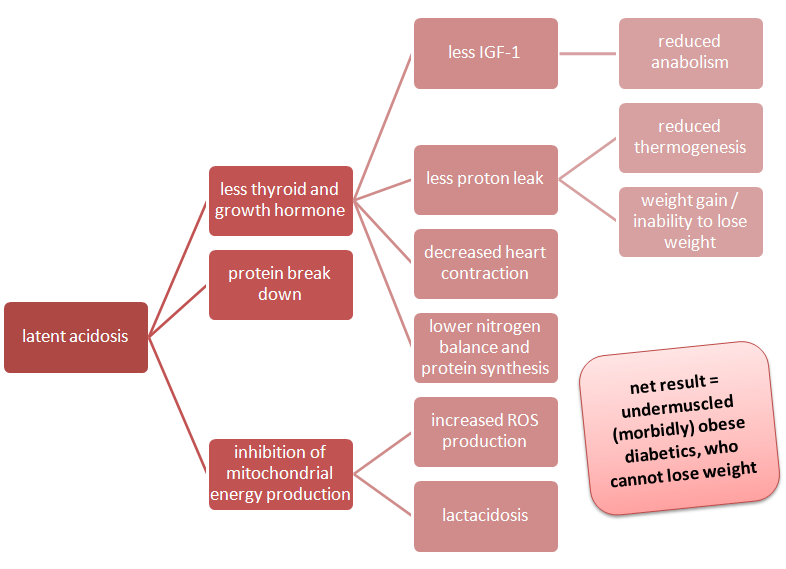
    Latent Acidosis? Why do I care? As you can see in the image to the right, even latent acidosis can reduce thyroid hormone production, increase protein breakdown and inhibit mytochondrial function . The latter leads to increased ROS, lactate production & proton leak, while the former entails decreases in protein synthesis, IGF-1 & cardiac output. These changes have long thought to promote the development of the metabolic syndrome by increasing inflammation and reducing the basal metabolic rate (Berkemeyer. 2009).
    During the 14-year follow-up period, a total of 1,372 cases of incident type 2 diabetes were validated. Fagherazzi et al.'s close analysis of the data revealed that there is a significant association between higher potential renal acid loads (PRALs) and the incidence of type 2 diabetes. Specifically, Fagharazzi et al. point out, ...
    "[...] the highest PRAL quartile, reflecting a greater acid-forming potential, was associated with a significant increase in type 2 diabetes risk, compared with the first quartile (HR 1.56, 95% CI 1.29, 1.90)." (Fagherazzi. 2013)
    A risk increase of 56%, alone, is a pretty impressive figure. What's even more impressive, though, is the fact that the association was significantly stronger among normal-weight women with a BMI <25 kg/m². For them the risk of developing type 2 diabetes almost doubles (+96%), when the dietary acid load is high. That's quite telling in view of the fact their baseline risk of developing T2D is low compared to those of the overweight study participants for whom the additional risk factor "dietary acid load" produced a significant (p = 0.03), but relatively low risk increase of only 28%.

    The characteristics of the pro-diabetic diet

    When we take a closer look at the actual data, there are dozens of statistically highly significant differences between the low and high pH quartiles (most of them with a p-value of p < 0.001). I initially tried to plot the differences, but that got way too chaotic, so I decided to make a list of items such as "higher energy intake (+15%)" indicating that the subjects with a high PRAL value (~the one's who were living on the more acidic side of the divide ;-) had a 15% higher energy intake than the subjects in the low PRAL quartile:
    • It may be coincidence, but in view of the anecdotal link between artificial sweeteners and heart-burn it's probably worth mentioning:  The most acidic study participants consumed 20% more artificially sweetened beverages (more about sweeteners)
      higher energy intake (+15%)
    • lower carbohydrate intake (-10%)
    • higher fat intake (+9%)
    • higher protein intake (+10%)
    • higher animal protein intake (+4%)*
    • lower fiber intake (-20%)
    • higher phosphorus intake (+16%)
    • lower potassium intake (-23%)
    • higher calcium intake (+10%)
    • lower magnesium intake (-22%)
    • higher sodium intake (+26%)
    As a seasoned SuppVersity veteran, you will already have realized where this is heading: Higher energy intake, higher fat intake, hilariously low levels of potassium and magnesium, and salt intakes way beyond the 3g margin - all these are SAD (=standard American diet) hallmarks of the way the average Westerner (even in metropolitan France) eats. The 88% higher cheese intake, the 45% lower fruit + 25% lower veggie intake and 45% more of everyone's favorite "healthy" bread complete the picture that's emerging here: It's the Pizza Hut Diet ;-)

    * The meat is not our only problem!

    You will probably already have been wondering about the "*" and the fact that I highlighted higher animal protein intake (+4%)* in the previous list, right? Don't worry, I am not going to blame our problems on meat and suggest we all go vegan. The actual reason I highlighted the "bad" animal protein is a different one: the corresponding press release that came with the study (some of you may already have read it on Science Daily or other copy+paste 'science news portals'). It goes without saying that whoever wrote the short blurb used the study results for another sweeping blow at animal proteins by citing the following paragraph, and only but the following paragraph from the discussion of the results:
    Suggested read: "Meat-Ology: The Link Between Red Meat, Cooking Techniques & Prostate Cancer" | more
    "A diet rich in animal protein may favour net acid intake, while most fruits and vegetables form alkaline precursors that neutralise the acidity. Contrary to what is generally believed, most fruits such as peaches, apples, pears, bananas and even lemons and oranges actually reduce dietary acid load once the body has processed them. In our study, the fact that the association between both PRAL and NEAP scores and the risk of incident type 2 diabetes persisted after adjustment for dietary patterns, meat consumption and intake of fruit, vegetables, coffee and sweetened beverages suggests that dietary acids may play a specific role in promoting the development of type 2 diabetes, irrespective of the foods or drinks that provide the acidic or alkaline components."(Fagharazzi. 2013)
    Obviously, it's going to be the first part of this paragraph, the one about the bad animal protein, that will get stuck in people's heads. The second part, the one that mentions rather casually that we are talking about total and not specific dietary acid loads, on the other hand, will go unnoticed. 

    Figure 1: Food composition of paleo (top; estimation assumes a high meat intake) and modern US diet in % of total energy intake (Sebastian. 2013) - Don't forget: 1kg of lightly acidic foods are more acid forming than 100g of highly acidic foods!
    Just as the fact that grains, which contribute an estimated 38% of the acid load yielded by the combined net acid-producing food groups in the contemporary diet (Sebastian. 2002), are just as, if not more problematic than the occasional steak of which the mainstream recommendations will tell you that you cannot have it more than once or twice a week, anyway.

    'Paleo reasoning' to the rescue!?

    In an effort to calculate the estimated net acid load of the 'ancestral', 'paleo' or 'whatever-you-want-to-call-it'-diet Sebastian et al. tested several scenarios, the worst of which a high protein, high fat version of the paleo diet (227g of protein, animal-fat content = 46%–63% of animal-food energy) still had a negative net endogenous acid production (NEAP = -7; Sebastian. 2013).

    A low fat variety with a animal to plant food ratio of 35%:65% and an animal fat content of only 26% from animal-food energy and an even higher protein intake of 258g per day had a NEAP value of whopping -78. By "paleo standards" the average Westerner is thus consuming an extremely acidic diet, he is not genetically adapted to...  ;-)
    Table 1: Acid-base value of common foods; positive values signify "acid forming", negative values "alkalizing" effects, the higher the figure the more pronounced the greater the impact of the given food is going to have (Cordain. 2012)
    Paleo logic + scientific evidence = Win!  You all know that I don't buy the mainstream interpretation of the 'we are not adapted to...'-logic and the way it is employed by its followers in an almost religious way and against all scientific evidence.

    What I do buy, however, are conclusions and recommendations that are based on both 'paleo logic' and scientific evidence - conclusions like the one Fagherazzi formulate in the last paragraph of their paper:
    "[The] dietary acid load is directly associated with an increased risk of type 2 diabetes. From a public health perspective, dietary recommendations should not only incriminate specific food groups but also include recommendations on the overall quality of the diet, notably the need to maintain an adequate acid/base balance."
    You want to know what foods Fagherazzi et al. may possibly be referring to? I already expected that. Just have a look at the table to the right, but don't forget: The study at hand does not prove causation. You could as well argue that it's the sum of dietary differences I listed as "characteristics of the pro-diabetic diet" which cause the diabetes. Anyways, the good news is: The solution, i.e. following a whole foods diet, is the same.

    References:
    • Berkemeyer S. Acid-base balance and weight gain: are there crucial links via protein and organic acids in understanding obesity? Med Hypotheses. 2009 Sep;73(3):347-56.
    • Cordain L . AARP The Paleo Diet Revised: Lose Weight and Get Healthy by Eating the Foods You Were Designed to Eat. John Wiley & Sons, Apr 23, 2012
    • Sebastian A, Frassetto LA, Sellmeyer DE, Merriam RL, Morris RC Jr. Estimation of the net acid load of the diet of ancestral preagricultural Homo sapiens and their hominid ancestors. Am J Clin Nutr. 2002 Dec;76(6):1308-16.

    Bicarbonate For Strength Athletes: 25g of Baking Soda Up Your Squat (+27%) & Bench Press (+6%) Within 60 Min

    NaHCO3 probably won't make the burn go away, but it will help you push though it.... and no(!), you don't have to be afraid to retain water - sodium bicarbonate is actually going to lower aldosterone and is thus - if anything - going to have a diuretic effect (Musabayane. 1991). Calcium loss etc. is nothing you have to be afraid of either (Luft. 1990).
    After yesterday's astonishingly popular excursion into dating sciences, we are back to "normal" or as others would call it "extraordinary", here at the SuppVersity today ;-) And to make really sure you know that you're right here we're going to get back into the ergogenic groove with one of my personal favorites: Sodium bicarbonate, NaHCO3 or as your granny calls it, baking soda!

    In the unfortunate case you have no idea, what I am taking about, I'd suggest you briefly go through the previous SuppVersity articles and Facebook posts (e.g. +13% increase the sprinting capacity; sorry for the → typo) about the ergogenic effects of baking soda . Once you've done that it should not really come as a surprise that scientists from the real Human Performance Laboratory  at the Coventry University in the UK found that NaHCO3 will not just for cyclists, runners and rowers, but also for "bench pressers" and "squatters" ;-)

    One thing after the other, though!

    If you know your SuppVersity articles by heart, you are probably thinking about the Kerr study from September 2012, now - right? For the average gymrat, this was probably the most exciting paper on the ergogenic effects of sodium bicarbonate supplementation I've written about (see "22g Baking Soda 60min Before a Old-School 4 x 12RM Leg Workout Allow for a 22 Rep Volume Increase on Hypertrophy Oriented Squat + Leg Press + Leg Extension Quads Routine" | read more).
    A note for those with gastrointestinal problems or an insurmountable gag reflex: I know that downing 25g sodium bicarbonate at once can be disgusting and sends people with weaker stomachs right to the toilette. Fortunately, a 2012 study by Dreher et al. suggests that "serial loading" with several smaller servings of baking soda works at least as well | learn more
    And while the Kerr study was among the first to demonstrate significant beneficial effects of sodium bicarbonate in a strength training scenario, it is - if you come to think of it, actually not that surprising to see that the H+ (=hydrogen ions → acidity) buffering effect works just as well during a high volume leg workout, as it does, during high intensity cycling and sprinting [just a note on the H+ buffer: contrary to beta alanine, bicarbonate buffers the acidity in the blood, not within the muscle cell and will thus have greater effects on the periphery than carnosine the histidine + beta alanine dipeptide you are actually looking for, whenever you take your beta alanine supplement.

    Now while it may not have been surprising that high volume + baking soda does make a perfect match, it is, as you will hopefully agree, not exactly straight forward that we would see similar benefits on the low volume performance test, the 8  men (mean age, height and body mass → 20  ±0.9 years, 1.8  ± 0.1m and 78.4  ± 15.6kg, respectively)  who had been recruited for the study at hand had to perform.

    Three sets of squats and bench presses? Isn't that too little volume for NaCO3 to work?

    All the participants who had at least one year of strength training experience competed  in  team  games  (rugby  union,  soccer, basketball) at the national level and were concomitantly training more than 10 hours per week as part of their regular preseason preparations (those included 3h of resistance training). During the testing conditions to which the subjects had been randomly assigned, all of the performed
    Learn about the best chest exercises in the SuppVersity EMG Series.
    • three sets of bench presses to failure at 80% 1RM, and 
    • three sets of back squats "to failure" at 80% 1RM
    With three minutes of rest between the sets and five minutes of rest between exercises, this is, as I already mentioned, not exactly the workout you would usually expect to benefit (most) from bicarbonate supplementation. Still, the data in Figure 1 tells another story:
    • 0.3g/kg NaHCO3 in 5 ml/kg of artificially sweetened water (NaHCO3), instead of
    • 0.045g/kg NaCL in an artificially sweetened water drink matched for taste
    60 minutes before the two blinded performance tests did the trick - it did increase the mean total reps for squats (+6.7 reps; +27%) and bench preses (+1.5 reps; +6% -- note: I used the values from the table in the full text. They differ from those in the abstract according to which the performance increase would be 7%)
    Figure 1: Back squat and bench press performance in three subsequent sets (Duncan. 2013)
    As it was to be expected due to the low volume and long rest between sets, there was no significant change in blood lactate across time or between conditions. There were however treatment × time interactions for blood pH (p = 0.014) and blood HCO3 concentration (p = 0.001), with the increasing pH and bicarbonate (HCO3) levels in the blood of the NaHCO group being the obvious cause of the highly significant performance benefits.
    Does beta alanine hamper instead of improve your sprinting performance? Learn more in a previous SV Article.
    Baking soda for strength athletes: After the previously cited study by Kerr et al. this is study #2 to prove that the usefulness of baking soda, sodium bicarbonate or NaHCO3 (call it whatever you want) is by no mean, as it was long thought to be, restricted to endurance sports with intermittent sprints. With the study at hand there is enough evidence to believe that it's acute effects are going to be present whenever you're pushing yourself to your own limits and in view of the fact that pushing to the limits, in order to raise the bar is what's driving progress.

    I would therefore be curious to see a long(er) term study (8-12 weeks) taking a look at the cumulative benefits of sodium bicarbonate supplementation on strength and mass gains in trained and untrained individuals. Unfortunately, I suppose that no one with the money to finance that study will share my interest. In the end, a study like this would after all entail the risk of exposing how pathetic the 2.85% performance increase we see in the average beta alanine study actually are (Hobson. 2012).
      Reference: 
      • Duncan MJ, Weldon A, Price MJ. The effect of sodium bicarbonate ingestion on back squat and bench press exercise to failure. J Strength Cond Res. 2013 Oct 11. [Epub ahead of print]
      • Hobson RM, Saunders B, Ball G, Harris RC, Sale C. Effects of β-alanine supplementation on exercise performance: a meta-analysis. Amino Acids. 2012 Jul;43(1):25-37. 
      • Luft FC, Zemel MB, Sowers JA, Fineberg NS, Weinberger MH. Sodium bicarbonate and sodium chloride: effects on blood pressure and electrolyte homeostasis in normal and hypertensive man. J Hypertens. 1990 Jul;8(7):663-70.
      • Musabayane CT, Balment RJ. Renal effects of aldosterone in the sodium bicarbonate infused rat. Ren Fail. 1991;13(2-3):71-6.

      The Latest on Sodium Bicarbonate: Serial Loading Almost as Effective as Acute Loading and Free of Gastrointestinal Side Effects. Plus: Can You Use Potassium Bicarbonate Instead?

      NaHCO3 loading has been most successful in events lasting from 1 to 7 minutes (Linderman. 1994) - so either track sprints or volume training
      Do you remember my last post on sodium bicarbonate and what I said about the SuppVersity being the place, where you would read about the latest studies on the wonders of baking soda, first? Well, at least I have not seen today's SuppVersity news being covered anywhere else, so I guess for the vast majority I am about to deliver on yet another promise, when I briefly summarizing the latest findings on the "effects of serial and actue NaHCO3 loading in well-trained cyclists" from University of Tasmania and the Tasmanian Institute of Sport in Lanceston, Australia (Driller. 2012; study will be published in the October issue of the Journal of Strength and Conditioning Research).

      Why don't we just "load" on NaHCO3 over a longer timespan?

      Interestingly, Matthew W. Driller, John R. Gregory, Andrew D. Williams and James W. Fell must have asked themselves a very similar question as I did a couple of weeks ago:  
      How come, that there is "limited research describing the use of serial NaHCO3 loading?"
      Or put simply: Wouldn't it be likely that we would see similar, in the long haul even superior, results from the chronic ingestion / slow loading of NaHCO3 with less side effects compared to the standard practice of downing 30-50g at once?

      Figure 1: The doses on day 1-3 were taken with breakfast, lunch and dinner, the 5 doses on the day of the test (day 5) within 90min before the test; placebo capsules contained microcrystalline cellulose
      To answer this question Driller et al. came up with a double-blind placebo controlled, randomized design in which each cyclist underwent 3 experimental trials over a 3-week timeframe:
      • AL - acute NaHCO3 loading
      • SL - serial NaHCO3 loading 
      • P - placebo loading condition 
      You can see the "exact" protocol in figure 1 to the right. The main performance variable was a 4-minute cycling test (TT), a choice the scientists explain by referring to it as an approximation (at least duration-wise) of a "complete a 4,000-m individual pursuit in track cycling" and refer to previous research by Lindermann & Gosselink from 1994, which confirms that "NaHCO3 loading has been most successful in events lasting from 1 to 7 minutes" (Driller. 2012).

      If you do the math on the figures, you'll see that the respective absolute amounts, i.e. P = 0mg, AL = 0.3mg/kg and SL = 0.9mg/kg were not identical.

      You could also argue that the SL group should at least have stuck do their regular protocol on the day of the test, but (1) the higher total dosage in the serial loading trial seems reasonable - after all, your body uses the NaHCO3 also, when you don't work out so you got to build an even greater buffer, and (2) it would have been hard to distinguish the "chronic" from the acute effects if the SL protocol had involved supplementation on the day of the test.

      The exercise protocol: A time trial simulates a 4k race

      Can I use potassium bicarbonate instead? NO! You can combine both, but from a physiological standpoint it does not makes sense to increase your serum potassium levels before a workout, because especially strength training will leech potassium from the cells into the blood anyways. Moreover your body conserves potassium pretty well during a workout, while you lose a comparably large amount of sodium in your sweat. In other words, you risk offsetting the peculiar balance of the extra-cellular sodium ions and the intracellular potassium ions. While weakness or skeletal muscle hyperexcitability would be rather harmless, but certainly ergolytic consequences, this can - in the worst case - lead to bradycardia (=abnormally slow heartbeats), arrhythmias and even sudden cardiac arrest as it was observed in the two "salt-phobic" bodybuilders in the case report I already cited in the comments on the "Sodium Bicarbonate for High Volume Strength Training" post (cf. John. 2011; there were probably confounding factors at play, here, but still, the risk of developing hyperkalemia is nothing you can totally exclude, if you ingest tons of potassium within a couple of minutes).
      If you feel that you don't get enough potassium in your diet, anyway, I'd suggest you mix them at a 3:1 ratio as you usually see it for "normal" sodium and potassium in electrolyte products.
      A pros pos "day of the test", on the latter, the participants, 8 well-trained male cyclists (age = 28y; height = 181cm; mass = 73.5 +/- 8.5 kg; VO2peak =66.8 +/- 8.4ml/ kg/min), who were all cyclists currently competing at the state or national level and in their on-season, ingested the placebo or bicarbonate capsules with a tightly controlled amount of water (10 ml /kg body mass) 90 minutes before they hopped onto an air-braked cycling ergometer to perform their time-trial test.
      "All the cyclists performed a standardized warm-up before the test, which was replicated before each TT. The warm-up consisted of 3 set intensities relative to the cyclists’ body mass, each lasting 4 minutes. [...] During the exercise test, each cyclist was encouraged to give a maximal effort during the TT. The investigators providing the encouragement were blinded to the trial each cyclist was undertaking. The VO2peak was taken as the highest VO2 value recorded over a 30-second period during the TT." (Driller. 2012)
      After the test the cyclists were provided with a modified gastrointestinal side-effects questionnaire which allowed them to quantify the side effects on 10-point Likert scale ranging from 1 = "none" to 10 = "unbearable".

      The results: Serial loading with accute effects, but less side effects

      Blood samples were taken before and after the trials, the subjects performed in a rested and hydrated state after fasting for at least 2h. They also filled 3-day food and training diaries for the days before the experiment. Since the scientists don't mention those in the FT to the study, I assume there were no significant intrapersonal differences between the trials), so that the results I summarized in figure 2 are not distorted by 3-days of overtraining or 3-days of McDonalds dieting ;-)
      Figure 2: Relative power (W/kg), peak blood lactate (mmol/l), HCO3 post loading and post test (mmol/l), pH post loading and post test, VO2 peak (l/min); p < 0.05 for all but the HCO3 post test value - the figures above the bars indicate the percentage of participants which did see practically relevant improvements in the respective parameter (vs. those with improvements that were trivial or even negative; based on Dreher. 2012)
      As you can see both the acute, as well as the alternative serial loading protocol yielded the desired improvements in exercise performance. On average, the alkalizing effects, as well as the increases in VO2max were yet more pronounced in the acute compared to the serial loading test... but let's be honest: What's that worth if you get the runs during a race or workout? To be fair, in the study at hand no athlete developed diarrhea, but three felt bloated after the AL protocol, whereas not a single study participant experienced any side effects from the serial loading.

      Why not simply stay "on" sodium bicarbonate?

      In view of what I have said before about the experimental necessity of not providing any NaHCO3 to the study participants on day 4 of the SL trial, the logical next step in the "evolution of bicarbonate science" would be to probe my previous suggestion to administer the baking soda chronically and keep the study participants "on" NaHCO3 for a week or two during their regular training, without dropping the dose (alternatively even escalating it) on the day of the exercise test / training days.

      Figure 3: Latent acidoses can set you up to become obese and prevent your hamper your fat loss (Berkemeyer. 2009)
      I would speculate that this would also allow them to exploit the previously cited plethora metabolic benefits of being in a more or less alkaline state (see figure 3 and "How Bicarbonate Could Help You Lose Fat & Build Muscle") and would thus turn something as "profane" as an ergogenic aid into a weight loss and health supplement. This appears even more likely in view of the fact that the study at hand clearly shows that it does not matter whether you use a bicarbonate buffer before your workout, or not, when you're done with it, your HCO3 levels will be rock bottom (assuming that you have trained with maximal intensity). That being said, it appears only prudent not to restrict the use of the buffer to the pre workout window, only, but to use it to re-alkalize your body immediately post workout, as well.

      And while I doubt that we will see that study being done in the near future, you know that there is no better place to check for the latest news on sodium bicarbonate, aka baking soda or NaHCO3 than right here, at the SuppVersity ;-)
      Update => Dr. Andro's Bicarbonate Protein Pudding: Since Spencer asked me on Facebook how / when I use baking soda and I already betrayed my "secret protein pudding recipe" *lol* I thought I'd post it here, as well.

      How it's done: You take some quark (this is a German dairy product you US guys usually know as curd cheese; depending on how hungry you are you use ~100-300g), add water maybe 100ml and stir it, you will soon notice that it does not become a smooth pudding, no matter what you do. So, next you add a scoop of casein or protein powder for the flavor you like best, e.g. chocolate, (casein works best, because it also adds to the creaminess). Mix the protein with the white "soup" and then add 1-2 teaspoons of sodium bicarbonate. You will soon realize that what happens now verifies the term "baking soda": your pudding-to-be is going to start raising like dough, keep the water and some stevia at hand and add water + stevia until the stuff has the consistency and sweetness you like best.  

      Voila! Dr. Andro's Quark Based Protein Laden Alkalizing Bicarbonate Pudding is Ready! Makes an excellent last meal of the day, as well... but watch out it is really filling ;-)

      References:
      • Berkemeyer S. Acid-base balance and weight gain: are there crucial links via protein and organic acids in understanding obesity? Med Hypotheses. 2009 Sep;73(3):347-56. 
      • Driller MW, Gregory JR, Williams AD, Fell JW. The Effects of Serial and Acute NaHCO3 Loading in Well-Trained Cyclists. J Strength Cond Res. 2012 Oct;26(10):2791-7.
      • John SK, Rangan Y, Block CA, Koff MD. Life-threatening hyperkalemia from nutritional supplements: uncommon or undiagnosed? Am J Emerg Med. 2011 Nov;29(9):1237.e1-2.
      • Linderman, JK,Gosselink, KL. The effects of sodium bicarbonate ingestion on exercise performance. Sports Med 18: 75, 1994.

      Fighting Body Fat W/ Green Tomatoes; Fasting, Exercise & Cognitive Performance; Potassium Citrate & Coconut Oil Strengthen the Bone; 25mg Clomid Double Testosterone

      Image of the week: Golf-ball sized tumors from GMO corn and a >100% increase in mortality in female rodents are the results of the (at least in Europe) much debated study by Gilles-Eric Séralini et al. (Séralini. 2012)
      I must admit that I got somewhat bored with writing the same, or at least very similar introductions time and again. So I decided to start each and every installment of On Short Notice with either a picture or a figure that impressed, amused, enraged or, as in this case, shocked me, when I hit on it. The image you see on the right shows the rodents from the French GMO corn study that made the news earlier this week. Females, to be precise. With golf-ball sized mammary gland tumors. Nasty and the result of a life on a 22% GMO or 22% GMO + Round-Up diet ... yeah, you read me right: 22% was enough. In fact, "the rate of mortality [...] reach[ed] a threshold at the lowest (11%) or intermediate (22%) amounts of GM maize" (Séralini. 2012), already, and that irrespective of whether the corn was or wasn't treated with round-up.

      Quite a difference to the previous 13 week rodent study, which was obviously enough for the officials to allow the Frankenfood to be sold as "save for human consumption". But enough of those nasty tumors and pre-mature deaths and on to a short collection of recent science news from the world of health, nutrition, supplementation and medication (exercise news will follow in a couple of days, don't worry ;-)


      Red Tomatoes Are Good, But Green Ones Could Be Even Better - For weight Loss, At Least That's the simple message the results from a soon-to-be-published study on the AMPK- and PPAR-gamma mediated anti-obesity effects of 20 g/kg diet of red vs. green tomato water extracts (extraction took place at room temperature for 1h; Choi. 2012).

      Figure 1: Significant benefits on weight gain, epididimal (=visceral) and liver fat were observed only with the dehydrotomatine, α-tomatine, trigonelline rich green tomato extract (based on Choi. 2012).
      While both, the red (RTE) and green tomato extracts (GTE) did ameliorate the weight gain and fat accumulation of male C57BL/6 mice who received the RTE and GTE enriched chow after they had been pre-fattened on a "high fat diet" for 4-weeks, only the green tomato extract with its higher dehydrotomatine, α-tomatine and trigonelline extract had statistically significant effects on total body weight and visceral fat gain (see figure 1).

      If you take a closer look at the photos of the rodents (small picture in figure 1), you will probably agree that judged by their physique the mice in the HFD + GTE appear to be the leanest. Now, it given the fact that "high" amounts of dietary fat and fatty livers are not exactly conducive to rodent health, the image may be misleading; and still, the fact that the purported "high fat" diet, had 4g more protein, 17g more fat and 23g less carbs per 100g, than the regular chow and thus a macronutrient composition of 24g / 41g / 24g makes me wonder if the control mice on the "healthy" low fat rodent chow would not have seen similar benefits from a few mg of GTE per day ;-)

      As far as the underlying mechanisms are concerned the additional in-vitro experiments, Choi et al. conducted revealed that the anti-obesity effects were probably the result of concomitant increases of p-AMPK (to normal = control levels) and a profound suppression of the pro-adipogenic (=fat storage promoting) proteins PPAR-gamma, C/EBP-alpha and perillipin in the adipose tissue of the GTE treated animals. And with tomatine turning out to be the most potent (-80%) inhibitor of fat accumulation (vs. -10% for trigonelline), we eill probably soon see the first stanardized green tomato extracts being sold as dietary supplement. I mean, you all know how it works these days: If there is a single rodent study showing benefits, people will be willing to pay for it and since demand determines supply, it won't take long until you see the first 2xGTE based "fat burner" (featuring GTE as in green tea extract and GTE as in green tomato extract ;-) hit the shelves.


      Regardless of whether you are low-carbing or not, eggs could literally give you a head-start in the morning (click here to learn more about the good "bad" eggs)
      Breakfast Counters Mental Fatique, Exercise curbs appetite - Regardless of Whether You "Break the Fast" or Not! That's what a group of researchers from Korea found, when they analyzed the effects of consuming or omitting breakfast on the physical and mental fatique, as well as the cognitive task performance, mood and appetite ratings of twelve healthy male participants during and after four different test conditions:
      • no breakfast and rest, 
      • breakfast and rest, 
      • no breakfast and exercise and
      • breakfast and exercise
      On each of the four test days the participants went through the 'same' routine that consisted of "breakfast (or continued fast), a 2 h rest, an exercise (treadmill run at 60% VO2max to expend ~710 kcal) or an equivalent rest period, a liquid snack, a 90 min rest period and finally an ad libitum lunch" (Veasey. 2012).

      As I already mentioned in the title of this item, the mental fatigue ratings were significantly higher during the fasted compare to the fed trials. Correspondingly consuming breakfast prior to resting increased speed on a Rapid Visual Information Processing task (RVIP) - an effect that was not observed, when the breakfast was supplied after the exercise. The treadmill exercise lead to a significant reduction in hunger ratings during and even temporarily after the exercise, irrespective of whether or not the subjects had had breakfast. The effect was however more pronounced in the fed condition.

      Recent UK study says: Children learn better w/ breakfast The findings of a study that used an online questionnaire + test system to establish a connection between breakfast consumption and cognitive performance in 1386 children aged between 6 and 16 years, from schools throughout the UK, appears to confirm previous laboratory studies, suggesting that breakfast can help maintain attention and memory during the morning (Wesnes. 2012).
      Now, though all this clearly suggests that skipping breakfast was a very bad idea, I would like to remind you of the "priming" or "programming" effect I have outlined in my recent post on "breaking the fast". Against that background, the scientists' conclusion that "consuming breakfast before exercise decreased mental fatigue ratings following cognitive task completion and exercise reversed the detrimental effects of breakfast consumption on RVIP reaction time" would have to be confirmed in a group of habitual "non-breakfast eaters", whose circadian rhythm is adapted to running on stored fuel in the morning, before we ascribe general validity to it.


      Potassium Citrate: Could the "Best Calcium Supplement" Contain No Calcium, At All? Usually the reason doctors will prescribe or tell people to take calcium supplements is that they are afraid their patients would otherwise pee out their bones - literally! Unfortunately, that does not reduce but will often rather exasperate the urinary excretion of calcium and thus belongs to the realms of counterproductive or at least incomplete text-book knowledge, which stands in contrast to a handful of studies of which the average physician usually has not heard, before (Harrington. 2003; Karp. 2009; Marangella. 2004, Sakhaee 2005; Taylor. 2010).

      Figure 2: Changes in urinary calcium and calcium balance (mg/day), as well as serum parathyroid levels (PHT in pg/dl) after 6 months on 650mg calcium citrate (placebo) with or without 60 or 90mmol potassium citrate
      The latter probably won't change with the soon-to-be-published paper that deals with the effects of potassium citrate supplementation on calcium balance in older men and women. And that despite the fact that the results could be of relevance for anyone following a high protein, high fat or SAD diet, as well - especially if he is like Adelfo's client Mr. C and "does not like his vegetables" ;-) After all, the main mechanism by which the administration of 60 or 90 mmol of potassium citrate improved the calcium balance of the subjects who had a low baseline calcium intake and a high phosporus load (556/1338 in the female and 618 / 1410 in the male subject) and a potassium intake 10-15% below the RDA of 3,500mg was the "complete neutraliz[ation]" of the dietary acid load, which can be a serious problem with far-reaching metabolic ramifications not just for the elderly (Mosele. 2012).

      In the study at hand, the alkalizing effect of the potassium supplement went hand in hand with increases in urinary potassium (42.0 in the low and  67.3 mmol/day in the high dose arm) and profound decreases in urinary calcium loss. In conjunction with the elevated calcium intake from 630mg of supplemental calcium citrate, all subjects (placebo included) received, this induced a shift from a negative into a positive calcium balance and corresponding decreases in PTH, the hormone that will not just leach calcium out of the bones to keep your serum calcium levels steady (see figure 2), but has also been found to be associated with increased body fat levels (interestingly specifically fat and not other anthropometric markers like body weight!) and metabolic syndrome (Snider. 2005; Hjelmesaeth. 2009)

      Is the dosage used in the study already dangerously high? No. 90mmol K-citrate are usually tolerated without problems (this assumes that you have healthy kidneys!), but must be spread across the day and are best ingested with food.
      In view of what you've learned about the role of phosphorus in calcium and vitamin D metabolism ("Phosphor, Calcium and Vitamin D"), as well as the potential pitfalls of becoming overtly acidic (scroll down to figure 3) and what you can do to stay on the alkaline side of things, it is probably not necessary I remind you of the fact that you can avoid running into problems in the first place by simply eating a balanced whole foods diet without tons of grainy junk (whole or not) and convenience "foods". If you do that, the use of supplements should be unnecessary and could, if consumed in excess, have serious side effects, which range from gastrointestinal distress over low blood pressure, muscular warkness and dehydration (due to a low sodium : potassium ratio), up to cardiac arrhythmias and - in the worst case - sudden cardiac arrest.


      25mg Clomiphene Citrate Still a Good Choice For Non Testosterone Based TRT (or Restart) ... and as if that was not already enough, it will also maintain your bone health, when your testosterone can't do the job for you, or help you and your significant other if you have problems conceiving (see box "Clomiphene citrate?", below; Da Ros. 2012)

      Clomiphene citrate? For those of you who have no idea, what clomiphene citrate aka "clomid" is: It's a SERM = selective estrogen receptor modulator - basically a molecule that looks and behaves similar to estrogen, but has only insignificant estrogenic effects, when it binds to the estrogen receptor. Originally developed for the treatment of breast cancer, SERMs have caught some attention within the bodybuilding community as the goto drug to "restart" the HPTA after the use of androgens. This works simply because estrogen, the last hormone in the steroid cascade has the most pronounced suppressive effect on steroid production. As soon as the respective receptors in the brain are blocked and the brain tricked to believe that there is almost no estrogen floating around it will ramp up the hormonal production again and the sex hormone levels will rise. Obviously, this does not work for former performance enhancing drug users, only, but also for men in whom the HPTA or testosterone production is suppressed for other reasons. And as if that was not astonishing enough, clomid has also been used with some success as a fertility drug for women (Zadehmodares. 2012).
      In a prospective study the results of which have been published in the International Brazilian Journal of Urology Carlos Teodósio Da Ros and Márcio Augosto Averbeck were able to show that the (in bodybuilding circles probably laughed at) dosage of 25mg/day clomiphene citrate increased the testosterone levels of 125 men with hypogonadism and low libido (mean age was 62 years) from Serum T levels ranged from 309 ng/dL at baseline to 642 ng/dL within no more than 3 months.

      What about the side effects? Well, the only ones the scientists observed were improvements in the
      post-treatment Quality of Life (QoL) scores
      . Total cholesterol, HDL-cholesterol, triglycerides, fasting plasma glucose and prolactin did, if anything, improve (!) - statistically significant was yet only the -5% reduction in total cholesterol.

      No serious adverse events were recorded. And if it were not for the absence of statistically significant improvements in sexual performance in the 26 men who had already passed the 71y age mark - you could probably say: "It worked like a charm" ;-)


      Curried Carrot Soup w/ coconut oil (DrAxe.com) - I doubt the chef who came up with this recipe was aware of a recent study by Conlon et al. which showed that coconut oil can increase carotenoid accumulation in tissue & serum of gerbils by up to 900%(!) over safflower control
      Virgin Coconut Oil For Everything - Including Bone Strength! Sounds hilarious, but is true: Researchers from the Pharmacology Department at the Faculty of Medicine of the Universiti Kebangsaan Malaysia in Lumpur, Malaysia, have found that the addition of 8g /100g virgin coconut oil (VCO) to the diets of the ovariectomized rats (this is the standard rodent model of menopause), was more effective than calcium supplements in preventing the menopausal bone loss.

      While calcium only prevented the reduction in trabecular separation but failed to increase the bone volume and trabecular number, the rodents in the VCO group had a significantly greater bone volume and trabecular number than the ovariectomized non-supplemented controls, as well.

      The scientists speculate that the beneficial effects the coconut oil had on the bone-structure of the estrogen deficient rodents was most likely due its high amount of saturated fats, particularly the medium chain triglycerides (MCTs). At least in my humble opinion the the additional biologically active components like vitamins and polyphenols, probably played an almost as important role. At least, that's what their antiallergenic, antiatherogenic, anti-inflammatory, antimicrobial, antithrombotic, cardioprotective, and vasodilatory effects would suggest - I mean, why don't we simply add antiosteoperotic to that list ;-)

      Hungry for more news? Visit the SuppVersity on Facebook!
      That's it for today, but there will be more in the days to come... more short news and an article I have promised to write looooong ago. So stay tuned and don't forget to check out the SuppVersity Facebook page for a couple of even shorter news-items on the bone-obesity connection, the potential downsides to chronic high dose glutamine supplementation, why total LDL cholesterol number and even LDL particle size could be less important than we have thought and much, much more ;-)

      References:
      • Choi KM, Lee YS, Shin DM, Lee S, Yoo KS, Lee MK, Lee JH, Kim SY, Lee YM, Hong JT, Yun YP, Yoo HS. Green tomato extract attenuates high-fat-diet-induced obesity through activation of the AMPK pathway in C57BL/6 mice. J Nutr Biochem. 2012 Sep 10. pii: S0955-2863(12)00184-2.
      • Conlon LE, King RD, Moran NE, Erdman JW Jr. Coconut Oil Enhances Tomato Carotenoid Tissue Accumulation Compared to Safflower Oil in the Mongolian Gerbil ( Meriones unguiculatus ). J Agric Food Chem. 2012 Aug 16.
      • Da Ros CT, Averbeck MA. Twenty-five milligrams of clomiphene citrate presents positive effect on treatment of male testosterone deficiency - a prospective study. Int Braz J Urol. 2012 Jul;38(4):512-8.
      • Harrington M, Cashman KD. High salt intake appears to increase bone resorption in postmenopausal women but high potassium intake ameliorates this adverse effect. Nutr Rev. 2003 May;61(5 Pt 1):179-83. 
      • Hayatullina Z, Muhammad N, Mohamed N, Soelaiman IN. Virgin Coconut Oil Supplementation Prevents Bone Loss in Osteoporosis Rat Model. Evidence-Based Complementary and Alternative Medicine. 2012; 237236: 8 pages.
      • Hjelmesaeth J, Hofsø D, Aasheim ET, Jenssen T, Moan J, Hager H, Røislien J, Bollerslev J. Parathyroid hormone, but not vitamin D, is associated with the metabolic syndrome in morbidly obese women and men: a cross-sectional study. Cardiovasc Diabetol. 2009 Feb 3;8:7.
      • Karp HJ, Ketola ME, Lamberg-Allardt CJ. Acute effects of calcium carbonate, calcium citrate and potassium citrate on markers of calcium and bone metabolism in young women. Br J Nutr. 2009 Nov;102(9):1341-7. 
      • Marangella M, Di Stefano M, Casalis S, Berutti S, D'Amelio P, Isaia GC. Effects of potassium citrate supplementation on bone metabolism. Calcif Tissue Int. 2004 Apr;74(4):330-5.
      • Moseley K, Weaver C, Appel L, Sebastian A, Sellmeyer DE. Potassium citrate supplementation results in sustained improvement in calcium balance in older men and women. J Bone Miner Res. 2012 Sep 18.
      • Sakhaee K, Maalouf NM, Abrams SA, Pak CY. Effects of potassium alkali and calcium supplementation on bone turnover in postmenopausal women. J Clin Endocrinol Metab. 2005 Jun;90(6):3528-33. 
      • Séralini GE, Clair E, Mesnage R, Gress S, Defarge N, Malatestab M, Hennequin D, de Vendômois JS. Long term toxicity of a Roundup herbicide and a Roundup-tolerant genetically modified maize. Food and Chemical Toxicology. 2012. Ahead of print.
      • Snijder MB, van Dam RM, Visser M, Deeg DJ, Dekker JM, Bouter LM, Seidell JC, Lips P. Adiposity in relation to vitamin D status and parathyroid hormone levels: a population-based study in older men and women. J Clin Endocrinol Metab. 2005 Jul;90(7):4119-23.
      • Taylor EN, Stampfer MJ, Mount DB, Curhan GC. DASH-style diet and 24-hour urine composition. Clin J Am Soc Nephrol. 2010 Dec;5(12):2315-22. 
      • Veaseay RC, Gonazalez JT, Kennedy DO, Haskell CF, Stevenson CS. Breakfast consumption and exercise interact to affect appetite, cognitive performance and mood later in the day. Appetite 59 (2012) 618–638.
      • Wesnes KA, Pincock C, Scholey A. Breakfast is associated with enhanced cognitive function in schoolchildren. An internet based study. Appetite. 2012 Aug 15;59(3):646-649.
      • Zadehmodares S, Niyakan M, Sharafy SA, Yazdi MH, Jahed F. Comparison of treatment outcomes of infertile women by clomiphene citrate and letrozole with gonadotropins underwent intrauterine insemination. Acta Med Iran. 2012;50(1):18-20.

      Ask Dr. Andro: The Pharmacokinetics of Creatine (Part I/II) - How Is Creatine Absorbed into the Bloodstream?

      Illustration 1: There is a bunch of things that could potentially go wrong with creatine uptake: The creatine from dietary sources could be mal-absorbed (1) in the small intestine, (2) not make it into the cell, or (3) be excreted too readily either before or immediately after it was transported into the muscle.
      Question from Lerner (via comments): Do Creatine Transporters behave the same as glucose transporters? (I.e., serum insulin binds to cellular insulin receptors, which causes Transporters to migrate from inside the cell to the plasma membrane - and the Transporters then pull in the external glucose.)

      Answer Dr. Andro: As you may have noticed, I took the freedom to set Learner's question into a broader context. A context I broached in my dissertations on Athletic Edge Nutrition's new creatine product Creatine RT on Tuesday, Aug 16, 2011. Thus, the questions I will be trying to answer (unfortunately, I have to rely on existing studies and do not have my own lab, here ;-) are the following ones:
      1. How does creatine get into the blood?
      2. How does creatine get into the muscle? (cf. Part II)
      3. What can influence these processes?
      In view of the fact that this is quite an extensive topic, I decided to tackle it in a two part series, where in part 1 (today) I will focus on the issue of creatine absorption into the bloodstream, a putative problem the clever researchers from the supplement industry pretend to have solved, already. Creatine ethyl-ester, Creatine malate, Creatine citrate, Creatine HCL, Creatine whatever, and Krealkalyn(TM)... are the names of the "solutions" to the purported inferiority of creatine monohydrate, the shelves of your local supplement story have to offer.

      How does Creatine Get into Your Blood?

      In essence all these esters, acids, chlorides and other "creatine + X"-combinations have been designed to mug you... ah, I mean to increase the amount of creatine that makes it into your bloodstream, or in other words, to increase bioavailability. Now, as Wesley Mc Call and Adam Persky state in chapter 13 of Creatine and Creatine Kinase in Health and Disease, there are four potential reasons why creatine bioavailability could be less than 100%, in the first place:
      1. Degradation (to creatinine) in the stomach
      2. Insufficient dissolution, i.e. passing the intestines "unsolved"
      3. Problems with creatine uptake by the epithelial cells
      4. Degradation by gut bacteria
      1. Creatine could degrade when it reaches your stomach:

      We know for certain that creatine degradation is maximal at pH 3 (Cannon. 1927, cf. figure 1). Now, a healthy stomach should have a pH of 1 and for about 84 years everybody (supplement producers included) would have been able to take a look at the data of the 1927 study by Cannon and Shore, who found that after 25 h in a solution with a pH of 1 only ~2% of the creatine would have "degraded" into its dehydration product creatinine and that the often cited "breakdown" of creatine monohydrate in the acidic milieu of your stomach is not really an issue, after all.
      Figure 1: Percent creatinine in solution of previously pure creatine after 25, 50, 125 and 1903h at a certain pH (data adapted from Cannon. 1927).
      Moreover, the data in figure 1 clearly shows that you would have to have the creatine sit in your stomach for more than 2h before it would make a statistically significant difference (25h: pH1=2%, pH6=2%; 125h ph1=9%, pH6=3%) whether your stomach had a pH 1 or a pH that is greater 6. Now, that certainly sounds ridiculously long, still in conjunction with food (Mc Call. 2008) and outside of the petri dish these effects are, as we are about to see further down, still physiological relevant.
      Image 2: You probably expected that it ain't advisable to take your creatine with a Big Mac, but would you have guessed that juices are counter-indicated, as well?
      Did you know that the ingestion of a meal will increase the PH of your stomach drastically? Dressman, et al. report an increase to pH ~6 after consuming a hamburger and a glass of milk (Dressman. 1990). After no more than 30 minutes, however, gastric secretion had reduced the pH to 4-3 and after roughly 90 minutes, the stomach of the subjects was the same "acid pit" (pH 1.3) as it was before the ingestion of the meal. This goes to tell you that taking creatine with a meal or even worse right after a meal could be counter-indicated.

      Tip: You better wait at least 90 minutes after your last meal, before you flush down your creatine with water, as even the presence of carbohydrates from juices has been shown to "delay the time to peak concentration", which usually is less than 2h and to decrease the maximal concentration at peak concentration (Mc Call. 2008).
      What you certainly want to avoid, though, is a pH somewhere between 3-4. However, even in this "worst" case scenario less than 10% of the creatine would undergo the (at higher pH partly reversible!) reaction from creatine to creatinine. So, as Mc Call and Persky point out, the "relatively short time the creatine actually spends in the stomach means that very little of the oral dose of creatine should be lost" (Mc Call. 2008) - at least, if you take it on an empty (and healthy, i.e. highly acidic) stomach.

      2. Creatine (Monohydrate) could not dissolve and thus be not absorbed

      Illustration 2: Creatine is taken up by enterocytes in the jejunum and the illeum.
      The issue of undissolved creatine monohydrate crystals, has been discussed on bulletin-boards and in the ads of several supplement companies ever since the first "advanced" creatine products hit the market. Yet, while it is beyond debate that the enterocytes of your small intestines (in rats creatine has been found to be absorbed in the ileum (Peral. 2005) and the jejenum (Tosco. 2004), cf. image 2) cannot absorb bulky creatine crystals, the solubility of creatine monohydrate in water at 20°C is 14 g/L at a neutral pH of 7. Now, with lower pHs and higher temperatures (as mentioned before your stomach should have a pH of about 1-2 and your body temperature obviously is ~37°C) it is absolutely unlikely that the creatine would not dissolve. Using creatine citrate, which, due to its lower pH (solution has pH 3.5), has a 1.5x higher solubility, or other highly soluble forms of creatine is thus not necessary, if your stomach is the warm acid pit it is supposed to be.

      Interestingly, a study by Harris et al. suggests that the creatine from meat such as the paddies of the burger in image 2 (I am assuming here that there is still some meat in McDonalds burgers / here in Germany they have recently begun advertising their meat quality ;-) is more readily absorbed (this refers to absolute amounts, not to the time-course) than either creatine suspended (=more creatine in water than can be solved) in water or creatine tablets / lozenges (Harris. 2002). A probable explanation for this phenomenon could be that the creatine is safely contained in the meat, until the latter is broken down by enzymes that are activated as  the pH of the stomach is decreasing. Thus only very limited amounts of free creatine will be exposed to pH levels in the detrimental3-4 range.

      3. Creatine could simply not be taken up by the enterocytes in the small intestine

      Obviously, any general digestive problem related to nutrient transport across the epithelial barrier in the intestines could compromise creatine uptake, as well. As mentioned earlier the presence of large (180g) amounts of carbohydrates have been shown to slow gastric emptying and consequently creatine absorption, considerably (Vist. 1995). In addition several other meal-constituents could also increase the pH temporarily and thus initially decrease solubility (when pH is still very high) and consequently increase creatine to creatinine breakdown (when the pH passes the critical 3-4 range, see above).

      4. Creatine could be degraded by bacteria in the gut

      Image 2: Biridobacterium tongum is a probiotic and a natural enemy of putrefective bacteria, who "suffocate" from the lactic acid, acetic acid and bacteriocins (image from dophilus.com)
      Even if the creatine survives passage through the stomach, is dissolved and the enerocytes are ready to absorb it, it could still be taken up by putrefective bacteria (bacteria that break down organic material) of which William C. Rose in a paper in the Annual Review of Biochem. writes that they transform creatine  into methylhydantoin, which previously had been shown to yield sarcosine under the influence of micro-organisms" (Rose. 1933) Unless you want Patrick Arnolds sarcosine as an adjunct to d-aspartic acid (as in TestForce 2), I would say this is another good reason to keep your gut clean and tidy ;-)

      Conclusion: Absorption should not be an issue

      If your gut is healthy, acidic and free of pathogenic amounts of putrefective bacteria there is absolutely no reason you could have problems absorbing creatine - especially if you stick to my recommendations and
      • do not escalate single dosages beyond 5g
      • take your creatine on an empty stomach (or at least 90 min after your last meal)*
        (taking creatine with carbs + protein will increase breakdown to creatinine, and decrease the maximal serum levels, but, on the other hand, it will increase muscular creatine retention, cf. Part II)
      • do not take creatine with a meal or protein or large amounts of carbohydrates**
        (read more on the carb issue in the 2nd part of this installment of "Ask Dr. Andro", tomorrow)
      A tweak to this general guideline resolves around the "mysterious" issue of alkaline creatine. The results from the Cannon study show that you have the choice:
      • increase your stomach pH beyond 6, or 
      • decrease your stomach pH below 2 
       if you want to avoid the breakdown of creatine to creatinine.
      Figure 2: Relative increase in creatine in dry muscle mass of horses, after supplementation with creatine monohydrate, kre-alkalyn or Gastner's patented creatine + sodium carbonate +sodium hydrogen carbonate formula (Gastner. 2010)
      Timing creatine away from meals would be option #2, option #1, on the other hand, would entail supplementing with some strong alkalizing agent such as sodium or potassium bicarbonate, and in fact, this is exactly what KreAlkalyn, the purported "super-creatine" is - a ph-buffered creatine-monohydrate product. Thomas Gastner holds the patent to a formula of which had a higher stability than KreAlkalyn and consists of nothing else but 2.98g creatine monohydrate + 150mg sodium carbonate + 118mg sodium hydrogen carbonate. According to self-conducted animal experiments (horses= the increased stability entailed a statistically significant improvement in muscular creatine retention after 4 weeks on creatine enriched feed pellets (+7% over creatine monohydrate and +10% over KreAlkalyn).
      Image 3: Kre-Alkalyn - expensive, but probably
      useless - at least when taken with food.
      The results of Gastner's experiment should obviously be taken with some skepticism. Nevertheless, the picture we are seeing here is conclusive, because either you rely on the acidity of your stomach (using plain creatine monohydrate) or you put enough alkaline buffers into your product so that the acidity of the stomach remains greater than pH 6 for a long enough amount of time. With Kre-Alkalyn (and horse stomachs) it appears that Jeffrey Gollini who holds the patent for KreAlkalyn managed to hit exactly that most unfavorable pH range, where the overall pH of the food + KreAlkalyn solution in the (horse-)stomach falls back into the 3-4 range very quickly and the creatine uptake is reduced due to the increased breakdown of  creatine to creatinine.
      In summary, this is a clear points win for creatine monohydrate taken on an empty stomach (or, alternatively with a significant amount of buffers + food). Fidgeting with citrates, malates, and esters which will eventually be cleaved (if you are unlucky at the very same moment your gastric pH has returned to the "danger zone" of 3-4), may be promotional, but either is not likely to be superior (citrate, malate & co) or has been shown (creatine ethyl ester, cf. Spillane. 2009) to be inferior to the undefeated 'top dog' creatine monohydrate.