.

.
marylin monroe
Showing posts with label DOMS. Show all posts

Taurine + BCAAs - Scientists Identify Unkown Synergy of Branch-Chained and Sulfur-Amino Acids: Redutions in DOMS, Faster Recovery and Reduced DNA Damage

If this is true and sore is the new sexy, the combination of taurine + BCAA's may turn you into an ugly worm.
You know them and I would bet that >75% of you have already taken them: Branch-Chained Amino Acids (BCAAs) and the sulfur-amino acid taurine. Maybe you have taken the former for their beneficial effects on skeletal muscle protein synthesis and the latter for its anti-oxidant effects and the cascade of beneficial downstream effects I have written about quite extensively, here at the SuppVersity.

If I am asking you whether you have taken both in conjunction as a means to reduce post-workout delayed-onset muscle soreness and the expression of purported markers of muscle damage, on the other hand, I'd expect only few people to raise their hands... right?

Sometimes it's worth taking another look

The currently available literature on the beneficial effects of BCAAs on DOMS is pretty inconclusive. If you restrict your review of the literature to studies using resistance training as a trigger for muscular damage (Jackman et al. (2010), Howatson et al. 2012; etc.), it does yet appear warranted to say that the chronic ingestion of a high dose of BCAAs can ameliorate the peak in delayed muscle soreness after 24-48h.
You can learn more about taurine & BCAAs at the SuppVersity

Taurine Pumps Up Strength & Recovery?

Taurine Improves Insulin + Glucose Metabolism

Taurine = 180% Testosterone Increase

Leucine Only Tops Ergogenic Effects of BCAAs

43% Reduced Performance W/ BCAAs

BCAA Neurotransmitter Depletion
In the previously referenced 2012 study by Howatson et al. we are talking about a ~50% reduction after 24h and a 25% reduction after 48h. Both statistically and physiologically relevant, but if the decrease in maximal voluntary contraction had not been blunted, as well, it'd been another instance of much ado about nothing. Similar beneficial effects have been observed with taurine, as well:
  • Taurine & caffeine make another super-stack; but only at the right ratios | learn more
    Zhang et al. report that taurine can "attenuate exercise-induced DNA damage and enhance the capacity of exercise due to its cellular protective properties" in the musculature of healthy young men (Zhang. 2004)
  • Silva et al. observed in a rodent model of skeletal muscle damage in response to eccentric exercise that taurine decreases the oxidative stress, in association with decreased superoxide radical production (Silva. 2011)
  • learn more in previous SuppVersity articles about taurine
Against that background it was to be expected that the previously sedentary subjects of a very recent study from the University of Tsukuba in Japan was attenuated, irrespective of whether they were taking 3x3.5g of BCAAs or 3x2.0g of Taurine for 2 weeks before they performed a standardized eccentric exercise test:
"For the ECC protocol, subjects were seated on a bench with their arm positioned in front of their body and resting on a padded support, such that their shoulder was secured at a flexion angle of 0.79 rad (45°) and their forearm was maintained in the supinated position throughout the exercise. Subjects were repeatedly weight-loaded upon
dumbbell lowering to achieve a 90% MVC (34.3 ± 1.3 Nm). Subjects performed six sets of five repetitions of elbow extension from the flexed position at 90° to the fully extended position slowly over 5 s, while maintaining a constant speed of movement by following a verbal metronome provided by the investigator." (Ra. 2013)
What we could not necessarily be sure of is whether these effects would also add up in those 12 untrained male subjects (22.5 ± 3.8 years) who were assigned to the taurine + BCAA group.
Figure 1: Post workout muscle soreness, left; post workout arm circumference in response to cell swelling, right (area under the curve for the 96h after the eccentric exercise test; based on Ra. 2013)
Now that you've taken a glimpse at the data in Figure 1, it's probably pointless to ask you to make an educated guess. It's too obvious that the individual DOMS reducing effects of taurine and BCAAs add up. What's yet even more obvious is that only the combination of both leads to a rapid reduction in muscle swelling, the effect size of which goes far beyond what additive effects could achieve - this indirect marker of muscle damage would thus suggest that there is a special synergy between taurine and BCAAs, a synergy due to which a reduction of 35mm/96h + 45mm/96h (the individual changes for BCAAs and taurine) does not translate into a -80mm/96h, but into a 465mm/96h reduction of this commonly used indirect measure of skeletal muscle damage.

"Synergy" is the name of the game

If you take a parting look at the data in Figure 2, you should actually be able to understand why the combination of branch-chained amino acids and the sulfur amino acid taurine works so well: One excels where the other has only minor effects.
Figure 2: CK, left, and 8-hydroxydeoxyguanosine (8-OHdG), right (area under the curve for the 96h after the eccentric exercise test; based on Ra. 2013)
While the branch-chained amino acids have a more pronounced effect on the expression of CK and LDH (not shown in Figure 2), they do very little to protect the muscle from oxidative damage (as indicated by the quasi non-existent effect on the levels of 8-hydroxydeoxyguanosine (8-OHdG), a marker of DNA damage.
Suggested read: "Rats 'On' Taurine Can't Ever Get Enough... Exercise of Course! What Were You Thinking About? Mice Cover 50% More Distance W/ HED of 3-4G of Taurine Post Workout " | more
Bottom line: Actually there is very little I have to add to the researchers conclusion that "his study confirmed that a combination of 3.2 g BCAA and 2.0 g taurine, three times a day, two weeks prior to
and three days after exercise attenuates some subjective and objective markers of DOMS and muscle damage induced by high-intensity ECC, which could not have been influenced by BCAA or taurine supplementation alone." (Ra. 2013)

I am not 100% sure if they are also correct in their assessment that this supplement is particularly useful for beginners who would be more motivate to continue an exercise program, if it doesn't hurt so much, though. That it could help competitive athletes to train at higher intensities on the other hand, is something I would fully subscribe - whether that's necessarily going to be more productive, on the other hand, is question I would not want to answer without a follow up study ;-)
References:
  • Jackman, S. R., Witard, O. C., Jeukendrup, A. E., & Tipton, K. D. (2010). Branched-chain amino acid ingestion can ameliorate soreness from eccentric exercise. Med Sci Sports Exerc, 42(5), 962-970.
  • Ra, S. G., Miyazaki, T., Ishikura, K., Nagayama, H., Komine, S., Nakata, Y., ... & Ohmori, H. (2013). Combined effect of branched-chain amino acids and taurine supplementation on delayed onset muscle soreness and muscle damage in high-intensity eccentric exercise. Journal of the International Society of Sports Nutrition, 10(1), 51.
  • Silva, L. A., Silveira, P. C., Ronsani, M. M., Souza, P. S., Scheffer, D., Vieira, L. C., ... & Pinho, R. A. (2011). Taurine supplementation decreases oxidative stress in skeletal muscle after eccentric exercise. Cell biochemistry and function, 29(1), 43-49.
  • Zhang, M., Izumi, I., Kagamimori, S., Sokejima, S., Yamagami, T., Liu, Z., & Qi, B. (2004). Role of taurine supplementation to prevent exercise-induced oxidative stress in healthy young men. Amino acids, 26(2), 203-207.

Ingestion of 400mg Caffeine Before a Workout Can Prevent Delayed Onset Muscle Soreness in Resistance Trained Men

Too many side-laterals without coffee?
Still having DOMS despite Alex Leaf's article on "DOMS - Delayed Onset Muscle Soreness: What Is DOMS & How Can It Be Managed? Science, Strategies, Supplements" (read more)?

In that case you are probably not a great fan of pre-workout products, coffee or energy drinks, because if you were, it is not unlikely that you had - instinctively, if you will - done everything right by consuming a hefty dose of the world's #1 OTC drug, caffeine, before each of your workouts.

400mg is plenty, but it does the trick

In case you have no clue what I am talking about, I'd suggest you take a look at the results of a recent paper by Hurley, Hatfield, and Riebe in the Journal of Strength and Conditioning Research (Hurley. 2013). In a series of tests that involved a strenuous biceps workout 4 sets of 10 bicep curls on a preacher bench, followed by a fifth set in which subjects completed as many repetitions as possible. The workout that was performed twice, with a one-week "wash-out" period - once with and once without the ingestion of 5mg/kg of caffeine 1h before the training session.
    When the scientists compared the performance, perceived exertion and post-workout muscle soreness parameters they found that the ingestion of 5mg/kg caffeine ...
    • had a beneficial effects on the perception of muscle soreness, 
    • reduced the levels of perceived exertion, and
    • lead to significant increases in performance
    As you can see in Figure 1 the equivalent of ~2-3 cups of coffee did nut just ameliorate the pain on day 2 after the workout (that's usually when DOMS hits you hard). It did also speed up the "regeneration", or rather the reduction of pain.
    Figure 1: Soreness values expressed relative to baseline testing (left) CK levels after the training session and number of repetitions on the all-out set (right; Hurley. 2013)
    I have to admit, I was tempted to write that caffeine sped up the recovery process, but if you read part II of Alex' two-part series on DOMS, you will be aware that it is not warranted to use DOMS as a marker of regeneration ("DOMS - Delayed Onset Muscle Soreness: No Pain, No Gain? Is DOMS Necessary to Build Muscle?" | learn more).
    The repeated bout effect is the opposite of the anabolic resistance that can occur after weeks of training | learn more
    What about the repeated bout effect? What if it skewed the results? The increase in performance and reduce in muscle damage upon the exposure to a "conditioned" stimulus could in fact have led to lower DOMS values in the second of the two testing session. Hurley et al. do however point out that this effect would be minized by counterbalancing and appropriate randomization as it was conducted in the study at hand.
    The non-existent effects on the creatine kinase (CK) levels of the the 12 healthy resistance-trained men (age 18–25 years) supports Alex' assessment that the link between CK and DOMS is a temporary one: While the peak values of DOMS and CK occur at the same time, a high CK level does neither predict a high degree of delayed onset muscle soreness, nor vice versa.

    So what's the mechanism here

    In view of the fact that the continuous provision of caffeine throughout the recovery phase did not lead to similar / increased reduction in DOMS, it appears certain that the effects of caffeine are acute. This means it works only, if it is ingested 1h before the workout and will thus achieve it's peak value when you are actually working out (depending on the dosage and delivery method, the caffeine levels peak after 40-60 min).

    As Hurley et al. point out, the effect could be brought about by a partial blockade of the natural increase in muscular adenosine concentrations that have been observed to increase in the working muscle and blood after high-intensity exercise in previous studies (Tarnopolsky, 2000; Davis. 2003; Motl. 2006). It would also stand in line with the (unsurprising) observation that the subjects’ perceived exertion was significantly lower with caffeine in the final 3 sets of exercise - an effect that has also been attributed to the adenosine-inhibiting effects of caffeine (Davis. 2003):
    "This response is attributed to the role of caffeine as a CNS stimulant and inhibiting adenosine receptor activity. Caffeine stimulates the CNS by secreting serotonin into the cerebral cortex, which results in mood improvements, increased mental awareness, and decreased fatigue and tiredness. This is all a result of inhibited adenosine activity thus reducing perception of pain, which could increase ability to perform more repetitions." (Hurley. 2013)
    In view of the fact that the adenosine levels have not been accessed, the authors are eventually still stuck for an answer with respect to the exact underlying mechanism of the anti-DOMS effects of caffeine. Adenosine is a likely candidate, though, and before I would do a follow up study on this, I would rather take some money to find out whether 400mg of caffeine taken before a PM workout won't be doing more harm than good by having profound negative effect on your sleep quality.
    Nonuniform Muscle Hypertrophy: Activation Patterns and Eventually Exercise Selection Determine Triceps Growth
    Sometimes the things we learn from scientific studies have questionable, limited or no practical relevance. For others, like the study at hand or a previous study on the "muscle shaping effects" of certain exercises, this is luckily not the case (read more)
    "Who cares about mechanisms, if it works?" I guess in view of the many in-vitro studies we are being bombarded with on a daily basis, most of you will probably agree that not knowing the exact mechanism of the DOMS-reducing effects of 5mg/kg of coffee is less problematic than knowing about the mechanism by which a certain substance works, but being clueless whether and at which doses it will produce the desired effects in humans - right?

    Right! Unfortunately, even the results of the study at hand come with a small "*" [asterisk] to indicate that the benefits were observed in subjects who consumed coffee and caffeinated beverages only occasionally. Based on the observation that the performance enhancing effects of caffeine do not differ between habitual / non.habitual caffeine consumers (Tarnopolsky. 2000; Astorino. 2007), it does however appear likely that this is not going to be an issue.
    References:
    • Astorino TA, Rohmann RL, Firth K, Kelly S. Caffeine-induced changes in cardiovascular function during resistance training. Int J Sport Nutr Exerc Metab. 2007 Oct;17(5):468-77.
    • Davis JM, Zhao Z, Stock HS, Mehl KA, Buggy J, Hand GA. Central nervous system effects of caffeine and adenosine on fatigue. Am J Physiol Regul Integr Comp Physiol. 2003 Feb;284(2):R399-404. Epub 2002 Oct 24.
    • Hurley CF, Hatfield DL, Riebe DA. The effect of caffeine ingestion on delayed onset muscle soreness. J Strength Cond Res. 2013 Nov;27(11):3101-9.
    • Motl RW, O'connor PJ, Tubandt L, Puetz T, Ely MR. Effect of caffeine on leg muscle pain during cycling exercise among females. Med Sci Sports Exerc. 2006 Mar;38(3):598-604.
    • Tarnopolsky M, Cupido C. Caffeine potentiates low frequency skeletal muscle force in habitual and nonhabitual caffeine consumers. J Appl Physiol (1985). 2000 Nov;89(5):1719-24.

    DOMS - Delayed Onset Muscle Soreness: No Pain, No Gain? Is DOMS Necessary to Build Muscle?

    Are stretch, tear and DOMS what makes concentration curls an effective biceps builder? Can we use the soreness as a gauge for the efficiency of our training?
    An arictle by Alex Leaf (CPT)

    In last Sunday's first installment of our discussion on delayed onset muscle soreness (DOMS), we looked at what causes DOMS as well as treatment methods and supplements for relieving its symptoms. This led us to today’s big question:  Is DOMS necessary for muscular adaptations to exercise? No pain, no gain, right?

    Before we can discern whether DOMS may benefit muscle growth, we need to look at what muscle growth is and what causes it, so that we may see if DOMS is in fact a piece of the puzzle.

    Taking a Second Look at Muscular Hypertrophy

    During muscle fiber hypertrophy, contractile proteins proliferate, and the muscle fibers enlarge to support this growth (Vierck. 2000). While there are many factors regulating this process, from gene expression to hormones and other growth factors, the two necessities for hypertrophy are some form of increased muscular tension, damage, or stress (Goldberg. 1975), and a positive net protein synthetic response with adequate energy availability (Miyazaki & Esser. 2009).

    Beware of too much "good" ROS scavengers. NAC will effectively block the recruitment of new satellite cells | learn more
    Through exercise, the former is accomplished and paves the way for the repair processes that require the latter to occur. In other words, without a need to increase muscle size and strength, hypertrophy will not happen. Likewise, even if there is a need, without proper nourishment hypertrophy simply cannot happen.

    So with exercise being the trigger and nutrition the ammo, what is left to play the gun? Skeletal muscle does not undergo significant cell replacement once mature (Chargé & Rudnicki. 2004), and thus a repair mechanism for any microtrauma is essential.

    This medic is the satellite cell, a type of stem cell found only within mature muscle tissue. After microtrauma, satellite cells activate, proliferate, and ultimately fuse to one another and existing muscle fibers to form new myofibrils (Toigo & Boutellier. 2006).

    All parts of this regenerative weapon rely on one another. The satellite cells mediate the hypertrophic process, but without a need (the exercise) they will not start, and without the nourishment (energy availability) they cannot function. All else that impacts the accuracy of the gun can be thought of as the factors influencing satellite cell efficiency. Hormones could be wind speed, gene expression the user’s accuracy, and perhaps DOMS is the distance to the target (or not ;-).

    Muscle Damage

    Suggested Read: "Understanding Muscle Hypertrophy - Study Sheds More Light on Process of Satellite Cell Recruitment" | read more
    The hypertrophy process begins with microtrauma and an ensuing accumulation of calcium within the damaged muscles (Sorichter. 1999). This is shortly followed by a rapid stimulation of satellite cells via hepatocyte growth factor (HGF) and nitric oxide (NO), both of which rely on the changes in calcium levels within the muscle tissue (Tatsumi, 2010), and satellite cells may even be activated by the calcium flux itself (Hara, et al., 2012).

    Furthermore, HGF secretion is proportional to the extent of the muscle damage (Tatsumi, et al., 1998). Therefore, it seems plausible that greater muscle damage leads to greater satellite cell recruitment, especially since the activation of satellite cells is exclusive to the fiber that has become damaged and satellite cells of one muscle fiber will not respond to injury of adjacent muscle fibers (Chargé & Rudnicki, 2004).

    As it just so happens, DOMS inducing eccentric contractions disrupts muscle integrity more so than concentric or isometric contractions (Faulkner, 1993).  What may seem odd, however, is that EMG activity has been shown to be lower in eccentric loading compared to concentric loading (Westing. 1991), suggesting less fiber recruitment.
    Part IPart II
    Just a reminder: This is a twp-part series on Delayed Onset Muscle Soreness. You can switch back and forth between part I "What Is DOMS & How Can It Be Managed? Science, Strategies, Supplements" & part II "No Pain, No Gain? Is DOMS Necessary to Build Muscle?" by clicking on the images to the left.
    In their study, (Westing. 1991) measured the torque and EMG activity of the quadriceps muscle at different movement speeds between a knee angle of 30° and 70° on the leg extension for both the concentric and eccentric portions of the exercise. The participants were 14 highly trained athletes that were accustomed to performing maximally during training. As you can see in Figure 1, average torque of the eccentric activity was significantly greater than that of the concentric activity across all movement speeds, but the EMG activity was significantly lower and continued to lower as movement speed increased. The fact that the EMG values of the eccentric activity are below 100% shows that the activation during the concentric phase was higher, even at lower speeds and despite “maximal” effort.
    Figure 1: Exemplary data from Westing (1991) showing the mean and SEM torque- and EMG-velocity relationships during the eccentric (open symbols) and concentric (filled symbols) tests.
    Actually, this gives support the idea that eccentric exercise is more damaging. It is hypothesized that neural drive to the working muscle is reduced under conditions of extreme muscle tension (i.e. less EMG but more torque) to protect the muscle from injury that could result if it became fully activated (Moore. 1984). Regardless, single bouts of eccentric contractions have been shown to increase the satellite cell content and activation status in Type II muscle fibers (Cermak. 2013).

    Inflammation - Friend or Foe of Muscle Growth?

    Learn more about eccentric training and satellite cell recruitment and how even fat cells can become muscle.
    Once the damage has been done, the repair process may begin. As mentioned in "DOMS - Delayed Onset Muscle Soreness: What Is DOMS & How Can It Be Managed? Science, Strategies, Supplements" (read article), an acute inflammatory response follows microtrauma.

    This is also the time that DOMS normally makes it move. During this time, the damaged muscle releases several cytokines, while white blood cells such as neutrophils and macrophages invade the damaged tissue and release several growth factors, all of which may regulate satellite cell activity (Toigo & Boutellier. 2006). Creatine kinase, for example, is a standard indirect measurement of muscle damage (Banfi. 2012).

    As stated above, several cytokines and growth factors are involved in the anabolic response to muscle damaging exercise. The list is quite extensive but a few notable players are:
    • The cytokine interleukin-6 (IL-6) appears to be an essential regulator of satellite cell mediated hypertrophy, and genetic loss of IL-6 blunts the hypertrophic response (Serrano, et al. 2008). There also appears to be a close association between cytokine concentrations and muscle damage (Pedersen, Ostrowski, et al. 1998), with (Bruunsgaard, et al. 1997) showing that IL-6 concentration is higher after eccentric cycling compared with concentric cycling.  Likewise, interleukin-15 (IL-15) is another highly anabolic player in the inflammatory response to muscle damage (Furmanczyk and Quinn 2003), and is elevated following resistance exercise but not treadmill running, suggesting a need for microtrauma in its stimulation (Pedersen, Akerström, et al. 2007).
    • Learn more about the different splice variants of IGF-1 and how they figure in the process of muscle hypertrophy and why systemic measures may mislead us.
      Insulin-like growth factor 1 (IGF-1) has also received much attention due to its ability to increase muscle mass via muscle protein and DNA augmentation (Chakravarthy, Davis and Booth 2000). These effects are at least in part attributed to the activation of satellite cells and increased protein synthesis within the muscle fibers (Barton-Davis, Shoturma and Sweeney 1999). And guess what? Damaging exercise increases IGF-1. A study by (Bamman, et al. 2001), for example, showed that eccentric exercise increased IGF-1 gene expression by 62% while decreasing inhibitory genes by 57%. Oh, and concentric exercise produced non-significant changes in the above markers, suggesting that it was indeed the structural damage responsible for the IGF-1 expression.
    • Lastly, the aforementioned HGF acts as a chemo-attractant for satellite cells (Bischoff 1997), effectively stimulating satellite cells to migrate to the place of injury, where it then has a direct effect on satellite cell proliferation and differentiation (Vierck, et al. 2000). Oddly enough, abnormally elevated concentrations of HGF actually inhibit muscle regeneration via up-regulation of myostatin (Yamada, et al. 2010). Since HGF is secreted by regenerating muscles for the first three days following injury (Jennische, Ekberg and Matejka 1993), its accumulation could act as a regulatory “stop” mechanism that marks the end of muscle repair via satellite cells (Chazaud 2010).
    A final indirect notion of the importance of DOMS is the idea that NSAIDs – a common treatment method – reduce the hypertrophic response. Recall that both NO and HGF are responsible for activating satellite cells in the early stages of the repair process. This process appears to be partially regulated by the cyclooxygenase (COX)-2 pathway, which releases various prostaglandins known to stimulate satellite cells (Bondesen, et al. 2004). The problem is that NSAIDs inhibit this pathway and thus may impair the hypertrophic response (Schoenfeld 2012). Indeed, studies have shown NSAID usage following eccentric exercise reduced satellite cell activity for up to eight days (Mikkelsen, et al. 2009).
    Summary: Hypertrophy involves a complex array of anabolic and catabolic processes working in a downstream manner to favor protein synthesis over degradation. DOMS is not necessary,  may however present itself during the early stages of exercise. What is necessary is a mechanical overload of the muscle resulting in microtrauma. So train hard, train smart, and may the growth be with you.
    So is DOMS necessary? DOMS can be thought of as a sign of muscle damage, but it is the damage itself and the subsequent inflammatory response that are responsible for hypertrophy. DOMS is actually a rather poor indicator of muscle damage and will not always reflect the magnitude of the damage (Nosaka, et al., 2002). Nor will it always be present.

    Studies have shown that even a single bout of eccentric exercise reduces and may negate DOMS in subsequent bouts (Nosaka. 2001), and these effects persist for at least several weeks (Clarkson. 1992). This would explain why soreness is common in the beginning of a new routine full of unaccustomed damaging exercise, but fades as time progresses. And in fact Flann (2011) showed that using a three week acclimation protocol prior to beginning an eight week eccentrically loaded leg press protocol significantly reduced DOMS and markers of muscle damage compared to beginning the routine cold turkey.
    References
    • Bamman, M M, et al. "Mechanical load increases muscle IGF-I and androgen receptor mRNA concentrations in humans." American Journal of Physiology - Endocrinology and Metabolism 280, no. 3 (2001): E383-E390.
    • Banfi, G, A Colombini, G Lombardi, and A Lubkowska. "Metabolic markers in sports medicine." Advances in Clinical Chemistry 56 (2012): 1-54.
    • Barton-Davis, E R, D I Shoturma, and H L Sweeney. "Contribution of satellite cells to IGF-I induced hypertrophy of skeletal muscle." Acta Physiologica Scandinavica 167, no. 4 (1999): 301-305.
    • Bischoff, R. "Chemotaxis of skeletal muscle satellite cells." Developmental Dynamics 208, no. 4 (1997): 505-515.
    • Bondesen, B A, S T Mills, K M Kegley, and G K Pavlath. "The COX-2 pathway is essential during early stages of skeletal muscle regeneration." American Journal of Physiology - Cell Physiology 287, no. 2 (2004): C475-C483 .
    • Bruunsgaard, H, H Galbo, J Halkjaer-Kristensen, T L Johansen, D A MacLean, and B K Pedersen. "Exercise-induced increase in serum interleukin-6 in humans is related to muscle damage." The Journal of Physiology 499, no. Pt 3 (1997): 833-841.
    • Cermak, N M, et al. "Eccentric exercise increases satellite cell content in type II muscle fibers." Medicine and Science in Sports and Exercise 45, no. 2 (2013): 230-237.
    • Chakravarthy, M V, B S Davis, and F W Booth. "IGF-I restores satellite cell proliferative potential in immobilized old skeletal muscle." Journal of Applied Physiology 89, no. 4 (2000): 1365-1379.
    • Chargé, S B, and M A Rudnicki. "Cellular and molecular regulation of muscle regeneration." Physiological Reviews 84, no. 1 (2004): 209-238.
    • Chazaud, B. "Dual effect of HGF on satellite/myogenic cell quiescence." American Journal of Physiology - Cell Physiology 298, no. 3 (2010): C448-C449.
    • Clarkson, P M, K Nosaka, and B Braun. "Muscle function after exercise-induced muscle damage and rapid adaptation." Medicine and Science in Sports and Exercise 24, no. 5 (1992): 512-520.
    • Faulkner, J A, S V Brooks, and J A Opiteck. "Injury to Skeletal Muscle Fibers During Contractions: Conditions of Occurrence and Prevention." Physical Therapy 73 (1993): 911-921.
    • Flann, K L, P C LaStayo, D A McClain, M Hazel, and S L Lindstedt. "Muscle damage and muscle remodeling: no pain, no gain?" The Journal of Experimental Biology 214 (2011): 674-679.
    • Furmanczyk, P, and L S Quinn. "Interleukin-15 increases myosin accretion in human skeletal myogenic cultures." Cell Biology International 27, no. 10 (2003): 845-851.
    • Goldberg, A L, J D Etlinger, D F Goldspink, and C Jablecki. "Mechanism of work-induced hypertrophy of skeletal muscle." Medicine and Science in Sports 7, no. 3 (1975): 185-198.
    • Hara, M, et al. "Calcium influx through a possible coupling of cation channels impacts skeletal muscle satellite cell activation in response to mechanical stretch." American Journal of Physiology - Cell Physiology 302, no. 12 (2012): C1741-C1750.
    • Jennische, E, S Ekberg, and G L Matejka. "Expression of hepatocyte growth factor in growing and regenerating rat skeletal muscle." The American Journal of Physiology 265, no. 1 Pt 1 (1993): C122-C128.
    • Mikkelsen, U R, et al. "Local NSAID infusion inhibits satellite cell proliferation in human skeletal muscle after eccentric exercise." Journal of Applied Physiology 107, no. 5 (2009): 1600-1611.
    • Miyazaki, M, and K A Esser. "Cellular mechanisms regulating protein synthesis and skeletal muscle hypertrophy in animals." Journal of Applied Physiology 106, no. 4 (2009): 1367-1373.
    • Moore, J C. "The Golgi tendon organ: a review and update." American Journal of Occupational Therapy 38, no. 4 (1984): 227-236.
    • Nosaka, K, K Sakamoto, M Newton, and P Sacco. "The repeated bout effect of reduced-load eccentric exercise on elbow flexor muscle damage." European Journal of Applied Physiology 85, no. 1-2 (2001): 34-40.
    • Nosaka, K, M Newton, and P Sacco. "Delayed-onset muscle soreness does not reflect the magnitude of eccentric exercise-induced muscle damage." Scandinavian Journal of Medicine & Science in Sports 12, no. 6 (2002): 337-346.
    • Pedersen, B K, K Ostrowski, T Rohde, and H Bruunsgaard. "The cytokine response to strenuous exercise." Canadian Journal of Physiology and Pharmacology 76, no. 5 (1998): 505-511.
    • Pedersen, B K, T C Akerström, A R Nielsen, and C P Fischer. "Role of myokines in exercise and metabolism." Journal of Applied Physiology, 2007: 1093-1098.
    • Schoenfeld, B J. "Does exercise-induced muscle damage play a role in skeletal muscle hypertrophy?" Journal of Strength and Conditioning Research 26, no. 5 (2012): 1441-1453.
    • Schoenfeld, B J. "The use of nonsteroidal anti-inflammatory drugs for exercise-induced muscle damage: implications for skeletal muscle development." Sports Medicine 42, no. 12 (2012): 1017-1028.
    • Serrano, A L, B Baeza-Raja, E Perdiguero, M Jardí, and P Muñoz-Cánoves. "Interleukin-6 is an essential regulator of satellite cell-mediated skeletal muscle hypertrophy." Cell Metabolism 7, no. 1 (2008): 33-44.
    • Sorichter, S, B Puschendorf, and J Mair. "Skeletal muscle injury induced by eccentric muscle action: muscle proteins as markers of muscle fiber injury." Exercise Immunology Review 5 (1999): 5-21.
    • Tatsumi, R. "Mechano-biology of skeletal muscle hypertrophy and regeneration: possible mechanism of stretch-induced activation of resident myogenic stem cells." Animal Science Journal 81, no. 1 (2010): 11-20.
    • Tatsumi, R, J E Anderson, C J Nevoret, O Halevy, and R E Allen. "HGF/SF is present in normal adult skeletal muscle and is capable of activating satellite cells." Developmental Biology 194, no. 1 (1998): 114-128.
    • Toigo, M, and U Boutellier. "New fundamental resistance exercise determinants of molecular and cellular muscle adaptations." European Journal of Applied Physiology 97, no. 6 (August 2006): 643-663.
    • Vierck, J, et al. "Satellite Cell Regulation Following Myotrauma caused by Resitance Exercise." Cell Biology International 24, no. 5 (2000): 263-272.
    • Westing, S H, A G Cresswell, and A Thorstensson. "Muscle activation during maximal voluntary eccentric and concentric knee extension." European Journal of Applied Physiology and Occupational Physiology 62, no. 2 (1991): 104-108.
    • Yamada, M, et al. "High concentrations of HGF inhibit skeletal muscle satellite cell proliferation in vitro by inducing expression of myostatin: a possible mechanism for reestablishing satellite cell quiescence in vivo." American Journal of Physiology - Cell Physiology 298, no. 3 (2010): C465-C476.

      DOMS - Delayed Onset Muscle Soreness: What Is DOMS & How Can It Be Managed? Science, Strategies, Supplements

      Whether the text on this photo is actually true or not will be discussed in part II of this series, for now we are going to restrict ourselves to an analysis of the underlying reasons of DOMS and means to prevent that the pain becomes unbearable.
      An article by Alex Leaf (CPT)

      If you train regularly I’m sure you’re well aware of it, especially the morning following a heavy training session. Delayed onset muscle soreness (DOMS) is the sensation experienced upon waking the next morning and lasting upwards of 72 hours after a heavy exercise session.

      It is most commonly brought about through unaccustomed eccentric muscle action causing a disruption of connective and/or contractile tissue (Cheung. 2003). It is not a singular mechanism but rather a result of several mechanisms beginning with microtrauma followed by an inflammatory response (Lewis. 2012).

      Does DOMS influence exercise performance?

      Although DOMS may make you rethink taking the stairs the next day, its effect on exercise is minimal. This assumes, of course, that you aren’t training the same muscles the very next day. It’s been shown that DOMS impairs force output for up to 24 hours following exercise and even alters the agonist-antagonist muscle activity through reducing motor unit discharge rates (Vila-Chã, Hassanlouei, Farina, & Falla, 2012).
      A word of caution: The regular use of NSAIDs as a means to counter delayed onset muscle damage is not a sustainable strategy for any athlete who cares about the health of his intestinal tract and liver. So you better make sure to stick to occasional use, only.
      The latter could be attributed to a self-protection mechanism to prevent further damage, as DOMS has also been shown to alter walking and running biomechanics (Paschalis, et al., 2007). But like I said, this only matters if you are training the same muscles the very next day. Assuming you have a rest day or are on some form of a split-routine, DOMS is not a contributor to perceived exertion (Haddad, et al., 2013).

      What can be done to prevent or diminish DOMS?

      Numerous treatment strategies have been investigated to help alleviate DOMS and restore maximal function to the muscles (Cheung, Hume, & Maxwell, 2003).
      • Figure 1: Disruption, inhibition, proteolysis and inflammation - these are the tree main phases trough which you will be going after a hard workout. The "thing" that hurts, though, is the inflammation in step three - the "onset" part in "DOMS" ;-)
        Nonsteroidal anti-inflammatory drugs have shown dosage-dependent effects with little reason to believe that the occasional use will negatively affect muscle growth (Ticchi, 2009). However, given their reported impairment of satellite cell activity, longer-term NSAID use may well be detrimental (Schoenfeld, 2012).
      • Warm water immersion (Hassan, 2011) but not cryotherapy (Howatson & Van Someren, 2003) has also demonstrated alleviating effects in the majority of respective trials.
      • Similarly, massage has shown varying success that is probably attributable to the type and timing of the massage. Stretching, which is also recommended as a means to prevent or even counter DOMS, on the other hand, has no science to support its effectiveness as an effective DOMS killer (Torres. 2012).
      And then of course there is exercise, which has shown to be one of the most effective means of reducing the symptoms of DOMS, although the pain relief is temporary and will resume again following the cessation of exercise (Cheung, Hume, & Maxwell, 2003). More than likely this is due to the break-up and removal of waste products within the muscles via increased blood flow, and also due to an increased endorphin release during exercise (Hough, 1900).
        Remember: Irrespective of whether or not DOMS may be necessary for muscle growth (this will be explicitly discussed in part II of this article), some researchers believe that the use of large amounts of anti-oxidant supplements can counter some the beneficial health effects of exercise (Peterneli & Coombes, 2011), (Ristow & Schmeisser, 2011)

        What about foods, nutrients and supplements?

        Suggested Read: "Pre-regeneration with a warm bath!?" | read more
        The best supplement for reducing DOMS isn’t a supplement per se, but rather supplementing the workout with nutrients. Consuming milk or a milk-based carbohydrate/protein supplement immediately post-workout has been shown to limit reductions in muscle performance and symptoms of DOMS 24 and 48 hours later (Cockburn, Stevenson, Hayes, Robson-Ansley, & Howatson, 2010), and these benefits can be achieved with a mere 500 mL – roughly two cups – of milk (Cockburn, Robson-Ansley, Hayes, & Stevenson, 2012).

        The reductions in muscle soreness are more than likely do to the high-quality protein of the milk rather than the carbohydrates or fats (Flakoll, Judy, Flinn, Carr, & Flinn, 2004). One study using BCAAs found that about 5g taken before a high volume squat exercise had significantly reduced levels of DOMS and preservation of power output 48 hours post-exercise compared to an isocaloric carbohydrate placebo (Shimomura, et al., 2006).  Five grams of BCAAs is the equivalent of just under 700mL – three cups – of milk, which just so happens to be the amount used in another study that found chocolate milk to reduce DOMS more so than an isocaloric carbohydrate drink (Gilson, et al., 2010). And if you aren’t a fan of milk, all this is about 20 to 25 grams of milk protein around training sessions.

        More specific supplements

        While it may help with DOMS, n-acetyl-cystein (NAC) is also one of the likely candidates that could theoertically blunt the exercise induced inflammation to a degree that would actually hamper the adaptive processes that's at the heart of strength, mass and performance gains (read more & learn about hormesis)
        These classics these classics, there is evidence from peer-reviewed randomized controlled trials that all of the following supplements can help ameliorate / prevent DOMS, as well:
        • 1,800mg of the antioxidants EGCG and N-acetyl-cysteine taken pre-exercise were associated with less muscle soreness the next day (Kerksick. 2010),; 
        • 2g of L-carnitine L-tartrate daily (Volek. 2002), and 
        • 8g of citrulline malate prior to training (Pérez-Guisado. 2010) 
        The usual suspects, vitamins C and E show mixed results, at best (McGinley, Shafat, & Donnelly, 2009). Moreover, super-dosing antioxidants may blunt the beneficial effects of exercise via interfering with important physiological processes (Peterneli & Coombes, 2011).
        Part IPart II
        Just a reminder: This is a two-part series on Delayed Onset Muscle Soreness. You can switch back and forth between part I "What Is DOMS & How Can It Be Managed? Science, Strategies, Supplements" & part II "No Pain, No Gain? Is DOMS Necessary to Build Muscle?" by clicking on the images to the left.
        Other supplements may even increase DOMS. The most effective naturally occurring statin, Red Yeast Rice, contains lovastatin which has been shown to increase markers of muscle damage following exercise (Thompson, et al., 1997). Diuretic compounds (Cleary, Sitler, & Kendrick, Dehydration and Symptoms of Delayed-Onset Muscle Soreness in Normothermic Men, 2006) and thermogenic agents (Cleary, Sweeney, Kendrick, & Sitler, 2005) may also exacerbate DOMS if fluid intake is not adequate.
        There is still one important question to answer:  We have learned that delayed onset muscle soreness is an almost inevitable consequence of microscopic muscle damage, but usually does not affect athletic performance or perceived exertion if you are not training the same muscles the next day. We also analyzed a variety of treatment strategies and supplements that may reduce DOMS. So I suppose the only question left to answer is:
        Is DOMS necessary for muscular hypertrophy?
        I mean, it’s “No pain, no gain…” - isn’t it? Come back to next Sunday for Part II of this two-part series and find out!
        Take home messages: Let's just briefly recapitulate what we've learned already in today's first installment of this two-post series on delayed onset muscle soreness:
        • DOMS is a result of exercise induced microtrauma.
        • Eccentric and unaccustomed exercises are particularly prone to induce DOMS.
        • DOMS will impair the muscular force production immediately after a workout
        • Unless you train the same muscle group on subsequent training days, its effects on athletic performance or perceived exertion are negligible
        Measures to counter DOMS include NSAIDs, warm-water immersion, massage and light exercise to mobilize the muscle. Supplements to prevent / ameliorate DOMS include (milk) protein and BCAA supplements, n-acetyl-cysteine, l-carnitine tartrate, citrulline and green tea (EGCG). Statins and statin-like OTC supplements such as red yeast rice, but also diuretics and some thermogenic agents can increase DOMS.
        References
        • Cheung, K., Hume, P., & Maxwell, L. (2003). Delayed onset muscle soreness : treatment strategies and performance factors. Sports Medicine, 33(2), 145-164. 
        • Cleary, M. A., Sitler, M. R., & Kendrick, Z. V. (2006). Dehydration and Symptoms of Delayed-Onset Muscle Soreness in Normothermic Men. Journal of Athletic Training, 41(1), 36-45.
        • Cleary, M. A., Sweeney, L. A., Kendrick, Z. V., & Sitler, M. R. (2005). Dehydration and symptoms of delayed-onset muscle soreness in hyperthermic males. Journal of Athletic Training, 40(4), 288-297. 
        • Cockburn, E., Robson-Ansley, P., Hayes, P. R., & Stevenson, E. (2012). Effect of volume of milk consumed on the attenuation of exercise-induced muscle damage. European Journal of Applied Physiology, 112(9), 3187-3194.
        • Cockburn, E., Stevenson, E., Hayes, P. R., Robson-Ansley, P., & Howatson, G. (2010). Effect of milk-based carbohydrate-protein supplement timing on the attenuation of exercise-induced muscle damage. Applied Physiology, Nutrition, and Metabolism, 35(3), 270-277.
        • Flakoll, P. J., Judy, T., Flinn, K., Carr, C., & Flinn, S. (2004). Postexercise protein supplementation improves health and muscle soreness during basic military training in marine recruits. Journal of Applied Physiology, 96(3), 951-956
        • Gilson, S. F., Saunders, M. J., Moran, C. W., Moore, R. W., Womack, C. J., & Todd, M. K. (2010). Effects of chocolate milk consumption on markers of muscle recovery following soccer training: a randomized cross-over study. Journal of the International Society of Sports Nutrition, 7(19).
        • Haddad, M., Chaouachi, A., Wong, d. P., Castagna, C., Hambli, M., Hue, O., & Chamari, K. (2013). Influence of fatigue, stress, muscle soreness and sleep on perceived exertion during submaximal effort. Physiology & Behavior, 119, 185-189..
        • Hassan, E. S. (2011). Thermal therapy and delayed onset muscle soreness. The Journal of Sports Medicine and Physical Fitness, 51(2), 249-254. 
        • Hough, T. (1900). ERGOGRAPHIC STUDIES IN MUSCULAR FATIGUE AND SORENESS. Journal of the Boston Society of Medical Sciences, 5(3), 81-92. 
        • Howatson, G., & Van Someren, K. A. (2003). Ice massage. Effects on exercise-induced muscle damage. The Journal of Sports Medicine and Physical Fitness, 43(4), 500-505. 
        • Kerksick, C. M., Kreider, R. B., & Willoughby, D. S. (2010). Intramuscular adaptations to eccentric exercise and antioxidant supplementation. Amino Acids, 39(1), 219-232.
        • Lewis, P. B., Ruby, D., & Bush-Joseph, C. A. (2012). Muscle soreness and delayed-onset muscle soreness. Clinics in sports medicine, 31(2), 255-262. 
        • McGinley, C., Shafat, A., & Donnelly, A. E. (2009). Does antioxidant vitamin supplementation protect against muscle damage? Sports Medicine, 39(12), 1011-1032.
        • Paschalis, V., Giakas, G., Baltzopoulos, V., Jamurtas, A. Z., Theoharis, V., Kotzamanidis, C., & Koutedakis, Y. (2007). The effects of muscle damage following eccentric exercise on gait biomechanics. Gait & Posture, 25(2), 236-242
        • Pérez-Guisado, J., & Jakeman, P. M. (2010). Citrulline malate enhances athletic anaerobic performance and relieves muscle soreness. Journal of Strength and Conditioning Research, 24(5), 1215-1222.
        • Peterneli, T. T., & Coombes, J. S. (2011). Antioxidant supplementation during exercise training: beneficial or detrimental? Sports Medicine, 41(12), 1043-1069.
        • Ristow, M., & Schmeisser, S. (2011). Extending life span by increasing oxidative stress. Free Radic Biol Med, 51(2).
        • Schoenfeld, B. J. (2012). The use of nonsteroidal anti-inflammatory drugs for exercise-induced muscle damage: implications for skeletal muscle development. Sports Medicine, 42(12), 1017-1028.
        • Shimomura, Y., Yamamoto, Y., Bajotto, G., Sato, J., Murakami, T., Shimomura, N., . . . Mawatari, K. (2006). Nutraceutical effects of branched-chain amino acids on skeletal muscle. The Journal of Nutrition, 136(2), 529S-532S. 
        • Thompson, P. D., Zmuda, J. M., Domalik, L. J., Zimet, R. J., Staggers, J., & Guyton, J. R. (1997). Lovastatin increases exercise-induced skeletal muscle injury. Metabolism, 46(10), 1206-1210.
        • Ticchi, S. J. (2009). The effect of nonsteroidal anti-inflammatory drugs on muscle recovery and strength after injury. The University of Toledo
        • Torres, R., Ribeiro, F., Alberto Duarte, J., & Cabri, J. M. (2012). Evidence of the physiotherapeutic interventions used currently after exercise-induced muscle damage: systematic review and meta-analysis. Physical Therapy in Sport, 13(2), 101-114. 
        • Vila-Chã, C., Hassanlouei, H., Farina, D., & Falla, D. (2012). Eccentric exercise and delayed onset muscle soreness of the quadriceps induce adjustments in agonist–antagonist activity, which are dependent on the motor task. Experimental Brain Research, 216(3), 385-395.
        • Volek, J. S., Kraemer, W. J., Rubin, M. R., Gómez, A. L., Ratamess, N. A., & Gaynor, P. (2002). L-Carnitine L-tartrate supplementation favorably affects markers of recovery from exercise stress. American Journal of Physiology - Endocrinology and Metabolism, 282(2), E474-E482.

        Overtraining, Inflammation, Insufficient Repair: Scientists Shed Some More Light on the Counterproductive Triad of Ups & Downs in Testosterone, IL-6, IL-10, COX II & Co

        Image 1: Part of Christian Bale's protocol to become the skinny Machinist was, you guessed it, overtraining - accompanied by undereating, the results (left) were profound.
        The debate on the practical implications and even the existence of a certain physical condition that is generally referred to as "overtraining" is probably one of the most longstanding debates in the realms of physical culture. From a scientific point of view, it stands out of question that the same exercises that turn a stringbean into a heavily muscled berserk can also change him back into a stringbean, when the narrow yet tremendously productive margin between "just enough" and "already too much" is repeatedly exceeded. Scientists from the Department of Sports Medicine at the Shanghai University of Sport probed the underlying causes of this phenomenon and came up with a few interesting observations (Xiao. 2012).
        Update: My friend Carl Lanore from Super Human Radio happened to read this post, yesterday and as chance would have it, had a show scheduled with Brooks Kubik on the issue of Overtraining and How it Pertains to General Health, he called me and we had a nice round-table discussion on air. So, in case you are interested, here is the podcast.
        Overtraining is determined by an imbalance of pro- and anti-inflammatory factors

        While many of  the results of their 11-week rodent study are not actually new (e.g. weight loss, drop in testosterone, etc. figure 1) and their significance for the average physical culturist, who won't be following an exclusively treadmill based exercise protocol are questionable, their findings pertaining to the cytokine response to overtraining could shed some light onto the underlying molecular underpinnings of both skeletal muscle atrophy and hypertrophy.
        Figure 1: Study design (left) and relative changes in body weight, hemoglobin and testosterone compared to sedentary control in the overtrained rodents (data calculated based on Xiao. 2012)
        It does not take much to identify the profound imbalance in pro- and anti-inflammatory cytokines the three weeks of excessive exercise brought about (cf. figure 2). In order to be able to understand how these changes affect your gains and eventually even make it impossible for your body to repair the damage you are doing on a daily basis, it is yet important to understand what the physiological role of the individual cytokines is.
        Figure 2: Changes in inflammatory and anti-inflammatory factors (left) and change in gastrocnemius weight and ratio of body weight to gastrocnemius weight in the overtrained rat immediately after the protocol (OT) or after recovery (OTR; data calculated based on Xiao. 2012)
        While most of you will probably be familiar with the "bad guys", IL-6, TGF-beta1, the physiological role of the "good guys", interleukin 10 (IL-10), cyclooxygenase II (COX II) or the more or less exotic urokinase type plasminogen activator (uPA) could be all Greek to you, even though they may be the ones which make the exercise induced gains we often take for granted possible:
        • IL10 is the "calming" counterpart to IL-6 and co. it acts directly on monocytes and inhibits the synthesis of pro-inflammatory cytokines such as IFN-γ, IL-2, IL-3, TNFα & Co.
           
        • COX in particular has been identified as a necessary factor for satellite cell activity (Hill. 2003) and muscle regeneration (Bondesen. 2004)
        • The inhibition of COX activity by ingestion of nonsteroidal anti-inflammatory drugs (NSAIDs) has been shown to to suppress the increase in mixed muscle protein synthesis due to exercise (Trappe. 2002
        • COX-2 null mutants also showed less macrophage invasion of injured muscle during regeneration (Bondesen. 2004), a factor about which you should have read in the Intermittent Thoughts on Building Muscle (Part II) that is a critical factor for the recruitment and "installation" of satellite cells into damaged or growing muscle tissue.
           
        • Urokinase type plasminogen activator (uPA) promotes the migration of numerous cell types, including macrophages, activated peripheral blood monocytes, endothelial cells, smooth muscle cells, and myoblasts (Novak. 2004). 
        • Several studies have shown that the accumulation of macrophage the damaged muscle was impaired in uPA-null mice (Lluis. 2001; Koh. 2005), with the result being impaired repair of the muscle tissue.
        • uPA increase the so-called hepatocyte growth factor, a paracrine signalling molecule that tells progenitor cells to "get going" and is required for skeletal muscle regeneration (Sisson. 2009), as well as the proliferation, migration and fusion of satellite cells (Bonavoaud. 1998; Munoz-Canoves. 1997; Fibbi. 2001) . 
        You could thus summarize the results as follows, the profound skeletal muscle damage cannot be repaired, because
        1. the downregulation of IL-10 exasperates the inflammatory reaction to exercise induced muscle damage
        2. the reduction of COX II inhibits or mitigates the protein synthetic response to exercise
        3. low COX II and uPA levels counteract the necessary replacement of damaged, let alone the installment of new myonuclei from quiescent progenitor cells (satellite cells)
        The results are profound and, as the body weight to gastrocnemius weight ratio in the OTR group suggests, had detrimental effects on the body composition of the rodents (cf. figure 2, right). So, unless your goal is to be skinny and you are willing to overtrain to stay that way for the rest of your life, you better stick to a reasonable training volume and allow your body the rest it needs to recover and grow.

        Practical implications: Questionable

        Yet while the study results should have made it pretty clear and yes, this means dragging yourself to the gym with delayed-onset-muscle soreness (DOMS) that requires "treatment" with NSAIDs is no longer an option, it is of little help to determine where exactly the initially mentioned margin begins and where it ends. I believe I have given you a couple of good starting points in the Step By Step Guide to Your Own Workout Regimen, but in the end, the number of factors which will influence both the position as well as the width of this margin are so numerous that is would be unrealistic to assume that any study, rodent or human, aerobic or anaerobic, one or twelve week, ... will ever provide you with the answer to the question I know you were just about to type into the comment area of this post: "Am I already training too much? Or would it be better if..."
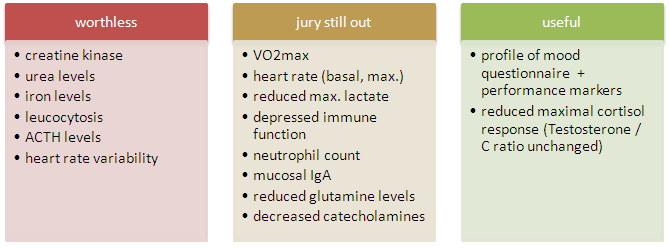
        Figure 3: Overview of selected biomarkers that have been investigated for their usefulness to identify over-reaching or overtraining (first published in "The Overmotivational Roots of Overtraining"; based on an overview in Purvis. 2010)
        What could yet potentially come out of this data is a test kit, one which would probably be a more reliable indicator of overtraining than DOMS or the creatine kinase levels which have long been touted as a potential candidate to distinguish between load and overload (cf. figure 3 and "The Overmotivational Roots of Overtraining"). Whether we will see respective test kits being available for the average Joe or Jane, is yet as questionable as whether the latter won't still rather waste his / her money on the latest and greatest supplement scam than on an optimized training routine. After all, a good personal trainer should - without any fancy tool-kits - be able to prescribe a routine that may not be 100% optimal, but will at least keep you within the repeatedly mentioned margin of productive overload, today!

        References:
        • Bonavaud S, Charriere-Bertrand C, Rey C, Leibovitch M P, Pedersen N, Frisdal E, Planus E, Blasi F, Gherardi R, Barlovatz-Meimon G. Evidence of a non-conventional role for the urokinase tripartite complex (uPAR/uPA/PAI-1) in myogenic cell fusion. J Cell Sci 1997; 110 : 1083 – 1089
        • Bondesen B A, Mills S T, Kegley K M, Pavlath G K. The COX-2 pathway is essential during early stages of skeletal muscle regeneration. Am J Physiol 2004; 287 : C475 – C483
        • Fibbi G, Barletta E, Dini G, Del Rosso A, Pucci M, Cerletti M, Del Rosso M. Cell invasion is affected by differential expression of the urokinase plasminogen activator/urokinase plasminogen activator receptor system in muscle satellite cells from normal and dystrophic patients. Lab Invest 2001; 81 : 27 – 39
        • Hill M, Goldspink G. Expression and splicing of the insulin-like growth factor gene in rodent muscle is associated with muscle satellite (stem) cell activation following local tissue damage. J Physiol 2003; 549:409 – 418  
        • Koh T J, Bryer S C, Pucci A M, Sisson T H. Mice deficient in plasminogen activator inhibitor-1 have improved skeletal muscle regeneration. Am J Physiol 2005; 289 : C217 – C223 
        • Lluis F, Roma J, Suelves M, Parra M, Aniorte G, Gallardo E, Illa I, Rod-riguez L, Hughes S M, Carmeliet P, Roig M, Munoz-Canoves P. Urokinase-dependent plasminogen activation is required for efficient skeletal muscle regeneration in vivo. Blood 2001; 97 : 1703 – 1711
        • Munoz-Canoves P, Miralles F, Baiget M, Felez J. Inhibition of urokinase-type plasminogen activator (uPA) abrogates myogenesis in vitro. Thromb Haemost 1997; 77 : 526 – 534
        • Novak M L, Bryer S C, Cheng M, Nguyen M H, Conley K L, Cunningham A K, Xue B, Sisson T H, You J S, Hornberger T A, Koh T J. Macrophage-specific expression of urokinase-type plasminogen activator promotes skeletal muscle regeneration. J Immunol 2011; 187 : 1448 – 1457 
        • Sisson T H, Nguyen M H, Yu B, Novak M L, Simon R H, Koh T J. Urokinase-type plasminogen activator increases hepatocyte growth factor activity required for skeletal muscle regeneration. Blood 2009; 114 : 5052 – 5061
        • Trappe T A, White F, Lambert C P, Cesar D, Hellerstein M, Evans W J. Effect of ibuprofen and acetaminophen on postexercise muscle protein syn-thesis. Am J Physiol 2002; 282 : E551 – E556
        • Xiao W, Chen P, Dong J. Effects of Overtraining on Skeletal Muscle Growth and
          Gene Expression. Int J Sports Med. 2012 May 16. [Epub ahead of print]