.

.
marylin monroe
Showing posts with label fatty fish. Show all posts

A Fat D-Ficiency! Do You Really Need More Vitamin D or Simply More Fatty Foods? Study Shows, Even 50.000 IU of Vitamin D3 Useless, When You Ingest It Without Fat.

 Image 1: Fatty fish and organ meats aside, whole eggs and full-fat dairy are your best food choices to raise vitamin D levels - I would even venture the guess that they (combined with fish and organ meats) would make supplementation obsolete, even in the Nothern hemisphere (if you "load up" on sun in the summer).
Those of you who have been following my daily blogposts, here at the SuppVersity for more than the last couple of days will be aware that I am one of the few outspoken vitamin D (-supplementation) skeptics. I am by no means doubting the scientific data which clearly indicates that low vitamin D levels (low in medical, not in "Internet blogosphere" terms) are associated with all sorts of diseases. I do not question the hypothesis that, from a biomolecular perspective, vitamin D has more of a hormone than of a "vitamin" (=essential nutrient). And I do not challenge the use of vitamin D(3) supplements by people with low or even borderline low vitamin D levels (although this blogpost may change the way you ingest them ;-). What I do yet call into question is the hilarious idea that every Joe and Jane in the Western hemisphere could benefit from taking "at least 2.000IU of vitamin D" per day.

Re-thinking dietary (=supplemental) vitamin D

Hitherto, the only Joes and Janes who have profoundly benefited from this one-(XL-)size-fits-it-all approach are the producers of respective supplements. Convincing scientific data from controlled studies which would show that the consumption of large amounts >1.000 IU of vitamin D capsule or pill form, exert any verifiable health benefit for someone with normal (or even low-normal) vitamin D levels is absent. The (remote?) possibility that there actually is no benefit, aside, there are yet a few other possible explanations why - epidemiological data aside - scientific evidence for the benefits of vitamin D3 supplementation in a non-vitamin-D-deficient cohort is still lacking:
    Image 2: Who would buy all those toxic, but expensive drugs, if it turned out that by taking a non-patentable "vitamin" the diseases they were invented for could be prevented?
  1. Lack of financial interest from the side of the pharma companies: Vitamin D is obviously non-patentable and if it could, as many people believe, prevent diabetes, stroke, heart disease and cancer, the use of respective supplements would obviously put the pharmaceutical industry out of business.

    Note
    : The pharmaceutical industry has already been trying to come up with patentable vitamin D analogues, of which they claim that they would lack the largely non-existent negative side-effects of the real vitamin - I guess, you can you tell which way the wind is blowing?!

    Financial revenue could thusly be a major factor, as it is obviously pretty costly to set up a tightly controlled, appropriately powered randomized, placebo-controlled study on healthy people. Even large scale epidemiological studies, on the other hand, can be done by a group of graduate students, by just plugging into respective databases and doing some more or less sophisticated statistical evaluations on existing data sets.

  2. Insufficient dosing or study periods that are simply too short to yield results: I have, in the past seen studies, even I, as a avowing skeptic, would not cite to underline my argument that we do not have enough scientific evidence that supplemental vitamin D is not the savior people may make you believe. I mean, if you assign a group of say 20 people to 400IU of vitamin D for 4 weeks and see no changes in a handful of pretty random markers of health and disease, this is unquestionably not an argument against the potential usefulness of vitamin D supplementation.

  3. Adding vitamin D3 supplements to a "healthy" low fat diet: Assuming that this point has immediately caught your eye, I want to encourage you to read the rest of this blogpost, as this, i.e. the necessity of adequate amounts of dietary fat, to absorb vitamin D3 is what the rest of this post will revolve around.
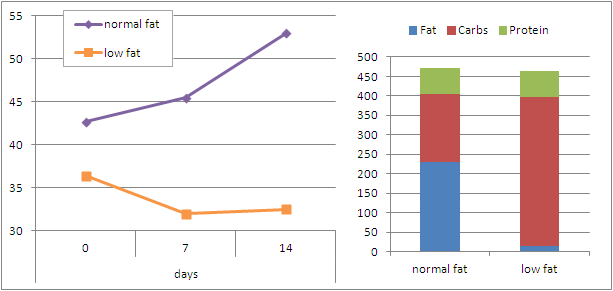
Fatty fish, eggs, organ meats, full fat organic (raw) dairy products - all those good foods which have been banned from YourPlate (at least if it contains what the US government's MyPlate suggests is healthy) are not only high in vitamin D, they are also high in fat. Against that background and in view of the fact that our ancestors did not buy their vitamin D at the local health food store, it is only reasonable to assume that our digestive tract was designed to absorb the little additional vitamin D we are supposed to get from foodstuff (you know that I am a firm believer in the power of sunlight - even beyond vitamin D) in the presence of fat. And guess what, a recent study, which was obviously not published in the Journal of the American Medical Association (cf. 1. in the previous list of possible explanations for the lack of conclusive scientific evidence on the usefulness of vitamin D supplementation), shows exactly that: without the concomitant presence of significant amounts of dietary fat, even 50.000IU of supplemental vitamin D3 have no effect on the serum levels of 25(OH)D, the active form of vitamin D (Raimundo. 2011, cf. figure 1).
Figure 1: 25(OH)D levels of 30 healthy men and women after ingestion of 50.000IU vitamin D3 supplement in conjunction with a normal or low fat breakfast (data calculated based on Raimundo. 2011)
And, as the detailed macronutrient breakdown in figure 1 (right) shows, the "high fat" breakfast the 30 young (~27y), healthy, non-obese, vitamin-d sufficient men (n=12) and women (n=18) ingested with a 50.000IU vitamin D3 capsule in the morning after an overnight fast, did not even consist of eggs and bacon. It was comprised of whole milk, white bread with bologna, and vegetable oil margarine and the whole milk aside, probably not much healthier than the skim milk, white bread with fruit jelly, and fruit salad breakfast the low-fat group had to eat. The additional 23.9g of fat did nevertheless make a huge difference, as far as the absorption and subsequent utilization of the vitamin D3 supplement is concerned.

No fat, no sun, no vitamin D - regardless of supplementation

Image 3: Get your D from the sun, if you can!
In view of the fact that the subjects were advised to "avoid sun exposure and changes in their usual eating pattern [which were probably low in dietary vitamin D] for the next two weeks", it is thusly hardly surprising that contrary to the "high fat" (I deliberately labeled it "normal fat" in figure 1 ;-) group, the subjects in the low fat breakfast group suffered a -11% decline in 25(OH)D serum levels over the 14-day follow up period, which other than the inter-group difference of 35% (!), did not reach statistical significance (mainly due to the small number of participants, where inter-subject variability renders even relatively profound differences "statistically non-significant").


And while the scientists concede that the small scale of the study, the lack of detailed recordings of the subjects' dietary vitamin D intake in the course of the 14-day follow up period and the reliance on 25(OH)D level as single surrogate for serum vitamin D levels (remember that we are actually talking about a whole host of "vitamins D") are limitations of their study, Raimondo et al. are nevertheless right to conclude that their "findings can have important implications to define the adequate dietary intake of vitamin D"... implications, which may well go beyond the mere recomendation to take your vitamin D with fat. After all, increased absorption would mean decreased need for supplementation and who knows whether you could not easily satisfy your dietary vitamin D requirements without any supplements, if you just set the "low-to-no fat, no dangerous organ meats" dietary recommendations at naught?

Meta-Analysis Says: Fish Oil Does Not Help You Lean Out! Plus: Why It's Still Worth Having Fatty Fish 1-2x/Week

SuppVersity readers know: Diet (and exercise) will make you lose weight. Supplements can only accelerate the process. However, it it really possible that fish oil does not even do that?
I guess those of you who are still taking it, will already have noticed that there is nothing to the whole hoopla about the "fat burning effects of DHA & EPA". A recent meta-analysis from the University of Sheffield in the United Kingdom does now confirm just that: The hypothesis that daily fish oil supplementation reduces body weight and BMI is not supported by scientific evidence -at least not in the overweight and obese study participants of the 9 studies that met the rigorous criteria of this meta-analysis.

The scientists had conducted a search of Web of Science, PubMed, Medline and Google Scholar for studies having the keywords ‘fish’, ‘fish oil’, ‘oily fish’, ‘omega three’, ‘omega-3’, ‘n-3’, ‘body weight’, ‘body composition’, ‘BMI’, ‘weight reduction’ or ‘weight loss’ in them.
SuppVersity Sneak Peak: While it may not be directly related to fish oil, it will certainly border on the issue of weight and more importantly fat loss, as well: Today's Special of the SuppVersity Science Round-Up (tune in live at 12PM EST) discussing all you need to know about endogenous and exogenous (=supplemental) DHEA (not to be confused with DHA ;-) No idea what that could be? Well, what about adrenal fatigue, insulin resistance, low / high testosterone, aromatization, dosages, clinical & anecdotal evidence, etc. EDIT: Due to technical difficulties the show is going to be postponed. I will let you know on Facebook, when I know the day it will be aired (probably sometime next week, not necessarily Thursday).
From the query results, they filtered all papers that were not based on randomized controlled trials, had not compared the effect of fish oil supplementation with another (non-n-3) oil control [this is actually pretty interesting, because many trials simply throw the omega-3s on top of the regular diet and who can say that a spoon of olive oil would not have had similar, if not even more pronounced effects], had not used overweight or obese subjects and had not taken pre- and post-intervention measurements of body weight and BMI. Actually the fact that all of what they were left with were only 9 study is at least in my humble opinion an important result of this meta-analysis that tells you something about the "quality" of the omega-3 supplementation research out there.
Figure 1: Whether the participants received fish (FO) or placebo oil (PO) supplements did not make a difference; in fact, the results look (but aren't) slightly better in the placebo trial, usually (Harden. 2013)
The data I compiled in figure 1 gives you an overview of the results of the meta-analysis. It's not difficult to see that the remaining 9 studies clearly indicate that it is unrealistic to expect any direct effect on diet and/or diet + exercise induced weight loss.

Bottom line: While the weight loss effects of fish oils are in fact totally overblown, it should not be overlooked that their beneficial effects on the inflammatory processes that are particularly pronounced during phases of weight gain can ameliorate (but not blunt) many of the ill health effects that arise as a consequence of the steady increase of the adipose organ. I have previously discussed the possibility of becoming what scientists love to celebrate as "healthy obese" person by soothing the sickening inflammation that would otherwise increase with every pound of extra-weight. Now you would thus still end up being fat, but you would get rid of the fat much easier and most importantly without permanent damage to your health.

Figure 2: Effects of 2.8 g/day omega-3 supplement on reductions in weight, waist and hip width in severely obese women on very low carb, very  low fat low protein 550kcal diets (Kunesova. 2005)
Based on studies by Kunesova and Hlavaty from the years 2005 and 2008, respectively, n-3 supplementation can also offset the negative effects of crazy low carb + low energy diets, as they are used to treat severely obese men and women, they can keep the fatty acid composition of the serum lipids normal and help enhance body weight and more importantly body fat on low carb diets (as signified by the superior reduction in waist circumference; cf. figure 2) loss.

So, irrespective of whether you are trying to lose or gain weight, the 1-2x servings of fatty fish I would recommend as a preferred source of omega-3 fatty acids should remain a staple of your diet. If not for weight loss purposes, then for their beneficial effects on your overall health.

Additional reads:
  • "Phospholipid or Triglyceride? What's in Your Fish Oil Caps? Only Phospholipid Based DHA+EPA Reduces Fat Cell Growth & Elevated Insulin Levels Despite Obesogenic Diet" | read more
  • "The Pro-Diabetic Effects of Shark Liver Oil - Plus: Can it Be Coincidence that the Omega-6-Laden Nigella Sativa Oil has Just the Opposite Effects on Blood Glucose & Triglycerides" | learn more
  • "Obese Vegan Salmon!? Vegetable Oils and Proteins Reduce DHA and EPA Content by -28% and Increase Overall Adiposity and Triglyceride Levels in Atlantic Salmon." | get the details
  • "Fish Oil W/ High Peroxide Levels Is Useless and Can Negate the Beneficial Health Effects of an Omega-3 Rich Diet. Plus: 3 Tips to Help You Make the Right Fish Oil Choices" | learn more
  • "Making the Right Fish Choices: Fatty Acid Contents of 33 Different Fish Species. Plus: What Are the Implications?" | make the right choice

References:
  • Harden CJ, et al. Preliminary meta-analysis of the effect of fish oil on body weight and body mass index in overweight and obese subjects does not support a link. Proceedings of the Nutrition Society(2013), 72 (OCE4), E283
  • Hlavatý P, Kunesová M, Gojová M, Tvrzická E, Vecka M, Roubal P, Hill M, Hlavatá K, Kalousková P, Hainer V, Zák A, Drbohlav J. Change in fatty acid composition of serum lipids in obese females after short-term weight-reducing regimen with the addition of n-3 long chain polyunsaturated fatty acids in comparison to controls. Physiol Res. 2008;57 Suppl 1:S57-65.
  • Kunesová M, Braunerová R, Hlavatý P, Tvrzická E, Stanková B, Skrha J, Hilgertová J, Hill M, Kopecký J, Wagenknecht M, Hainer V, Matoulek M, Parízková J, Zák A, Svacina S. The influence of n-3 polyunsaturated fatty acids and very low calorie diet during a short-term weight reducing regimen on weight loss and serum fatty acid composition in severely obese women. Physiol Res. 2006;55(1):63-72. Epub 2005 Apr 26.

Fish Oil Compromises, Fish Improves Adiponectin Levels in "Overweight, But Healthy" Individuals. Neither Promotes Weight or Fat Loss Within a 4-Week Study Period

Fish are smart, they tell you about the good things "omega-3" fatty acids will do, without pointing you to the fact that eating them will yield a more favorable DHA:EPA ratio than popping pills that are made from the same remnants of their deceased relatives the fishery industry has dumbed for decades.
With the vitamin D news the other day (go back), you are now probably thinking "hell, no Adel's other favorite topic to rant about"... an yes! You are right: I just like to rant against mainstream stupidity and one-size-fits-it all approaches everybody loves because they are so "easy"! Take your fish oil! And everything is going to be all right. Much easier and so much more compelling, than my advice to eat fatty fish at least once, better twice or thrice a week to promote, not magically achieve metabolic health.

And while you've heard about the anabolic and blood pressure lowering benefits of fish protein in previous articles, here at the SuppVersity, it is more than unlikely that you've already gotten wind of the latest study from the Smart Foods Centre, School of Health Sciences (you got to love that name!) at the University of Wollongong, New South Wales, Australia (Neale. 2013)... and that despite the fact that it took - just as with the egg study, showing only beneficial effects on blood lipids (learn more) - suspiciously long for the study to make it from an "accepted manuscript" into a print article in the scientific journal Metabolism.

Scaled fish or capped oils - is that even a question?

In what is by no means the first, and certainly not going to be the last paper comparing the metabolic effects of fish oil caps to the food item, the oil is supposed to be delivered with (the fish ;-), Elizabeth P. Neale and her colleagues recruited 18–65 year old volunteers, who were willing to consume fish, but had a low- or moderate habitual fish intake to begin with (<3x per week). The subjects had to have a BMI somwhere in-between 25 and 37 kg/m² and a chubby midline with awaist circumference of >94 cm for men, >80 cm for women. Exclusion criteria were pregnancy, diabetes mellitus, impaired renal function, smoking, not weight stable for the past six months, food allergies or habits inhibiting compliance with the study design, illiteracy and inadequate conversational English; plus, they were excluded if they were currently taking medications including thiazolidinediones, valproic acid, ACE in-hibitors, and glucocorticoids.This left the researchers with N=30 subjects who were randomized to consume either
  • fish providing 1.86 g of LC n-3 PUFA (812mg EPA +1044 mg DHA)per day -- three serves of 135 g salmon (Birds Eye Atlantic Salmon Fillets, Simplot Australia), two serves of 66 g sardines (adjusted for percentage fish in total canned product; John West Sardines in Tomato Sauce, Simplot Australia) and one serve of 55.1 g tuna (adjusted for percentage fish; John West Tuna Tempters Lemon and Cracked Pepper, Simplot Australia) per week, or
  • supplemental fish oil (Blackmores Omega Daily) containing the same amount of LC n-3 PUFAs, yet - and this is a consequence of the low DHA/EPA ratio in fish oil vs. real fish - 1055.1 mg EPA and only 744.9 mg DHA
for 4 weeks, on a daily basis. And while the participants in the supplement group were "not expressly told to avoid fish", they were not "encouraged to consume it in preference to other protein sources", either (Neale. 2013).

What did the scientists want to measure?

The primary outcome parameter of the study were the differential effects of fish and fish oil on the plasma total and high molecular weight adiponectin levels in overweight humans and, secondary, to identify the genetic variations in participant's ADIPOQand FTO genes that may influence that response.
Figure 1: Relative changes in weight, BMI, waist, body fat (%), glucose, insulin and EPA + DHA levels in serum from t = -2 weeks (i.e. before the 2-week run in in which the diets and activity levels were standardized to 25% protein, 45% carbohydrate, and 30% fat) to t = 4 weeks (Neale. 2013)
As the data in figure 1 goes to show you this did not stop the scientists from evaluation the effects the intervention had on anthropometric parameters (waist, body fat, etc.) of their subjects, as well. Neither of these, nor the effects on blood glucose and insulin showed any significant inter-group difference. If we discard the identical changes in the EPA and DHA levels of the subjects, the dietary / supplement intervention had absolutely zero effects on any of these "extra-parameters" - no weight loss, no visible improvement in glucose metabolism.

No reduction in body fat or waist circumference in with fish or fish oil

Reason enough to ask yourself, whether we should not go back to baseline and ask "is fish / fish oil even good for you"? Certainly not - or I should say, only if you put faith in the hilarious promises of "instant weight loss, improvements in glucose metabolism" and what not, if you finally jump aboard and take your "essential fish oil supplements" that are plastered all over the Internet. If you discard these advertisment claims or simply apply some critical thinking skills, it should be obvious that you got to content yourself with changes in your potential to shed fat / improve glucose metabolism by simultaneously committing to lifestyle that's juxtaposed to the way of living that has gotten you into all the trouble to begin with.
Figure 2: Total and high molecular weight adiponectin levels expressed relative to the levels after the 2-weeks run-in (left) and the ratio of the absolute values after 4 weeks (right; Neale. 2013)
The changes in adiponectin expression in figure 2 are such an indicator of a change in the potential of getting rid of the blubber, the high blood glucose - and it is obvious to see that fish oil is inferior to fish, when it comes to inducing these changes.
"The results of this study suggest that short-termconsumption of fish and fish oil supplements does not have the same effect on HMW adiponectin levels in overweight humans. [...] This was due to a small increase in HMW adiponectin in the ‘fish’ group, whilst the ‘supplement’ group exhibited a significant decrease in HMW adiponectin concentrations. A similar pattern was seen for total adiponectin; however this did not reach statistical significance." (Neale. 2013)
As mentioned in the previous paragraph, these changes were not associated with differential effects on body weight, insulin levels and body fat mass, all of which "remained relatively constant" (Neale. 2013)


Fatty acid content in g/100g of wild and farmed salmon (left) and respective omega-3 to omega-6 ratios; learn more about making the "right fish choices", here
Unfortunately(?), the underlying mechanisms behind the differential effects on HMW adiponectin are as of now not known. Neale et al. do yet also subscribe to the "synergy hypothesis" I alluded to earlier in the first paragraphs of this article. The proven benefits of fish protein on insulin sensitivity and chronic inflammation (Soucy. 1999; Ouellet. 2007; Pilon. 2011), as well as the "other components present in fish such as selenium and vitamin D [, which] have also been associated with a range of health benefits in humans" [Rayman. 2000; Garland. 2006)...

...Oh, no! I know what you are thinking now. "I got all those in my multi! And I guess whey will do just as well as fish protein..." - come on, are you serious? Synergy is about ratios, about competition, about ups and downs, about co-factors and adjuvants. It's not about a kitchen sink supplementation approaches that try to reunite what has been ripped apart in a helpless effort to "make things easier" for the lazy consumer who does not like his fish and does not want to spend some of his daily screen time on buying fresh foods and preparing them... sorry, now I am really ranting ;-)

Handpicked suggested reads:
  • Study on Krill Powder Suggests: There is More to Seafood Than Fat - Can Krill Give You What Fish Oil Can't? Plus: Krill Protein's EAA Content More Than an Able Match to Whey (read more)
  • Phospholipid or Triglyceride? What's in Your Fish Oil Caps? Only Phospholipid Based DHA+EPA Reduces Fat Cell Growth & Elevated Insulin Levels Despite Obesogenic Diet (read more)


References:
  • Moroi M, Akter S, Nakazato R, Kunimasa T, Masai H, Furuhashi T, Fukuda H, Koda E, Sugi K, Jesmin S. Lower ratio of high-molecular-weight adiponectin level to total may be associated with coronary high-risk plaque. BMC Res Notes. 2013 Mar 6;6:83. 
  • Neale EP, Muhlhausler B, Probst YC, Batterham MJ, Fernandez F, Tapsell LC. Short-term effects of fish and fish oil consumption on total and high molecular weight adiponectin levels in overweight and obese adults. Metabolism. 2013 May;62(5):651-60.
  • Ouellet V, Marois J, Weisnagel S, et al. Dietary cod protein improves insulin sensitivity in insulin-resistant men and women: a randomized controlled trial. Diabetes Care 2007;30(11):2816.
  • Pilon G, Ruzzin J, Rioux L-E, et al. Differential effects of various fish proteins in altering bodyweight, adiposity, inflammatory status, and insulin sensitivity in high-fat–fed rats. Metabolism 2011;60(8):1122–30. 
  • Rayman MP. The importance of selenium to human health. Lancet 2000;356(9225):233–41.
  • Soucy J, LeBlanc J. The effects of a beef and fish meal on plasma amino acids, insulin and glucagon levels. Nutr Res 1999;19(1):17–24.

Fishing for Muscle: Cod Protein Promotes Muscle Repair After Injury More than Casein or Peanut Protein

Image 1: There are obviously more nutritionally valuable parts to cod than just its liver.
On Wednesday, you have learned that diet-deoptimization with rice instead of casein protein is a possible way to gain less weight. Today, we are going to tackle what appears to be a way more promising alternative to the dairy-based top-dogs among the protein supplements: Cod protein! Within the health and fitness community, the cold(er) water fish is hitherto, above all, known for its vitamin-laden liver and the oil humans have been producing from it and consuming for centuries, now. That the arginine-, glycine- and taurine-rich protein of its tasty white flesh could soon replace - or at least complement - dairy proteins (casein, whey) as the physical culturists' go-to protein for muscle building and regeneration will yet probably be news to most of you, right?

COD - Canned or dried? Probably doesn't matter as long as you eat it.

In a recently published paper on yet another rodent protein feeding trial (Dort. 2012), Junio Dort and his colleagues from the Laval University and the Research Center of CHUQ, CHUL in Quebec, Canada, report that the artificially injured tibialis muscle of rodents that were kept on cod-protein based diets for 21-days healed significantly faster than the skeletal muscle of the peanut or casein protein control groups.
Figure 1: Amino acid profile of casein, peanut and cod protein source on which the otherwise identical rodent diets were based (based on Dort. 2012)
For the smart SuppVersity student you are, it should not take more than just a brief glance at the amino acid profiles of the three protein sources to identify cod protein and casein as superior and peanut (as it was to be expected) inferior protein source. With -24% and -30% less branched-chain (BCAA) and total essential amino acids (EAA), peanut protein would certainly not be the first choice of any non-vegan physical culturist, let alone bodybuilder, who is interested in opti- and not deoptimizing his his/her diet (on an unrelated not: Don't you Americans never refer to the ladies, first? I always read "his/her" - that would not exactly be gentleman-like here, in Germany!).

118 neutrophils and still counting: Cod protein (not oil, in this case) tames the inflammation

In order to assess how peanut, casein and cod-based diets would modulate the rodents' response to muscular injury the animals were treated with bupivacaine, a substance that is myotoxic ("kills" muscle cells, but - and this is a specialty of bupicacaine - not satellite cells) at higher doses (here 100µL). The drug was injected into one of the animals' tibialis muscles, while the contra-lateral side was sham-injected (saline injection) to serve as a control. At days 3, 14, and 24 post-injury, both the injured and sham-injected tibialis muscles were "collected" (8 animals per dietary group) and the neutrophil count, and macrophage infiltration - both measures of ongoing inflammation and thusly incomplete healing subsequent to prior muscle damage - were assessed.
Figure 2: Neutrophil count and EDI+ macrophage count in bupivacaine injected tibialis muscle 3 and 14 days and 14 and 24 days after the injection; data expressed relative to sham control (data calculated based on Dort. 2012)
As the data in figure 2 goes to show, the cod protein group showed a markedly faster reduction in neutrophil and EDI+ macrophage count than the casein group, which - in a separate experiment - had already been found to sustain the healing process better than the nutritionally inferior peanut proteins, which also exhibited a -19% lower feeding efficacy (meaning that similar to the rice protein in Wednesday's newspost, it lead reduced weight gain; again, not necessarily desirable, specifically in injured rats) and, "in results previously published, [...] lower skeletal muscle mass than those fed casein [even] before injury" (Dort. 2012).

The anti-inflammatory effects of cod protein reach beyond skeletal muscle

Though muscle is, as my friend Carl Lanore likes to say, "metabolic currency" and it's protection and repair should be on everyone's, man and women top list of health priorities, the benefits of cod protein extend beyond skeletal muscle. A brief review of the literature revealed among others ...
  • increases in HDL, decreasse in VLDL with cod over casein and soy (Jacques. 1995)
  • restoration of GLUT-4 activity in skeletal muscle of HFD obese rodents (Trembley. 2003)
  • lower hepatic triglyceride production vs. beef or casein (Demonti. 2003)
  • lowest insulin / glucose ratio (vs. soy or casein), when given as part of complex test meal (Post-Skagegard. 2006)
  • improvements in insulin sensitivity and reductions in C-reactive protein vs. diet containing beef, pork, veil, eggs and dairy in insulin resistant men and women (Ouellet. 2007; Ouellet. 2008)
Just as the improved healing of the muscoskeletal injury in the rodent study at hand, most of the aforementioned effects are probably attributable to the modulatory the homemade cod protein (the scientists simply used frozen cod fillets to prepare their protein powder) exerts on the immune system. In this context, it is particularly important to mention that
[...] an impairment of insulin-stimulated glucose uptake and a reduction of protein synthesis, combined with an increase of muscle protein degradation, are the main adverse metabolic changes induced by injuries in skeletal muscle.
In previous studies, the researchers were also able to show that the profound impairment of the AKT /PKB pathway, which is one of the key mechanisms behind the nutrient induced increase of protein synthesis, is protected from the impairments of "high fat diets" (the researcher variety, which is more akin to the standard American than to "low carb" diet), if the latter contains cod, instead of soy- or casein-protein (Tremblay. 2003).
Arginine for repair, EAA for growth: It may be of interest that Dort et al. attribute the muscle building and muscle repairing effects of cod protein to different amino acid in the cod protein. While they believe that its high arginine content suffices as NO precursor to drive and accelerate the repair process, they hold the high essential amino acid (EAA) content responsible for its pro-anabolic effects which are comparable to those of casein (and probably even whey) proteins.
Image 2: Fish is not for you? Maybe you just don't know how to prepare it properly? It's not really difficult to grill a fillet, trust me - even I can do that.
It stands to reason, that both the restoration and / or maintenance of skeletal muscle mass and insulin sensitivity, as well as the general anti-inflammatory properties of cod protein (remember: the protein in the study was derived directly from frozen fillets and contained almost no fat!) come handy for everyone who wants to live a healthy and active live into the old age. In this regard the study result do not only underline the importance and multifaceted benefits of regular fish consumption (fatty or not) as part of a healthy diet, they also support my repeatedly proffered believe that the latter should not be defined by macronutrient ratios, let alone calories, but must be build around concrete meal and food suggestions, as well as general and flexible recommendations regarding the frequency and combinations in which these can be consumed.